
What Is an HVAC System?
HVAC stands for Heating, Ventilation, and Air Conditioning. HVAC systems are meant to give you control over your home’s heating and cooling temperatures. Most people refer to HVAC systems by their more common names, such as central air conditioners, ductless AC units, furnaces, heat pumps, or boilers. They sometimes come in combined packages that offer heating and cooling in one unit or, in areas with more predictable climates, you may only need one or the other.
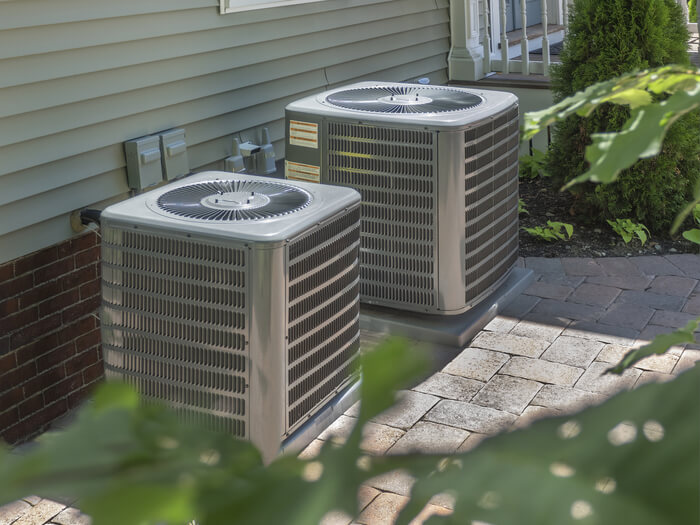
An HVAC system can be any combination of a heater unit and a cooling unit, all of which are described in the sections below.
How Does an HVAC System Work?
HVAC systems are responsible for regulating temperature and maintaining air quality through proper ventilation. There are three basic components — heating system, cooling system, and ventilation, to deliver efficient results.
HVAC systems heat the environment with the help of a heat pump by absorbing heat from the outside, distributing it inside. Or with the help of a furnace, where heat is generated either through electricity or burning a fuel source, which is then ventilated inside.
In warm climates, the air conditioning system absorbs the heat within the environment and moves it to the outdoor unit, where the warm refrigerant gas is taken to the compressor to remove ambient heat and turn it into its liquid form. This liquid refrigerant is then passed through a condenser and evaporator coil, which converts the liquid refrigerant into cool air that is passed through the vents and air ducts. Read in detail about how an HVAC system works to cool your home.
Frequently Asked Questions
The common parts of an HVAC system include thermostat for temperature control, AC unit (central AC, furnace, or heat pump), duct work, compressor, evaporator coil, and exhaust outlets. We discuss them briefly below:
- Thermostat: This is the most interactive part of the entire HVAC system. It controls the heating and cooling devices by switching them on or off, or by regulating the airflow to maintain the desired temperature.
- Central Air Conditioners: Air conditioners distribute cool air throughout your home using a circuit or series of connected ducts. Central air conditioner is most common in warmer climate regions.
- Furnace: There are various types of furnaces, with the most common using gas combustion or electric resistance heat strips to produce the necessary heat. Since furnace installation can only produce heat, it is sometimes retrofitted with a central air conditioner to provide cool air during the summer months.
- Heat Pump: A heat pump is a variation of a central air conditioner. Heat pumps are capable of delivering both heated and cooled air. They work by transferring the inside heat outside during the summer months to cool the home and extracting heat from outside air or ground inside during the winter months. Heat pump systems are one of the most energy-efficient systems available today.
- Air Return: Air return is the starting point of your ventilation. Its main purpose is to suck the air along with its pollutants and contaminants from the environment through filters to be cooled or heated. This also helps to maintain air quality and airflow.
- Exhaust Outlets: Exhaust outlets are used to remove heat and gas from the environment, which can be done through chimney flue or vent stack.
- Ducts: Air ducts help to distribute heated and cooled airflow to maintain acceptable indoor quality of air.
- Compressor: An air compressor part of the outside AC unit that helps to turn the warm refrigerant gas into liquid. It is in this compressor the heat is removed from the gas with the help of pressure.
- Evaporator Coil: Inside an AC unit, evaporator coils help cool down the air being circulated using a liquid refrigerant. A blower assembly — fan and motor — provides the necessary circulation to distribute the conditioned air.
The square footage area of your home is the top factor to determine the size of HVAC unit needed for your home. The size is calculated in tons based on how many BTUs you need to cool/heat your home. For example, for a 2000 sq. ft. home, you will need an AC unit size of 40,000 BTUs, or approximately 3.5 tons.
To find the ideal size for your home, consider these factors:
- Square Footage: This is a general guideline, not the only factor.
- Climate: Hotter climates need a larger capacity than mild ones.
- Insulation: Well-insulated homes require less BTU (British Thermal Units) for heating and cooling.
- Sun Exposure: South-facing windows let in more heat, requiring a larger system.
- Ductwork: Leaky or poorly designed ducts can reduce efficiency.
Use our AC size calculator to estimate the BTU requirements based on square footage. The calculators use a range of 20 BTU per square foot as a rule of thumb.
The following chart is an estimation for tonnage coverage based on the square footage of your property to show standard AC sizes available in the market.
Room Size Tonnage Your Air Conditioner Needs
600 to 1100 square feet 1.5 tons
901 to 1400 square feet 2 tons
1201 to 1650 square feet 2.5 tons
1501 to 2100 square feet 3 tons
1801-2300 square feet 3.5 tons
2101 to 2700 square feet 4 tons
2401 to 3300 square feet 5 tons
By changing or upgrading your air filters to high-efficiency filters like a MERV 13 or 14, you can improve the air quality of your house. While standard filters can only capture larger dust particles, upgrading can significantly improve particle removal, including allergens like pollen and pet dander.
Some HVAC systems allow for additional filtration options like HEPA filters or UV germicidal lights. HEPA filters capture even tinier particles down to 0.3 microns, while UV lights help kill bacteria, mold, and viruses within the system.
Topics To Explore
What Are the Different Types of HVAC Systems?
There are four main types of HVAC systems:
- Heating and Cooling Split Systems: These systems consist of two separate units, one for heating and one for cooling. Split systems are the most common type of HVAC system.
- Mini Split Ductless Systems: These systems are also known as mini-split systems. They are a good option for homes that do not have ductwork.
- Packaged Heating and Air Conditioner Combinations: These systems are all-in-one units that contain both the heating and cooling components. Packaged systems are a good option for homes that have limited space.
- Geothermal Systems: These systems use the earth’s constant temperature to heat and cool your home. Geothermal HVAC systems are the most energy-efficient type of HVAC system, but they are also the most expensive to install.
Your HVAC contractor will be able to help you decide which combination of units will work best for your home’s size, the climate in your area, and your overall budget for the project. Here are the different combinations of HVAC systems that they may suggest after discussing your home’s heating and cooling needs:
Frequently Asked Questions
The best HVAC system for your home will depend on a number of factors, including the size of your home, the climate in your area, and your budget. Here are some things to consider when choosing an HVAC system:
- The Size of Your Home: You will need an HVAC system that is sized correctly for your home. A system that is too small will not be able to adequately heat or cool your home, while a system that is too large will be less efficient.
- The Climate in Your Area: If you live in a cold climate, you will need an HVAC system that is good at heating. If you live in a warm climate, you will need an HVAC system that is good at cooling.
- Your Budget: HVAC systems can range in price from a few thousand dollars to tens of thousands of dollars. It is important to choose a system that fits your budget.
A ductless HVAC system, or mini split unit is beneficial for some homes based on certain needs for your household. A ductless system has multiple indoor units located in each room that you would like to have controlled heating and cooling. The mini split units are mounted on your home’s walls and connect to a compressor located outside of the home. Mini split units are easier to install than a central AC system but usually cost more upfront.
Some reasons you may be interested in a duct free AC unit would include:
- You want to cool or heat only one particular room, such as a garage or a new room that was added to the house.
- You do not use all of the rooms in your home and you would like to be energy efficient with your air conditioning use for only rooms you utilize.
- You prefer independent control of room temperature across multiple areas of your home.
Pros and Cons of Ductless AC – Mini Split System
Pro: They have lower energy costs than most of the split systems, and it is your best high-energy efficiency option. The biggest pro is that you don’t have to worry about ducts because they are ductless, so no extra infrastructure is needed.
Con: These systems are low heat effective, so if you live in cold climatic areas, getting an effective mini split system will be impractical and costly as mini split systems are costlier than traditional ones. Also, maintenance can be expensive in some areas as it is hard to get parts for the system. Consult with your HVAC contractor to know which would be the best option for you.
The most common type of HVAC system is the heating & cooling split system. Split HVAC units have two main systems, one dedicated to cooling your home and one dedicated to heating your home. They usually contain one indoor unit such as a furnace (found in a garage, utility closet, crawl space, garage, attic, or basement) and one outdoor unit such as a central air conditioner often located outside on a flat cement foundation called an AC pad.
The split systems can be configured in different ways according to the needs,
AC and Furnace: These systems are very popular and are also called forced air systems because they use blower fans in the furnace to circulate the air through ducts. They absorb untreated air and push treated air into the environment.
Heat Pump and Air Handler: Heat pump split systems are usually ideal for warm climate regions which do not experience freezing temperatures. The heat pump does not generate heat (instead absorbs ambient heat), so it is energy efficient. So the absorbed heat is circulated through the air handler via ducts. The heat pump’s function is reserved to distribute cold air in mild warm climates.
Pros and Cons of Split System
Pro: They are quite popular, efficient, and cost-effective HVAC systems. It is easy to replace the existing duct system without doing minor or no modifications. They are highly energy efficient in areas that require less heating or cooling.
Con: The forced air system may disperse dust and allergens around your home, and it might also disperse your kitchen odor to the parts of your home. The system also requires ductwork, which may be expensive for homeowners.
An air conditioner is designed solely for cooling by removing heat from the indoor air and expelling it outside. It’s best suited for hot climates and must be paired with a separate heating system, like a furnace, for colder weather. Air conditioners are ideal when cooling is the primary need, and they operate efficiently in warm environments. See how central air conditioners work.
A heat pump, on the other hand, can both cool and heat a home by reversing its operation to extract heat from the outside air and transfer it indoors. This makes it versatile and efficient in moderate climates, though its efficiency can drop in extremely cold weather. Modern heat pumps, especially cold-climate models, are better suited to handle lower temperatures compared to traditional heat pumps. See how heat pumps work.
Some of the best air conditioning brands to consider are Carrier, Trane, Lennox, American Standard, and Rheem. These brands are known for their reliability, efficiency, and performance across different models and price ranges.
Use our guide to top 10 best air conditioner brands where we compare brands based on cost of installation, AC unit efficiency, features, performance, warranties and customer satisfaction.
Topics To Explore
How Can I Calculate the Cost of Replacing an HVAC System?
To calculate the cost of replacing an HVAC system, consider these key factors:
- Local Climate and System Type: Your local climate is the most crucial element that affects choice of your HVAC system and costs associated with it. Installation costs will vary significantly based on the type (central air, ductless, heat pump) you want installed.
- HVAC Unit Size: Your regional climate will also affect the size of the HVAC unit you need, which should be appropriately matched to your home’s square footage.
- Efficiency Ratings: Higher efficiency units (measured by SEER for cooling and AFUE for heating) usually cost more upfront but can save money on energy bills over time.
- Ductwork and Modifications: The complexity of the installation, including modifications to existing ductwork or electrical systems, can impact labor costs.
- Location and Labor Rates: Costs can vary depending on your geographic location due to differing labor rates, cost of living, and local building codes.
- Additional Features and Upgrades: Options like smart thermostats, zoning, or air quality enhancements can increase the total cost.
Use our HVAC replacement cost calculator to determine your project cost considering these factors.
Frequently Asked Questions
How To Choose the Right HVAC Contractor?
Here are some important things to consider when hiring an HVAC contractor for replacement based on the provided modernize.com links:
- Get Multiple Quotes: Don’t settle for the first quote you receive. Get quotes from several different contractors to compare prices and services. Evaluate the HVAC quote and the factors affecting it before closing the project.
- Compare Quotes Carefully: Make sure the quotes include all of the same items, such as the cost of the equipment, labor, permits, and any other fees.
- Vet the Contractor: Ask the contractor about their experience and some references that you can follow up with. Use our list of questions to vet contractors on a call.
- Look for a Licensed and Insured Contractor: Make sure the contractor is licensed and insured in your state. This will help protect you in case of any problems with the installation.
- Beware of Contractors Who Ask for a Large Down Payment: Reputable contractors will not ask for a large down payment upfront. Be wary of any contractor who does.
- Ask About Warranties: Make sure the contractor offers a warranty on their work and the equipment they install.
Frequently Asked Questions
Ready to get your project started?
Let us find the best HVAC pros in your area, then easily request quotes, book a contractor, and get the job done. It’s that easy.


Homeowner Resources
Here are the top articles that homeowners found useful when planning their HVAC project and navigating the contractor hiring process.
Real Stories, Real Success
See how our solutions empower homeowner projects and experiences.
“The pros did an excellent job for a reasonable price. Roofing crew was amazing. I would highly recommend this company.”
Stephanie F.HomeownerCharlotte, NCRoof Replacement
“They did beautiful work replacing 3 windows for us and we got them done at a great price.”
Mark Y.HomeownerAustin, TXWindows Replacement
“The installers were excellent! They did everything they promised. I got a great price and the new AC Unit works perfectly!”
Tina P.HomeownerDallas, TXAC Unit Replacement
“They did a great job installing and getting the required permits to complete the job. The new solar system a good investment to our home.”
James S.HomeownerSacramento, CASolar Installation
“Helped us choose the best products and pricing and were able to get us financing at an excellent rate! Truly professional and very nice.”
Paul G.HomeownerSeattle, WAWindows Replacement
“The whole process, from getting the quote to having the work done was flawless. The guys were truly professionals.”
Tony H.HomeownerNashville, TNHeating Unit Replacement