Cabinets
Cabinet Installation Cost
Average Cost: $4,000 – $13,000
The average cost to install cabinets as of 2026 ranges between $4,000 and $13,000 or more, with the national average falling around $6,500 to $7,500 for a typical mid-sized project. Pricing varies based on the cabinet material you choose, the total number of cabinets installed, whether they’re painted or stained, hardware complexity, and local labor rates.
Find the best cabinet installers in your area.

The Modernize Mission
We help homeowners make confident decisions through our reliable, up-to-date, and unbiased information and average project costs. All of our content is thoroughly reviewed and fact-checked by our team of home improvement experts. Learn more about how we maintain these values.
Table of Contents
- Cabinet Installation Cost Guide
- How Much Does it Cost to Install Cabinets?
- Cabinet Installation Costs by Room
- Factors that Impact Cabinet Installation Costs
- Cabinet Costs by Type and Material
- Labor and Installation Costs
- Cabinet Installation Cost by Room Size
- Cabinet Installation Cost by Cabinet Size
- How Much Does it Cost to Install Cabinet Hardware?
- How Much Does it Cost to Paint or Finish Cabinets?
- How Much Does Cabinet Refacing and Refinishing Cost?
- Tips for Saving on a Cabinet Installation
- Hiring a Qualified Professional
Cabinet Installation Cost Guide
Cabinet installation can be a significant investment, whether you’re updating a kitchen, bathroom, laundry room, home office, hallway, or garage. Cabinets often represent one of the largest line items in a remodeling budget, accounting for 30% to 35% of total project costs in many renovations. If you’re wondering where that money goes and how to plan effectively, this guide breaks it all down.
In this Cabinet Installation Cost Guide, you’ll learn what affects cabinet installation pricing, including material costs, labor expenses, cabinet types, and budget-friendly alternatives. You’ll also find tips for saving money and planning your project with confidence.
How Much Does it Cost to Install Cabinets?
The cost to install cabinets typically ranges between $4,000 and $13,000 as of 2026, with an average price of $6,500 to $7,500. Costs depend heavily on the number of cabinets, their type, and how customized the installation is.
When pricing by linear foot, homeowners can expect to pay:
- $150 to $500 per linear foot for semi-custom cabinets
- $500 to $1,200 per linear foot for custom cabinets
For example, installing approximately 20 linear feet of cabinetry — common in medium-sized kitchens or multi-room projects — could cost:
- $3,000 to $10,000 for semi-custom cabinets
- $10,000 to $24,000 for custom cabinets
Smaller projects, such as bathroom vanities or laundry room cabinets, typically fall at the lower end of the range, while whole-home or multi-room installations cost more.
Cabinet Installation Costs by Room
Cabinet installation costs vary widely depending on where the cabinets are installed and how the space is used.
- Kitchen Cabinets
- $4,000 to $13,000+: Kitchens typically cost the most due to the number of cabinets, islands, specialty storage, and layout complexity.
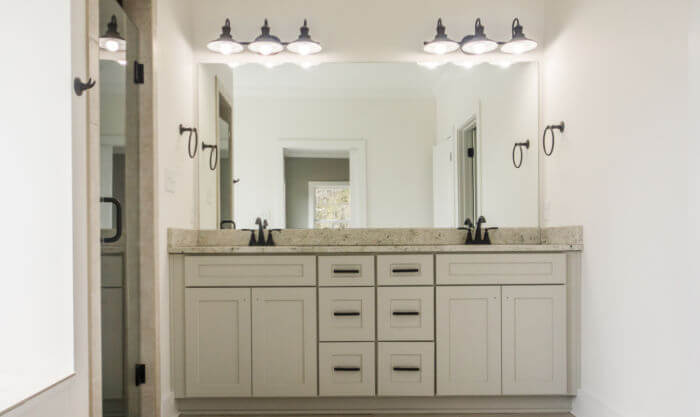
- Bathroom Cabinets and Vanities
- $400 to $4,000+: Smaller spaces mean lower overall costs, though custom vanities or double sinks increase pricing.
- Laundry Room Cabinets
- $2,000 to $7,500: Laundry rooms often include upper cabinets, base cabinets, and utility storage.
- Home Office or Built-In Cabinets
- $2,000 to $7,500+: Custom shelving, desks, and storage walls increase both material and labor costs.
- Pantry or Hallway Storage Cabinets
- $1,000 to $5,000+: Costs depend on height, depth, and whether cabinetry is custom-built.
- Garage Cabinets
- $300 to $3,000+: Garage cabinets are typically more affordable but may include durable materials or specialty storage systems.
Factors that Impact Cabinet Installation Costs
Several factors influence the total cost of cabinet installation, including:
- Cabinet material and quality
- Size and layout of the space
- Total number of cabinets and linear feet required
- Hardware selection and installation
- Local labor and installation rates
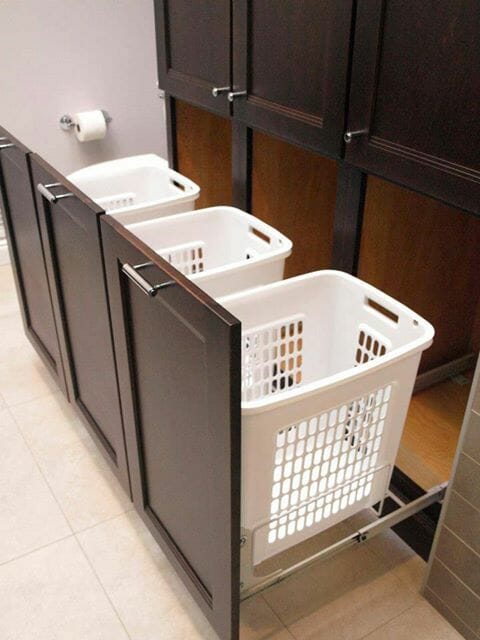
For example, installing stock cabinets in a small laundry room costs far less than installing custom solid wood cabinets throughout a large kitchen or home office. Choosing between stock, semi-custom, and custom cabinets has one of the biggest impacts on overall pricing, as does the complexity of hardware and interior features.
You should also account for additional labor costs such as demolition, wall preparation, or minor construction work, which can increase the final price.
Cabinet Costs by Type and Material
The cost of new cabinets will vary by the material you choose, as well as the quality. In terms of material options, some of the most popular choices are solid wood, wood veneer, laminate, metal, and acrylic.
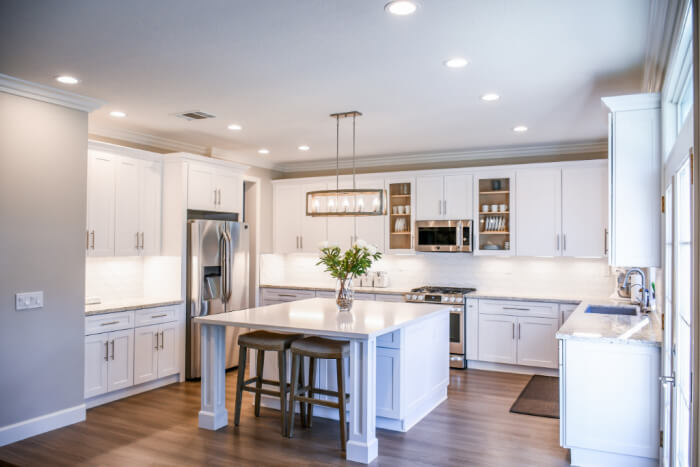
Cabinets are generally available in three quality categories:
- Stock Cabinets: Pre-manufactured and ready to install. These are the most budget-friendly option but offer limited sizes, styles, and finishes.
- Semi-Custom Cabinets: Manufactured in standard sizes with expanded customization options for finishes, hardware, and storage features.
- Custom Cabinets: Built to exact specifications for your space. These offer the most flexibility in material, layout, and design, but typically cost 20% to 50% more than semi-custom cabinets.
Below, you can explore average cabinet prices by material and quality as of 2026.
| Material | Stock cabinets cost per linear ft. | Semi-custom cabinets cost per linear ft. | Custom cabinets cost per linear ft. |
|---|---|---|---|
| Solid wood | $100 to $600 | $200 to $800 | $500 to $2,000 |
| Wood veneer | $60 to $200 | $100 to $300 | $500 to $1,200 |
| Laminate | $60 to $200 | $100 to $300 | $500 to $1,200 |
| Metal | $100 to $600 | $400 to $900 | $1,000 to $2,000+ |
| Acrylic | $400 to $600 | $600 to $1,200 | $1,200 to $2,000 |
Labor and Installation Costs
Labor typically accounts for 20% to 30% of total cabinet installation costs. Rates vary by region, project complexity, and the type of cabinets being installed.
Common labor costs include:
- Demolition and disposal: $300 to $500
- Wall and space preparation: $200 to $500
- Cabinet installation: $50 to $200 per linear foot
- Hardware installation: $300 to $1,900 for an average set
Additional construction work, such as drywall repair, repainting, or moving outlets or plumbing, can add to labor costs, especially in kitchens, bathrooms, or laundry rooms.
Cabinet Installation Cost by Room Size
The size of the space where cabinets are installed directly affects cost. Larger rooms typically require more cabinets and higher labor costs.
For example:
- A small space requiring 10 to 12 cabinets may cost $2,800 to $6,500
- A larger space requiring 20 or more cabinets may cost $3,800 to $8,500 or more
Multi-room projects — such as installing cabinets in a kitchen and laundry room at the same time — can increase total costs but may reduce per-cabinet labor expenses.
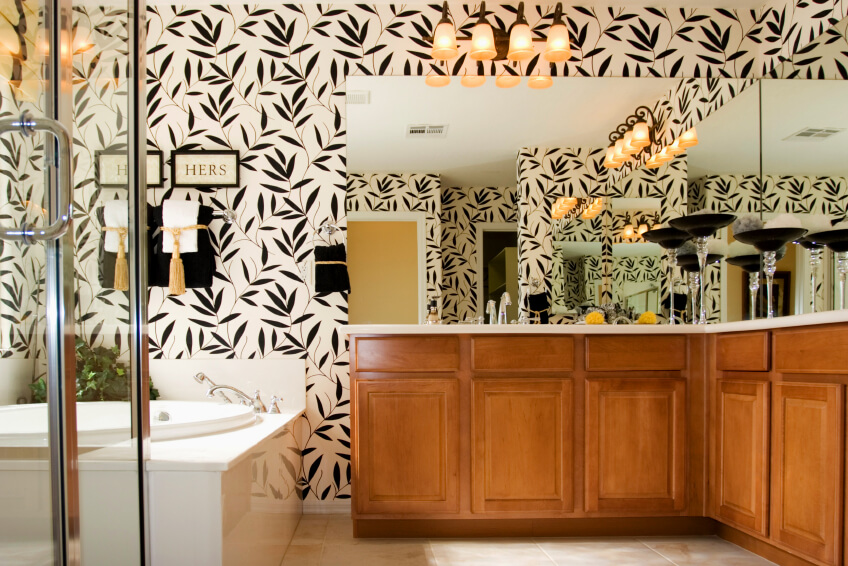
Cabinet Installation Cost by Cabinet Size
Cabinet sizes impact material costs but not necessarily installation costs. Cabinet sizes are relatively standard across types and materials. As such, installation costs fall in a similar range whether you decide on stock, semi-custom, or custom cabinets.
Where the cabinet is installed and the complexity of the labor required are the two main cost drivers. The more moving parts and bells and whistles included with each cabinet, the more it costs to install. Drawers, lazy susans, and pull-outs are a few examples of features that cost extra to install.
Below you will find standard cabinet sizes by type as well as what you can expect to pay for each size.
| Cabinet Type | Standard Sizes | Installation Cost per Cabinet |
|---|---|---|
| Base cabinets | Height: 35” Depth: 24” Width: 12” to 36” | $275 to $2,325 |
| Upper or wall cabinets | Height: 30” to 36” Depth: 12” to 18” Width: 24” to 30” | $250 to $1,100 |
| Utility cabinets | Height: 35” to 36” Depth: 12” to 24” Width: 18” to 36” | $1,150 to $9,485 |
How Much Does it Cost to Install Cabinet Hardware?
The average cost to install cabinet hardware ranges from $300 to $1,900, depending on the number of cabinets and hardware style. Hardware prices vary widely, from $1.50 per piece for basic options to $50 or more per piece for custom or handcrafted designs.
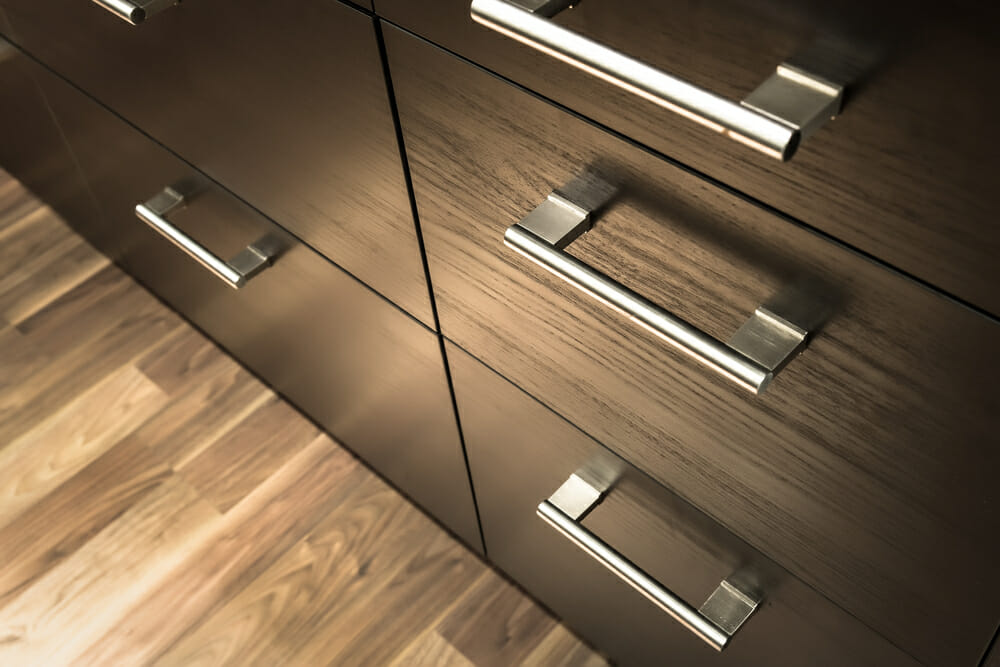
Key factors affecting hardware costs include:
- Material
- Size
- Finish
- Design complexity
Knobs are generally less expensive to install than pulls since they require fewer drilled holes.
How Much Does it Cost to Paint or Finish Cabinets?
Painting or finishing cabinets after installation typically costs $30 to $60 per linear foot. Finishing is often done after installation to ensure consistency and a professional appearance.
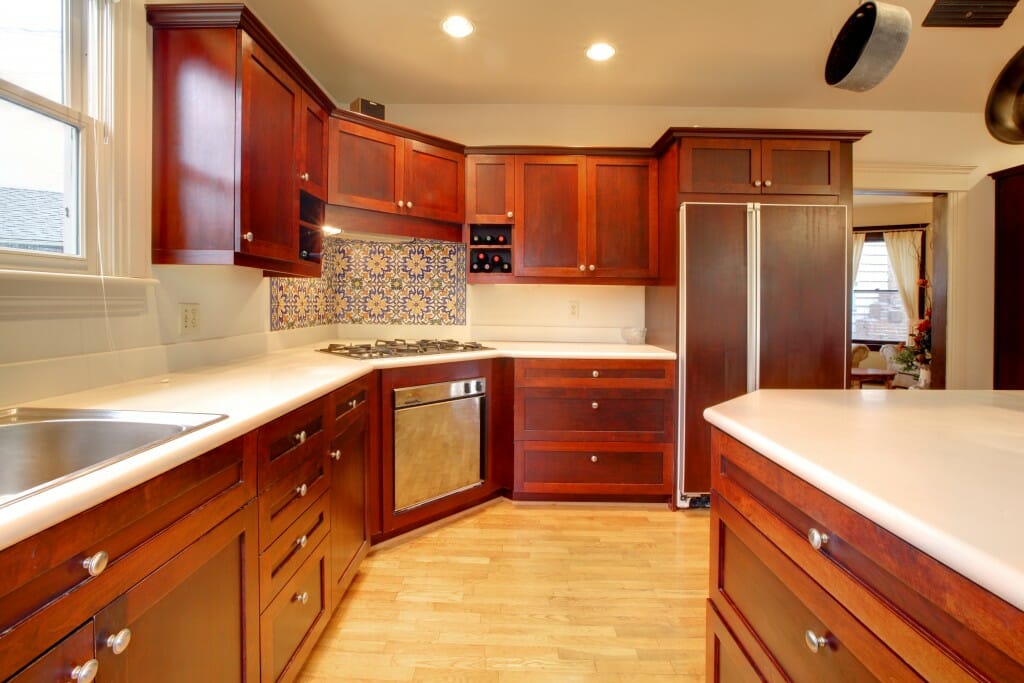
Staining
- $20 to $50 per linear foot
- Highlights natural wood grain
- Easier to touch up over time
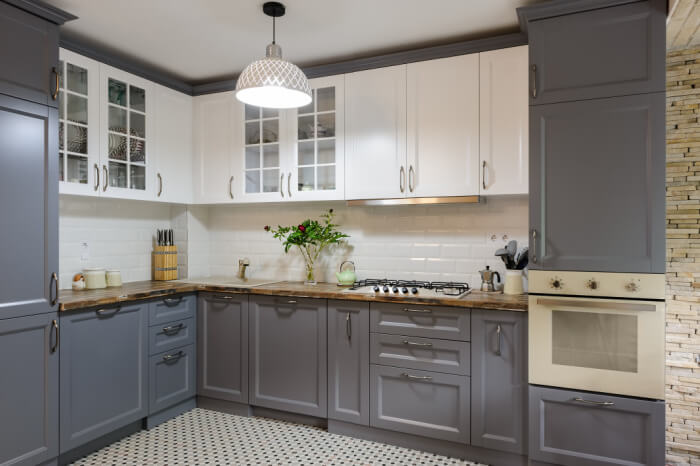
Painting
- $30 to $60 per linear foot
- Offers more color options
- Typically costs 10% to 15% more than staining
How Much Does Cabinet Refacing and Refinishing Cost?
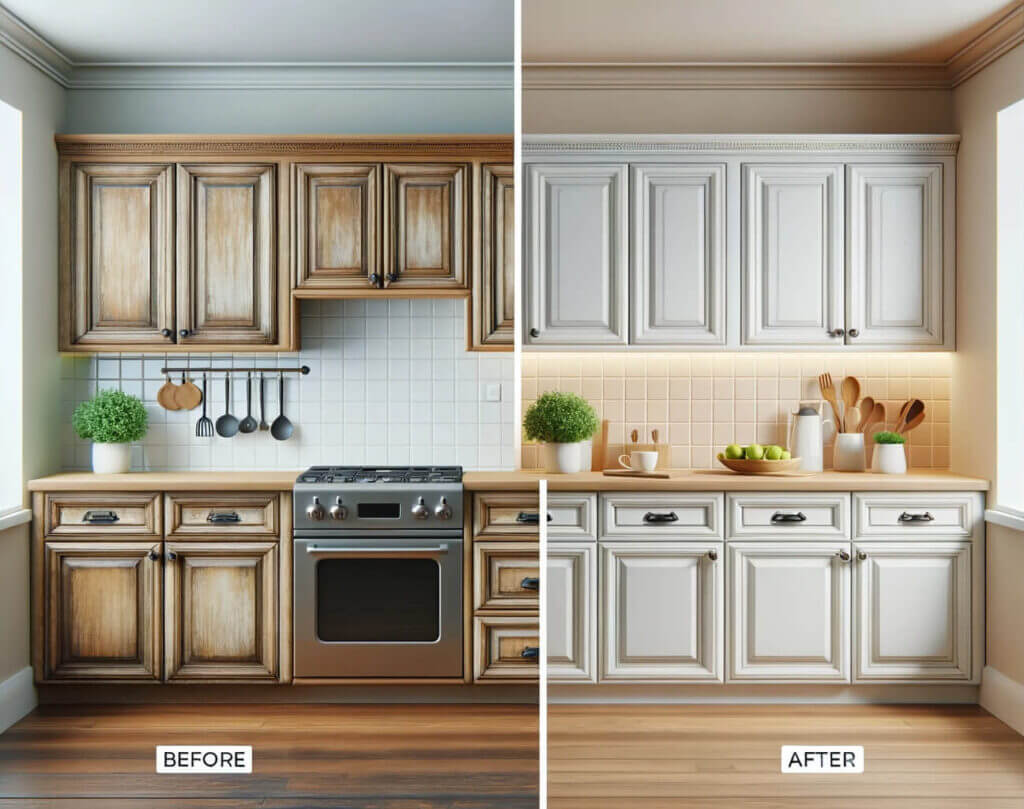
If full cabinet replacement isn’t necessary, refacing or refinishing can be more affordable alternatives.
- $4,000 to $9,500, or $100 to $250 per linear foot
- Replaces doors and drawer fronts while keeping cabinet boxes
- Offers a fresh look without changing layout
Cabinet Refinishing
- $2,000 to $5,000, or $30 to $60 per linear foot
- Involves sanding, repainting or restaining, and hardware updates
- Best for structurally sound cabinets on a tighter budget
Tips for Saving on a Cabinet Installation
Installing new kitchen cabinets requires a significant portion of your remodeling budget. Here are a few ways to maximize your investment and save some cash on your project:
- Opt for stock or semi-custom cabinets instead of custom
- Avoid expensive glass fronts in wall cabinets
- Replace several wall cabinets with open shelving
- Opt for a more minimalist or less ornate design
- Choose cabinet staining over painting
Hiring a Qualified Professional
One of the most reliable ways to save costs and ensure a quality project is by hiring a reputable remodeler or cabinet installer. With their expertise and deep product knowledge, they can help you select the right type of cabinet material and type for your budget. They also work efficiently and cause the least amount of disruption to your household so you can begin enjoying your brand-new kitchen sooner.
Let Modernize help you with your kitchen improvement project. Find a local, pre-screened kitchen cabinet installation professional today.