Flooring
How Much Does It Cost to Remove Tile Flooring?
Average Cost: $2 – $7 per sq. ft.
Most homeowners pay between $2 and $7 per square foot for professional tile removal, with the average job costing around $560. For a 200- to 300-square-foot kitchen or bathroom, you can expect to spend $400 to $1,400, depending on the tile type, removal method, and local labor costs.
Tile removal is often priced separately from new flooring installation. When you get quotes for a full replacement, make sure to check whether demolition and disposal are included or listed as separate charges before you compare estimates.
Connect with the best tile flooring removal pros in your area.

The Modernize Mission
We help homeowners make confident decisions through our reliable, up-to-date, and unbiased information and average project costs. All of our content is thoroughly reviewed and fact-checked by our team of home improvement experts. Learn more about how we maintain these values.
Tile Removal Cost at a Glance
- Average Cost per Square Foot: $2 to $7
- Average Total Project Cost: $320 to $1,120
- National Average (All-In): About $560
- Small Bathroom (50 Square Feet): $100 to $350
- Average Kitchen (130 Square Feet): $260 to $910
- Large Open-Plan Area (300 Square Feet): $600 to $2,100
- Dust-Free Removal (Premium Method): $3.50 to $7 per square foot
- DIY Removal (Tools and Supplies Only): $1 to $2 per square foot
What Affects the Cost to Remove Tile?
Tile removal prices vary. A contractor might charge $3 per square foot for a standard ceramic kitchen floor, but $6 or more for a primary bathroom with natural stone and a mud-set installation. Here are the main factors that affect the price.
Tile Type and Material
Harder and denser tiles take more work to break up and remove. Ceramic tile is usually the easiest and least expensive to remove. Porcelain is a bit tougher, but it costs about the same in most places. Natural stone, like slate, travertine, marble, and granite, is heavier and often set with stronger adhesive, so it takes more time and costs more to remove.
- Ceramic Tile: $2 to $4 per sq. ft.
- Porcelain Tile: $2.50 to $5 per sq. ft.
- Natural Stone (Slate, Marble, Travertine): $4 to $7+ per sq. ft.
- Mosaic Tile: $4 to $7+ per sq. ft.
- Large-Format Tile (24 Inches by 24 Inches and Up): $3 to $6 per sq. ft.
How the Tile Was Installed
Tile set in a thick mortar bed, called a mud-set or mud bed, is much harder to remove than tile glued directly to a concrete slab or cement board with thinset. Mud-set floors are common in older homes and custom showers. If you are unsure how your tile was installed, a contractor can check during an estimate visit.
Removal Method
There are three main ways to remove tile, and the method your contractor uses affects both the price and how much the work disrupts your home.
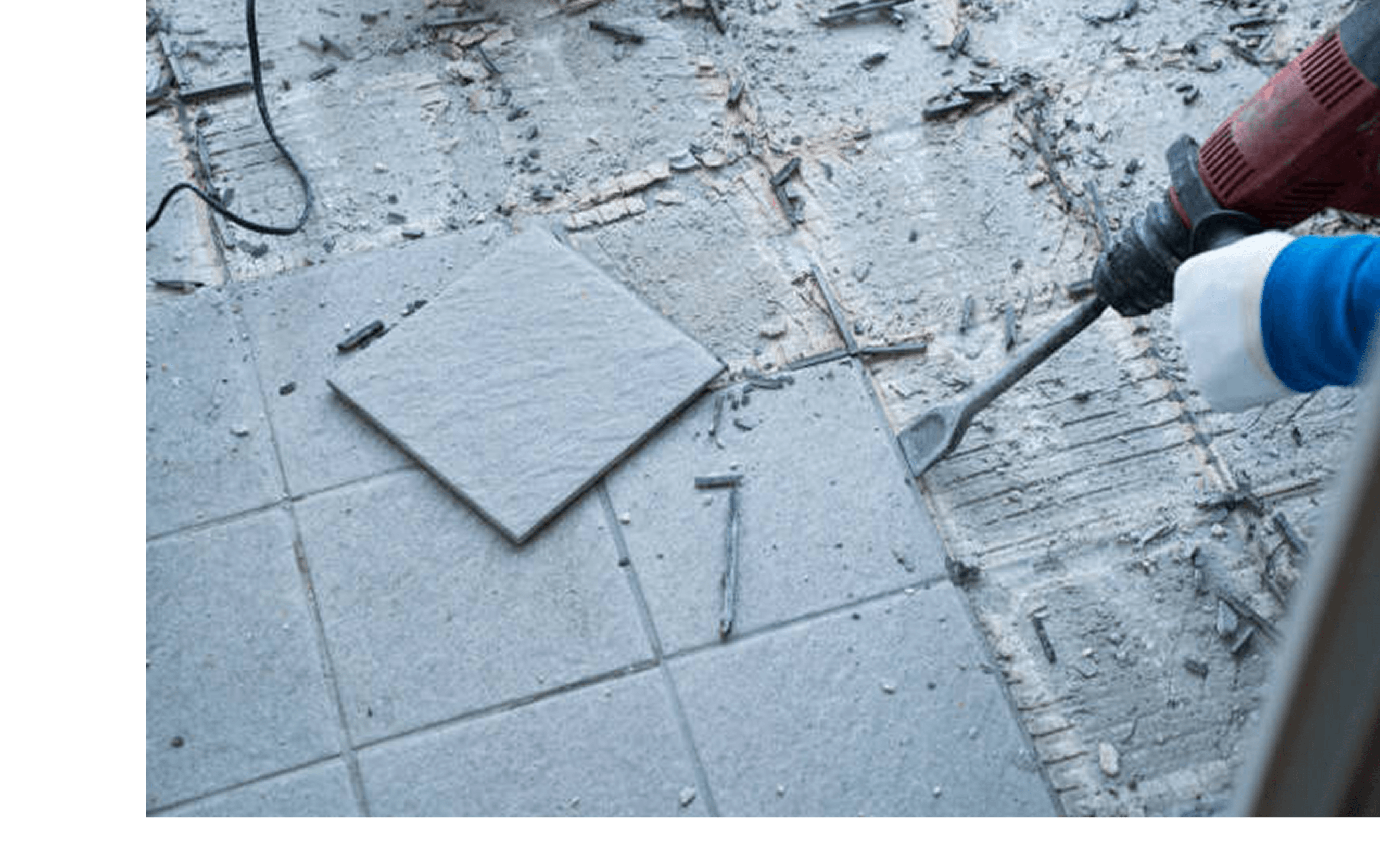
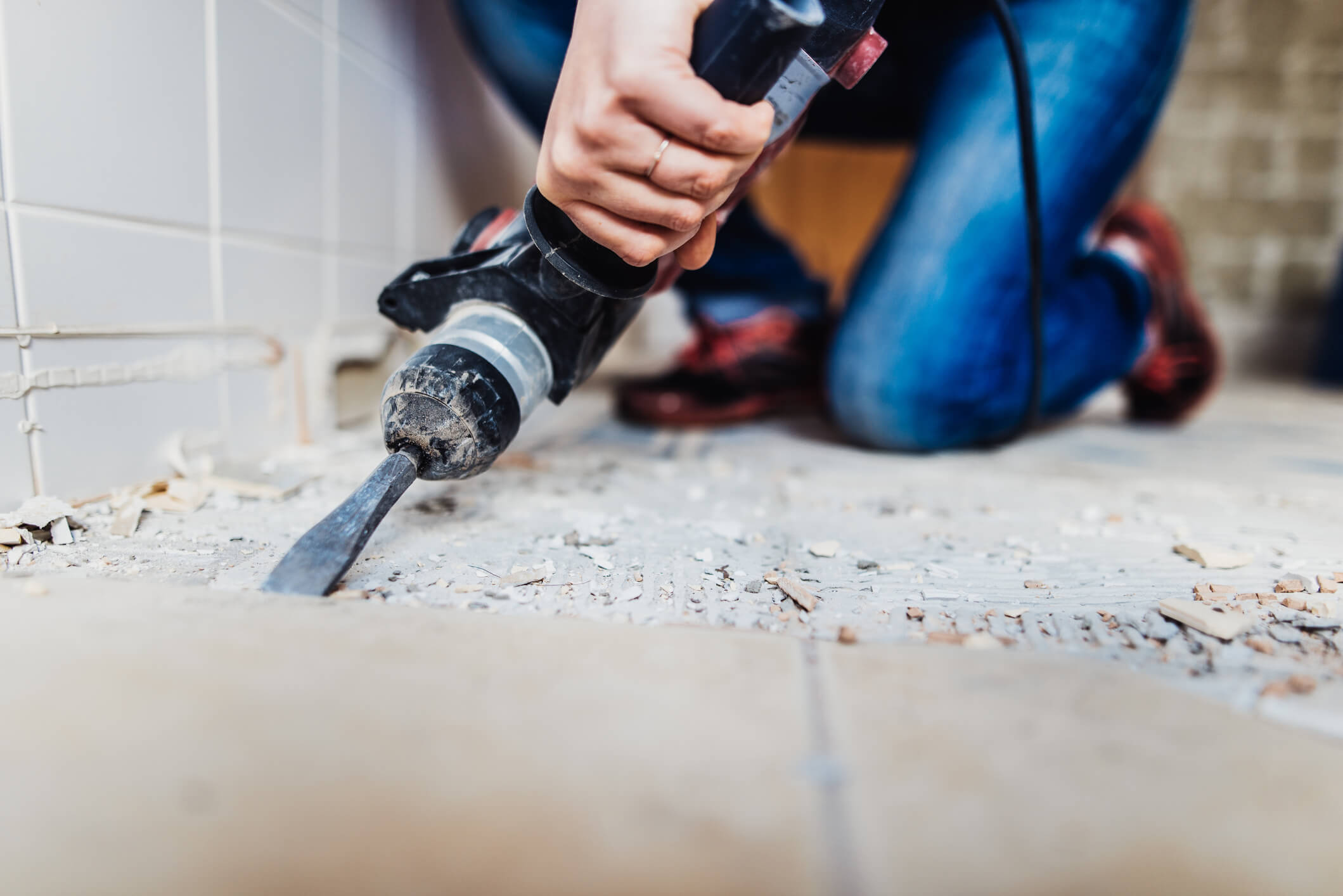
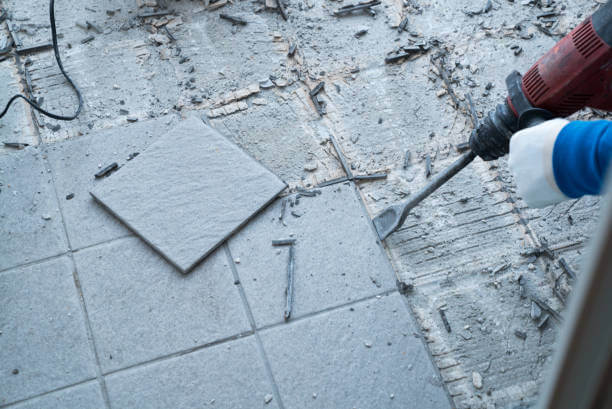
- Manual removal with a hammer and chisel: This is the least expensive option, but it is slow and requires a lot of effort. Removing 100 square feet by hand can take eight to 12 hours or more and creates a lot of dust. While it is affordable, it is also the most disruptive option for your home.
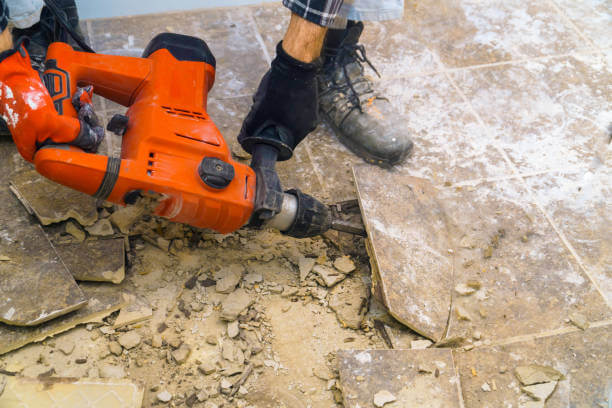
- Power tool removal: This method uses electric chisels and floor strippers to make the job much faster. Removing 100 square feet with power tools usually takes about four to six hours. This is the standard method for most professionals and creates a moderate amount of dust.
- Dust-free removal: This method uses special equipment with built-in high-efficiency particulate air (HEPA) vacuums to capture silica dust as it is created. Removing 100 square feet this way takes one to two hours with heavy machinery. It costs more than standard removal, but it is a good choice for occupied homes, people with allergies or breathing issues, or spaces where dust would be a major problem. Cleanup after the job is also much easier.
Room Size and Layout
Most contractors charge by the square foot for tile removal, but the room’s layout also matters. Tight spaces like small bathrooms, showers, or laundry rooms slow down the work because there is less space for equipment. Tile under cabinets, around toilets, or behind appliances takes more time and care to remove. Some contractors have a minimum service fee for small jobs, so you might save money by combining small projects with other nearby work.
Floor Height and Subfloor Type
Tile installed over a concrete slab is usually easier to remove than tile over a wood subfloor. With wood, there is a higher risk of damaging the underlayment, so the job takes more care and time. On concrete, leftover thinset often needs to be ground down to make the surface flat for new flooring, and this step is sometimes billed separately.
Local Labor Rates
Labor is the main factor in tile removal costs, and rates depend on where you live. Large cities like New York, San Francisco, Boston, and Seattle are at the higher end of the price range. Smaller cities and areas with a lower cost of living are usually closer to $2 to $3 per square foot. Getting three quotes from local contractors is the best way to find out what removal will cost in your area.
Additional Costs to Budget For
The price per square foot is just the starting point. There are often extra costs that may not be included in the first quote. Be sure to ask about these before you sign a contract.
Thinset and Adhesive Removal
After tile is removed, thinset mortar or adhesive residue almost always stays stuck to the subfloor. Grinding or scraping this residue to create a flat surface for new flooring is a separate step. Sometimes it is included in removal quotes, but it can also be billed separately at $1 to $3 per square foot. Check whether your quote includes subfloor prep or just tile removal.
Debris Disposal
Broken tile is heavy and takes up a lot of space. Most professional removal contractors include hauling and disposal in their quote, but some list it as a separate charge. Renting a dumpster for tile waste usually costs $200 to $800 per week, or $130 to $370 for a junk removal service if the contractor does not haul it directly. Always ask whether disposal is included before you compare quotes.
Subfloor Repair
Tile often hides damage that only shows up after removal, such as water damage, soft spots, rot, or cracks in concrete. This is a common source of budget surprises in tile removal projects. Subfloor replacement costs $2.20 to $4.75 per square foot for wood and $3 to $10 per square foot for concrete repair. It is a good idea to ask your contractor to check the subfloor during the estimate and to add a 10% to 15% cushion to your budget for unexpected repairs.
Asbestos Testing and Removal
In homes built before 1980, tile adhesive, though not usually the tile itself, may contain asbestos. This is most common with 9-inch vinyl floor tiles from that era, but other adhesive products were also affected. If you are removing tile in an older home and are unsure of its history, asbestos testing costs $25 to $75 per sample before work begins. If asbestos is found, certified remediation costs $5 to $20 per square foot and must be completed before standard removal can proceed. This is not optional. Disturbing asbestos-containing materials without proper containment is a serious health hazard.
Permits
Most tile removal projects do not need a permit. However, if the removal is part of a larger renovation, especially one with structural, plumbing, or electrical changes, permit fees of $50 to $500 may apply, depending on your local rules.
Mold Remediation
Mold under tile flooring, which is most common in bathrooms, laundry rooms, and basements, requires professional remediation before new flooring is installed. Remediation costs $15 to $30 per square foot for contained areas. If you notice a musty smell before demolition begins, include this in your contingency budget.
Tile Removal Cost by Room
| Room | Size | Average cost |
|---|---|---|
| Half Bathroom | 20 to 40 square feet | $40 to $280 |
| Full Bathroom | 50 to 100 square feet | $100 to $700 |
| Kitchen | 130 to 200 square feet | $260 to $1,400 |
| Laundry Room | 30 to 60 square feet | $60 to $420 |
| Mudroom / Entryway | 40 to 80 square feet | $80 to $560 |
| Open-Plan Kitchen / Living Area | 300 to 500 square feet | $600 to $3,500 |
| Whole-Home Tile Removal | 1,000+ square feet | $2,000 to $7,000+ |
Lower costs assume ceramic or porcelain tile in good condition with standard thinset adhesive. Higher costs reflect natural stone, mud-set installation, dust-free removal methods, or difficult access.
DIY Tile Removal: Is It Worth It?
Tile removal is one of the more DIY-friendly demolition tasks. It does not require a license, and the technique is learnable. However, it is also one of the most physically demanding home improvement jobs, and it is easy to underestimate the hidden costs of doing it yourself.
What DIY Tile Removal Costs
If you already own basic tools, DIY removal costs $1 to $2 per square foot for supplies and disposal. If you need to purchase or rent tools, add the following:
- Floor scraper or electric chisel rental: $50 to $100 per day
- Safety equipment: $30 to $80 for a dust mask rated N95 or higher, eye protection, and knee pads
- Heavy-duty contractor bags for debris: $20 to $40
- Dumpster rental, if needed: $200 to $800
For a 150-square-foot bathroom, a fully equipped DIY removal might cost $400 to $700 for tools, rentals, and disposal. This is not much less than what a professional might charge for the same job, and you may not get the savings you expect.
The Silica Dust Problem
The biggest risk in DIY tile removal is not cutting yourself on broken tile. It is silica dust. Ceramic and porcelain tile contain crystalline silica, and cutting or breaking them creates fine particles that become airborne and are invisible to the naked eye. Inhaling silica dust is a serious respiratory hazard linked to silicosis, which is a progressive and irreversible lung disease.
The Occupational Safety and Health Administration (OSHA) regulates silica dust exposure for professional contractors. Homeowners doing DIY work do not have the same safeguards unless they use proper respiratory protection and dust containment.
A basic N95 mask is the minimum. A half-face respirator with P100 filters is significantly more effective. Dust-free removal equipment, available from specialty contractors, eliminates most of the risk entirely, which is one reason to consider the premium removal method even if it costs more.
When DIY Makes Sense
DIY tile removal makes the most sense when the area is small, usually under 100 square feet, the tile was set with standard thinset instead of a mortar bed, the home will be unoccupied or well-ventilated during and after the work, and you have time to work slowly. Rushing tile removal to meet a contractor’s installation schedule can lead to subfloor damage.
When to Hire a Professional
It is best to hire a professional for tile removal when the area is large, the tile is natural stone or set in a mortar bed, the home is occupied, especially if there are children or anyone with respiratory concerns, the subfloor is wood and the risk of damage is higher, or when the removal is part of a larger project where timing matters.
How to Get an Accurate Tile Removal Quote
Tile removal quotes can vary a lot between contractors, and the lowest quote is not always the most complete. Here is how to compare estimates accurately:
- Ask what is included. Does the quote cover thinset and adhesive removal, or just the tile? Is disposal included or billed separately?
- Clarify the removal method. Is it standard power tool removal, manual removal, or dust-free removal? The method affects both price and disruption.
- Ask about subfloor assessment. Will the contractor assess subfloor condition during the walkthrough and flag potential repair costs before starting?
- Confirm whether asbestos testing is needed. For homes built before 1980, ask whether the contractor requires or recommends testing before proceeding.
- Get at least three quotes. Tile removal pricing can vary by 30% to 50% between contractors in the same market. One quote gives you no baseline for comparison.
- Ask about minimum charges. Some contractors have a project minimum of $200 to $300, regardless of square footage. If your project is small, this affects the effective per-square-foot cost significantly.
Tile Removal and New Flooring: What Comes Next
Tile removal is rarely the end goal. It is usually the first step before your next flooring project. Knowing how removal costs fit into your total budget helps you avoid surprises.
- If you are installing new tile: New tile installation costs $10 to $50 per square foot, depending on tile type, pattern complexity, and labor. Removal cost is in addition to this.
- If you are installing hardwood or engineered hardwood: A flat, properly prepared subfloor is essential. Any thinset residue left after tile removal needs to be ground down before hardwood installation can proceed. Confirm this prep work is included in your removal quote or budgeted separately.
- If you are installing luxury vinyl plank (LVP) or vinyl: Most LVP products require a flat subfloor within 3/16 inch over 10 feet. Post-removal subfloor leveling costs $1 to $5 per square foot, depending on severity.
- If you are installing carpet: Carpet is the most forgiving new flooring type in terms of subfloor prep requirements, making it the most straightforward post-removal installation.
See Modernize’s Flooring Installation Cost Guide for full pricing on replacement flooring options.