
Modernize Water Treatment Product & Company Rating Methodology
We rate water treatment products to help you make smart choices about one of the most important systems in your home. Clean, safe water matters, and so does knowing exactly what you’re getting and who’s installing it.
How We Rate Water Treatment Products and Companies
We use two different sets of criteria depending on what we’re looking at. For products and brands (like reverse osmosis systems, water filters, and softeners), we focus on how well they filter water, whether they’re certified by outside groups, how much they cost to own over time, and how easy they are to maintain. For water treatment companies (the ones who sell, install, and service whole-home systems), we look at their credentials, installation quality, customer reviews, warranty coverage, and how upfront they are about pricing.
Both sets of criteria use the same scoring system. We rate each factor from 1 to 5, then combine them for a final score using the formula below.
Final Score = Σ (Criterion Score × Criterion Weight)
In case you didn’t know: The symbol Σ (sigma) is standard math notation for summation — it means we add up the weighted score for each criterion to arrive at the final score.
Once the final score is calculated, it maps to a star rating:
- 4.75–5.00 stars: Excellent
- 4.25–4.74 stars: Very Good
- 3.50–4.24 stars: Good
- 2.75–3.49 stars: Fair
- 2.00–2.74 stars: Poor
- Below 2.00 stars: Very Poor
A top rating means a product or company stands out compared to similar options. It doesn’t mean it’s perfect. We always compare products and companies within the same category.
For a full explanation of the scoring formula and what each star tier represents, see our Rating Methodology overview.
Water Treatment Products & Brands Rating Methodology
We rate water treatment products (such as reverse osmosis (RO) systems, water filters, and softeners) on how well they actually work, whether outside experts have verified those results, and what it really costs to own them. Manufacturer claims aren’t enough for a high score. We want to see third-party certifications and proof that the product works in real homes.
If a criterion applies differently to a certain product type, we call that out in each section.
How we evaluate water treatment products & brands
Below is a breakdown of each criterion and what we look for when assigning scores.
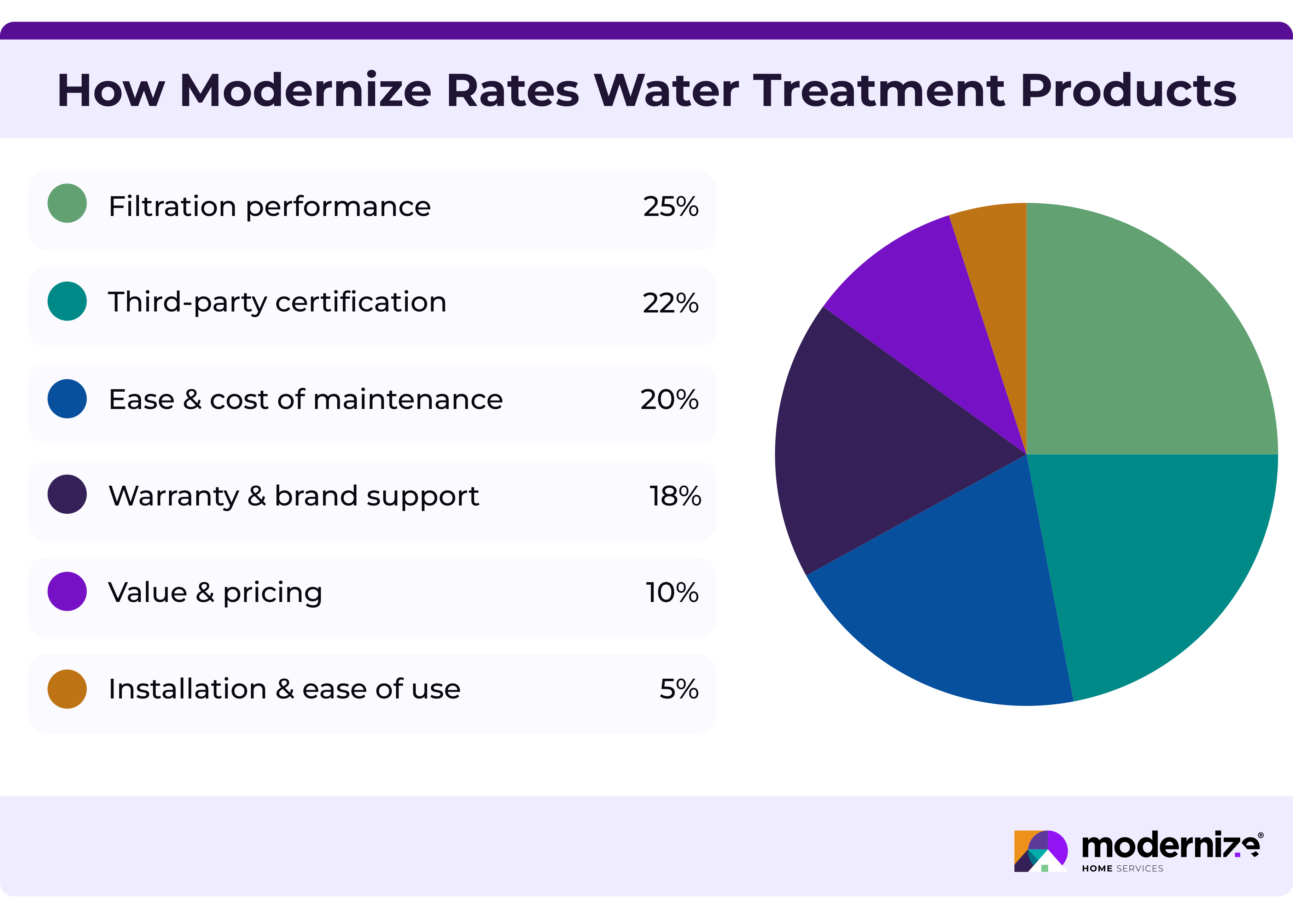
Filtration performance & contaminant reduction (25%)
We look at how well a product removes or reduces contaminants from your drinking water — things like lead, chlorine, PFAS, fluoride, nitrates, and sediment. For RO systems, we check how many contaminants they handle, how well the RO membrane works, and whether the system adds minerals back in. For water softeners, we look at grain capacity, how efficiently the unit regenerates, and how well it handles hard water in different situations. For whole-home filters, we check contaminant coverage and whether the system improves both taste and safety. Products that perform well across more contaminants, at higher reduction rates, and in real homes get higher scores.
Third-party certification (22%)
Independent certification is the clearest sign of quality. We look for certifications from organizations like NSF International, the Water Quality Association (WQA), and IAPMO. These confirm that a product meets standards for removing contaminants, material safety, and durability. Certifications that address health risks (like lead and PFAS) matter more than those that only cover taste and odor. Products with multiple independent certifications for both health and taste get the highest scores. Products with no third-party certification — or only self-reported lab results — score lower, regardless of what the manufacturer claims.
Filter replacement cost & maintenance (20%)
The real cost of a water treatment product goes beyond the purchase price. We look at how much you’ll spend each year on replacement filters or supplies (like salt, media, or membranes), how often replacements are needed, how easy they are to find, and whether the brand offers a subscription or maintenance reminders. For RO systems, we also check how much water gets wasted per gallon filtered. Products with low annual maintenance costs, easy-to-find parts, and long-lasting filters score higher. If a product is cheap to buy but has expensive or hard-to-find filters, we score it lower.
Warranty & brand support (18%)
We check how long the manufacturer’s warranty lasts, what it covers, and how the brand handles customer support. We also look at whether replacement parts will be available down the road. If a product loses support after a few years, that’s a real risk worth factoring in. Brands with long or lifetime warranties, responsive customer service, and a track record of standing behind their products get higher scores.
Value & pricing (10%)
We assess value by comparing total cost of ownership (upfront price plus ongoing maintenance) against filtration performance, certifications, and expected lifespan. A pricier product with full certification, low annual costs, and a long lifespan can be a better deal than a cheaper option with expensive filters, a weak warranty, or few certifications. We score accordingly.
Installation & ease of use (5%)
We check whether you can install the product yourself or need a plumber, how clear the instructions are, and how easy routine maintenance is. Products that are tool-free, come pre-assembled, have clearly labeled filters, and include good support resources score higher. If a product type typically requires professional installation, we don’t count that against it.
Scoring philosophy
We weight independent proof more heavily than marketing claims. A product with strong third-party certification and real-world results will always score higher than one that relies on self-reported data. We compare products within their own category (RO systems to RO systems, softeners to softeners) so the ratings are fair and useful regardless of price or technology.
Water Treatment Companies Rating Methodology
We rate water treatment service companies (the ones who sell, install, and maintain whole-home water systems) by focusing on what matters most: installation quality, system performance, and long-term homeowner satisfaction. In this category, pricing is rarely listed upfront, in-home sales pitches are common, and quality often depends on the individual dealer or technician — not just the brand. That’s why we put extra weight on pricing transparency and warranty quality.
How we evaluate water treatment companies
Below is a breakdown of each criterion and what we look for when assigning scores.
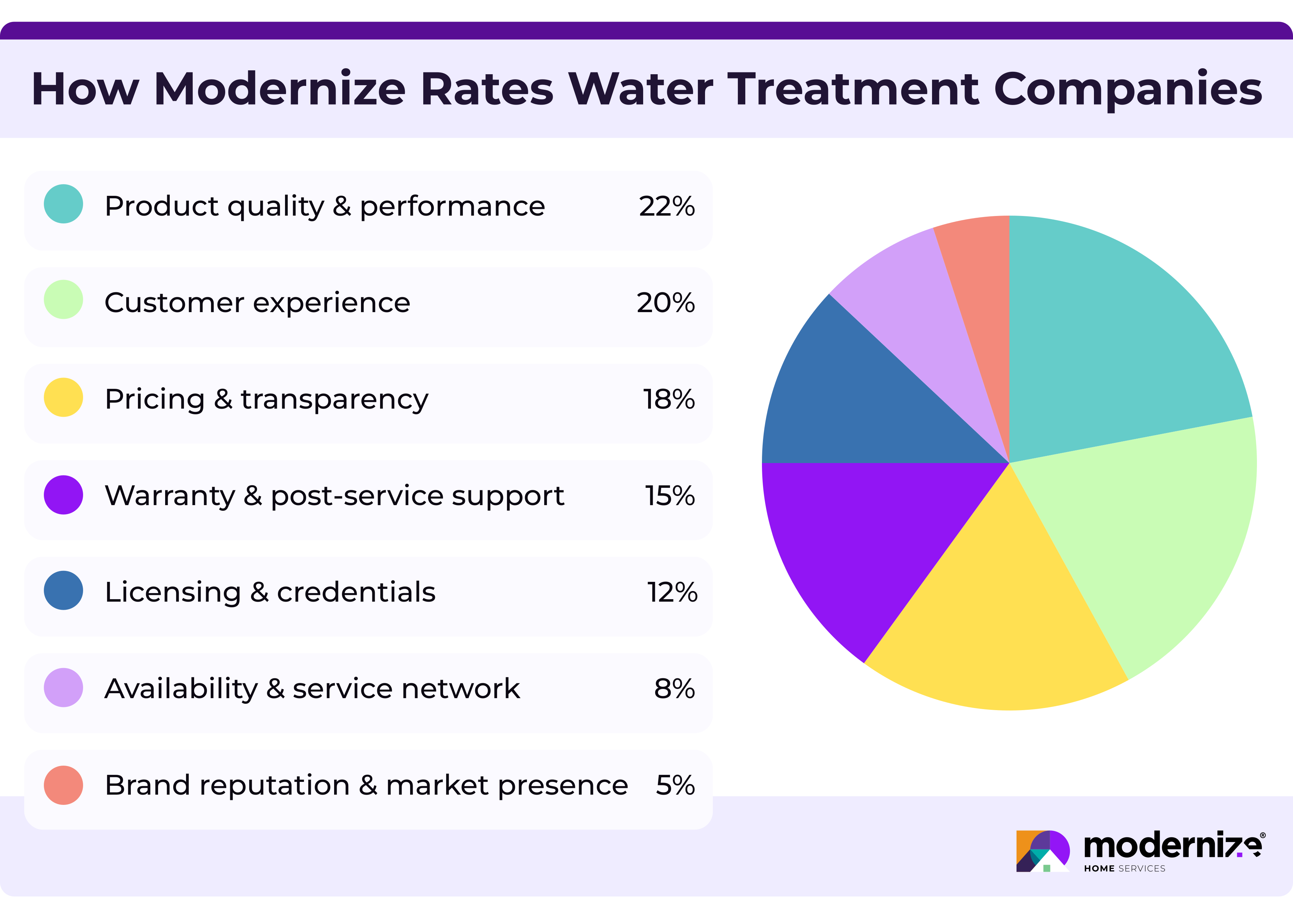
Product quality & system performance (22%)
We look at the quality and range of water treatment systems a company offers. We check whether the products they install are independently certified, how well they work with different water types (like hard water, well water, or city water with high chlorine or PFAS levels), and whether the company conducts a real water test before making a recommendation. Companies that match you with the right certified system based on your actual water test score higher. Companies that push the same expensive system on everyone score lower.
Customer experience (20%)
We measure customer experience by reviewing feedback from multiple sources. We look at overall satisfaction, review volume, and how recent the reviews are. We also pay close attention to whether systems keep performing as promised months or years after installation, and how the company handles service and communication after the sale.
Pricing & transparency (18%)
We put extra weight on pricing transparency because most water treatment companies won’t share costs until they visit your home. We check whether companies provide a written, itemized quote after testing your water, whether they use high-pressure sales tactics, and whether they clearly explain the total cost — including filters, salt, and service contracts — before you commit. Companies that use high-pressure sales, bait-and-switch pricing, or hide ongoing costs score significantly lower.
Warranty & post-service support (15%)
We check how long product and labor warranties last, whether they’re transferable to a new owner, what’s actually covered, and how reliably the company honors claims. For companies that use independent dealers, we also look at what happens to your warranty if your local dealer closes. Companies with manufacturer-backed, transferable warranties that stay valid regardless of dealer status score higher.
Licensing & credentials (12%)
We verify that companies and their technicians hold the right state and local licenses for plumbing and water treatment work, carry proper insurance, and maintain industry certifications from organizations like the WQA. Companies with certified water specialists who can test your water and recommend the right solution score higher than those who primarily send out salespeople.
Availability & service network (8%)
We look at how far a company’s service network reaches, how quickly they can schedule installs and service calls, and how reliable their local technicians are for maintenance and warranty work. For companies that operate through dealers, we care more about the quality and availability of dealers in your area than about national coverage alone. Strong, reliable local service beats a broad national footprint that can’t deliver where you live.
Brand reputation & market presence (5%)
We look at how long a company has been in business, its Better Business Bureau (BBB) rating and complaint history, and any industry awards or recognition it’s received. Companies with a long track record, strong BBB standing, and active WQA membership score higher. Longevity alone isn’t enough, though — a company with a high volume of complaints won’t score above a 3 in this category.
Scoring philosophy
Our water treatment company ratings are designed to reflect what homeowners actually experience — not just what’s promised in a sales pitch. Because this industry is known for high-pressure sales tactics and unclear pricing, we hold companies to a higher standard for transparency than in other home improvement categories. Companies that offer strong products, honest sales practices, clear warranties, and reliable post-installation service earn the best ratings. Companies with high prices, aggressive sales tactics, or inconsistent service score lower, even if their products are good.