If it feels like homeowners are taking longer to say “yes” than they used to, you’re not imagining it. Across the industry right now, contractors are reporting the same pattern: more inquiries and estimate requests, but slower conversion. Rising material costs, economic uncertainty, and a “wait and see” mindset are making even motivated homeowners drag their feet. For contractors, that hesitation is showing up in the numbers: financial concerns remain the leading reason homeowners delay projects, while postponements and cancellations have increased year over year.
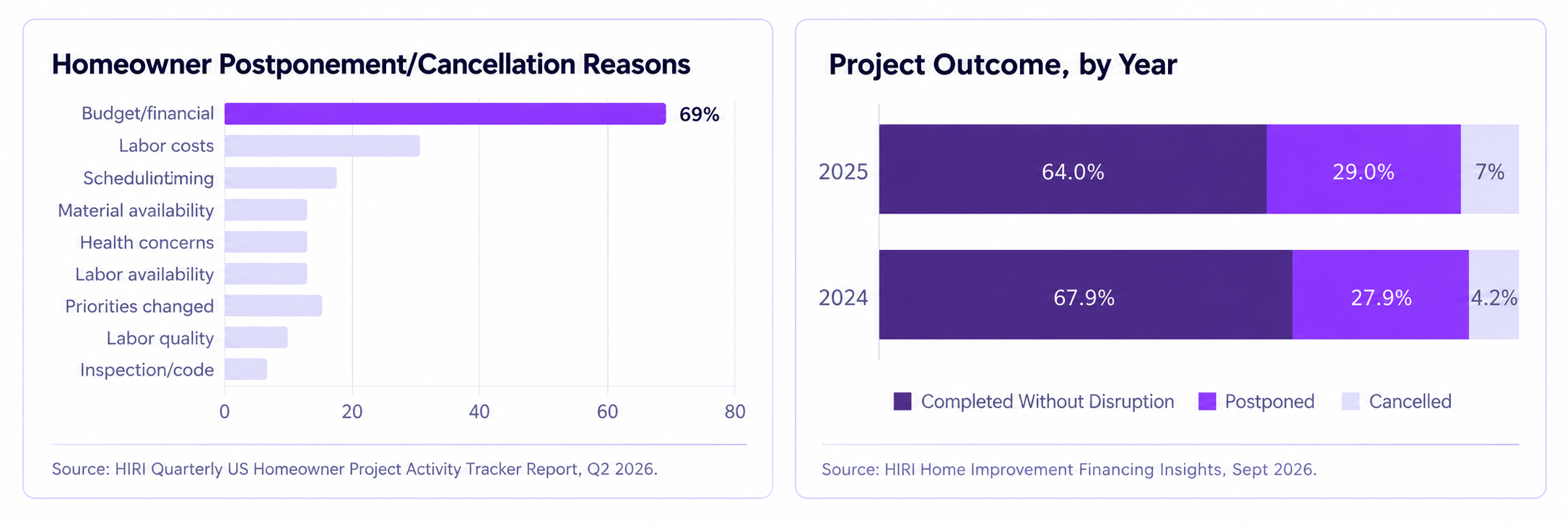
The good news: a longer sales cycle isn’t just something that happens to you. Most of the delay comes from a handful of fixable gaps in how estimates are presented, followed up on, and de-risked for the customer. Here’s how to close them.
Diagnose Where the Hesitation Is Actually Coming From
Not all “I need to think about it” responses mean the same thing. Before you can shorten the cycle, figure out which kind of hesitation you’re dealing with:
Put together, this is the environment your estimate is landing in: a homeowner who wants the work, feels the cost of waiting climbing every month, and still can’t quite talk themselves into writing one large check or opening a high-rate credit card to cover it. That’s not a pricing problem you can discount your way out of. It’s a payment-structure problem.

Ask directly during the estimate visit: “On a scale of 1 to 10, how ready are you to move forward this month?” Anything below an 8 is worth a follow-up question: “What would need to be true for that to be a 9 or 10?” The answer tells you exactly which lever to pull.
Make the First Estimate Do More Work
A lot of stalled deals aren’t held up because of hesitation. They’re stalled because the homeowner walked away from the estimate without enough to act on. A strong estimate should leave them able to say yes without needing to call you back with basic questions.
Include:
- A clear price range or firm number, not just “we’ll follow up with a quote”
- 2-3 tiered options (good/better/best) so the decision is “which one” instead of “yes or no”
- Financing options listed plainly, with approximate monthly payments
- A specific next step and date (“I’ll follow up Thursday to answer any questions”)
Tiered pricing is especially effective because it matches the way people naturally make decisions. Most homeowners don’t want to choose the cheapest option if it feels risky, and they often don’t want the highest option if it feels excessive. They gravitate toward the middle when it feels like the smartest balance of value and cost.
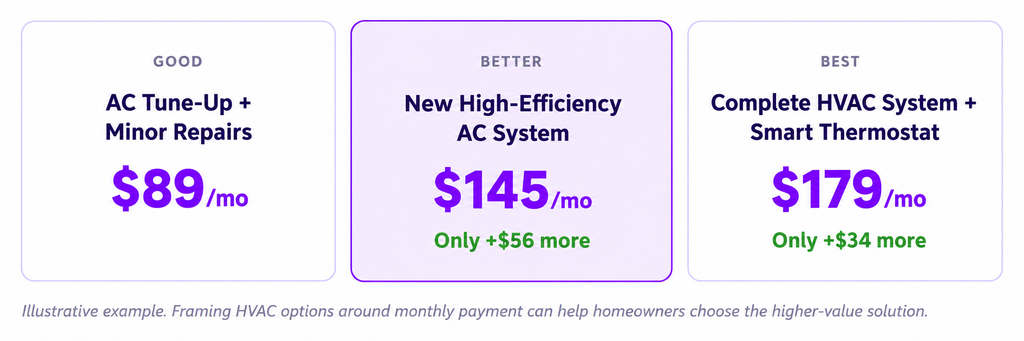
So, instead of deciding whether to buy at all, homeowners can focus on which option fits them best. In other words, a better estimate doesn’t just inform the homeowner, it helps structure the decision.
Follow Up Like You Mean It
This is the single biggest lever most contractors leave on the table. Estimates you don’t follow up on within a few days quietly die, not because the homeowner said no, but because life got busy and nobody nudged them.
A simple follow-up cadence:
Put this on a calendar or in a CRM so it happens automatically. The goal isn’t to be pushy. It’s to be the contractor who’s still there when they’re finally ready, instead of the one they forgot about.
Lower the Risk of Saying Yes
A lot of hesitation isn’t about price. It’s about fear of a bad outcome. Homeowners have heard the horror stories: contractors who disappear mid-job, blow past timelines, or do sloppy work. Every bit of uncertainty you can remove speeds up the decision.
- Put your timeline, payment schedule, and warranty in writing, up front. Don’t wait for them to ask.
- Show recent, local reviews and before/after photos specific to their type of project.
- Offer a start date, even a tentative one: “if we get the signed contract by Friday, we can start the week of the 20th” creates urgency without pressure.
- If licensing, insurance, or certifications are a selling point, say so explicitly rather than assuming they’ll notice.
Give Them a Reason to Decide Now, Not Later
Homeowners who are on the fence will often let a project sit indefinitely unless there’s a real reason to act. You don’t need high-pressure tactics, just genuine, honest urgency:
- Seasonal timing (“this needs to happen before the first freeze to avoid X”)
- Material price increases you’re seeing from suppliers
- Limited scheduling availability for the season
- A time-limited promotion or discount for signing within a set window
The key is that the urgency has to be true. Manufactured scarcity erodes trust fast, and trust is the thing you’re trying to build.
Make Financing Part of the Pitch, Not an Afterthought
With borrowing costs still elevated and homeowners watching their budgets closely, financing conversations can’t be a footnote at the end of the estimate. Bring it up early, explain the options simply, and have a go-to lending partner or two you can point people to on the spot. Homeowners who leave an estimate visit without a clear sense of how they could pay for the project are far more likely to stall out during the “thinking it over” phase.
Want to know how to use financing to unlock bigger projects and higher approval rates? Check out our guide: 7 Ways Financing Can Grow Your Business: From More Approvals to Bigger Tickets, it walks you through how to position financing as a conversion tool, not a backup option.
The Bottom Line
Shortening your sales cycle isn’t about pressuring people into faster decisions. It’s about removing the friction, uncertainty, and inertia that cause good leads to go quiet. Diagnose the real hesitation, make your estimate easier to say yes to, follow up consistently, and reduce the perceived risk of hiring you. Do those four things well, and you’ll close more of the jobs you’re already bidding on, without spending an extra dollar on lead generation.
Ready to Convert More Leads Into Contracts?
Your sales cycle is already in motion. The next step is making sure financing doesn’t become a reason to stall.
Contact 360 Finance Today. Our lending specialists work with contractors just like you to streamline approvals and close bigger deals. Let’s talk about what’s possible for your business.