Ready to start your project?
Enter your ZIP to find local pros.
Flooring
Types of Carpet: Fibers, Styles, and Pile Guide
On this page
Types of carpet fibers
Carpet styles and pile heights
Best padding for carpet
The most common carpet fibers are nylon, polyester, triexta, olefin (polypropylene), wool, and acrylic. The type of fiber affects how your carpet performs, including its durability, stain resistance, softness, and lifespan. Pile style, whether cut, loop, or cut-and-loop, also changes how the carpet looks and feels. Both fiber and pile style matter and work together. For example, the best carpet for a busy hallway is not the same as what you’d want in a primary bedroom.
We help homeowners make confident decisions through our reliable, up-to-date, and unbiased information and average project costs. All of our content is thoroughly reviewed and fact-checked by our team of home improvement experts. Learn more about how we maintain these values.
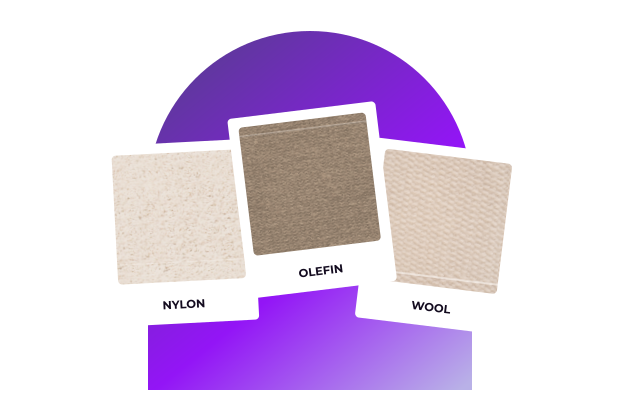
Nylon is the most popular carpet fiber in the U.S. and is used in about 90% of homes. Its biggest advantage is resilience. Nylon usually keeps its shape and does not flatten from foot traffic or weight. It is easy to maintain, keeps its color, and resists insects, mold, mildew, rot, stains, and abrasions. These qualities make nylon a good choice for almost any room, especially high-traffic areas.
Nylon is not the cheapest option. It costs more per square foot than polyester or olefin, but its longer lifespan often makes it worth the extra money. Mid- to high-quality nylon usually lasts 12 to 15 years in a typical home.
Material cost: $5 to $8 per square foot
Lifespan: 12 to 15 years
Best for: Living rooms, hallways, stairs, households with kids or pets
Pros
Most durable synthetic fiber
Maintains fiber height under traffic
Resistant to mold, mildew, and abrasion
Holds color well over time
Cons
More expensive than polyester or olefin
Requires stain treatment for best protection
Triexta (SmartStrand)
Triexta is the newest major carpet fiber and has been a major shift in residential carpet over the past 20 years. Often sold as SmartStrand, triexta combines the strengths of polyester and nylon. It is durable, resists stains and soil, is easy to clean, keeps its color, and does not fade easily. Triexta is made from a polymer, with 37% coming from corn, a renewable resource.
Triexta’s stain resistance is built into the fiber, not just added on the surface. This means it will not wear off over time like some treatments on nylon. Some triexta carpets come with warranties of 20 to 25 years, which shows that manufacturers trust their durability. Triexta is a great choice for homes with kids, pets, or a high chance of spills.
Material cost: $4 to $7 per square foot
Lifespan: 15 to 25 years, depending on warranty and brand
Best for: Family rooms, households with young children or pets, high-spill environments
Polyester is the second most common carpet fiber in homes. It feels softer than nylon at similar prices and comes in bright colors. Polyester naturally repels water-based stains, so it does not need extra treatments. Some polyester carpets are made from recycled plastic bottles, making them a more eco-friendly synthetic option.
Polyester does not keep its shape as well as nylon when exposed to traffic and weight. This is its main drawback. It works best in low-traffic areas, where its softness is a benefit and flattening is less of a problem.
Material cost: $1 to $5 per square foot
Lifespan: 5 to 15 years
Best for: Bedrooms, guest rooms, low-traffic living spaces
Pros
Very soft underfoot
Naturally stain-resistant to water-based spills
Affordable
Available in recycled (PET) versions
Cons
Flattens under heavy traffic
Less resilient than nylon or triexta
Can absorb oil-based stains
Olefin (Polypropylene)
Olefin is solution-dyed during manufacturing, so it keeps its color well and resists fading from sunlight. This is a big advantage in rooms with lots of direct sunlight or in outdoor and semi-outdoor spaces. Olefin also resists water and stains, making it a good choice for indoor and outdoor carpets. It is the main fiber used in commercial loop-pile, or Berber-style, carpets.
Olefin’s main drawback is that it attracts and holds onto oil. Because it is oleophilic, foot traffic leaves natural skin oils in the fibers, which then collect dirt and can be hard to clean. For this reason, olefin is better for low-traffic areas, basements, and outdoor spaces instead of main living areas.
Material cost: $1 to $3.50 per square foot
Lifespan: 3 to 10 years in residential use
Best for: Basements, covered outdoor spaces, sunrooms, low-traffic areas
Pros
Excellent UV and fade resistance
Mold- and mildew-resistant
Very affordable
Can be cleaned with bleach-based solutions
Cons
Attracts and holds oils — collects dirt
Less resilient than nylon
Shorter lifespan in high-traffic use
Wool
Wool is the classic luxury choice for soft flooring. This natural fiber allows for more design, detail, and color options than most tufted carpets. Wool resists stains if treated quickly and is naturally flame-retardant. It is also the only major carpet fiber that is completely natural, renewable, and biodegradable.
Wool does have some drawbacks to consider before buying. It can be damaged by insects, unlike synthetic fibers, and may shed, especially when new. Wool is also prone to mildew in humid areas. It is the most expensive carpet fiber, with top grades costing up to $26 per square foot just for materials. However, if you care for it properly and use it in the right environment, wool carpet can last 25 to 50 years, much longer than any synthetic option.
Material cost: $5 to $26 per square foot
Lifespan: 25 to 50 years with proper care
Best for: Formal living rooms, bedrooms, low-humidity environments where longevity is a priority
Pros
Unmatched lifespan when maintained
Natural, renewable, biodegradable
Inherently flame-retardant
Naturally stain-resistant if treated promptly
Cons
Most expensive fiber option
Susceptible to insect damage
Prone to mildew in humid environments
Can shed, especially when new
Acrylic
Acrylic is often called synthetic wool because it looks and feels like wool but costs less. It resists moisture, mildew, fading, stains, and static electricity. The main drawback is durability. Acrylic is not as strong as nylon or wool, so it is best for low-traffic areas. Acrylic is also less common than other fibers and can be damaged by harsh cleaning products if not handled with care.
Material cost: $2.50 to $4 per square foot
Lifespan: 5 to 15 years
Best for: Dining rooms, home offices, low-traffic rooms where wool aesthetics are desired at a lower price
Types of Carpet Pile
Pile refers to how the carpet surface is made, including how the fibers are attached to the backing and whether the loops are cut or left whole. The type of pile affects how the carpet looks, feels, wears over time, and how much it shows footprints and vacuum marks.
Loop Pile
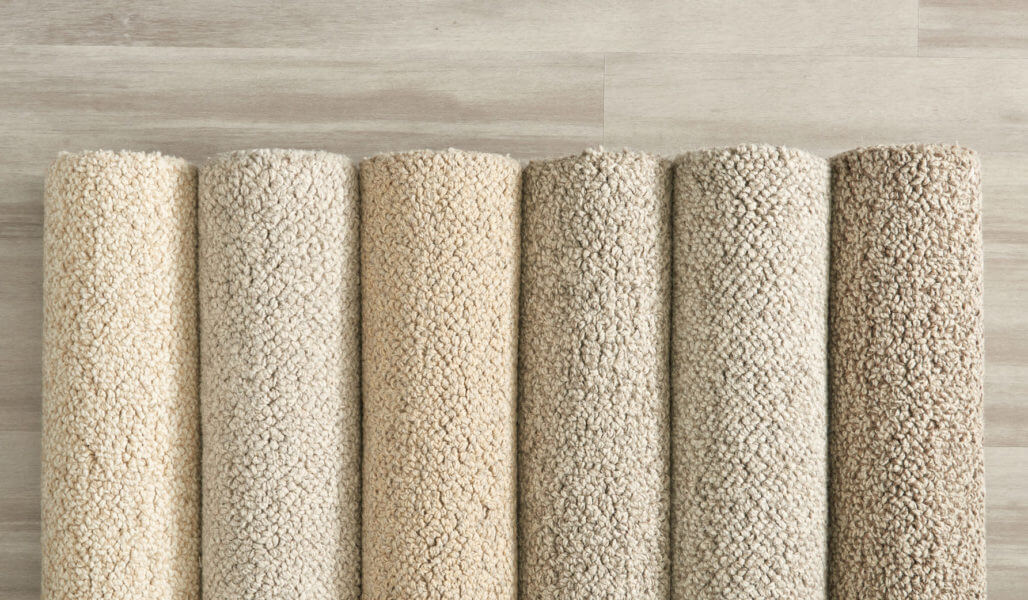
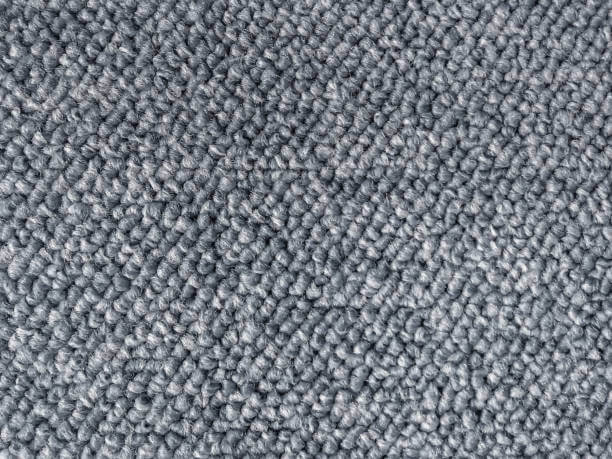
In loop pile carpet, the fiber loops are left whole and not cut at the tip. This creates a dense, low-profile, and very durable surface. Loop pile resists crushing better than cut pile and is easier to clean, so it is often used in high-traffic commercial and residential spaces. The loops are usually the same height, creating a flat, uniform surface.
Level loop (Berber): All loops are the same height, creating a flat, uniform surface. This is one of the most durable everyday carpet constructions. It resists footprints and vacuum marks and is best for hallways, stairs, and high-traffic areas.
Patterned loop (multi-level loop): Loops of varying heights create texture and visual pattern. This style hides footprints and vacuum marks better than level loop. It adds design interest without sacrificing durability.
Limitations of loop pile: Loop pile is not recommended in homes with cats. Pet claws can snag and pull the loops, causing damage that is hard to repair. A cut pile or cut-and-loop style is a better choice for homes with cats.
Cut Pile
In cut pile carpet, the loops are cut at the tip, so the fibers stand upright. Cut pile feels softer and more luxurious than loop pile, which is why it is common in homes. However, cut pile is usually less durable and more likely to show footprints, vacuum marks, and wear over time. How much this happens depends on the specific style of cut pile.
Saxony: Dense, upright fibers with a smooth, formal appearance. Very soft underfoot. It shows footprints and vacuum marks easily, so it is best for formal, low-traffic rooms.
Plush (velvet cut pile): Shorter, more densely packed fibers than Saxony. Very luxurious feel. It is even more likely to show footprints and wear, so it is best for formal areas with very light traffic.
Textured cut pile: Fibers are twisted into spiral strands of different lengths. This texture hides footprints and vacuum marks well, so it works in high-traffic rooms without losing softness. It is often called trackless carpet for this reason and is the most practical cut pile style for everyday family use.
Frieze (tight twist): Heavily twisted yarn creates a curly, casual texture. It is highly durable for a cut pile style, hides footprints well, and suits contemporary interiors. Sometimes it is marketed as casual texture, short shag, or cable carpet.
Cable cut pile: Long, thick fibers give a plush, luxurious feel. It shows footprints easily and is best reserved for low-traffic formal rooms or bedrooms.
Cut-and-Loop Pile
Cut-and-loop pile combines cut and looped fibers at different heights to create sculpted patterns and extra texture. This style hides footprints and vacuum marks better than most cut pile carpets and looks more interesting than level loop. It is a practical middle-ground choice for living rooms and areas with moderate traffic.
Carpet Pile Height: Low, Medium, and High
Pile height is the length of the fibers from the backing to the tip. It affects how the carpet feels and how well it performs.
Low pile (under 1/4 inch): Dense and flat. It is the easiest to clean, most durable underfoot, and best for high-traffic areas, stairs, and homes with mobility aids where a flat surface is important.
Medium pile (1/4 to 1/2 inch): Offers a good balance of comfort and durability. It is the most practical choice for most rooms in the home. Most people prefer medium pile because it is comfortable and easy to vacuum. The best density for medium pile is between 45 and 55 ounces, which gives a good mix of price, comfort, durability, and appearance.
High pile (over 1/2 inch): This is the softest and most luxurious underfoot, but it is the least durable, hardest to clean, and most likely to get crushed or matted. It is best for bedrooms and formal rooms with minimal foot traffic.
Types of Carpet Padding
Padding is the base under your carpet and directly affects how the carpet feels and how long it lasts. Thicker, denser padding adds cushion, improves insulation, reduces noise, and helps prevent the carpet backing from wearing out too soon against a hard floor.
Rebonded foam: This is the most widely used padding type, making up about 85% of all carpet underlayment installations. It is made from recycled scrap foam, giving it a multi-colored look, and offers good density and cushion at a budget-friendly price.
Frothed foam (memory foam): This type is denser and more uniform than rebonded foam. It provides better cushion and a more premium feel underfoot. It is common in higher-end residential installations.
Waffle and slab rubber: These are heavier and more durable than foam padding. They tend to last longer, making them a strong choice for high-traffic areas, but they have a higher upfront cost.
Synthetic fiber padding: Made from recycled fiber materials, this is an eco-friendly option with good moisture resistance. It is common in commercial applications and is becoming more popular in homes.
When choosing padding, look for one about 1/2 inch thick with a density of 6 to 8 pounds per cubic foot for most homes. Thicker is not always better. Padding that is too thick under low-pile carpet can cause the seams to wear out early. Your flooring contractor can help you choose the right padding for your carpet.
Padding cost: $0.50 to $1 per square foot, typically installed as part of the overall carpet quote.
Best Carpet for Each Room
The right carpet depends on the room’s traffic, moisture level, and comfort needs. Matching the fiber and pile style to the space will help your carpet last longer and look better over time.
High-traffic areas (hallways, stairs, family rooms): Nylon or triexta fiber in a loop pile or textured cut pile style. Prioritize density and durability over plushness. Low- to medium-pile height.
Bedrooms: Polyester or wool in a Saxony, plush, or high-pile cut style. Softness is the priority, and traffic demands are lower. Medium- to high-pile height.
Living rooms: Nylon or triexta in a textured cut pile or cut-and-loop style. This balances durability with comfort. Medium-pile height.
Basements: Olefin or solution-dyed nylon. Moisture and mildew resistance are the priority. Low- to medium-pile height.
Homes with kids or pets: Nylon or triexta with built-in or treated stain resistance. Avoid loop pile in homes with cats. Choose darker or patterned styles that hide staining and wear.
Formal rooms (dining rooms, home offices): Wool or acrylic for a refined appearance. Traffic is low enough that softer, less durable fibers are appropriate.
How Much Does Carpet Cost?
Total carpet cost depends on fiber type, pile style, padding, and installation. As a general range: