Ready to start your project?
Enter your ZIP to find local pros.
Flooring
Types of Hardwood Flooring: A Complete Guide by Species
On this page
Solid vs. engineered hardwood floors
Most popular types of hardwood
Cost per square foot to install
Some of the most popular hardwood flooring choices are oak, maple, hickory, walnut, ash, cherry, pine, and mahogany. Oak is especially common in the U.S., accounting for about two-thirds of all hardwood floors sold. When picking a wood species, think about how much foot traffic your space will have, the color and grain you prefer, how hard the wood is, and your budget.
We help homeowners make confident decisions through our reliable, up-to-date, and unbiased information and average project costs. All of our content is thoroughly reviewed and fact-checked by our team of home improvement experts. Learn more about how we maintain these values.
Before you pick a wood species, it’s useful to know that hardwood flooring comes in three main types: solid hardwood, engineered hardwood, and reclaimed hardwood. Choosing the right type for your space will make it easier to decide which options fit your needs.
Solid Hardwood
Solid hardwood is made from a single piece of wood, usually about 3/4 inch thick, and has a tongue-and-groove edge for easy installation. You can sand and refinish it five to 10 times over its life, so it can last for generations if cared for properly. It’s best to install solid hardwood in dry, climate-controlled rooms above ground level. Avoid using it directly over concrete or in basements, since moisture can cause problems.
Material cost: $4 to $15 per square foot for domestic species; $10 to $20+ for premium imports
Best for: Living rooms, dining rooms, bedrooms, hallways
Pros
Can be refinished many times
Lifespan of 50 to 100+ years
Increases home resale value
Cons
More expensive than engineered
Expands and contracts with humidity
Not suitable below grade or over concrete
Engineered Hardwood
Engineered hardwood has a real hardwood layer on top of several layers of plywood or high-density fiberboard. This design makes it more stable than solid wood, so it does not expand or contract as much with changes in temperature or humidity. You can install engineered hardwood below ground level, over concrete, or over radiant heat systems, which are places where solid wood is not suitable.
How many times you can refinish engineered hardwood depends on the thickness of the top wood layer. If it’s 2 millimeters or thicker, you can usually refinish it once or twice. Thinner veneers, under 1 millimeter, are best for light maintenance rather than full refinishing.
Material cost: $3 to $12 per square foot
Best for: Basements, over concrete slabs, rooms with radiant heat, high-humidity climates
Pros
More moisture- and humidity-resistant
Can go where solid hardwood cannot
Lower material cost
Cons
Fewer refinishing cycles than solid hardwood
Shorter lifespan on thinner veneers
Not all products are equal — veneer thickness varies widely
Reclaimed Hardwood
Reclaimed hardwood is taken from old buildings such as barns, factories, warehouses, and demolished structures, then remilled for flooring. Because reclaimed wood has dried and settled over many years, it’s often more stable than new wood. Its unique look, including saw marks, nail holes, and weathered texture, is a big part of its charm and cannot be matched by new lumber.
You can find reclaimed wood at salvage yards and specialty lumber dealers. Prices vary a lot depending on the type of wood, its condition, and how much is available, but it usually costs more than new wood. Installing reclaimed boards may take extra preparation, depending on their condition and consistency.
How Is Wood Hardness Measured? The Janka Scale Explained
The Janka Hardness Scale measures how much force is needed to press a steel ball halfway into a piece of wood. Higher numbers mean the wood is harder and better at resisting dents and scratches. This scale is the standard for comparing the durability of different wood species.
As a practical guide:
Under 1,000: Soft woods, best for low-traffic rooms such as bedrooms.
1,000 to 1,500: Medium hardness, suitable for most homes.
Over 1,500: Hard woods, ideal for high-traffic areas and homes with pets or children.
Red oak (1,290) is the industry benchmark. Most domestic species are compared against it. The table below lists Janka ratings alongside cost for every major species covered on this page.
Types of Hardwood Flooring by Species
Each hardwood species has its own color, grain pattern, hardness, and price point. Comparing them side by side can help you narrow down the best fit for your home and lifestyle.
Species
Janka Rating
Material Cost (Per Sq. Ft.)
Best For
Oak (red)
1,290
$2 to $6
Most rooms, high-traffic areas
Oak (white)
1,360
$5 to $8
Modern interiors, high-traffic areas
Maple
1,450
$3 to $10
High-traffic, light-colored rooms
Hickory
1,820
$5 to $15
Rustic homes, very high-traffic areas
Ash
1,320
$9 to $13
Modern interiors, high-traffic areas
Walnut
1,010
$4 to $9
Bedrooms, low- to medium-traffic areas
Cherry (American)
950
$3 to $12
Low-traffic rooms, bedrooms
Pine
690 to 890
$3 to $6
Budget projects, low-traffic rooms
Mahogany (imported)
2,200
$8 to $18
Accent areas, dry low-traffic rooms
Brazilian cherry
2,350
$10 to $20+
High-traffic, premium installations
For a full breakdown of installed costs including labor, underlayment, subfloor prep, and removal of existing flooring, see our Hardwood Floor Cost Guide.
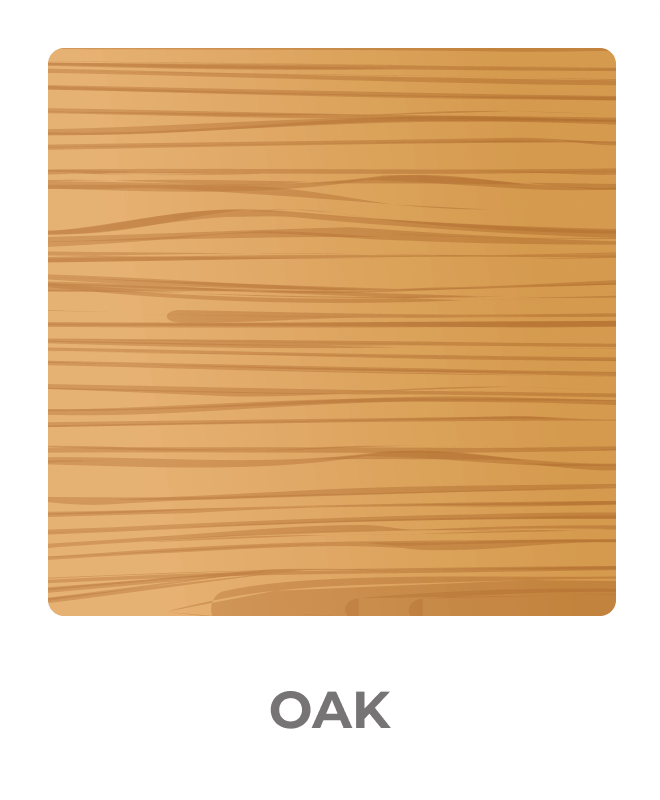
Oak
Best for: High-traffic areas like living rooms, hallways, dining rooms, and kitchens.
Oak is the most popular hardwood flooring in the United States, making up about two-thirds of all hardwood floors sold. There are two main types: red oak and white oak, each with its own look and features.
Red Oak
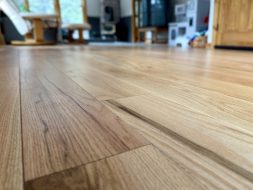
Red oak has a warm color that ranges from pinkish to reddish-brown and features a bold, flowing grain pattern. It’s the most common and affordable domestic hardwood. Its open grain takes stain well, so it’s a great choice if you want to customize the color.
Janka rating: 1,290.
Material cost: $2 to $6 per square foot.
White Oak
White oak is harder than red oak and has a cooler color without pink tones. Its grain is tighter and more even, giving it a clean, modern look. White oak is popular in contemporary homes and is more moisture-resistant than red oak because of its closed grain.
Janka rating: 1,360.
Material cost: $5 to $8 per square foot.
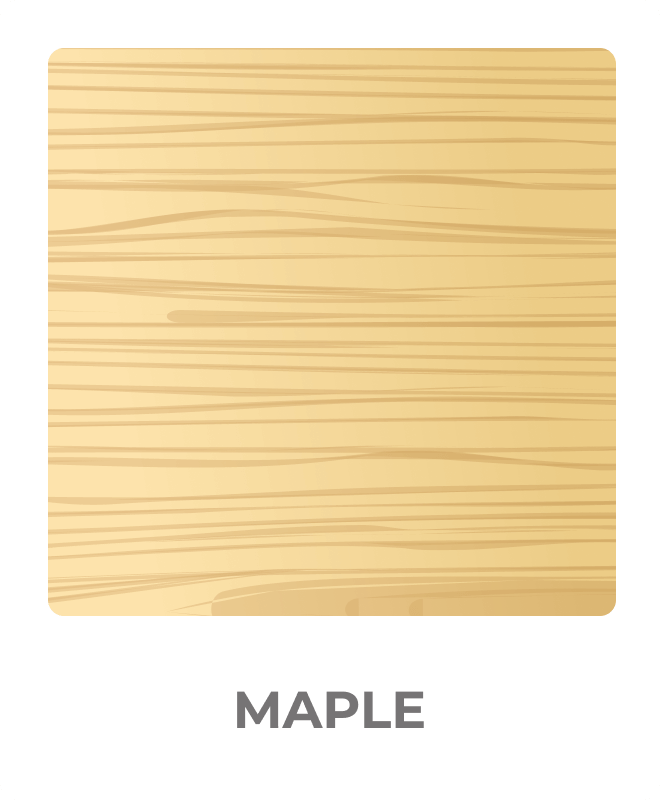
Maple
Best for: High-traffic areas, kitchens, rooms where a light color palette is the goal.
Maple is one of the hardest domestic hardwoods, with a Janka rating of 1,450, so it’s tougher than both red and white oak. Its pale, creamy color and smooth, even grain are popular in modern spaces and rooms where you want a light, airy feel.
Because maple’s grain is so tight, it can be tricky to stain evenly. Blotching can happen without careful preparation and a good conditioner. For most maple floors, a clear or light finish that highlights the natural color works best.
Janka rating: 1,450
Material cost: $3 to $10 per square foot for solid hardwood; $2.50 to $9 per square foot for engineered hardwood
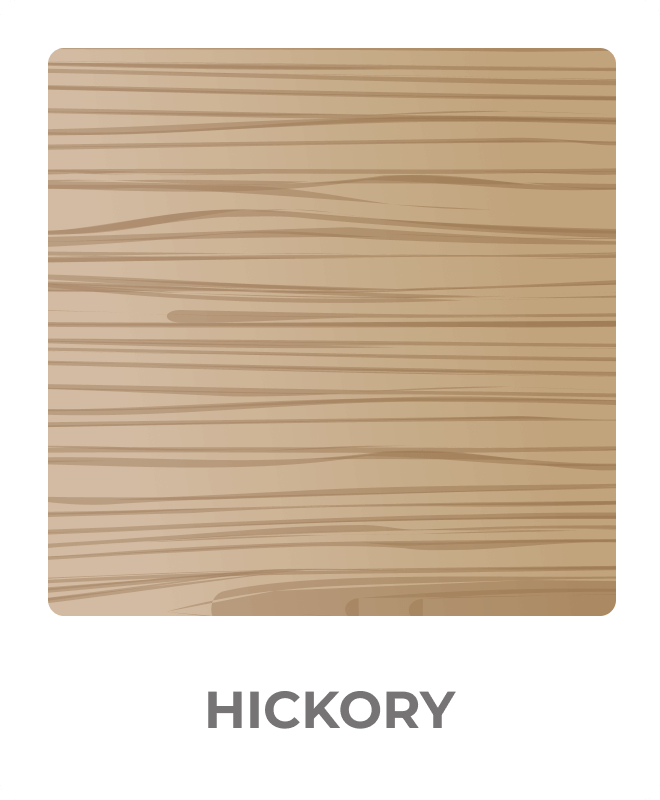
Hickory
Best for: Rustic, farmhouse, or craftsman-style homes; high-traffic areas; households with pets or heavy use.
Hickory is the hardest domestic hardwood you can buy in the U.S., with a Janka rating of 1,820, much higher than oak or maple. Its color ranges from pale cream to deep brown, and it often has knots that give it a rustic look. Some people love this style, while others may not.
Hickory is great for busy homes with pets or kids and for areas that get a lot of use. Because it’s so hard, it can be tougher to cut and nail during installation, which might make labor a bit more expensive.
Janka rating: 1,820
Material cost: $5 to $15 per square foot
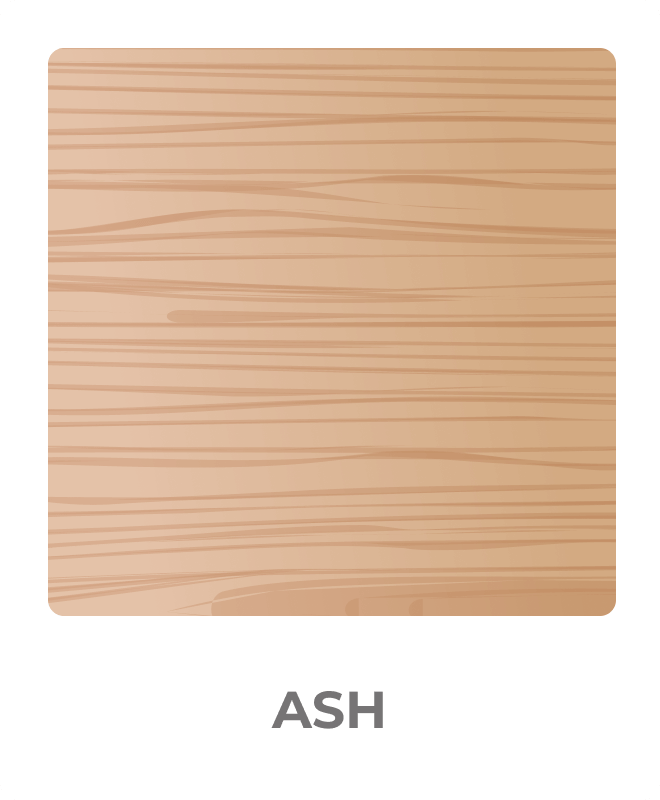
Ash
Best for: Contemporary and transitional interiors, high-traffic areas, homeowners who want strong grain character with oak-level durability.
Ash has a Janka rating of 1,320, so it is a bit harder than red oak. It has a bold, open grain with strong lines, and its color ranges from pale beige to light brown, sometimes with darker streaks.
Ash takes stain well and is often used for modern looks with darker finishes. However, the emerald ash borer insect has reduced the supply of North American ash, so prices have increased in recent years.
Janka rating: 1,320
Material cost: $9 to $13 per square foot
Walnut
Best for: Bedrooms, home offices, dining rooms, low- to medium-traffic areas where visual richness is the priority.
American black walnut is known for its rich, dark chocolate-brown color that stays consistent from board to board, along with a straight, fine grain. With a Janka rating of 1,010, it is softer than oak and works best in rooms with moderate foot traffic. Its even color and subtle grain give it a refined, modern look compared to hickory or oak. Keep in mind that walnut’s color can lighten over time if it gets a lot of sunlight.
Janka rating: 1,010
Material cost: $4 to $9 per square foot
Cherry
Best for: Bedrooms, studies, formal rooms with low foot traffic for American cherry; high-traffic premium installations for Brazilian cherry.
American Cherry
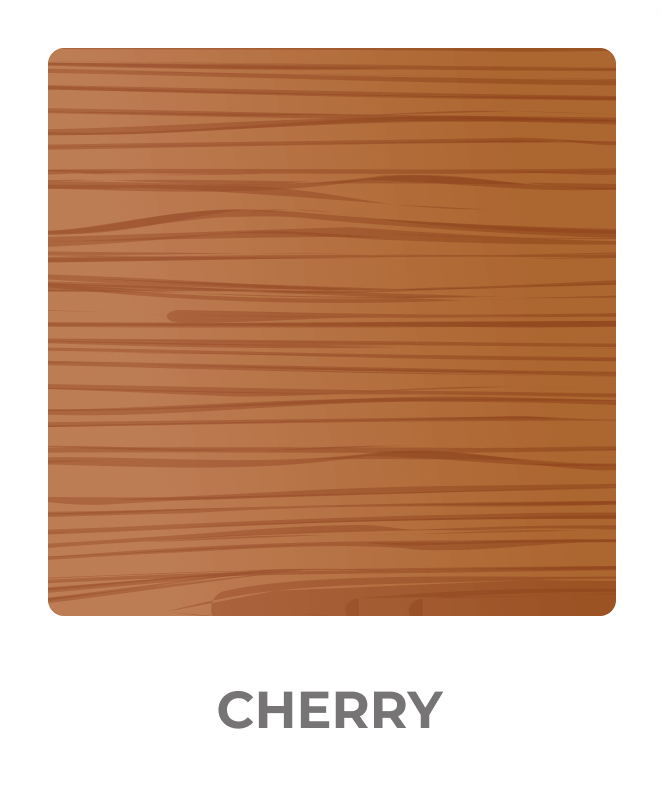
American cherry starts as a warm, pinkish-brown and darkens over time with age and sunlight, eventually turning a deep, reddish-brown.
This natural color change is one of cherry’s best features and is why it often looks better as it ages. With a Janka rating of 950, cherry is softer than most hardwoods, so it’s best for rooms with less foot traffic. It is usually cut into wide boards to highlight its flowing grain.
Janka rating: 950
Material cost: $3 to $12 per square foot
Brazilian Cherry (Jatoba)
Brazilian cherry, also called Jatoba, is a different species from American cherry. It’s much harder, with a Janka rating of 2,350, making it one of the toughest flooring choices. Its deep reddish-brown color also gets richer over time. As an imported wood, it costs more and may take longer to get.
Janka rating: 2,350
Material cost: $10 to $20+ per square foot
Pine
Best for: Low-traffic rooms, historic or farmhouse-style homes, budget-conscious projects where character is valued over dent resistance.
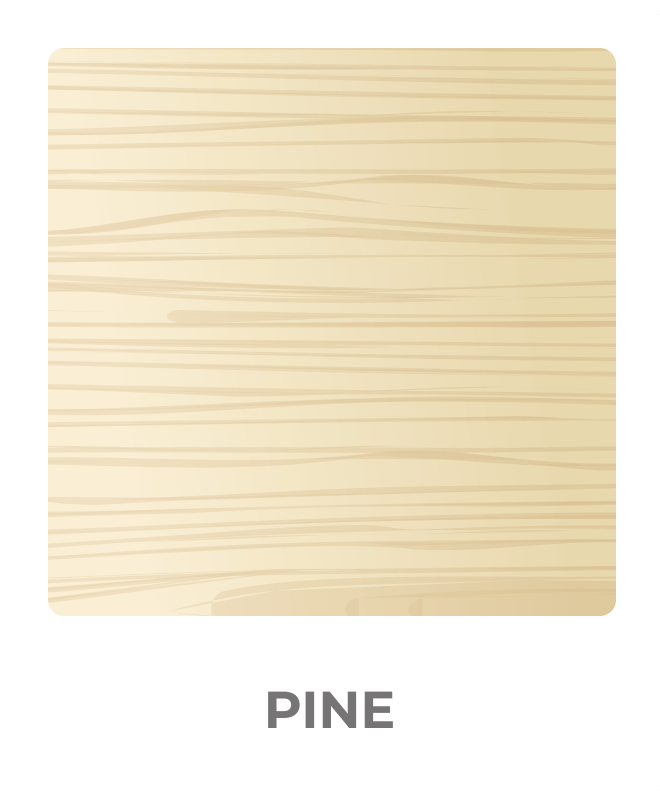
Pine is actually a softwood, not a true hardwood, but it’s still a popular flooring choice, especially in historic and colonial-style homes where its wide planks and knots add character.
With a Janka rating between 690 and 890, pine dents and scratches more easily than hardwoods. However, many people like the patina that develops over time, and pine is the most budget-friendly wood flooring you can buy.
Heart pine, which comes from old-growth buildings, is denser and harder than new pine and is now popular for reclaimed flooring. It’s different from regular pine flooring.
Janka rating: 690 to 890
Material cost: $3 to $6 per square foot
Mahogany
Best for: Formal rooms, home offices, dry and climate-controlled environments; engineered format recommended.
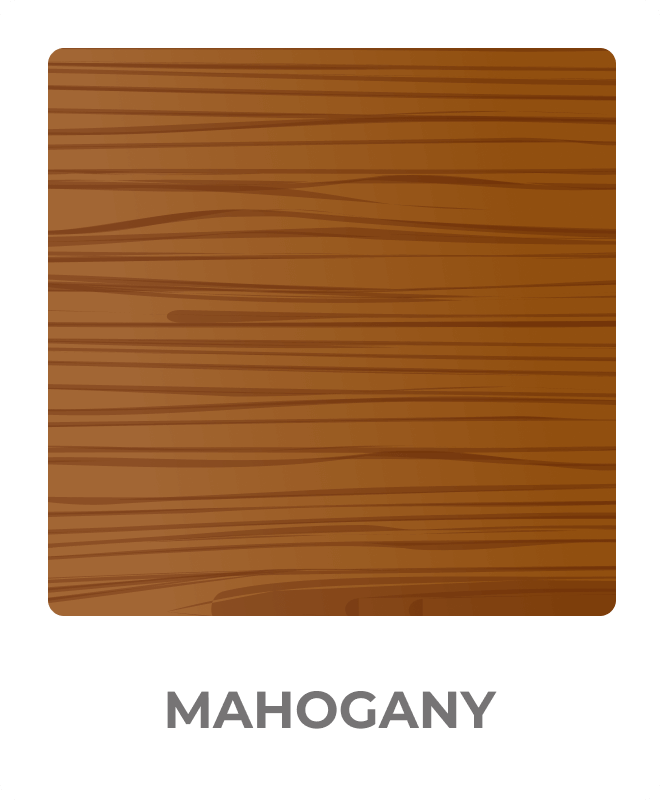
Imported mahogany is a high-end exotic hardwood with a Janka rating of about 2,200 and a deep reddish-brown color with a straight, even grain. Its natural oils help prevent warping and rot, which is why it is often used for furniture, cabinets, and boats.
As flooring, mahogany looks beautiful but needs a stable environment because it absorbs moisture easily and can expand in humid conditions. For this reason, mahogany flooring is usually sold as engineered hardwood, since the layered construction makes it more stable than solid wood.
Finished vs. Unfinished Hardwood: Which Should You Choose?
For most people, prefinished hardwood is the easiest and most practical option. Unfinished hardwood is worth the extra time and money if you need a custom stain or want the new floor to blend perfectly with existing floors. This is common in renovations.
Prefinished Hardwood
Prefinished hardwood is sanded, stained, and sealed at the factory before it arrives at your home. This makes installation quicker and cleaner because there is no sanding or fumes, and you can walk on the floor right away. Factory finishes are usually harder and more durable than what you get with on-site finishing. The downside is you have fewer color choices, and there is a small groove between boards from the factory edge.
Unfinished Hardwood
Unfinished hardwood is sanded, stained, and sealed after it is installed in your home. This lets you choose any color you want and blend the new floor with existing ones for a smooth, seamless look. The process takes two to three extra days and creates dust and fumes while the finish cures. Labor costs are higher, but the wood itself usually costs less.
Which Type of Hardwood Floor Is Best for Each Room?
The best hardwood floor depends on where you plan to install it and how much wear the space gets. Matching the species and product type to the room can help you get better performance and longer life from your floor.
High-traffic areas (hallways, living rooms, kitchens): Oak, maple, or hickory. Prioritize a Janka rating of 1,200 or higher.
Bedrooms and low-traffic rooms: Any species works. Walnut, cherry, and pine are popular choices where softer aesthetics are preferred over maximum durability.
Basements and over concrete: Engineered hardwood only. Solid hardwood is not appropriate in below-grade or high-moisture environments.
Homes with pets or children: Hickory or white oak. Higher Janka ratings resist dents and scratches from claws and heavy use.
Historic or farmhouse-style homes: Pine, reclaimed heart pine, or reclaimed oak. Wide planks and natural character marks suit the aesthetic.
Modern and contemporary interiors: White oak with a natural or matte finish. Tight grain, cool tone, and minimal color variation align with current design trends.
FAQs About Types of Hardwood Flooring
Oak is the most popular hardwood flooring species in the United States, accounting for roughly two-thirds of all installed hardwood floors. Red oak is the most widely installed variety due to its affordability and availability, while white oak has grown significantly in popularity for its cleaner, more contemporary appearance.
Among domestic species, hickory with a Janka rating of 1,820 is the most durable hardwood flooring option. Among all species available for residential use, Brazilian cherry at 2,350 and imported mahogany at 2,200 are harder, though both carry higher price tags and are less widely available than domestic options.
Solid hardwood is made from a single piece of wood and can be refinished many times. Engineered hardwood has a real wood layer on top of a plywood core, which makes it more stable and better for places like basements, over concrete, or over radiant heat where solid wood is not suitable.
Oak, maple, and hickory are the top choices for high-traffic areas. All three have Janka ratings above 1,200 and are widely available in solid and engineered formats. For households with pets or children, hickory’s Janka rating of 1,820 provides the highest dent resistance of any mainstream domestic species.
Yes. Oak, maple, and hickory are all commonly installed in kitchens. The key is prompt cleanup of spills and avoiding flooring directly in front of dishwashers or sinks where standing water is a risk. Engineered hardwood is the more moisture-tolerant option if the kitchen is large or heavily used.
Pine is the least expensive wood flooring option, with material costs starting around $3 per square foot. Among true hardwoods, red oak typically starts around $2 to $3 per square foot for materials, making it the most affordable entry point into genuine hardwood flooring.