What Are Soffit and Fascia on a House?
When people start looking into soffit and fascia repair, they often wonder what these parts actually are. Although they work together, soffit and fascia have different jobs and are found in separate spots on your home’s exterior.
What Does the Soffit Do?
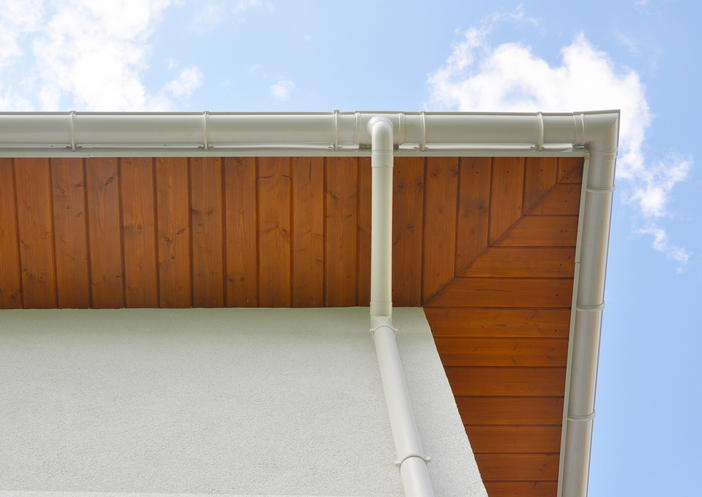
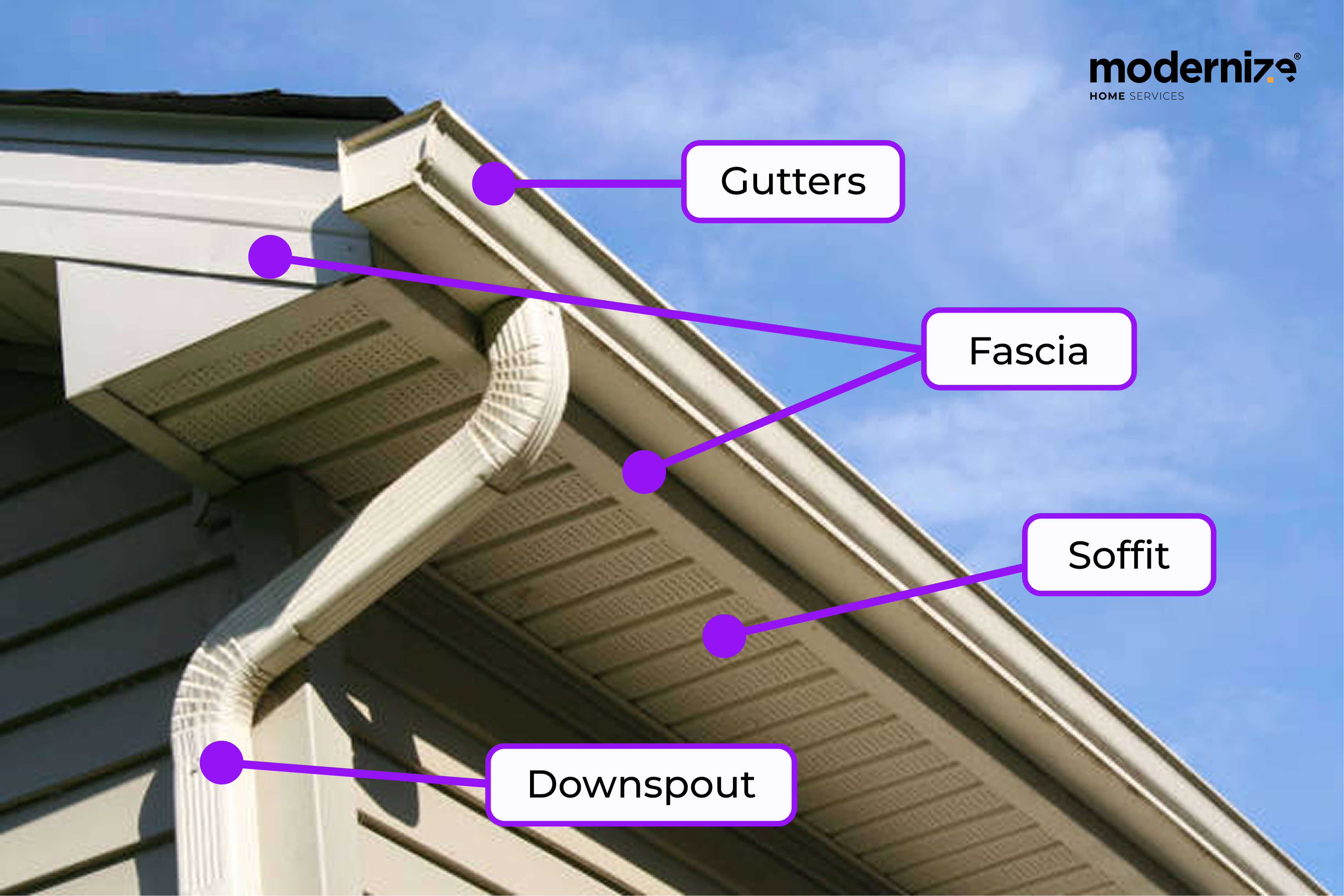
The soffit is the part you see under the edge of your roof. You usually notice it only when you stand near the house and look up. Soffits might not affect your home’s appearance much, but they are very important for how your house works.
Soffits usually have small vents or holes that let air move into the attic. This airflow helps control temperature and moisture, which lowers the chance of mold and helps your roof last longer. Soffits also block animals and insects from getting into your attic.
What Does the Fascia Do?
The fascia is the vertical board that runs along the edge of the roof, directly above the soffit. This is the surface where gutters are attached, making it a very important structural component of your gutter system.
Since fascia is easy to see from the street, it adds more to your home’s curb appeal than the soffit does. More importantly, it shields the edge of the roof from water and gives gutters a strong place to attach, which helps direct water away from your house.
Soffit and fascia are usually made from wood, vinyl, or aluminum. Wood is the traditional choice, but vinyl and aluminum are popular because they need less upkeep, especially for fascia boards that get wet from gutters.
» Learn More: Guide to Fascia Gutters
Why Soffit and Fascia Condition Matters
Soffit and fascia are more than simply decorative trim. They help protect your home from moisture, heat, and pests. If either one is damaged or worn out, it can lead to problems with your roof, attic, siding, and gutters.
Properly functioning soffits help maintain airflow through the attic, letting heat and moisture escape. Without adequate ventilation, moisture can become trapped, leading to mold growth, wood rot, and reduced roof lifespan.
Fascia boards keep water from getting into the edge of your roof and hold up your gutters. If the fascia gets weak or starts to rot, gutters can sag, come loose, or even fall off, which can make water run down your siding or collect near your foundation.
In short, if you ignore soffit and fascia problems, a small repair can quickly become a bigger and more costly issue for your home’s exterior.
Common Signs Your Soffit or Fascia Needs Repair
Since soffit and fascia are high up on your house, damage can go unnoticed until it gets serious. Periodic inspections, especially when cleaning gutters or after storms, can help you spot problems early.
Visible Damage to Look For
Some of the most common visible signs of soffit or fascia damage include:
- Cracking, peeling paint, or blistering surfaces
- Sagging or warped boards
- Holes or gaps along the roofline
- Discoloration or dark streaks, which are often caused by water exposure
These problems are especially common with wooden soffits and fascia, since wood is more likely to be damaged by moisture.
Less Obvious Warning Signs
Not all soffit and fascia problems are easy to spot. Other warning signs may include:
- Moldy or musty smells coming from the attic
- Signs of animal or insect activity near the roofline
- Water stains on exterior walls or near gutters
- Gutters pulling away from the house or failing to drain properly
If not fixed, problems like water damage, dry rot, or pests can spread from the soffit and fascia to your siding, roof deck, or attic framing.
Should You Repair Soffit and Fascia When Installing New Gutters?
Yes, it’s usually a good idea to repair soffit and fascia when you’re putting in new gutters, and sometimes it’s required. Since gutters attach right to the fascia board, their condition affects how well your new gutters work and how long they last.
Installing gutters on damaged or rotting fascia can lead to sagging, poor drainage, and premature failure. Addressing soffit and fascia issues at the same time helps ensure the gutter system is properly supported and reduces the risk of needing repairs shortly after installation.
Why Gutter Installers Check Fascia Boards
A quality gutter installer will inspect the fascia before mounting new gutters. Fascia boards must be solid and securely fastened to support the load of the gutters, especially when they’re full of rainwater or debris.
If the fascia is rotting, warped, or pulling away from the roof, it’s best to repair or replace it before putting up new gutters. Often, contractors can handle fascia repairs during the same job, cutting time and reducing disruption.
Risks of Installing Gutters on Damaged Fascia
If you skip fascia repairs when installing gutters, you could face several problems, such as:
- Gutters pulling away from the house
- Improper gutter slope and drainage
- Water running behind the gutters instead of into them
- Voided manufacturer or installer warranties
Fixing these problems as soon as possible helps protect your new gutters and your roof.
Repair vs. Replacement: Which Do You Need?
You don’t always need to fully replace damaged soffit and fascia. The best choice depends on how bad the damage is, what material you have, and if the problem has spread.
A professional can check and let you know if a repair is enough or if replacing the parts would save you more money in the long run.
When Can Soffit or Fascia Be Repaired?
Repairs are often enough when:
- The damage is limited to a small area.
- Wood rot is minor and hasn’t spread.
- The basic structure is still sound.
- Issues are only surface-level, such as peeling paint or small cracks.
In these situations, contractors might just patch the damaged spots, strengthen weak areas, or swap out single boards instead of replacing everything.
» Related: Gutter Repair Costs
When Full Replacement Makes More Sense
Fascia or soffit replacement is typically the recommended approach when:
- Rot or water damage is widespread.
- Fascia boards are no longer structurally sound.
- Soffits are failing to ventilate properly.
- Damage keeps recurring despite previous repairs.
Replacing soffit or fascia costs more at first, but it can help you avoid future repairs and stop hidden damage from spreading to your roof or attic.
How Much Does Soffit and Fascia Repair Cost?
The price for soffit and fascia repair can vary a lot based on how much work is needed and what materials you choose. Small repairs cost less, while bigger replacements are more expensive.
On average, repairs can cost anywhere from a few hundred to a few thousand dollars, depending on the factors listed below.
Average Repair Costs
Minor repairs, such as replacing a small section of soffit or reinforcing fascia behind gutters, are usually cheaper. If you need to replace several sections or use different materials, the cost for labor and materials will go up.
Replacement Cost Factors
Several variables influence total project cost, including:
- Material type (usually wood, vinyl, aluminum, or composite)
- Total linear footage requiring repair or replacement
- Number of stories and ease of access
- Labor rates in your area
If your home has a complicated roof or more than one story, repairs usually take more work and equipment, which raises the total cost.
Additional Costs to Consider
Homeowners should also account for potential add-ons such as:
- Painting or finishing work
- Gutter removal and reinstallation
- Discovery of hidden wood rot or moisture damage
- Pest or insect remediation
Since these problems often show up during repairs, it’s smart to set aside extra money just in case.
What Materials Are Used for Soffit and Fascia?
Soffit and fascia are available in different materials, each having its own pros, cons, maintenance requirements, and lifespan. The best option for you depends on your budget, local weather, and how much maintenance you want to do.
Wood
Wood is a traditional and widely used material for both soffit and fascia, especially in older homes. It has a “classic” appearance and can be painted to match your home’s exterior.
But wood needs regular care and is more likely to get damaged by moisture, rot, or insects. If you don’t keep up with maintenance, wood soffit and fascia might need repairs or replacement sooner than other materials.
Aluminum and Vinyl
Vinyl and aluminum are popular because they need less maintenance than wood. Vinyl soffits are often used since they resist moisture and usually have built-in vents for better attic airflow. Aluminum fascia is light, strong, and doesn’t rot easily.
Both vinyl and aluminum work well in wet climates and usually just need to be cleaned now and then, instead of being repainted or sealed.
» Related: Guide to Aluminum Gutters and Guide to Vinyl Gutters
Composite or PVC Options
Composite and PVC materials are made to resist moisture, insects, and temperature shifts. While they usually come at a greater upfront cost, they can offer long-term durability with minimal maintenance, making them a good option for homeowners wanting to reduce future repair needs.
When Is the Best Time to Repair or Replace Soffit and Fascia?
When you repair soffit and fascia matters for both convenience and cost. If there’s urgent damage, fix it right away, but you can often plan repairs to line up with other outside projects.
At the Same Time as Roof or Gutter Work
It’s often easiest to repair soffit and fascia when you’re already working on your roof or gutters. Since contractors need to reach the roofline anyway, doing these projects together can save on labor and finish the work faster.
Replacing gutters is a great time to check and fix fascia problems, since the gutters have to come off to reach the boards behind them.
Seasonal Considerations
Milder weather is typically best for exterior repairs, as extreme heat, cold, or precipitation can slow work or limit material effectiveness. However, if soffit or fascia damage is allowing water or pests into the home, repairs should not be delayed regardless of the season.
Can You Repair Soffit and Fascia Yourself?
Some homeowners think about fixing soffit and fascia themselves to save money, but whether you can do it depends on how bad the damage is and what kind it is.
DIY-Friendly Tasks
Small, surface-level tasks may be manageable for experienced homeowners, such as:
- Repainting or sealing minor cosmetic damage
- Replacing small, accessible sections with no structural involvement
Even for these small jobs, you need to be careful and use the right safety steps, especially when you’re on a ladder or near the edge of the roof.
When to Call a Professional
Professional repair is recommended when:
- Damage involves rot, water intrusion, or structural weakness
- Repairs require gutter removal or roof-edge access
- Pest infestations or ventilation issues are present
If repairs aren’t done right, you could end up with more damage or safety issues, so hiring a professional is usually the safer choice in the long run.
How Long Do Soffit and Fascia Typically Last?
The lifespan of soffit and fascia depends largely on material choice, climate, and maintenance. Well-maintained components can last several decades, while neglected materials may fail much sooner.
Checking your soffit and fascia regularly, fixing problems quickly, and keeping your gutters in good shape can help them last much longer.
How to Prevent Future Soffit and Fascia Damage
Doing routine maintenance is one of the best ways to avoid needing frequent soffit and fascia repairs.
Gutter Maintenance and Water Control
Clogged or overflowing gutters are a main reason fascia gets damaged. Keeping your gutters clean and sloped right stops water from backing up onto the roof edge and soaking into the fascia boards.
Routine Inspections
Check your soffit and fascia during regular maintenance, like when you clean gutters or after storms. Catching small problems early usually means cheaper repairs and less hassle.
Find the Right Contractor for Your Gutters Project
Whether you’re ready to begin your project now or need some expert advice, our network of contractors are here to help. With a few simple questions, we’ll find the best local professionals for you