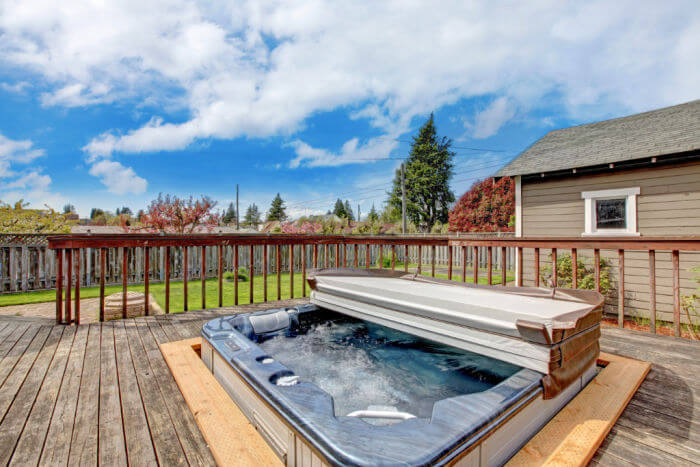
When you’re in the market for a hot tub, the question will cross your mind at some point: Is it worth buying brand new? Are used hot tubs a better investment? Just as with anything else in life that offers a “new” or “used” option, there are pros and cons. Let’s take a look at whether it’s worth it to buy a used hot tub.

Why a Used Hot Tub Might Make Sense
If you’re on a very tight budget, a used hot tub for your backyard might be in your sights. It’s important to remember that if you go this route, you need to do much more homework on that hot tub, as you want it to meet certain criteria.
For example, you want to look for a hot tub that has a clear maintenance record. Many people will record their hot tub maintenance manually in a notebook or through a computer program to keep up with the cycling of the pump, the chemicals they use, and other details that matter to the longevity of the tub. When you’re shopping for used hot tubs, you want to find someone who has this information. It helps you see how well the tub was maintained.
If you do find a tub that has very little wear and tear, especially one that is only a few years old, consider which worn parts might need to be replaced more immediately, and factor that into the overall cost. For instance, the hot tub cover takes a beating from the elements; you might want to replace that. You might also want to place a used hot tub in a new cabinet or upgrade the pumps. Consider the money you will spend in addition to the asking price of the hot tub itself – if it’s cheaper than a new one, then it’s worth pursuing the option.
No matter what your choice when it comes to a used hot tub, inspection is absolutely necessary. You have to be able to look at the tub for the signs of wear and tear that might cancel the potential sale. You can’t do that when you purchase a used hot tub online, so buyer beware: If you are going to purchase a used hot tub, do it from an in-person seller.
How to Inspect a Used Hot Tub
It is absolutely imperative that you check every inch of a used hot tub. Remember, once money has exchanged hands and that hot tub is in your possession, it’s yours – the odds of the seller taking it back are next to nothing. Make sure to reference this list when inspecting a used hot tub.
Start With the Cabinet
Look for cracks, leaks, and any sort of damage. Discoloration, especially on the edges, can be a sign of water damage even if you don’t see any water issues at the moment of inspection. Look for broken or warped sections. Remember that minor scratches might be normal wear and tear, but minor cracks can and will worsen over time.
Look at the Shell
Inspect the shell closely for any scratches or cracks, with the understanding that these issues will only worsen over time if they are not fixed immediately. Look for warping or leaking areas of the shell. These problems might not be possible to fix.
What About the Framework?
The framework underneath should be solid and true, without any warping or discoloration. You definitely don’t want to see any dents or cracks.
Look at the Access Panel
If there is any evidence of a leak, including dampness, warped areas, discoloration, or even standing water, this could be a very expensive issue. The wires should be free of corrosion, with wire insulation and connections looking firm and undamaged. Look for evidence of insects or pests, such as chewed wires, lots of cobwebs, snakeskin, beehives, nests for rats or mice, and the like. Those little critters can do extensive damage.
Inspect the Control Panel
Use the control panel to make sure all the features work. This should include the thermostat, lights, jets, and any other features. Be sure to take the time to make certain the thermostat works – depending upon the size of the tub it can take some time for the temperature to reach the setting. Bring a thermometer to test.
Test Out the Pumps
Fill up the hot tub and turn on the pumps, one at a time. Listen to the sound; they should make a constant, low hum. Any sound other than this can indicate a problem. Make sure the pumps have the power you expect.
Inspect All Other Parts of the Tub
Take a step back and look at the other parts of the tub. Are the LED lights all working? Is each jet doing what it should be doing? Are all moving parts able to move freely, without anything gumming up the motion?
Ask to See the Paperwork
You want to see verification of the age of the tub, the dealer, where it might have been serviced, the maintenance records, and anything else that can tell you the history of the tub. Check the energy efficiency by asking to see electric bills for the last few years. Be wary of the purchase if the owner doesn’t have any of this.



What You Get With a New Hot Tub
When you’re considering a used hot tub, you might be tempted by the lower price. But think about what you might be losing out on if you choose to go that route.
- With a new hot tub, you get a warranty. These warranties vary depending upon the model and manufacturer. But they certainly cover damaged parts that are discovered within a reasonable period of time. When you purchase from a private seller and things go wrong, those costs are out of pocket for you. It might wind up costing more than you would have paid for a new spa.
- When you purchase from a dealer, you have a variety of payment options and financing. You can opt for everything from putting the purchase on a credit card to using your home equity to getting low-interest financing through the dealer themselves. When purchasing used, your only option is often paying in cash.
- A new hot tub often comes with the option of a service and maintenance plan. This can help ensure that you get the help you need with any components of the tub, even those not covered under warranty. These plans are often unavailable when you purchase used.
- No matter where you buy the hot tub, you must deal with delivery and installation. Keep in mind that even if a used hot tub is still under warranty, that warranty might be void if it is moved from its original location. Regardless, you will have to pay to move it. You will then pay more to have it installed. These are things that are often rolled into the total price if you purchase a new hot tub. Plus, you don’t have to worry about voided warranties.
What about a Refurbished Hot Tub?
When you choose to purchase a refurbished hot tub from a dealer, you’re buying one that has been inspected, repaired if necessary, and under a limited warranty. It’s in good condition, but not in as good condition as if you were to purchase brand new. Many reputable dealers do offer refurbished hot tubs that might save you some money. But keep in mind, these usually don’t come with the bells and whistles you might want.
The Bottom Line
Though a used hot tub can be quite tempting, it’s usually not worth the extra hassle, repairs, and lack of warranty assurance that comes with it. Purchasing a new hot tub gives you a very good idea of how long the tub will actually last. You also know what kind of service and warranty you get, and help with delivery and installation. Though it might be more of an investment than a used hot tub, your long-term savings can add up, especially with a good warranty or service plan. You also have the peace of mind of knowing that the tub is in good working order from the day you first step into it. That return on investment makes the purchase of a new hot tub worthwhile.
Think a new hot tub might be right for you?
Find the Right Contractor for Your Home Improvement Project
Whether you’re ready to begin your project now or need some expert advice, our network of contractors are here to help. With a few simple questions, we’ll find the best local professionals for you