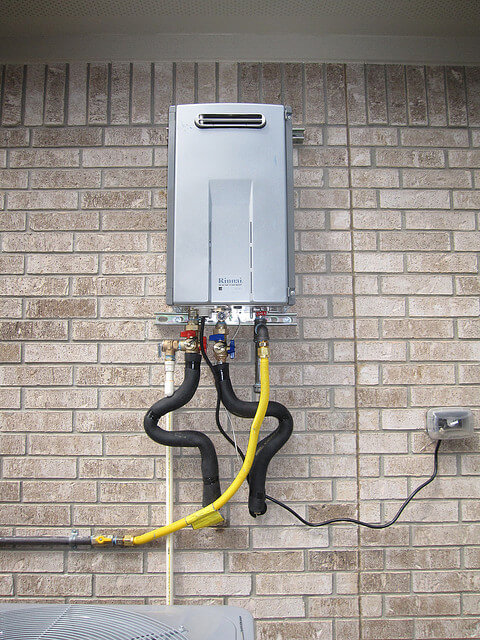
Tankless water heaters, also called on-demand water heaters, heat water only when you need it instead of storing hot water in a tank. That makes them a strong option for homeowners who want better energy efficiency, a more compact footprint, and longer hot-water run times for showers, laundry, and daily household use.
The best tankless water heater brands combine strong flow rates, high efficiency, durable heat exchangers, solid warranty coverage, and dependable long-term performance. While tankless units often cost more upfront than traditional storage-tank models, they can save space, reduce standby energy loss, and deliver continuous hot water when sized correctly for the home.
Most homeowners spend about $1,000 to $3,500+ for a tankless water heater, depending on fuel type, capacity, efficiency, venting needs, and installation complexity. Gas tankless systems usually cost more to install than electric models, especially when venting, gas-line upgrades, or recirculation accessories are involved. ENERGY STAR notes that whole-home tankless gas water heaters must meet minimum requirements for efficiency, hot-water delivery, warranty period, and safety to qualify, which is helpful context for homeowners comparing premium models.
Federal Rule Update: A proposed market shift for gas-fired instantaneous water heaters is no longer an immediate factor for 2026 shoppers. Instead of comparing brands under a newly imposed federal standard, homeowners can still focus on flow rate, efficiency, warranty coverage, and installation fit.
Tax Credit Eligibility: Some premium, high-efficiency tankless gas models may still qualify for a federal tax credit, which makes it worth checking ENERGY STAR eligibility before you buy. Not every tankless unit qualifies, so documentation and model-specific requirements matter.
Pricing Pressure: Tankless water heater quotes may still feel higher than older guides suggest because equipment pricing remains sensitive to broader manufacturing, materials, and import-cost pressure. That makes side-by-side quote comparison even more important in 2026.
Best Brands at a Glance
4.8/5
Modernize RatingThis rating was determined by the Modernize Editorial Team based on factors such as customer reviews, product quality, warranties, company reputation, and service coverage. Our ratings are editorially independent and are not influenced by our advertising or partnership relationships.
Excellent efficiency and premium condensing performance
Strong installer familiarity and broad residential brand recognition
Long residential warranty coverage on flagship models
Modernize RatingThis rating was determined by the Modernize Editorial Team based on factors such as customer reviews, product quality, warranties, company reputation, and service coverage. Our ratings are editorially independent and are not influenced by our advertising or partnership relationships.
Built-in recirculation on key models improves convenience
Strong premium reputation in condensing tankless systems
Solid warranty coverage on heat exchanger and parts
Modernize RatingThis rating was determined by the Modernize Editorial Team based on factors such as customer reviews, product quality, warranties, company reputation, and service coverage. Our ratings are editorially independent and are not influenced by our advertising or partnership relationships.
Strong smart-home and connected-control positioning
Broad brand recognition and retail/pro installer visibility
Premium condensing options with recirculation availability
Modernize RatingThis rating was determined by the Modernize Editorial Team based on factors such as customer reviews, product quality, warranties, company reputation, and service coverage. Our ratings are editorially independent and are not influenced by our advertising or partnership relationships.
Strong capacity options for larger households
Long heat-exchanger warranty on residential models
Our experts at Modernize evaluated leading tankless water heater brands based on energy efficiency, flow rate, warranty coverage, product range, ease of installation, smart features, and long-term reliability. Below are the top-rated brands for performance, homeowner value, and day-to-day hot-water comfort.
Best For: Premium-performance households that want high efficiency, strong brand reputation, and dependable whole-home hot water for daily high-demand use.
Rinnai
4.8/5
Modernize RatingThis rating was determined by the Modernize Editorial Team based on factors such as customer reviews, product quality, warranties, company reputation, and service coverage. Our ratings are editorially independent and are not influenced by our advertising or partnership relationships.
Rinnai is the industry leader in tankless technology, offering powerful gas and condensing models that deliver consistent, on-demand hot water. Known for outstanding efficiency and longevity, Rinnai’s products are engineered in Japan and built for decades of dependable service.
Rinnai received a 4.8 score for its premium efficiency, strong performance reputation, and long warranty coverage, with points held back mainly by higher pricing and the fact that some smart functionality is not built in across every model.
Good Fit If: You want a premium tankless brand with high efficiency, strong long-term value, and good support through professional installers.
Not Ideal For: Homeowners who want the cheapest upfront option or a simpler entry-level unit for occasional or low-demand use.
What We Love
Excellent efficiency and premium condensing performance
Strong installer familiarity and broad residential brand recognition
Long residential warranty coverage on flagship models
Watch Out For
Premium pricing compared with value brands
Smart features may require add-ons depending on model
Best performance often depends on professional sizing and installation
Rinnai tankless water heaters typically cost $1,200 to $3,500 installed, depending on size, venting configuration, and gas line requirements.
Basic Non-Condensing Models: $1,200 to $1,800
High-Efficiency Condensing Units: $2,000 to $3,500
Installation costs usually run $800 to $2,500 and depend on venting upgrades, gas-line capacity, and whether a recirculation system is added.
SENSEI RX199iN is a great fit for homeowners who want strong whole-home performance, high efficiency, and enough hot water for a busy household. It works especially well in larger homes where multiple people may need hot water at the same time. For shoppers who want a premium tankless unit with long-term reliability, this is one of Rinnai’s strongest options.
Best For: Large or active households that want premium tankless performance plus faster hot-water delivery and strong recirculation features.
Navien
4.7/5
Modernize RatingThis rating was determined by the Modernize Editorial Team based on factors such as customer reviews, product quality, warranties, company reputation, and service coverage. Our ratings are editorially independent and are not influenced by our advertising or partnership relationships.
Navien combines advanced engineering with outstanding energy savings, making it one of the most efficient tankless brands available. Its condensing gas models recover nearly all exhaust heat, achieving exceptional UEF ratings.
Navien received a 4.7 score because it combines premium condensing efficiency with standout comfort features like built-in recirculation, though it sits just behind Rinnai because pricing is higher and some of its biggest advantages matter most in medium-to-large homes.
Good Fit If: You want premium comfort features, strong flow performance, and less waiting for hot water at fixtures.
Not Ideal For: Smaller households or homeowners who want a simpler, lower-cost tankless setup.
What We Love
Built-in recirculation on key models improves convenience
Strong premium reputation in condensing tankless systems
Solid warranty coverage on heat exchanger and parts
Watch Out For
Higher upfront cost than mid-tier brands
Advanced features can be overkill for smaller homes
Best value depends on proper installation and plumbing layout
Navien systems cost $1,300 to $3,200 installed, depending on model and configuration.
NPE-A2 Series With Recirculation: $2,000 to $3,200
Standard NPE-S2 Series: $1,300 to $2,200
Installation costs typically range $700 to $2,000, varying with venting materials, fuel-line size, and retrofit complexity.
Navien NPE-240A2 is a smart choice for homeowners who want faster hot water and better day-to-day convenience. Its built-in recirculation features can help cut down on wait time at showers and faucets, which is especially useful in larger homes. This model is a strong pick for families who want both comfort and efficiency.
Best For: Homeowners who want a premium tankless brand with strong smart features, broad availability, and easier integration into a connected home setup.
Rheem
4.6/5
Modernize RatingThis rating was determined by the Modernize Editorial Team based on factors such as customer reviews, product quality, warranties, company reputation, and service coverage. Our ratings are editorially independent and are not influenced by our advertising or partnership relationships.
Rheem’s tankless systems blend reliability with innovation, offering both gas and electric models suited for diverse households. Known for strong warranties and excellent support, Rheem’s newer Performance Platinum tankless line integrates smart Wi-Fi control for convenience and efficiency tracking.
Rheem received a 4.6 score for its smart-home edge, broad product lineup, and premium tankless innovation, but it ranks a bit lower than Rinnai and Navien because the lineup is less cleanly differentiated for shoppers and warranty/registration details can feel more involved.
Good Fit If: You want smart features, connected monitoring, and a premium tankless system from a very established brand.
Not Ideal For: Homeowners who want the simplest possible comparison process or the lowest upfront cost.
What We Love
Strong smart-home and connected-control positioning
Broad brand recognition and retail/pro installer visibility
Premium condensing options with recirculation availability
Watch Out For
Warranty terms and registration details can be more complex than expected
Pricing rises quickly on premium models
Product lineup can feel broad and harder to compare at a glance
Rheem units cost $1,000 to $2,800 installed, depending on fuel source and efficiency.
Standard Gas or Electric Models: $1,000 to $1,600
Condensing and Wi-Fi-Enabled Units: $1,800 to $2,800
Installation typically adds $600 to $900, depending on whether the home needs venting or electrical upgrades and whether a recirculation system or smart-home integration is added.
The Rheem RTEX-18 is a compact and highly efficient tankless water heater built to deliver reliable, on-demand hot water. Boasting a 99.8% energy efficiency rating, it features durable copper heating elements and precise digital temperature control, making it an ideal solution for smaller homes and households with moderate hot water demands.
Best For: Bigger households that want strong whole-home output, contractor-familiar equipment, and a tankless system built around traditional plumbing-channel reliability.
AO Smith
4.4/5
Modernize RatingThis rating was determined by the Modernize Editorial Team based on factors such as customer reviews, product quality, warranties, company reputation, and service coverage. Our ratings are editorially independent and are not influenced by our advertising or partnership relationships.
AO Smithbrings the same trusted durability from its tank models into its tankless lineup. The brand’s gas and hybrid models are designed for efficiency and reliability, with corrosion-resistant heat exchangers and strong warranty coverage.
A.O. Smith received a 4.4 score because it offers strong capacity, pro-level reliability, and long warranty coverage, but it ranks below the premium leaders because the lineup is less consumer-friendly and not as feature-rich in smart or comfort upgrades.
Good Fit If: You want a dependable, contractor-familiar tankless system for a medium-to-large home.
Not Ideal For: Homeowners who want built-in smart features or the most streamlined shopping experience.
What We Love
Strong capacity options for larger households
Long heat-exchanger warranty on residential models
Well known among contractors and plumbing pros
Watch Out For
Less exciting smart-home feature set than top competitors
Some models are pro-channel oriented and less consumer-friendly to shop
Model naming and lineup can be harder for homeowners to navigate
A.O. Smith tankless heaters cost $1,000 to $2,700 installed, depending on type and flow rate.
Standard Non-Condensing Models: $1,000 to $1,500
Condensing Models: $1,800 to $2,700
Installation costs are generally $600 to $1,500, influenced by venting design, gas-line size, and the complexity of replacing an existing water heater.
AO Smith ATI-540H-N is a strong option for homeowners who need dependable whole-home hot water in a medium-to-large house. It is a good fit for families that may run more than one fixture at a time and want a brand that contractors know well. This model makes sense for shoppers who want performance and durability without paying for a lot of extra bells and whistles.
Best For: Larger homes or homeowners working with plumbing professionals who want durable tankless performance and strong warranty-backed residential reliability.
Bradford White
4.3/5
Modernize RatingThis rating was determined by the Modernize Editorial Team based on factors such as customer reviews, product quality, warranties, company reputation, and service coverage. Our ratings are editorially independent and are not influenced by our advertising or partnership relationships.
Bradford White is highly regarded by professional plumbers for its robust and contractor-grade tankless systems. Known for durable design and superior heat exchanger quality, the brand focuses on performance and dependability.
Bradford White received a 4.3 score for strong durability, long warranty coverage, and solid whole-home performance, but it ranks below the top tier because it is less consumer-friendly to shop and lighter on smart or convenience features.
Good Fit If: You are working with a contractor and want a durable, professionally supported tankless brand.
Not Ideal For: Homeowners who want strong smart-home features or a more retail-style research and buying experience.
What We Love
Strong residential warranty coverage
Good durability and contractor-oriented brand reputation
Helpful performance features like scale-reduction technology on select models
Watch Out For
Less consumer-facing shopping transparency than retail-friendly brands
Fewer standout smart-home features
Often better known through installers than through direct homeowner research
Bradford White tankless models cost $1,200 to $2,800 installed, depending on configuration.
Standard Gas Models: $1,200 to $1,800
High-Efficiency Condensing Units: $2,000 to $2,800
Installation costs average $700 to $1,500 and depend on vent routing, access, and any gas or plumbing upgrades required.
Bradford White Infiniti® K Series is a solid choice for homeowners who want reliable tankless performance from a brand often recommended by plumbing professionals. It works well for households that want continuous hot water and long-term durability, especially when installed as part of a professionally guided replacement. This is a good fit for buyers who value reliability more than flashy extra features.
Best For: Homeowners who want Rheem-like smart features and strong efficiency in a slightly less prominent tankless brand.
Ruud
4.1/5
Modernize RatingThis rating was determined by the Modernize Editorial Team based on factors such as customer reviews, product quality, warranties, company reputation, and service coverage. Our ratings are editorially independent and are not influenced by our advertising or partnership relationships.
Ruud, a sister brand to Rheem, delivers similar reliability and energy performance at slightly lower price points. It’s a strong option for homeowners seeking dependable hot water and good warranty protection without the premium cost.
Ruud received a 4.1 score because it offers strong smart and performance features, but it ranks below Rheem because it is less recognizable and often feels like a secondary choice rather than the first brand homeowners research.
Good Fit If: You want connected features and strong efficiency but are open to a brand that is less dominant in consumer comparisons.
Not Ideal For: Homeowners who want the most recognizable premium tankless brand or the broadest installer familiarity.
What We Love
Built-in Wi-Fi and connected controls on select models
Useful comfort and leak-detection features
Strong efficiency and retrofit-friendly installation details
Watch Out For
Less consumer recognition than Rheem
Brand positioning can feel overshadowed by its sister-brand reputation
Product research can be a little less straightforward for homeowners
Ruud tankless systems cost $900 to $2,400 installed, depending on model and flow rate.
Standard Models: $900 to $1,400
Condensing Models: $1,600 to $2,400
Installation costs typically range $600 to $1,200 and vary with venting type, fuel source, and whether new plumbing or electrical work is needed.
Ruud RUTGH Series Super High Efficiency Condensing Tankless Gas Water Heater is a good fit for homeowners who want strong efficiency along with useful features like connected controls and leak protection. It can be a smart choice for buyers who like the idea of easier monitoring and more modern system alerts. For households that want premium-style features without defaulting to a more heavily advertised brand, this model stands out.
Best For: Budget-conscious homeowners who still want a professional-grade tankless system from an established plumbing-channel brand.
State Water Heaters
3.9/5
Modernize RatingThis rating was determined by the Modernize Editorial Team based on factors such as customer reviews, product quality, warranties, company reputation, and service coverage. Our ratings are editorially independent and are not influenced by our advertising or partnership relationships.
State Water Heaters provide reliable tankless systems that balance cost and performance. Known for accessible pricing and dependable operation, these units are ideal for homeowners who want long-term efficiency without paying premium prices.
State Water Heaters received a 3.9 score because it offers solid value, real whole-home tankless capability, and strong warranty support, but it ranks lower because it is lighter on premium features and consumer-facing appeal.
Good Fit If: You want dependable tankless performance and solid value from a plumbing-channel brand.
Not Ideal For: Homeowners who want top-tier smart features, premium branding, or a more polished direct-to-consumer experience.
What We Love
Good value for a whole-home tankless brand
Professional-grade positioning through plumbing channels
Long residential heat-exchanger warranty
Watch Out For
Less brand recognition with general consumers
Fewer standout premium or smart features
More functional than aspirational in presentation
Typical costs range $900 to $2,200 installed, depending on type and efficiency.
Basic Models: $900 to $1,200
Condensing Models: $1,500 to $2,200
Installation costs run $500 to $1,000 and fluctuate based on venting, gas-line upgrades, and overall installation difficulty.
State ProLine® XE GTS-310C-NI is a practical choice for homeowners who want solid whole-home tankless performance at a more approachable price. It works well for buyers who want dependable hot water and good long-term value without stepping up to a premium-priced model. This is a strong fit for households that care most about function, warranty support, and overall value.
Best For: Budget-minded homeowners, cabins, smaller homes, or lighter-duty applications where lower upfront cost matters more than premium features or maximum whole-home output.
Eccotemp
3.6/5
Modernize RatingThis rating was determined by the Modernize Editorial Team based on factors such as customer reviews, product quality, warranties, company reputation, and service coverage. Our ratings are editorially independent and are not influenced by our advertising or partnership relationships.
Eccotemp is a great choice for homeowners on a budget or for off-grid and RV applications. The brand specializes in portable, compact, and affordable tankless water heaters that are easy to install and maintain.
Eccotemp received a 3.6 score because it delivers affordability and useful small-home flexibility, but it ranks last on this list because it is not as strong in premium whole-home performance, warranty confidence, or long-term upscale positioning.
Good Fit If: You want a lower-cost tankless unit for a smaller home, cabin, or lighter-use application.
Not Ideal For: Homeowners who have a large household with heavy simultaneous hot-water demand or want a premium long-term whole-home system.
What We Love
Lower upfront pricing than most premium brands
Broad lineup spanning portable and lighter-duty residential use
Good option for smaller homes, cabins, or secondary applications
Watch Out For
Less ideal for high-demand large-household use
Not as strong in premium warranty/performance positioning
Brand focus is broader and less centered on top-tier whole-home tankless
Eccotemp models cost $500 to $1,500 installed, depending on size and setup.
Portable or Point-of-Use Units: $500 to $800
Whole-Home Systems: $1,000 to $1,500
Installation costs generally fall between $400 and $800, varying with fuel source, venting needs, and whether professional or DIY installation is chosen.
Eccotemp i12 Indoor Tankless Water Heater is a good option for homeowners in smaller homes, condos, apartments, or cabins who want a lower-cost way to get continuous hot water. It is best for lighter-duty use and buyers who do not need the output of a larger premium whole-home system. For budget-conscious shoppers, it is one of the easier entry points into tankless water heating.
Modernize Review Hub
Ready to take the next step? Visit the Modernize Review Hub to explore vetted water heater installers, compare detailed brand reviews, and get the insights you need to choose with confidence.
Typical Water Heater Installation Cost by Efficiency
Efficiency Tier
Typical UEF Range
Estimated Unit Cost
Estimated Installed Cost
Best For
Standard Non-Condensing
0.80 to 0.88
$800 to $1,500
$1,500 to $3,000
Smaller homes, lower-demand households, and budget-focused buyers
Mid-Range Condensing
0.90 to 0.94
$1,200 to $2,000
$2,000 to $3,800
Most homeowners seeking a balance of efficiency and value
Premium High-Efficiency Condensing
0.95+
$1,800 to $3,000+
$2,800 to $5,500+
Large households, premium brands, and long-term efficiency shoppers
What Can Increase Tankless Water Heater Installation Cost?
Two homeowners can buy the same tankless water heater and end up with very different project costs. That is because installation complexity often has just as much impact on price as the unit itself.
Gas-Line Upgrades: Many tankless gas units need a larger gas supply line than an older tank water heater.
Venting Changes: Condensing and non-condensing models use different venting materials and layouts.
Electrical Work: Even gas tankless units often need a nearby outlet or control wiring, while electric units may need major panel upgrades.
Recirculation Accessories: Comfort-focused systems with recirculation pumps or dedicated return lines can raise total cost.
Relocation or Wall-Mounting Changes: Moving the heater to a new location may add plumbing, carpentry, and labor costs.
When a Higher-Efficiency Model Is Worth It
Paying more for a higher-efficiency tankless water heater usually makes the most sense when your household uses a lot of hot water, plans to stay in the home for years, or wants premium features like recirculation, smart controls, or better whole-home performance. For smaller homes with modest hot-water demand, a lower-cost model may still be the more practical choice.
When to Buy a New Tankless Water Heater
A tankless water heater does not always fail all at once. In many cases, it starts showing warning signs first: longer wait times for hot water, inconsistent temperatures, rising repair bills, or error codes that keep returning. Replacing the unit before a complete breakdown can help you avoid emergency installation costs and rushed brand decisions.
Frequent Repairs: If service calls are becoming more common, replacement may be more cost-effective than continued repairs.
Inconsistent Water Temperature: Fluctuating hot water can point to internal wear, scale buildup, or capacity issues.
Reduced Flow Performance: If the unit struggles to keep up with normal household demand, it may be undersized or nearing the end of its useful life.
Recurring Error Codes: Repeated ignition, venting, sensor, or combustion errors can signal deeper system problems.
Age and Warranty Status: Once a unit is older and no longer under warranty, major repairs become harder to justify.
How to Choose the Right Tankless Water Heater Brand
The right brand depends on how you use hot water, how large your household is, what fuel source your home supports, and how much installation complexity you are willing to take on. Some brands are stronger for premium whole-home performance, while others make more sense for budget-conscious buyers, smaller homes, or lighter-duty use.
Start With Your Household’s Hot-Water Demand
Smaller Homes or Lower Demand: Budget-friendly or lower-capacity brands may be enough.
Medium-Size Households: Look for a whole-home model with strong efficiency and good installer support.
Large or Busy Households: Prioritize high flow rate, premium performance, and recirculation features.
Compare Brands on These Core Factors
Flow Rate: Make sure the brand offers models that can keep up with simultaneous showers, laundry, and dishwashing.
Fuel Type: Gas units usually work better for whole-home demand, while electric units may make sense for smaller or point-of-use setups.
Warranty Coverage: Check heat exchanger, parts, and labor coverage separately.
Installer Availability: A strong brand is more valuable when local pros know how to install and service it.
Efficiency: Higher-efficiency condensing units cost more upfront but may reduce operating costs over time.
Features: Smart controls, recirculation, leak detection, and diagnostic tools can improve long-term ownership.
Common Tankless Water Heater Deal Breakers to Watch For
The Unit Is Undersized for the Home: This is one of the most common mistakes. A unit that cannot handle simultaneous demand will disappoint no matter how strong the brand is.
The Home Needs Major Infrastructure Upgrades: Gas-line, venting, or electrical changes can make a low-priced unit much more expensive to install.
Warranty Terms Are More Limited Than Expected: Some warranties require registration, professional installation, or regular maintenance to stay valid.
Local Service Support Is Weak: Even a high-end brand becomes frustrating if replacement parts or qualified service technicians are hard to find.
Maintenance Expectations Are Ignored: Hard-water areas often require regular flushing and scale management to protect performance and lifespan.
Questions to Ask Before You Buy
Can this model handle my peak hot-water demand?
Will my home need gas, venting, or electrical upgrades?
Is there a qualified installer or service tech in my area?
What maintenance is required to keep the warranty valid?
Does the brand offer good parts availability?
Tankless Water Heater Features Worth Paying For
Built-In Recirculation: Helps reduce wait time for hot water and can improve comfort in larger homes.
Smart Diagnostics: App controls, error alerts, and remote monitoring can make maintenance easier.
Leak Detection or Protection: Helpful for reducing risk and improving peace of mind.
Scale-Reduction Technology: Especially useful in hard-water areas where mineral buildup can shorten unit life.
Higher Turndown Ratio: Can improve efficiency and performance across different demand levels.
Tankless Water Heater Maintenance
Annual Descaling or Flushing: Helps remove mineral buildup and protect the heat exchanger.
Water Filter Cleaning: Some units include filters or screens that should be checked regularly.
Vent and Intake Inspection: Proper airflow matters for safe and efficient operation.
Error Code Monitoring: Repeated warnings should be addressed early before they turn into larger repairs.
Why Maintenance Affects Brand Value
Two brands with similar performance can feel very different over time if one has better diagnostics, stronger parts support, or easier service access. That is why brand choice affects more than the purchase price. The best long-term value usually comes from choosing a correctly sized model from a brand with strong warranty support, accessible service, and realistic maintenance expectations.
Frequently Asked Questions About Tankless Water Heater Brands
When choosing a tankless water heater, start with brands that have a strong reputation for reliability, good warranty coverage, and broad service availability. Rinnai, Navien, and Rheem are usually the top names homeowners compare first because they offer strong whole-home performance, premium condensing options, and wide installer familiarity. Rinnai positions itself as the leading tankless brand in the U.S., while Navien and Rheem both market high-efficiency residential systems with strong feature sets.
Even if you choose a more budget-friendly brand, it is still smart to compare those same factors: reputation, warranty terms, local service support, and long-term reliability.
There is no single best warranty across every tankless model, but premium brands tend to offer the strongest overall coverage. Rinnai, Navien, Rheem, and Bradford White all offer long heat-exchanger coverage on many residential models, though exact terms depend on the specific product, installation type, and whether registration is required. For example, Rinnai notes that residential tankless models include 1 year of labor coverage by default, with the opportunity to extend labor coverage to 5 years if the product is registered within 90 days. Rheem’s IKONIC tankless line lists a 15-year heat exchanger, 5-year parts, and 1-year labor warranty on current product pages.
When comparing warranties, look beyond the number of years. Check whether labor is included, whether professional installation is required, whether registration is necessary, and whether routine maintenance such as descaling is required to keep coverage valid.
Efficiency ratings like UEF are important, but they should not be the only factor you compare. You should also consider flow rate, fuel type, warranty coverage, smart features, and how easy it will be to get service and parts in your area. ENERGY STAR’s whole-home tankless criteria also highlight that qualifying models must meet minimum performance, warranty, and safety requirements, which is helpful when comparing premium gas units.
A highly efficient model is not automatically the best fit if it is oversized, undersized, difficult to service locally, or lacks the features your household actually needs.
Not necessarily. Lower-cost brands like Eccotemp or State Water Heaters can make sense for smaller homes, lighter-duty use, cabins, or budget-conscious buyers who still want on-demand hot water. State’s current tankless lineup includes both condensing and non-condensing residential gas options, while Eccotemp continues to market smaller residential and specialty-use tankless products.
The key is to make sure the lower-cost brand still fits your household’s hot-water demand, has acceptable warranty support, and can be serviced in your area. Lower upfront cost can be a good value, but only if the system is sized correctly and supported long term.
Brand selection can affect lifetime cost in several ways, including warranty support, repair frequency, service-part availability, maintenance expectations, and energy efficiency. A premium brand may cost more upfront but can offer longer heat-exchanger coverage, better contractor familiarity, and features that improve comfort or reduce water waste, such as built-in recirculation. Navien’s NPE-A2 line, for example, includes built-in recirculation and buffer tank features, while Rheem’s IKONIC line promotes no-wait hot water and high efficiency.
A lower-cost unit may still be the right choice for a smaller or lower-demand home, but for larger households, choosing a stronger brand can reduce long-term headaches and improve everyday performance.
Both are top-tier tankless brands, but they shine in slightly different ways. Rinnai is a strong choice for homeowners who want premium whole-home performance, broad installer familiarity, and high-efficiency flagship models like the SENSEI RX series, which is currently marketed at up to 0.98 UEF. Navien is especially appealing for homeowners who prioritize comfort features like built-in recirculation, which can reduce wait times for hot water at fixtures.
If you want a widely recognized premium brand with very strong whole-home positioning, Rinnai is often the safer pick. If you care most about convenience and fast hot-water delivery in a larger or busier household, Navien may have the edge.
There is not one universal answer, because installation difficulty depends on fuel type, venting, gas-line sizing, home layout, and whether you are replacing an existing tankless unit or switching from a tank model. That said, brands with broad contractor familiarity and strong support networks — such as Rinnai, Rheem, and AO Smith — are often easier to install and maintain over the long run because plumbers and HVAC pros are more likely to know the products well. Rheem and Ruud also market connected features that can help with diagnostics and monitoring on select models.
For most homeowners, the easiest system to live with is one that is correctly sized, professionally installed, and supported by local service technicians.
Tankless water heaters can be worth it for homeowners who want energy savings, longer hot-water run times, and a more compact footprint. They usually cost more upfront than storage-tank models, but they reduce standby heat loss and can provide continuous hot water when properly sized for the home. The biggest value tends to come in households that use a lot of hot water or want to free up space.
They are usually less compelling if your hot-water needs are very modest or if your home would require expensive gas-line, venting, or electrical upgrades just to make the switch.
For larger households, the best brands are usually Rinnai, Navien, A. O. Smith, and Bradford White because they offer higher-capacity whole-home gas models designed for multiple simultaneous fixtures. State’s newer Adapt condensing models also market flow rates up to 10.5 GPM, which shows how much sizing matters for bigger homes.
The right choice depends on how many bathrooms you have, whether multiple showers run at once, and whether you want extras like recirculation for faster hot-water delivery.
Rheem is one of the clearest smart-feature leaders in this category right now. Its IKONIC line promotes built-in features, recirculation models, and premium convenience-focused performance, while Ruud also highlights built-in Wi-Fi and EcoNet connectivity on select tankless models.
If smart monitoring, app connectivity, and easier diagnostics are priorities, Rheem is usually the strongest brand-level answer on this page.
Many top tankless brands sell both condensing and non-condensing models, but condensing units are usually more efficient and more expensive. Condensing tankless water heaters capture more heat from exhaust gases, which improves efficiency, while non-condensing models are often simpler and less expensive upfront. State currently markets both condensing and non-condensing residential gas tankless options, which is a good example of how brands can serve different budgets and performance needs.
For most whole-home buyers comparing premium brands, condensing models are usually the better long-term choice if the budget allows.
That depends on your home and hot-water demand. Gas tankless water heaters are usually the better fit for whole-home use because they can support higher flow rates, while electric tankless units often work better for smaller homes, point-of-use applications, or homes without easy gas access. Rheem currently offers both gas and electric residential tankless options, which makes it a good brand example for homeowners weighing both paths.
For larger households, gas is usually the more practical choice. For smaller spaces or limited-use setups, electric can be a simpler option.
A quality tankless water heater can last well over a decade, especially if it is properly installed and maintained. One reason homeowners gravitate toward premium brands is that warranty terms often reflect confidence in long-term durability, with several leading brands offering 15-year heat-exchanger coverage on residential models.
Actual lifespan depends on water quality, maintenance, scale buildup, installation quality, and how heavily the unit is used.