Bathroom Remodel
Cast Iron Tubs: Cost, Installation, and Benefits
Average Cost: $1,500 – $7,000
Cast iron tubs are heavy, durable, and hold heat better than almost any other material. Most homeowners spend between $1,500 and $7,000 for the tub and professional installation. The tub itself usually costs $500 to $5,000, while labor and structural prep add the rest.
Find the best bathroom remodel pros in your area.

The Modernize Mission
We help homeowners make confident decisions through our reliable, up-to-date, and unbiased information and average project costs. All of our content is thoroughly reviewed and fact-checked by our team of home improvement experts. Learn more about how we maintain these values.
What Is a Cast Iron Tub?
A cast iron tub starts with a solid iron base. Manufacturers coat this base with multiple layers of porcelain enamel and fire it at high temperatures. The result is a hard, glossy surface that resists chips and scratches better than most materials.
These tubs are heavy. An empty cast iron tub weighs between 200 and 500 pounds. Add water, and you’re looking at 700 pounds or more. That weight gives the tub stability and helps it retain heat, but it also means you can’t just swap one in without checking your floor structure.

Cost Breakdown
The total cost depends on the tub style, brand, and how much work your bathroom needs. Here’s a realistic range.
- Tub only: $500–$5,000
- Installation labor: $1,000–$2,500
- Structural reinforcement: $500–$1,500 (if needed)
- Old tub removal: $150–$500
- Total project cost: $1,500–$7,000
Alcove models sit at the lower end of the price spectrum. Freestanding clawfoot tubs cost more because of their design and the extra plumbing work they often require. Drop-in tubs fall in the middle but may need custom decking, which adds to the labor bill.


Types of Cast Iron Tubs
Cast iron comes in three main styles. Each fits different bathroom layouts and design goals.
Alcove Tubs
Alcove tubs fit between three walls. They’re the most common type in U.S. homes because they save space and work well as shower-tub combos. Most have an apron front (the finished side you see) and standard plumbing connections inside the walls.
- Best for: Small bathrooms and budget-conscious remodels.
- Cost: $500–$2,000 installed.
- Pros: Easy to install if replacing an existing alcove tub; space-efficient.
- Cons: Limited design options; requires tile or surround on three sides.
Freestanding Tubs
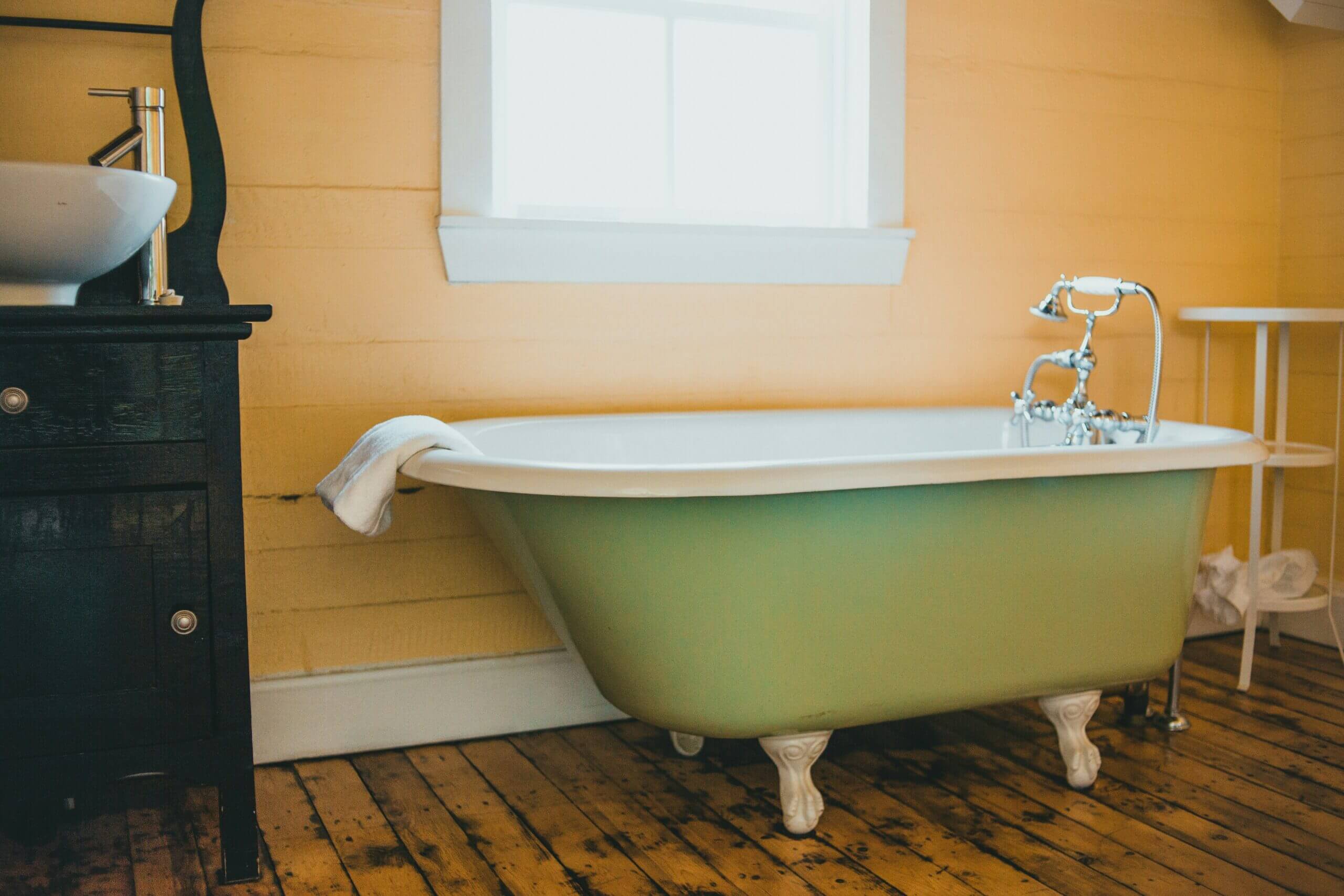
Freestanding tubs stand alone. They don’t touch walls. Clawfoot models rest on decorative feet, while pedestal models sit on a solid base. These tubs act as a focal point in larger bathrooms.
- Best for: Luxury master baths and vintage-style designs.
- Cost: $2,000–$5,000+ installed.
- Pros: High-end look; flexible placement.
- Cons: Requires floor-mounted plumbing; harder to clean around the base.
Drop-In Tubs
Drop-in tubs sit inside a custom-built deck or platform. The rim rests on the surface, hiding the unfinished sides. This style lets you customize the surround with tile, stone, or wood.
- Best for: Custom designs and large bathrooms.
- Cost: $4,000–$6,000 installed.
- Pros: Seamless look; extra storage space on the deck.
- Cons: Requires carpentry for the deck; higher installation cost.
Pros and Cons
Cast iron isn’t for every home. Here’s where it shines and where it falls short.
Pros
- Heat retention: Iron holds heat exceptionally well. Your bath stays hot longer without adding more water.
- Durability: The enamel surface resists chips and scratches. With care, these tubs last 50 years or more.
- Stability: The weight prevents flexing or movement. The tub feels solid underfoot.
Cons
- Weight: Heavy tubs need strong floors. Older homes may require joist reinforcement, which adds cost.
- Price: Cast iron costs more than acrylic or fiberglass. Expect to pay a premium for the material and labor.
- Installation difficulty: Moving a 300-pound tub requires multiple people and careful planning. It’s not a DIY job.
Installation Challenges
Installing a cast iron tub is more complex than swapping in an acrylic model. Here’s what contractors handle during the process.
- Floor assessment. The contractor checks if your floor can support the weight. If not, they reinforce the joists or add plywood subflooring.
- Removal. Taking out an old cast iron tub is tough. It often requires cutting it into pieces to get it out of the house safely.
- Plumbing adjustments. Freestanding tubs need floor-mounted supply lines and drains. Alcove tubs use wall connections. Moving pipes adds to the labor cost.
- Positioning. It takes two or three people to move the tub into place. Once it’s set, it doesn’t move again.
- Sealing. The contractor seals gaps between the tub and walls or deck to prevent leaks.
Because of the weight and plumbing requirements, we recommend professional installation. A mistake here can lead to floor damage or leaks that cost far more to fix than the initial install.
Maintenance
Cast iron tubs are low maintenance, but they aren’t invincible. The enamel coating is tough, but it can chip if you drop something heavy on it. Once chipped, the iron underneath can rust.
Clean with mild soap and water. Avoid abrasive scrubbers or harsh chemicals like bleach, which can dull the finish over time. If you notice a small chip, use a porcelain repair kit to seal it before rust sets in.
For freestanding tubs, clean around the base regularly. Dust and hair can accumulate under the feet or pedestal, which looks messy and can trap moisture.