
Modernize Flooring Rating Methodology
Modernize rates flooring contractors, retailers, and products using a weighted scoring framework across seven criteria. Contractors are evaluated on licensing, customer experience, installation quality, and responsiveness. Retailers are scored on product selection, pricing, and installation services. Products are rated on durability, performance, warranty coverage, and value. Every rating uses the same standardized scale so you can compare your options with confidence.

How Our Rating System Works
Modernize scores every flooring contractor, retailer, and product on a one-to-five scale using a weighted formula:
Final Score = Σ (Criterion Score × Criterion Weight)
In case you didn’t know: The symbol Σ (sigma) is standard math notation for summation — it means we add up the weighted score for each criterion to arrive at the final score.
Each criterion is weighted based on how much it actually affects the outcome for you as a homeowner. For flooring contractors, installation skill and licensing carry the most weight because the type of flooring — hardwood, tile, luxury vinyl plank, or carpet — only performs as well as the installation behind it. For products, durability and real-world performance drive the score.
Once the final score is calculated, it maps to a star rating:
- 4.75–5.00 stars: Excellent
- 4.25–4.74 stars: Very Good
- 3.50–4.24 stars: Good
- 2.75–3.49 stars: Fair
- 2.00–2.74 stars: Poor
- Below 2.00 stars: Very Poor
A five-star rating means a contractor, retailer, or product is excellent relative to comparable options — not that it’s flawless. All ratings are evaluated within the same category. For a full explanation of the scoring formula and what each star tier represents, see our Rating Methodology overview.
Flooring Contractor Rating Methodology
When we rate flooring contractors, we look closely at the things that matter most for a successful installation and long-term satisfaction in your home. Because flooring comes in so many types — from hardwood and tile to luxury vinyl plank (LVP) and carpet — we focus on installation skill, proper licensing, and quality workmanship. These factors have the biggest impact on how your new floors will look and last.
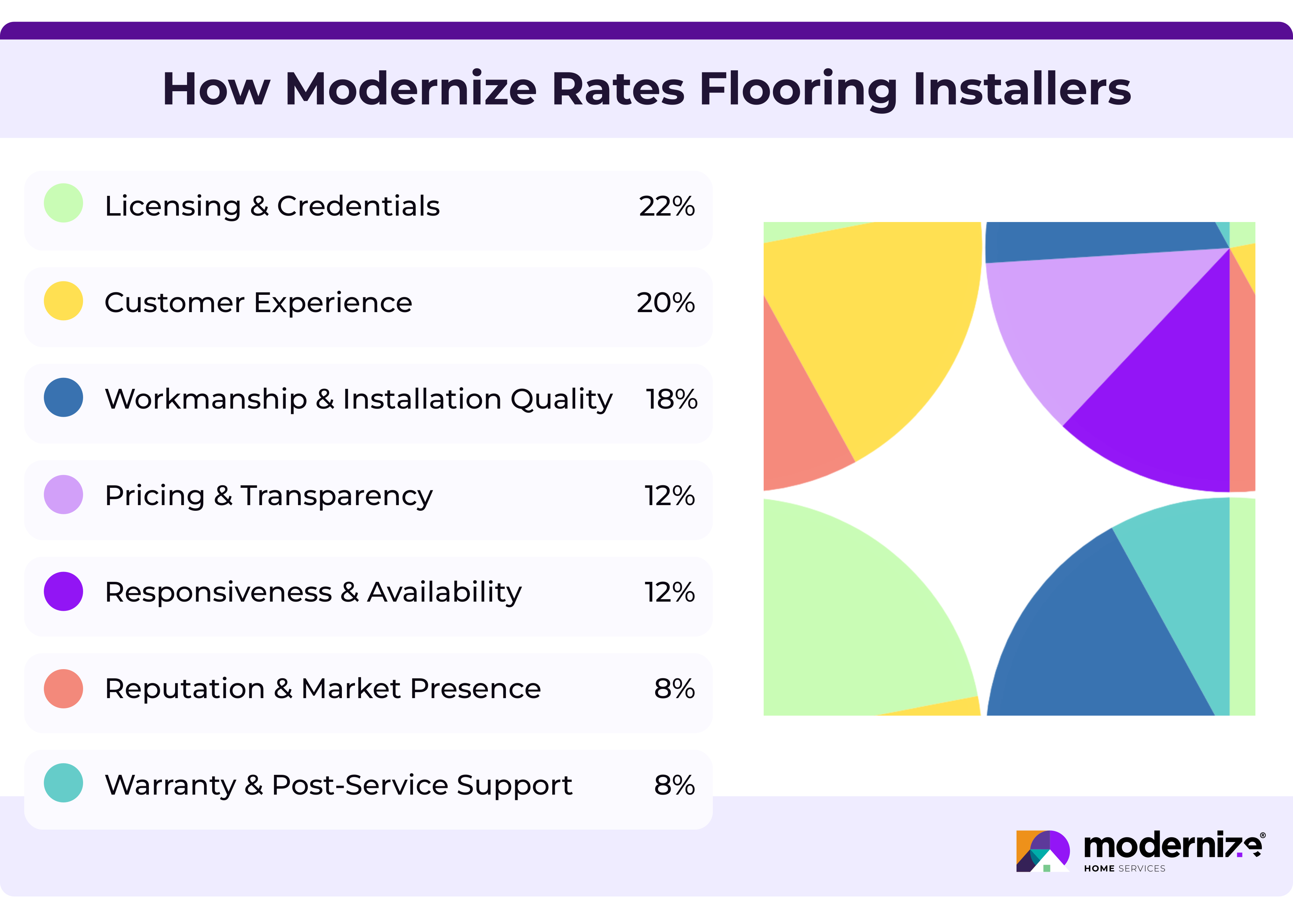
How we evaluate flooring contractors
Here’s how we break down each area we consider when scoring flooring contractors.
Licensing and credentials (22%)
We check that contractors have all the right state and local licenses, carry proper insurance, and hold important trade certifications. For flooring, this can include manufacturer-approved installer credentials for hardwood or tile, lead-safe certification when needed, and proof of OSHA safety training. Contractors who go above and beyond with their credentials and have a strong compliance record earn higher scores.
Customer experience (20%)
We measure customer experience by looking at reviews from several trusted sources. We pay attention to overall homeowner satisfaction, how recent the feedback is, and whether positive results are consistent across different types of flooring projects. Contractors with strong, steady ratings and happy customers across the board score higher.
Workmanship and installation quality (18%)
A quality installation makes all the difference in how your floors look and hold up over time. We look for contractors who know how to prepare subfloors, lay out patterns, place seams, install moisture barriers, and finish edges and transitions. Those who consistently deliver precise work, have few callbacks, and follow manufacturer guidelines earn the highest scores.
Responsiveness and availability (12%)
We consider how quickly and reliably contractors respond to homeowners — from answering questions to scheduling appointments and starting projects. Clear communication, setting expectations early, and following through on promises all help contractors earn higher scores.
Pricing and transparency (12%)
We look at how clearly contractors explain their pricing. This includes providing written estimates, breaking down labor and material costs, and outlining exactly what’s included in the project. Contractors who are upfront about costs, help you avoid surprises, and offer financing when needed earn the highest scores.
Reputation and market presence (8%)
We look at how long contractors have served your area, their reputation with local homeowners, and their standing in the flooring industry. Contractors with a proven track record, good relationships with suppliers, and a strong community presence score higher.
Warranty and post-service support (8%)
We check both how long a contractor’s labor warranty lasts and how well they handle follow-up service. Contractors who offer longer warranties, make it easy to get help if something goes wrong, and provide dependable support after installation earn higher scores.
Scoring philosophy
Our flooring contractor ratings are built to show you what to expect in real homes — not just what’s promised in brochures. We use clear, consistent criteria and compare contractors to others in your local area for a fair and meaningful score. Contractors who combine strong credentials, skilled installation, and responsive service earn our highest ratings. Those with missing licenses, uneven workmanship, or poor communication receive lower scores — even if their prices seem appealing.
Flooring Products and Brands Rating Methodology
We evaluate flooring products and brands by looking at how well the materials perform, how durable they are, how easy they are to maintain, and the value they offer over time. While our contractor ratings focus on installation and service, our product ratings highlight real-world quality and performance across all types of flooring — not just what’s listed in the manufacturer’s specs.
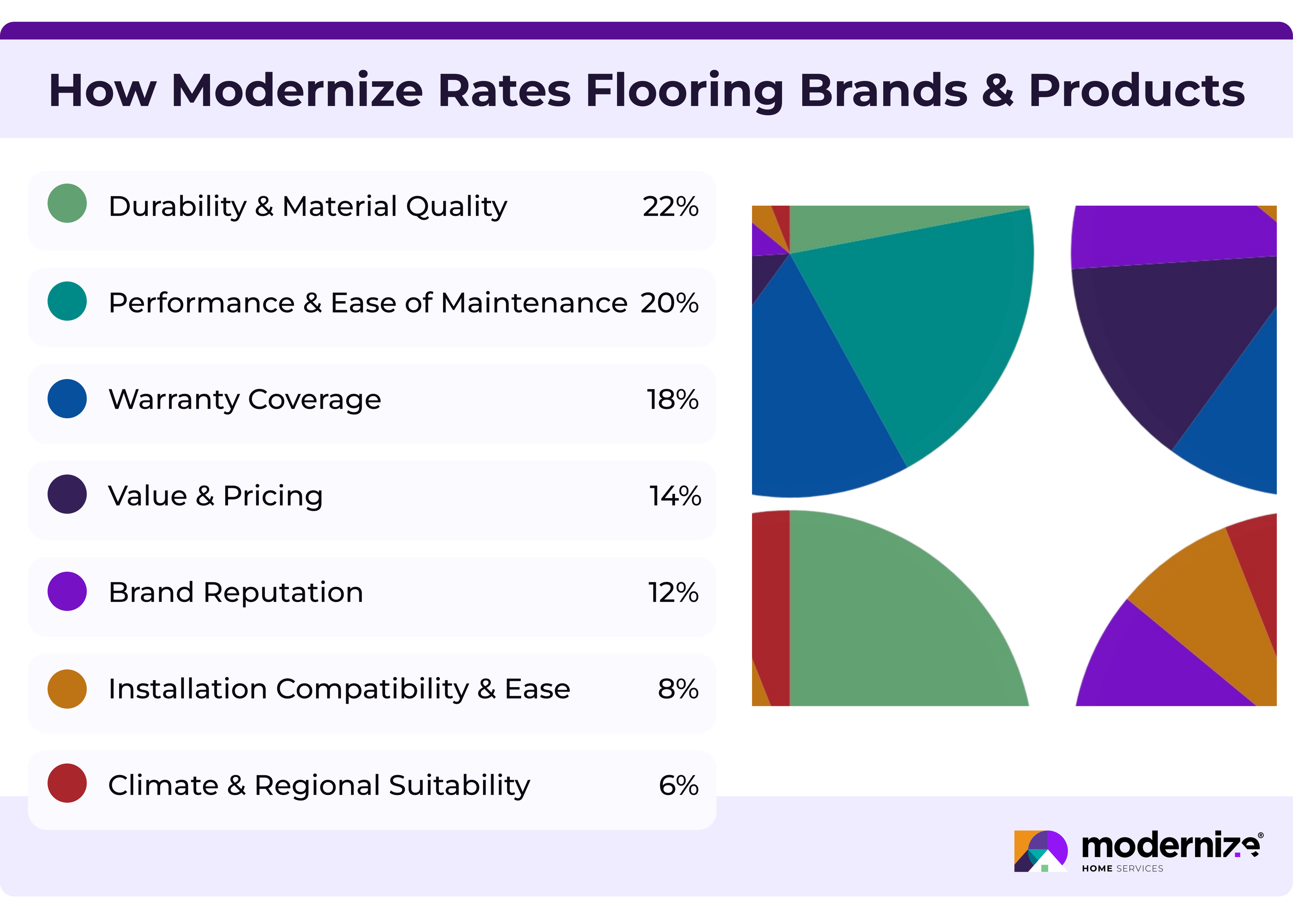
How we evaluate flooring products and brands
Here’s how we break down each area we consider when scoring flooring products and brands.
Durability and material quality (22%)
We judge durability by looking at how the flooring is made, how thick the wear layer is, and how well it holds up in real homes. We adjust our evaluation for each flooring type so you get a fair comparison.
- Hardwood: species hardness (Janka rating), finish quality, and solid vs. engineered construction
- Luxury vinyl plank (LVP) / luxury vinyl tile (LVT): wear layer thickness (mil rating), core type (WPC, SPC, or standard), and overall rigidity
- Laminate: AC rating (Abrasion Criteria), HDF core density, and moisture-resistant construction
- Tile (ceramic and porcelain): PEI hardness rating, water absorption classification, and glaze quality
- Carpet: fiber type (nylon, polyester, wool), pile weight, and face weight
Flooring that stands up to years of use, has solid construction, and a strong track record in real homes earns higher scores.
Performance and ease of maintenance (20%)
We look at how flooring holds up to daily life — including how well it resists scratches, dents, moisture, and stains, and how easy it is to clean and care for. We adjust our performance checks for each type of flooring.
- Hardwood: surface finish hardness, refinishability, and moisture response
- LVP/LVT: waterproof core ratings, surface texture durability, and cleaning requirements
- Laminate: water resistance ratings, scratch resistance, and susceptibility to swelling
- Tile: grout requirements, slip resistance (DCOF rating), and surface porosity
- Carpet: stain treatment technology, fiber resilience, and ease of deep cleaning
Flooring that keeps looking good with little effort and stands up to busy households earns higher scores.
Warranty coverage (18%)
We check how long the manufacturer’s warranty lasts and what it covers, including wear, finish, and structure. We also look at how easy it is to make a claim and whether the brand stands behind its promises. Flooring with clear, transferable warranties and a strong support history earns the highest scores.
Value and pricing (14%)
We judge value by how well a flooring product balances quality, durability, and price. Flooring that offers strong materials, lasts a long time, and needs little upkeep for the cost will score higher than pricier options that don’t perform as well.
Brand reputation and support (12%)
We look at how easy it is to find a brand’s products, how well they support installers, and their reputation in the industry. Brands that are widely available, offer good support to contractors, deliver consistent quality, and provide helpful customer service earn higher scores.
Installation compatibility and ease (8%)
Even the best flooring can fall short if it’s hard to install. We check if products work with common subfloors, offer easy installation options like click-lock or floating floors, and are familiar to most installers. Flooring that’s easy to work with and fits a variety of rooms and subfloors earns higher scores.
Climate and regional suitability (6%)
How well flooring performs can depend on your local climate. We look at how products handle humidity, temperature changes, and moisture. Flooring designed for specific conditions — like waterproof cores for humid areas or stable construction for places with big temperature swings — earns higher scores.
Scoring philosophy
Our flooring product ratings are built to help you understand what to expect for durability, upkeep, and long-term value in your own home. We use the same scoring standards for every product and compare each one to similar flooring in its category — so you get a fair and useful rating whether you’re looking at hardwood, LVP, laminate, tile, or carpet. Flooring that’s built to last, comes with a strong warranty, and is easy to care for earns our highest ratings. Products with weaker materials, less warranty coverage, or disappointing real-world results score lower.
Flooring Retailer Rating Methodology
Our flooring retailer ratings evaluate the full shopping and buying experience — from product selection and pricing to the quality of installation services offered in-store. While contractor ratings focus on the installer who comes to your home, retailer ratings assess the companies you shop with to find and purchase your flooring.
How we evaluate flooring retailers
Here’s how we break down each area we consider when scoring flooring retailers.
Product selection and brand quality (25%)
We evaluate the breadth and quality tier of flooring brands carried, variety across flooring types (hardwood, LVP, laminate, tile, carpet), and availability of exclusive or proprietary brands.
Pricing and value (20%)
We assess competitive per-square-foot pricing, transparency of total project cost, frequency and quality of promotions, and price-match policies.
Customer experience and service (18%)
We evaluate in-store or in-home consultation quality, staff product knowledge, responsiveness to inquiries, and the overall ease of the shopping process.
Installation services (15%)
We assess the availability, quality, and consistency of professional installation — including how well retailers vet their installers and how accountable they are for post-installation issues.
Warranty and return policy (12%)
We evaluate product return windows, claim process ease, accountability when products underperform, and whether warranty support routes through the retailer or directly to the manufacturer.
Availability and accessibility (10%)
We consider the number of locations, online ordering capability, delivery options, and in-stock inventory reliability.
Scoring philosophy
Our flooring retailer ratings are designed to help you find a buying experience that matches your project needs — whether you’re shopping in person, online, or both. Retailers who offer a strong product range, transparent pricing, and accountable installation services earn our highest ratings. Those with limited selection, unclear costs, or inconsistent service receive lower scores.