Zoeller M53 1/3 HP Sump Pump Review 2026: Is It Worth the Price?
Average Cost: $200 to $250
Key Features
- Up to 2,520 gallons per hour (GPH) pump capacity
- Cast iron housing with stainless steel hardware
- Built-in motor overload protection

The Modernize Mission
Modernize maintains homeowner-first editorial integrity, meaning we accept no commissions and no partner links for this review. Our reviews are thoroughly fact-checked by our home improvement experts. Ratings are determined by a sophisticated algorithm to rate brands, including analyses of products, materials, quality, costs, sizes, durability, energy efficiency, and warranties.
Table of Contents
Key Features and Specifications
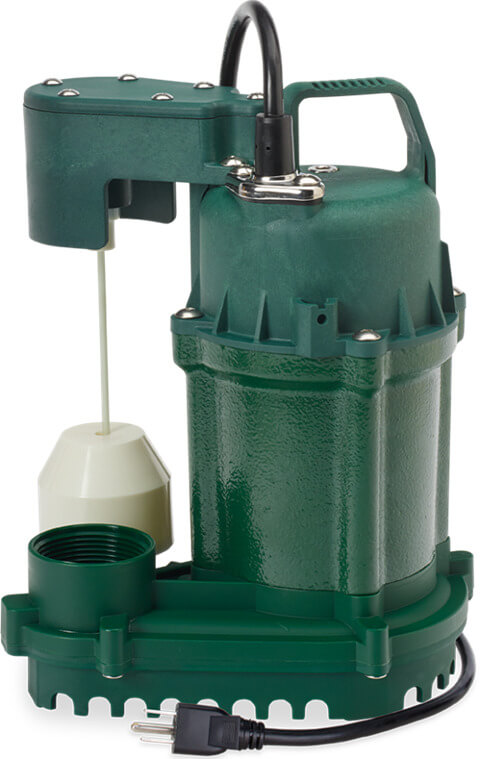
The Zoeller M53 uses a cast-iron housing and a vertical float switch. These are the main specs that matter for most homes:
- Motor: 1/3 HP, 115V, 60 Hz
- Pump capacity: Up to 2,520 gallons per hour (GPH) at zero feet of head; capacity decreases as discharge height increases
- Solids handling: Non-clogging vortex impeller handles solids up to 1/2 inch in diameter
- Switch type: Vertical float switch (automatic activation as water rises)
- Construction: Cast iron housing; stainless steel hardware
- Thermal protection: Built-in overload protection to prevent motor burnout
- Discharge size: 1-1/2 inch NPT
- Minimum pit size: 10-inch diameter sump basin
A note on horsepower labeling: The Zoeller M53 is marketed as both “1/3 HP” and “3/10 HP” depending on the retailer and packaging. These refer to the same pump. If you see either designation on the box or product listing, you have the right pump.
Performance and Applications
The M53’s 1/3 HP motor is strong enough for most common basement flooding problems — like seasonal groundwater, high water tables, and moderate storm runoff. With a maximum capacity of 2,520 GPH, it can remove about 42 gallons per minute in ideal conditions, which is enough for most single-family homes with typical water issues.
This pump is not meant for severe flooding, homes with very high water tables that require constant pumping, or basements larger than about 2,500 square feet with heavy moisture problems. In those cases, a 1/2 HP pump like the Zoeller M57 or another higher-capacity model is a better choice.
The vortex impeller is a real advantage over standard designs because it lowers the risk of clogs when debris, silt, or small solids get into the pit. This is especially helpful in older basements or crawl spaces with dirt floors.
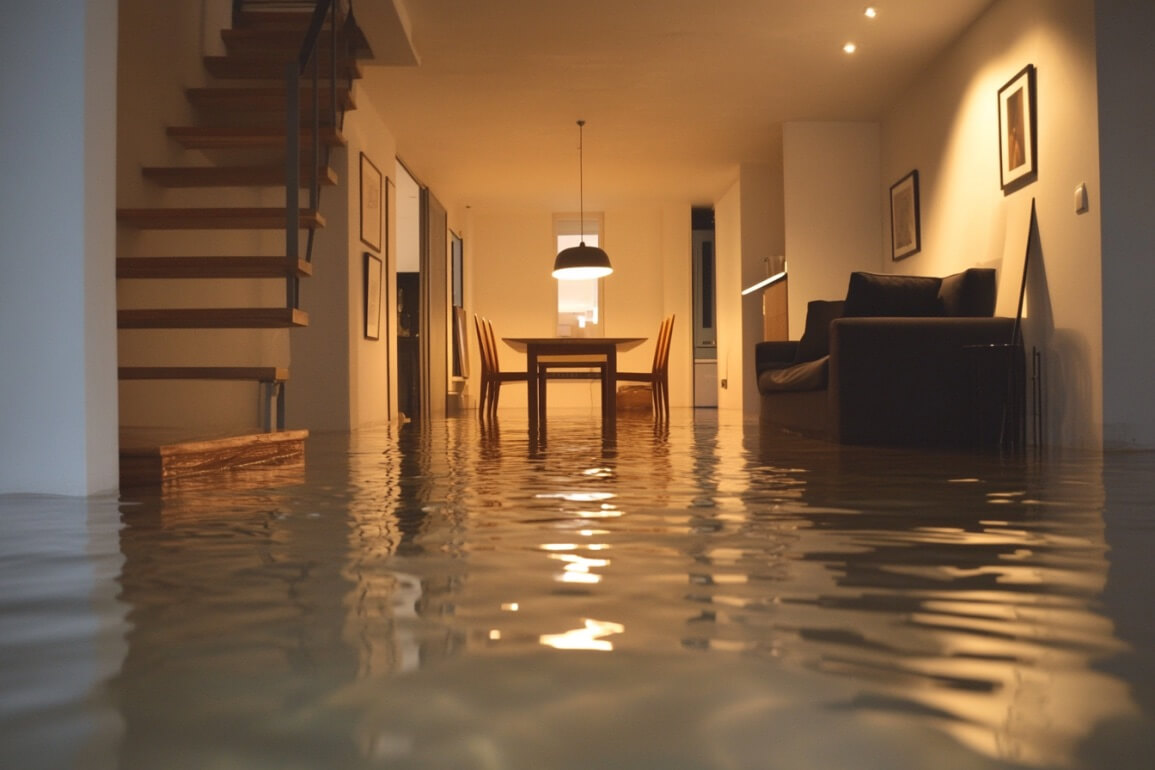
Pros and Cons of the Zoeller M53
Zoeller M53 pros
- Cast iron durability: Lasts much longer than pumps with plastic housings — typically 10 to 15 years compared to five to seven years for cheaper plastic models.
- Vortex impeller: Less likely to clog in areas with debris than standard centrifugal impeller designs.
- Thermal overload protection: Helps prevent the motor from burning out during long periods of use, which is a common failure point in pumps that lack this feature.
- Established track record: The M53 has been in production for decades and has a strong history of reliable performance in residential applications.
- Straightforward installation: Fits standard 10-inch sump basins and works with standard 1-1/2 inch discharge pipes.
Zoeller M53 cons
- No battery backup included: The M53 is a primary pump only. If the power goes out during a storm, which is when flooding most often occurs, the pump will not work unless you add a separate battery backup system.
- Vertical float switch reliability: The vertical switch requires adequate space and a clean pit to operate reliably. Several verified buyers have reported switch failures, including instances where the pump did not activate even when submerged. A separate water level alarm is a good precaution with this model.
- Heavier than plastic alternatives: The cast iron build makes this pump heavier, so servicing and replacing it is more difficult than with lighter plastic models.
- 1/3 HP limit: Sufficient for most homes, but not for properties with severe, constant, or high-volume water intrusion.
- Higher upfront cost: At $220 to $250, this pump costs roughly twice as much as basic plastic models. It offers better long-term value, but the initial price is higher.
How Much Does the Zoeller M53 Cost?
The Zoeller M53 typically sells for $220 to $250. The similar N53 model, which does not include a built-in float switch and requires a separate switch for automatic operation, costs $200 to $230. Most homeowners should choose the M53. The N53 is best suited for custom installations where the installer prefers a different switch type.
Price by model
- Zoeller M53: $220 to $250, includes a vertical float switch for automatic operation.
- Zoeller N53: $200 to $230, requires a separate float switch; best for custom installations.
Total installed cost
- Professional installation: $100 to $300 depending on labor rates, pit condition, and whether discharge piping needs to be run or replaced.
- Check valve (strongly recommended): $10 to $30.
- Discharge piping: $20 to $60 depending on run length.
- Battery backup system (recommended for flood-prone homes): $150 to $400 for a standalone backup unit.
A professional installation of the M53 with a check valve and a basic backup system typically costs $600 to $1,000 for most homes. This is more than a budget pump setup, but far less than the $3,000 to $10,000 it can cost to remediate a flooded basement.
Installation Considerations
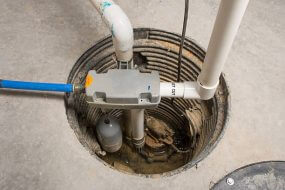
The M53 is designed for easy installation in standard home sump pits, but a few factors can affect whether it is a simple job or requires additional work:
- Basin size: The M53 requires at least a 10-inch diameter sump pit. In older homes, the basin may be undersized or in poor condition and may need to be replaced before installing the pump.
- Discharge piping: Use 1-1/2 inch PVC pipe to match the pump’s flow capacity. Undersized or kinked pipes can reduce performance and accelerate pump wear.
- Check valve: Install a check valve on the discharge line to prevent water from flowing back into the pit when the pump shuts off. Without one, the pump works harder and wears out faster.
- Discharge destination: Direct discharge water at least 10 feet away from your home’s foundation and away from neighboring properties. Check local codes for specific discharge requirements before installation.
- Discharge line freeze protection: In cold climates, make sure the discharge line cannot freeze while the pump is running. A frozen line traps water with nowhere to go, which can burn out the motor. Insulate any exposed sections of pipe or route them to avoid freezing.
- GFCI outlet: The pump must plug into a grounded, ground fault circuit interrupter (GFCI)-protected outlet. Do not use an extension cord.
If you are not comfortable with plumbing or electrical work, hire a professional to install the pump. In finished basements, professional installation is often required to meet permit requirements.
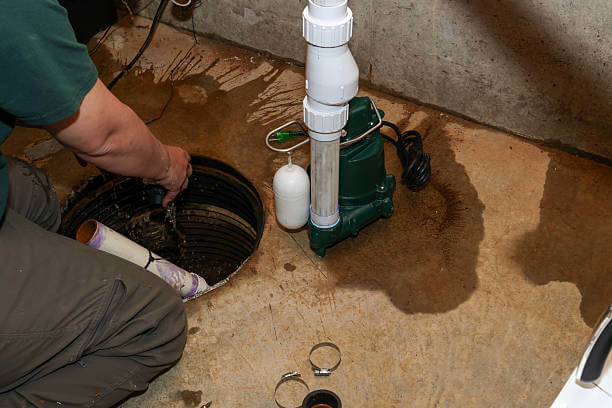
How the Zoeller M53 Compares to Alternatives
The M53 is frequently compared to two other commonly recommended residential sump pumps in the same price range.
| Model | Housing | Motor | Max GPH | Switch Type | Price |
|---|---|---|---|---|---|
| Zoeller M53 | Cast iron | 1/3 HP | 2,520 | Vertical float | $220 to $250 |
| Wayne CDU980E | Cast iron/stainless | 3/4 HP | 4,600 | Electronic | $160 to $200 |
| Liberty Pumps 257 | Cast iron | 1/3 HP | 2,580 | Vertical float | $180 to $220 |
The Wayne CDU980E offers significantly higher capacity at a lower price, making it a strong option for homes with greater water volume. The Liberty Pumps 257 is the closest competitor to the M53 — similar features, a slightly lower price, and a comparable reputation for durability. The M53 stands out for its long production history and wide service network. Zoeller also manufactures many parts domestically, which can simplify repairs.
What Homeowners and Installers Say
Reviews from verified Lowe’s buyers and independent forums generally fall into two groups: homeowners who have run the M53 for years without issues, and those who have experienced float switch problems. Both are worth knowing before you buy.
A reliable workhorse
On the reliability side, the M53 has a well-documented track record of handling sustained heavy use.
One Reddit commenter described six years of continuous service, with the pump cycling every 30 seconds for days at a time during heavy spring rains: “It’s a workhorse and I highly recommend this brand.”
Mike, a verified Lowe’s reviewer, reported four years of problem-free operation, including continuous spring rain cycles, and kept a second unit on hand as a backup.
Benjamin noted his first M53 lasted 4.5 years in a light residential application and said he would buy it again.
The professional installer perspective is particularly useful here. A Reddit commenter who works as a basement waterproofer put the typical lifespan at 10 to 12 years across their installations — with one outlier reaching 22 years and only one failure at the five-year mark in their own experience.
Potential problem areas
The float switch is the most common problem area. Todd, a verified Lowe’s reviewer, reported that the pump sometimes did not activate when submerged and sometimes ran when the basin was dry. Chabeeb, another reviewer, had to tap the discharge pipe to get the pump working for the last three years of a five-year period, and advised against buying this pump without a separate water level alarm as a backup. These reviews are consistent with the earlier note that in smaller or debris-filled pits, the float switch can become unreliable before the motor fails.
One reviewer also flagged a cold-climate risk: if the discharge line freezes while the pump is running, the motor can burn out. In cold areas, insulating the discharge line during installation is a better approach than addressing it after the fact.
Reviews sourced from verified Lowe’s purchasers and independent community forums.
Maintenance and Testing
Regular testing is the only way to know your sump pump will work when you need it. The M53 requires minimal maintenance, but these checks are important:
- Test quarterly: Pour a bucket of water into the sump pit to confirm the float switch activates and the pump runs and drains. Do this before rainy seasons.
- Clean the inlet screen annually: Remove the pump and clear any debris from the screen at the pump’s base to maintain flow rate.
- Check the float switch: Confirm the float moves freely and is not obstructed by debris or tangled against the pump housing.
- Inspect the check valve: Listen for backflow when the pump shuts off. If water flows back into the pit audibly, the check valve needs replacement.
- Test the backup system: If a battery backup is installed, test it separately and replace the battery every two to three years regardless of use.
According to the Federal Emergency Management Agency (FEMA), sump pump failure is a leading cause of basement flooding in homes that already have drainage systems; most often due to power outages, float switch problems, or pumps that have not been tested before a flood event.
Our Verdict: Is the Zoeller M53 Worth It?
When it’s worth it
The Zoeller M53 is worth the higher price for homeowners who want a pump built to last more than a few years. The cast iron housing, vortex impeller, and thermal overload protection are genuine durability features — not just marketing claims — and the M53’s decades-long production history backs that up. One experienced installer cited a typical lifespan of 10 to 12 years across their jobs, which makes the premium over a $100 plastic pump a reasonable investment.
When it might not be worth it
This pump is not right for every situation. Homes with severe water problems need a higher-capacity 1/2 HP model. In flood-prone areas, a battery backup system is essential, since the M53 alone will not operate during power outages, which is when most flooding occurs. If your sump pit is small or irregularly shaped, confirm the vertical float switch will have enough clearance to operate reliably before purchasing.