
Modernize HVAC Rating Methodology
Modernize rates HVAC contractors and systems using a weighted scoring framework across seven criteria. Contractors are evaluated on licensing, installation quality, customer experience, and responsiveness. Products are scored on efficiency, durability, warranty coverage, and value. Every rating uses the same standardized scale so you can compare your options with confidence.

How Our Rating System Works
Modernize scores every HVAC contractor and product on a one-to-five scale using a weighted formula:
Final Score = Σ (Criterion Score × Criterion Weight)
In case you didn’t know: The symbol Σ (sigma) is standard math notation for summation — it means we add up the weighted score for each criterion to arrive at the final score.
Each criterion is weighted based on how much it actually affects the outcome for you as a homeowner. For HVAC contractors, that means installation quality and technical credentials carry more weight than market presence. For products, system efficiency and durability drive the score more than ease of installation.
Once the final score is calculated, it maps to a star rating:
- 4.75–5.00 stars: Excellent
- 4.25–4.74 stars: Very Good
- 3.50–4.24 stars: Good
- 2.75–3.49 stars: Fair
- 2.00–2.74 stars: Poor
- Below 2.00 stars: Very Poor
A five-star rating means a contractor or product is excellent relative to comparable options — not that it’s flawless. All ratings are evaluated within the same category. For a full explanation of the scoring formula and what each star tier represents, see our Rating Methodology overview.
HVAC Contractor Rating Methodology
We rate HVAC contractors by focusing on the factors that most affect system performance, installation quality, and long-term homeowner satisfaction. Given the complexity of HVAC systems, we place extra emphasis on technical qualifications and workmanship rather than surface-level details like price alone.
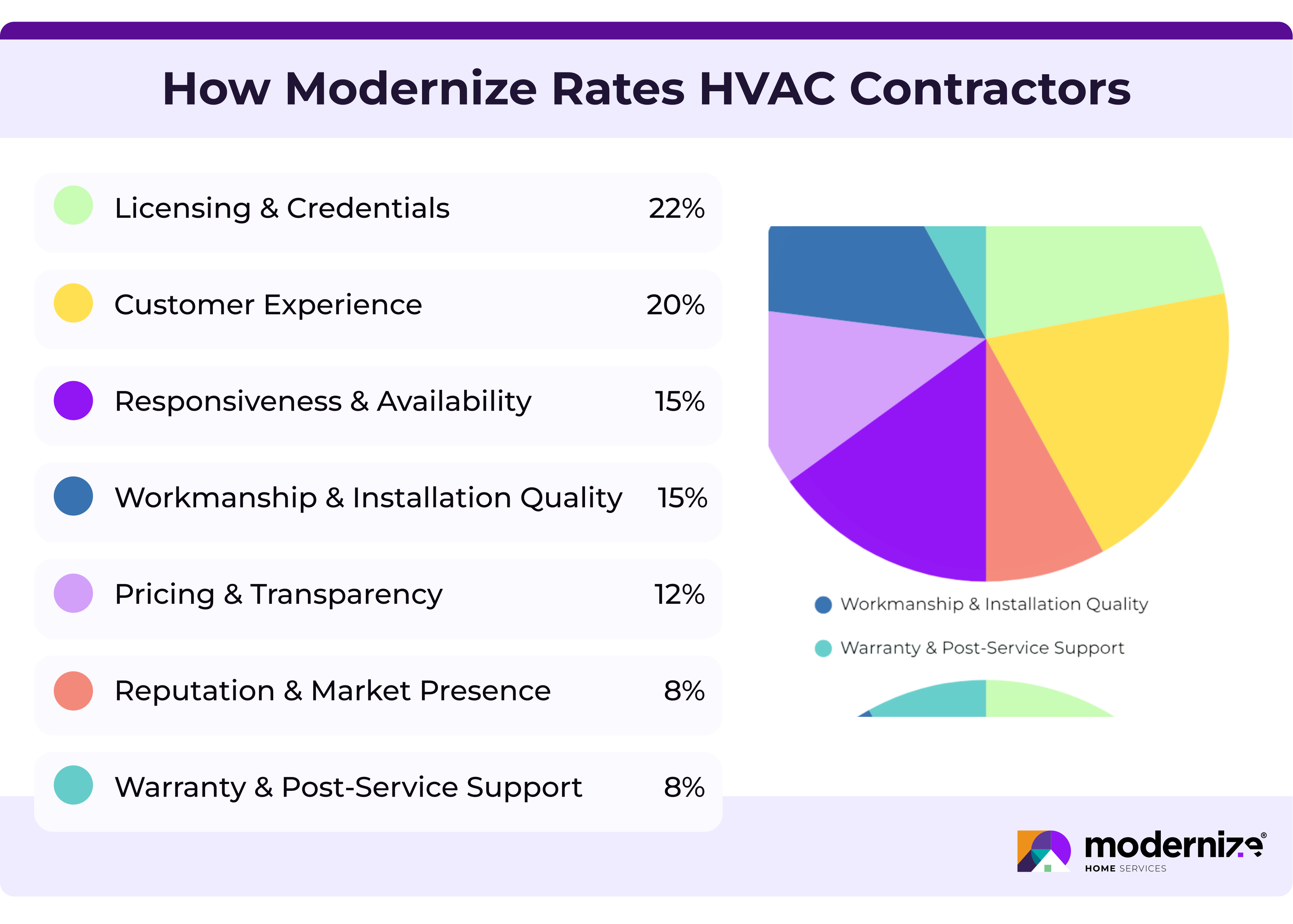
How we evaluate HVAC contractors
Here’s how we break down each area we consider when scoring HVAC contractors.
Licensing and credentials (22%)
We verify whether contractors meet required licensing standards and hold appropriate certifications — including EPA 608 and industry-recognized credentials like NATE or manufacturer certifications. Contractors with advanced certifications and a strong compliance history earn higher scores.
Customer experience (20%)
We measure customer experience using aggregated review data across multiple platforms. Scores reflect overall satisfaction trends, including the consistency, volume, and recency of feedback.
Responsiveness and availability (15%)
We evaluate how quickly and reliably a contractor engages with customers — including response times, scheduling speed, and availability for urgent or emergency service.
Workmanship and installation quality (15%)
Proper installation significantly affects HVAC system performance and longevity. We look for contractors who follow best practices, size systems accurately, meet code requirements, and use proven installation methods. Contractors with strong technical skills and consistent quality earn higher scores.
Pricing and transparency (12%)
We assess how clearly contractors explain their pricing, including whether they provide written estimates, itemized quotes, and financing options. Contractors who are upfront about costs — with little risk of surprises — earn the highest scores.
Reputation and market presence (8%)
We consider how long contractors have been in business, their presence in your community, and their overall reputation. Contractors with a strong local or regional track record earn higher scores.
Warranty and post-service support (8%)
We evaluate both the length and quality of a contractor’s labor warranty and their track record for follow-up service. Contractors offering longer warranties and reliable post-installation support earn higher scores.
Scoring philosophy
Our HVAC contractor ratings are designed to reflect real-world outcomes, not just what’s promised on paper. All scores use standardized definitions and are evaluated relative to comparable contractors in the same market. Contractors who combine strong credentials, reliable installation quality, and responsive service earn the highest ratings. Providers with gaps in licensing, inconsistent workmanship, or poor communication receive lower scores — even if their prices are competitive.
HVAC Products and Brands Rating Methodology
Modernize evaluates HVAC products and brands based on performance, efficiency, durability, and long-term value. While contractor ratings focus on service and installation, our product ratings emphasize engineering quality and real-world system performance over time — not just specifications listed on a data sheet.
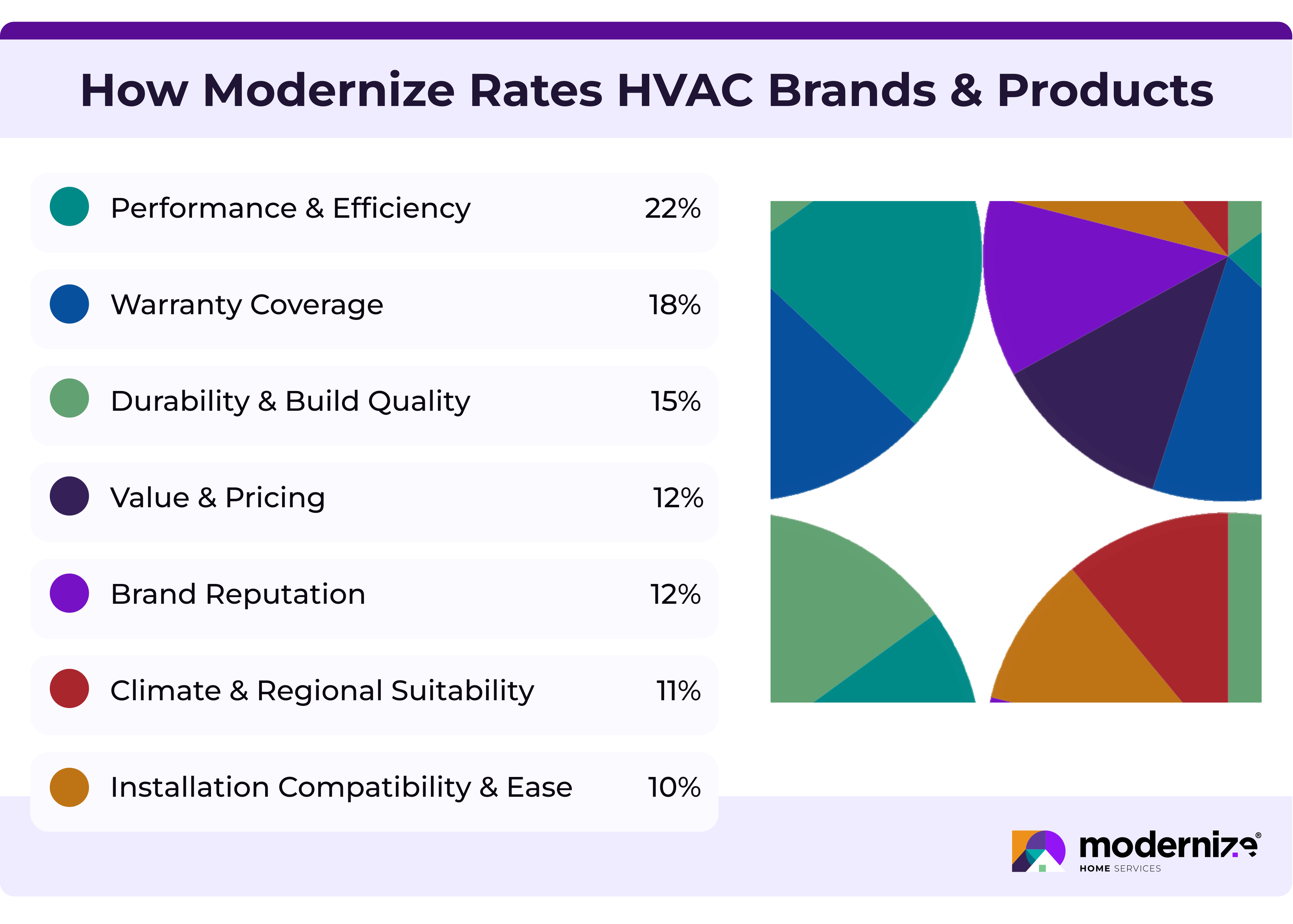
How we evaluate HVAC products and brands
Here’s how we break down each area we consider when scoring HVAC products and brands.
Performance and efficiency (22%)
We use system-specific metrics to evaluate performance so you can compare different types of HVAC equipment fairly. Depending on the system type, this includes:
- Air conditioners: SEER2 (seasonal energy efficiency ratio 2), EER2 (energy efficiency ratio 2), compressor type (single-stage, two-stage, variable-speed)
- Furnaces: AFUE (annual fuel utilization efficiency), staging, airflow control
- Heat pumps: SEER2, HSPF2 (heating seasonal performance factor 2), cold-climate performance
- Boilers: AFUE, condensing capability, modulation
Systems that deliver consistent comfort, strong efficiency, and reliable operation in real homes — not just in lab conditions — earn higher scores.
Warranty coverage (18%)
We look at how long and how comprehensive the manufacturer’s warranty is, including coverage duration for major components, ease of claims and registration requirements, and the brand’s track record for honoring warranties. Products with clear, easy-to-use warranties and strong claims support earn the highest scores.
Durability and build quality (15%)
We assess durability based on the quality of system materials and components — including compressors, heat exchangers, coils, and overall construction. Higher scores go to systems with proven long-term reliability, reinforced or premium components, and a strong performance history in the field.
Value and pricing (12%)
We assess value by looking at how cost, performance, and expected lifespan work together. Products that offer strong efficiency, durability, and long-term energy savings relative to their price earn higher scores than more expensive, lower-performing options.
Brand reputation and support (12%)
We evaluate the strength of the manufacturer’s service network, parts availability, and industry reputation. Brands with wide service coverage, strong installer relationships, and consistent reliability signals earn higher scores.
Climate and regional suitability (11%)
HVAC performance can vary considerably by local climate. We check how well systems hold up in different regions — including extreme heat or humidity, cold-weather heating demands, and seasonal efficiency consistency. Products proven to perform in demanding climates earn higher scores.
Installation compatibility and ease (10%)
Even high-quality systems can underperform if they’re difficult to install correctly. We assess compatibility with common residential configurations, flexibility across installation scenarios, and familiarity among contractors. Products that are widely supported and straightforward to install correctly earn higher scores.
Scoring philosophy
Our HVAC product ratings are designed to show you what to expect in terms of comfort, operating costs, reliability, and system longevity. We use consistent scoring criteria across all products and compare them to similar systems within their category — so ratings are always meaningful, whether you’re evaluating a central air conditioner, a heat pump, or a high-efficiency furnace. Products that offer high efficiency, durable construction, and strong warranty support earn the highest ratings. Systems that only meet basic requirements or lack long-term reliability receive lower scores.