Plumbing
Water Heater Repair Cost in 2026: What Homeowners Should Expect
Average Cost: $90 – $1,775
The average homeowner spends about $600 on a typical water heater repair, though total costs can range from around $90 to $1,775+ depending on the type of unit (tank vs. tankless), the specific part that failed, the severity of the issue, and local labor rates. Smaller fixes — like replacing a thermostat or heating element or flushing the tank — often fall in the $100 to $350 range, while more involved repairs (such as a gas control valve replacement or more complex leak work) commonly run $200 to $750. Labor is a major driver of the final bill and can increase when the unit is difficult to access or the job involves additional plumbing, electrical, or gas work. This guide breaks down water heater repair costs, what influences pricing, when replacement is the better value, and how to reduce future repair risk.
Find the best plumbing pros in your area.

The Modernize Mission
We help homeowners make confident decisions through our reliable, up-to-date, and unbiased information and average project costs. All of our content is thoroughly reviewed and fact-checked by our team of home improvement experts. Learn more about how we maintain these values.
Cost of Water Heater Repair in 2026
For most homeowners, water heater repair costs depend on two things: what’s actually wrong and how complicated it is to access and fix. A simple part swap on an easy-to-reach unit can be affordable. A complicated diagnosis, extensive labor, or multiple failing components can raise the total quickly.
To keep expectations realistic, it helps to think in tiers:
Typical Water Heater Repair Cost Ranges
| Repair Level | What It Often Includes | Typical Cost Range |
|---|---|---|
| Minor repairs | Thermostat or heating element replacement, basic adjustments, tank flush | $100 to $350 |
| Medium repairs | Gas control valve replacement, leak repairs (non-tank), larger internal component replacement | $200 to $750 |
| Severe issues | Tank failure, significant corrosion, major leaks, multiple major problems | $750 to $1,775+ |
It’s completely normal for a homeowner to hear one quote that sounds reasonable and another that feels high — because the “same problem” (like “no hot water”) can be caused by very different failures.
Common Water Heater Repairs and Typical Costs
| Repair Type | What It Usually Involves | Typical Cost Range |
|---|---|---|
| Diagnostic/service call | Technician troubleshooting, basic testing, confirming cause | $75 to $200 |
| Thermostat replacement (electric tank) | Replacing one or both thermostats, testing heating cycle | $100 to $300 |
| Heating element replacement (electric tank) | Replacing one or both elements, draining/refilling tank as needed | $150 to $350 |
| Tank flushing (sediment removal) | Draining and flushing tank to improve performance/noise | $100 to $250 |
| Anode rod replacement | Replacing sacrificial rod to slow corrosion | $200 to $500 |
| Dip tube replacement | Restoring hot water delivery when mixing/cooling occurs | $150 to $400 |
| T&P relief valve replacement | Replacing temperature & pressure safety valve, checking discharge line | $150 to $350 |
| Gas thermocouple / flame sensor | Restoring reliable ignition (common “won’t stay lit” issue) | $150 to $350 |
| Pilot/ignition repair (gas) | Cleaning/repairing ignition components, verifying safe operation | $150 to $450 |
| Gas control valve replacement | Replacing gas valve/controls, testing combustion and safety | $250 to $750 |
| Leak repair (valves/fittings/lines) | Fixing connection leaks (not tank failure), replacing fittings or shutoff | $150 to $600 |
| Expansion tank replacement (if present) | Replacing expansion tank, checking pressure and connections | $150 to $400 |
| Tankless descaling/flush (maintenance) | Descaling heat exchanger to restore efficiency & prevent errors | $150 to $400 |
| Tankless sensor replacement | Replacing flow/thermal sensors, recalibrating/testing | $150 to $500 |
| Tankless heat exchanger issues | Advanced repair; sometimes not cost-effective vs replacement | $500 to $1,500+ |
| Tank leak / tank failure | Typically means replacement, not a long-term “repair” | Often replacement |
What Drives the Cost (and Why Quotes Vary so Much)
- The Part That Needs Fixing: Some components are relatively straightforward and inexpensive. Others are more complex and costly, especially on gas or tankless systems. For example, replacing a thermostat or heating element generally costs far less than replacing a control valve or troubleshooting a complex tankless ignition issue.
- Labor Time and Access: Even when the part itself is affordable, labor can make the final bill climb. A unit tucked into a tight attic space, a closet with limited clearance, or an installation that requires partial disassembly or rerouting connections can increase labor hours. Diagnostic time also counts — especially when symptoms are vague.
- Tank vs. Tankless (and Gas vs. Electric): Storage-tank and tankless water heaters use different components and have different repair paths. Tankless systems can require more specialized troubleshooting and maintenance (like descaling), while tank units often deal with wear-and-tear parts over time. Gas and electric systems also differ, and gas repairs can involve additional safety steps and parts.
- Severity — and Whether the Unit Is Truly Repairable: Sometimes a “repair” starts as a small problem and ends as a bigger decision. If the tank itself is failing — especially from internal corrosion — repair options can be limited and short-lived. That’s when homeowners are often advised to shift attention toward replacement.
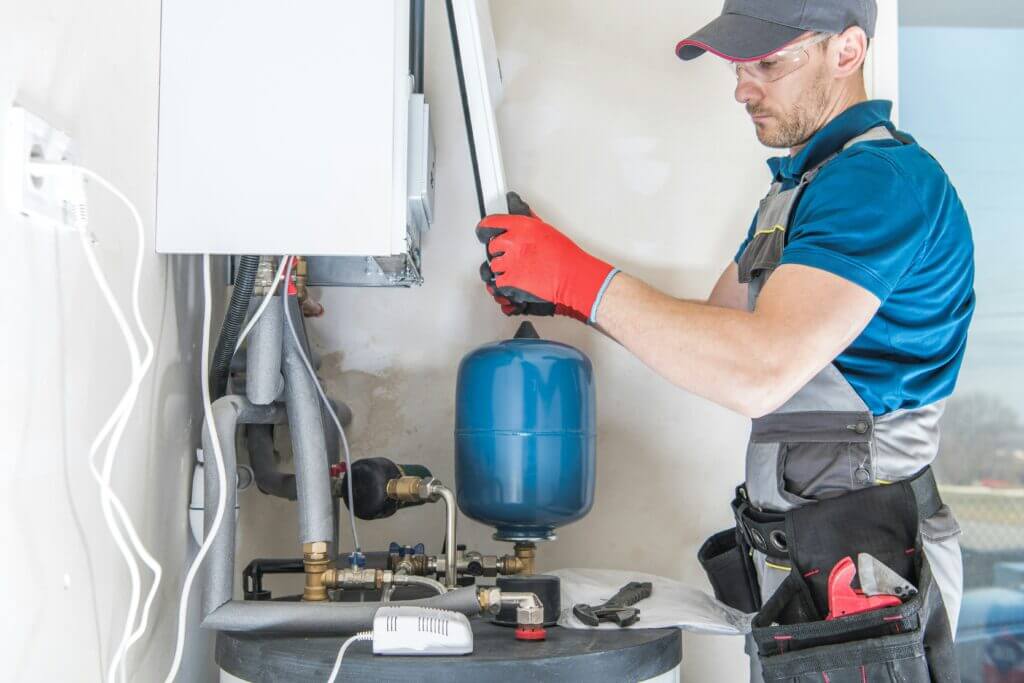
Water Heater Repair vs. Replacement
If you’re facing a higher quote, you’re not alone in wondering whether repairing is worth it. The repair-vs.-replace question is usually less about the exact number on the estimate and more about what that repair buys you.
When a Repair Is Usually the Right Choice
Repair tends to make sense when the issue is isolated and the unit is otherwise in decent condition. If a pro can replace a single component (like a thermostat, heating element, or a minor valve issue) and the rest of the system checks out, a repair can restore performance at a relatively manageable cost.
Repairs are also more appealing when you haven’t had recurring failures. If this is the first real issue you’ve had and the diagnosis is clear, fixing it is often the simplest path forward.
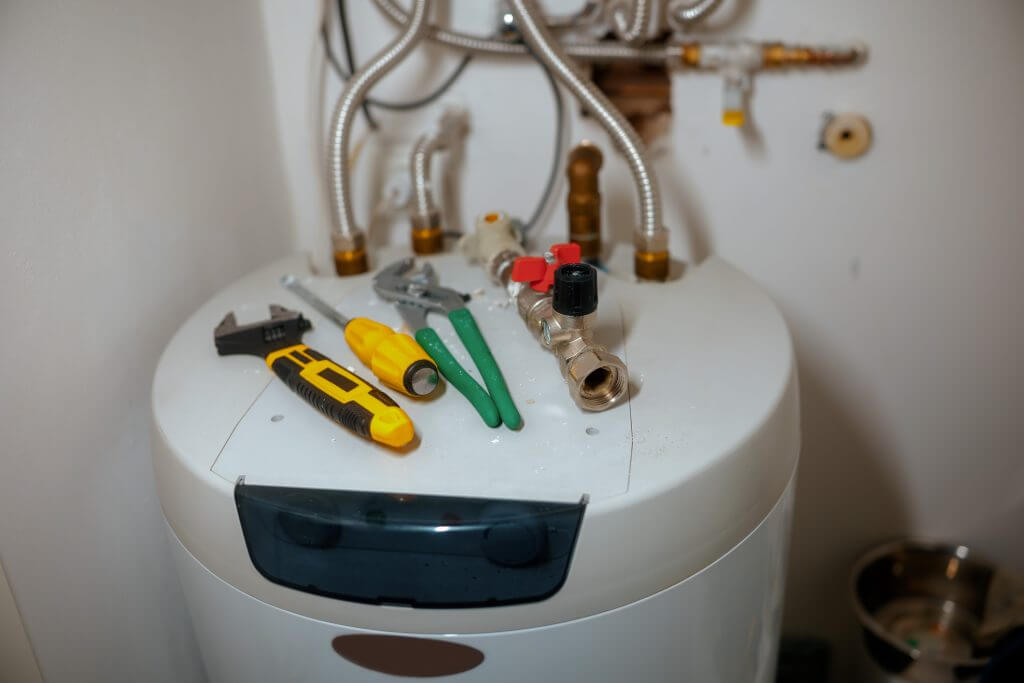
When Replacement Is Often the Better Value
Replacement becomes more appealing when you’re dealing with tank-related problems — especially a major leak or signs of tank corrosion. Even if a technician can stabilize the issue temporarily, the underlying damage may continue, and you could end up paying for multiple service calls in a short period.
Replacement also becomes a strong contender when repair costs stack up: multiple failing components, high labor complexity, or a system that has become unreliable. In those cases, a new unit can offer peace of mind, improved efficiency, and fewer “surprise” breakdowns.
A helpful way to frame it: If the repair is expensive and the unit is older or showing signs of decline, replacement may be the more cost-effective long-term choice.
How to Save on Water Heater Repair Costs
No one wants to cut corners on hot water — especially when safety is involved — but there are legitimate ways to keep costs from ballooning.
Reduce Emergency Pricing When Possible
If your water heater isn’t actively leaking or creating a safety issue, scheduling a repair during normal business hours can help you avoid higher emergency service rates. If you’re without hot water but the situation is stable, it’s worth asking whether a next-day appointment could lower the price.
Get a Second Opinion for Mid-To-High Quotes
For expensive repairs, it’s reasonable to get another estimate — especially if the first recommendation quickly jumps to replacement or involves multiple costly parts. A second technician may confirm the same diagnosis (which is useful) or offer a different approach.
Ask for the “Repair vs. Replace” Breakdown
A good contractor can explain what the repair accomplishes, what risks remain, and how long you can realistically expect the fix to hold. If replacement is recommended, ask why — and what the cost difference looks like when you factor in reliability, warranty coverage, and the likelihood of additional repairs.
Don’t Ignore Small Symptoms
This sounds counterintuitive, but paying attention early can prevent bigger bills later. A minor performance issue — like inconsistent temperature — can sometimes be resolved before it turns into a major failure that involves multiple parts or water damage.
Water Heater Maintenance Tips to Prevent Future Repairs
Water heaters work quietly in the background, and that’s exactly why maintenance gets overlooked. But a small amount of routine upkeep can reduce sediment buildup, improve efficiency, and extend the system’s lifespan.
For Storage-Tank Water Heaters
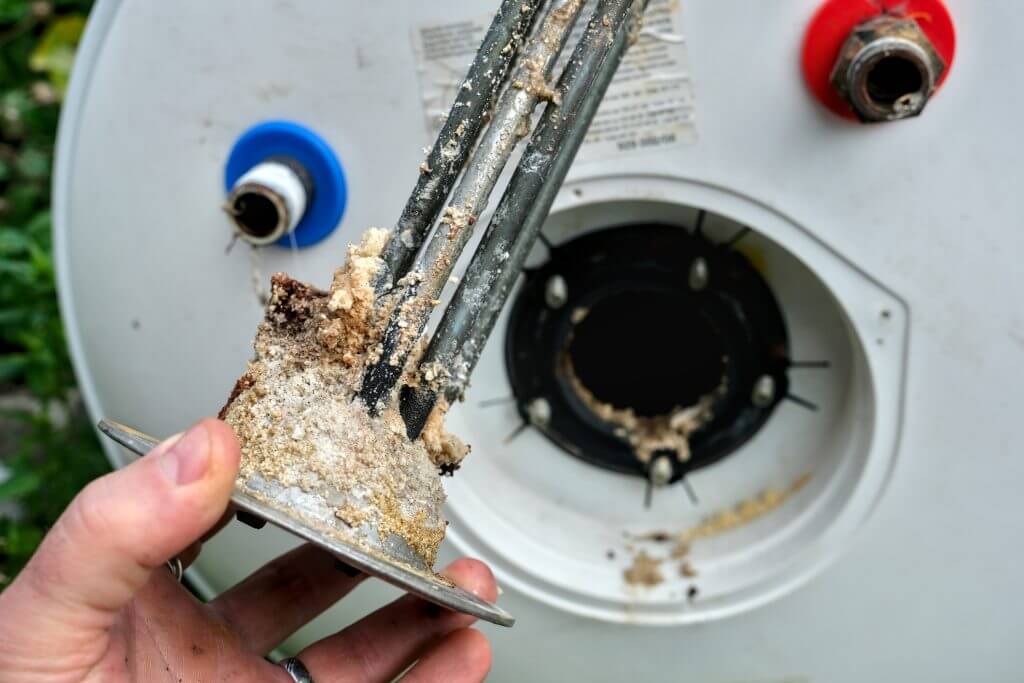
One of the most helpful steps is periodic flushing. Over time, minerals and sediment settle in the bottom of the tank, which can cause rumbling noises, reduce heating efficiency, and contribute to component wear. Flushing frequency depends on your water quality, but many homeowners benefit from making it a regular habit.
It’s also worth keeping an eye on any visible signs of corrosion around fittings and connections. Even small, slow leaks can escalate — and early detection can mean a simpler repair.
For Tankless Water Heaters
Tankless units often need descaling (especially in areas with hard water). Mineral buildup can affect performance, trigger error codes, or reduce efficiency. If you have hard water, this maintenance is more than “nice to have” — it’s a key part of keeping the system running reliably.
If you’re unsure what your unit needs, a professional maintenance visit can be a good investment, particularly before peak seasons when demand is high.
Signs Your Water Heater Needs Repair
Water heater problems don’t always announce themselves loudly — sometimes it’s just a gradual drop in comfort or efficiency. Use the chart below to match what you’re noticing with what it often points to, plus how urgent it is to get help.
| What You Notice | What It Often Indicates | Repair Timing | What To Do Next |
|---|---|---|---|
| Hot water runs out fast / isn’t as hot | Failing thermostat or heating element (electric), sediment buildup (tank) | Soon (within a few days) | Check if temps were bumped down; note how long hot water lasts; schedule service if it continues. |
| Water temperature swings (hot-cold-hot) | Thermostat issues, sediment affecting performance, flow/sensor problems (tankless) | Soon | If tankless, record any error codes; avoid repeatedly resetting; book a diagnostic visit. |
| Rusty, brown, or metallic-smelling water | Corrosion inside tank, deteriorating anode rod (sometimes plumbing-related) | Soon | Run cold water at a nearby faucet to compare; take a photo of discoloration; schedule inspection. |
| Popping/rumbling/banging noises | Sediment buildup overheating near tank bottom | Schedule Soon | Plan a tank flush/maintenance; ask about sediment severity and whether components were damaged. |
| Water pooling or dampness around the unit | Leaking fittings/valves/lines or tank leak (more serious) | Urgent (same day if active leak) | Turn off power (electric) or set gas to “off” if instructed; shut off cold supply valve; call a pro. |
| Drips from the T&P relief valve discharge pipe | Excess pressure/temperature, failing relief valve, expansion tank issue | Urgent (safety-related) | Don’t cap/plug the pipe; reduce heater setting if it’s unusually high; schedule same-day service. |
| Gas unit: pilot won’t stay lit / burner issues | Thermocouple/flame sensor, gas control problems, venting/combustion issues | Urgent (safety-related) | If you smell gas, leave the area and contact your gas utility; otherwise, call a qualified technician. |
| Tankless: error codes / reduced hot water flow | Scale buildup, sensor issues, venting/ignition problems | Soon To Urgent (depends on code) | Write down the code and model; check if the unit needs descaling; schedule service if code persists. |
“Tell-Tale” Clues
- “It used to be fine, now it’s suddenly not” often points to a component failure (like a thermostat, element, or sensor).
- “It’s been getting worse over weeks/months” is commonly linked to sediment buildup, corrosion, or scaling.
- Any active leak is worth treating as urgent — even small drips can cause expensive water damage fast.
- Gas-related symptoms (ignition, pilot, combustion) should be handled by a qualified pro since safety is part of the equation.
Next Steps
If you suspect your water heater needs repair, you don’t need to guess your way through it. A few practical steps can help you move from “something’s wrong” to “I have a plan”:
- Identify your system type (tank or tankless; gas or electric). This affects both typical repair costs and what failures are most likely.
- Write down symptoms — how long hot water lasts, whether temperature fluctuates, any noises, and whether there’s visible leaking.
- Schedule a professional diagnosis if the issue involves leaks, recurring shutdowns, or anything gas-related.
- Compare repair vs. replacement if the repair is expensive or the unit shows signs of corrosion or tank damage. When in doubt, ask a technician to explain what the repair realistically buys you in terms of lifespan and reliability.