
Modernize Stairlift Rating Methodology
Modernize rates stairlift installers and brands using a weighted scoring framework. Installers are evaluated on safety, installation quality, licensing, customer experience, and service response time. Brands and products are scored on safety and reliability, product range, warranty coverage, and value. Because stairlift failures can put users at risk, safety and reliability carry more weight in this category than in almost any other product we review.

How Our Rating System Works
Modernize scores every stairlift installer and brand on a one-to-five scale using a weighted formula:
Final Score = Σ (Criterion Score × Criterion Weight)
In case you didn’t know: The symbol Σ (sigma) is standard math notation for summation — it means we add up the weighted score for each criterion to arrive at the final score.
Each criterion is weighted based on how much it actually affects the outcome for the people who rely on these products every day. For installers, safety and technical installation quality carry the most weight — a stairlift that isn’t installed correctly can leave someone stranded or at risk of a fall. For brands, safety certification and product reliability are the primary drivers of the score.
Once the final score is calculated, it maps to a star rating:
- 4.75–5.00 stars: Excellent
- 4.25–4.74 stars: Very Good
- 3.50–4.24 stars: Good
- 2.75–3.49 stars: Fair
- 2.00–2.74 stars: Poor
- Below 2.00 stars: Very Poor
A five-star rating means an installer or brand is excellent relative to comparable options — not that it’s flawless. All ratings are evaluated within the same category. For a full explanation of the scoring formula and what each star tier represents, see our Rating Methodology overview.
Stairlift Installer Rating Methodology
When we rate stairlift installers, we focus on what matters most: safety, long-term performance, and the experience for people who rely on their stairlift every day. Stairlifts are often purchased quickly by people with limited mobility, so we hold installers to a higher standard for safety, quality, and service than in most other home projects.
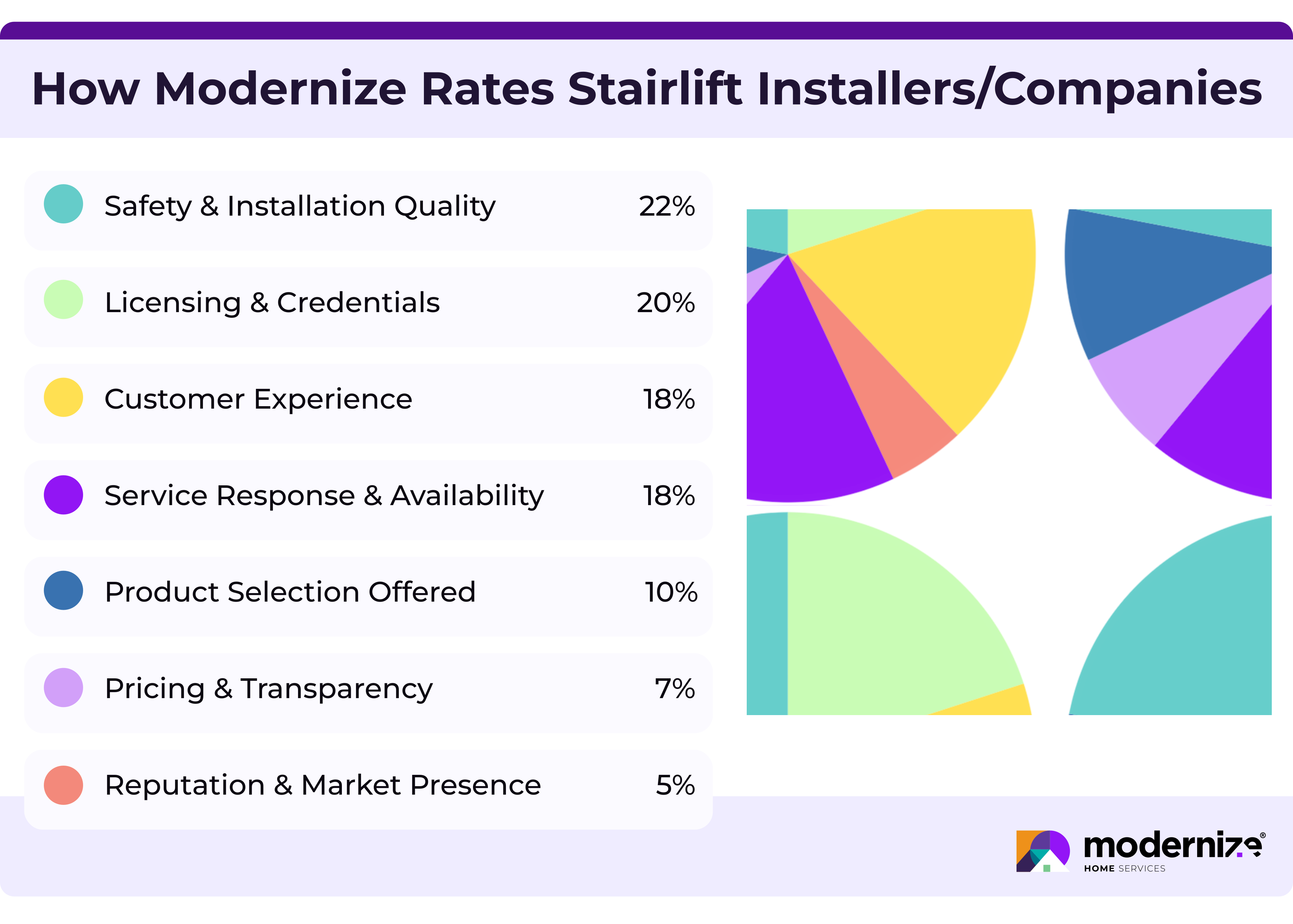
How we evaluate stairlift installers
Here’s how we break down each area we consider when scoring stairlift installers.
Safety and installation quality (22%)
Getting the installation right is essential for both safety and long-term performance. We check whether installers fit rails to your specific staircase, ensure mounting points are structurally sound, handle any electrical work to code, and complete a full safety check with you before leaving. Installers who follow manufacturer guidelines, document their work, and confirm everything is safe before sign-off earn the highest scores.
Licensing and credentials (20%)
We check that companies hold the right state licenses, insurance, and certifications. For stairlift installers, this means being an authorized dealer for the brands they sell, having Certified Aging in Place Specialists (CAPS) on staff, and holding the appropriate electrician licenses for hardwired lifts. Companies with more certified staff and a clean compliance record earn higher scores.
Customer experience (18%)
We look at customer reviews from multiple platforms to see how companies treat their customers — especially older adults and people with disabilities. We pay attention to patience during demonstrations, clarity of instructions, and sensitivity to the stress that often comes with purchasing a stairlift. Companies with strong ratings and consistently positive feedback about how they treat users earn the highest scores.
Service response and availability (18%)
Fast service matters because a broken stairlift can leave someone unable to move safely between floors. We check how quickly companies respond to service calls, whether they offer emergency or same-day help, and if technicians show up when promised. Companies with quick, reliable service teams earn the highest scores.
Product selection offered (10%)
We check if a company can handle all types of stairlifts — straight, curved, outdoor, or heavy-duty — and whether they carry more than one brand. Companies that offer rental options, certified pre-owned units, or multiple price tiers score higher because they can accommodate more budgets and timelines.
Pricing and transparency (7%)
We look for companies that provide a clear, written quote showing the cost of the stairlift, installation, and any additional work. Because stairlift buyers are often navigating health challenges at the same time, we flag companies that use high-pressure sales tactics, change prices after quoting, or won’t provide written estimates. Companies that are upfront and patient about pricing earn higher scores.
Reputation and market presence (5%)
We look at how long a company has been in business, what local homeowners and healthcare professionals think of them, and whether they work with occupational therapists, hospitals, or senior care centers. Companies with strong ties to the healthcare community earn higher scores because that trust reflects a higher standard of care.
Scoring philosophy
We rate stairlift installers with the needs of real users in mind. Safety and fast service matter most here because the stakes are higher for people with limited mobility. Companies with the right credentials, careful installations, quick service, and genuine care for their customers earn our highest ratings. Companies that cut corners, respond slowly, or rely on high-pressure sales tactics receive lower scores — even if their prices look good.gory (RO systems to RO systems, softeners to softeners) so the ratings are fair and useful regardless of price or technology.
Stairlift Brands and Products Rating Methodology
We rate stairlift brands by what matters most when safety and mobility are at stake. If a stairlift fails, someone could fall or get stranded on the stairs — so we put extra weight on safety and reliability, more than almost any other product we review. We also check how well each brand handles real homes, whether you have a straight staircase, a tight curve, or need something designed for outdoor use.
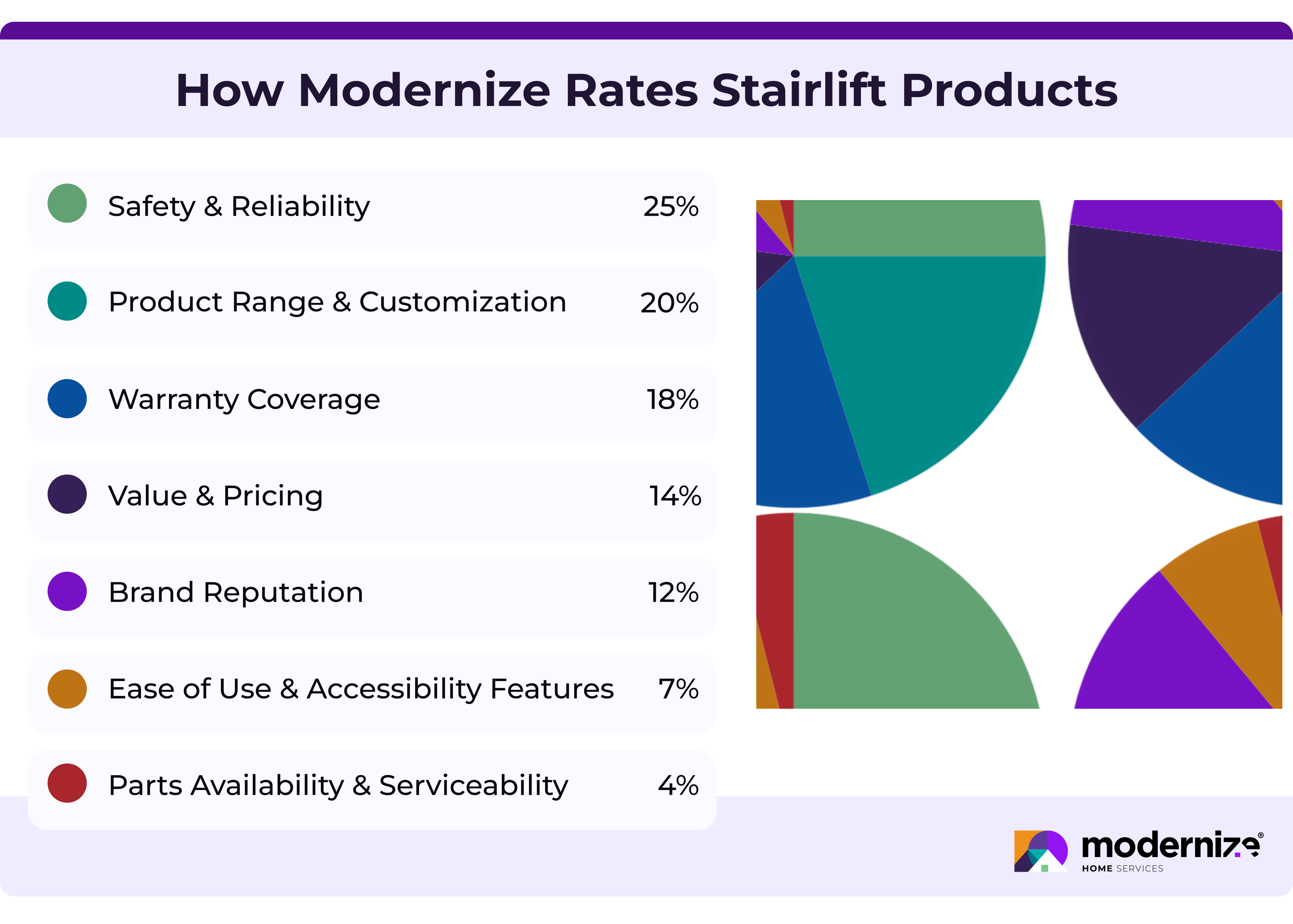
How we evaluate stairlift brands and products
Here’s how we break down each area we consider when scoring stairlift brands.
Safety and reliability (25%)
We check each brand’s safety certifications, drive system quality, weight capacity, and sensor technology. We look for UL or CSA/CE certification, obstruction sensors, seatbelt style, swivel seat locks, and battery backup for power outages. Brands with a strong safety record and low breakdown rates earn the highest scores.
Product range and customization (20%)
We look at whether a brand can handle all types of staircases — straight, curved, narrow, outdoor, or heavy-duty. Curved stairlifts are especially important to evaluate because they require custom rails and skilled installation. Brands that offer a wide range of configurations, seat styles, and rail options for challenging staircases earn higher scores.
Warranty coverage (18%)
We check how long parts and labor warranties last, whether batteries are covered, and how easy the warranty is to understand and use. Since many stairlift users have limited mobility, we also look at how simple it is to initiate a warranty claim and how quickly service arrives. Brands with long, clearly written warranties and a reliable claims record earn the highest scores.
Value and pricing (14%)
We look at what you get for the price — how well the stairlift performs and how long it lasts. Straight stairlift pricing tends to be fairly consistent across brands, so we pay closer attention to how curved and specialty models are priced. We also consider rental options, certified pre-owned availability, and buyback programs, which can significantly reduce costs if you only need a stairlift short-term.
Brand reputation and dealer network (12%)
We look at how long the brand has been in business, its overall reputation, and how many authorized dealers and service technicians it has. A strong dealer network matters because it means faster service if something breaks. Brands with extensive networks of well-trained dealers and a long history in accessibility earn higher scores.
Ease of use and accessibility features (7%)
We check how easy each stairlift is to use for people with limited mobility, arthritis, or cognitive challenges. Features like joystick or paddle controls, remote call buttons, powered footrests, and adjustable seats all help. Products developed with input from occupational therapists or that meet recognized accessibility standards earn higher scores.
Parts availability and serviceability (4%)
We look at how easy it is to get replacement parts, whether you’re limited to brand-only components, and how long the company commits to keeping parts available after a model is discontinued. Brands with widely available, affordable parts and a long parts guarantee earn higher scores.
Scoring philosophy
When we rate stairlift brands, we ask one main question: can you count on this product to work safely every time? Safety and reliability come first. We use the same standards for every brand so you can compare them fairly. Brands with strong safety records, good warranties, and a wide range of options earn our highest ratings. Brands with fewer configurations, limited service coverage, or a pattern of complaints receive lower scores.