U.S. media inflation is projected to reach 4.0% in 2026, but that doesn’t mean every contractor will see the same increase in advertising costs. In 2025 paid search benchmarks, home services cost per lead (CPL) rose 10.5% year over year, compared with 5.1% across industries. Modernize’s paid search data through July 2026 shows even bigger differences between trades: windows CPL increased 29.5%, while HVAC CPL declined 7.6%.
For contractors planning marketing budgets, the question isn’t simply whether leads cost more. It’s how much they cost in your specific trade and local market.
Media Inflation Is Becoming the Baseline
The original forecast for U.S. media inflation in 2025 was 2.3%. That estimate was later revised to 3.8%, with another 4.0% projected for 2026.
These figures reflect overall media inflation across advertising channels, not how much an individual contractor’s leads will cost. Actual changes depend on the channel, trade, and local market. As homeowners move between search, social media, streaming, and AI tools to research projects, contractors need to understand where their advertising dollars are going.
A contractor running the same campaign with the same budget as last year shouldn’t assume it will reach the same number of potential customers.
Paid Search Is Under Particular Pressure
Paid search remains an important way to reach homeowners who already have a project in mind. Someone searching for “roof replacement near me” may be much closer to hiring than someone browsing general renovation ideas. That makes high-intent searches valuable, and competitive.
LocaliQ’s 2025 benchmarks found that average search cost per click (CPC) increased nearly 13% across industries, with 87% of industries reporting higher CPCs. Home services paid $7.85 per click on average, versus $5.26 across industries.
Search is changing, too. Google AI Overviews reshape how homeowners find information, though ads can still appear above, below, and within those results. The journey from research to contacting a contractor is evolving.
Home Services Paid Search Lead Costs Rose Twice as Fast
The same LocaliQ research found that paid search CPL increased 10.51% for home services, compared with 5.13% across industries. That’s a 5.38-percentage-point gap, and roughly double the rate of increase.
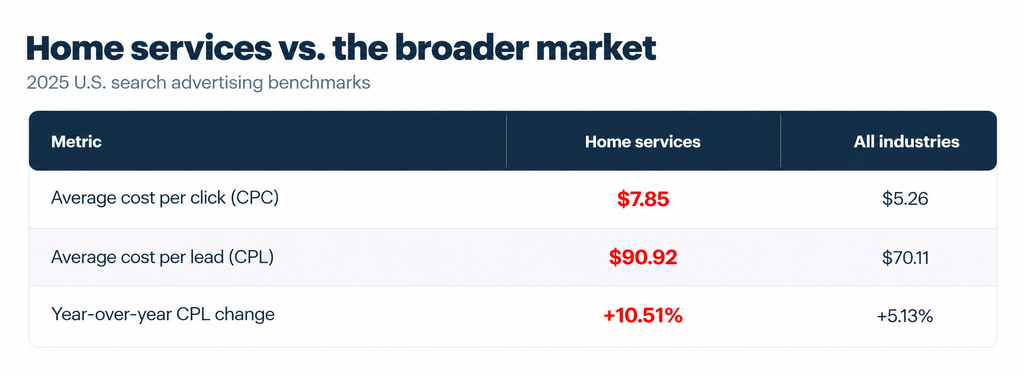
The difference matters because a flat budget buys fewer leads when CPL rises. If lead cost increases by 10.5%, an unchanged $100,000 budget buys approximately 9.5% fewer leads, assuming everything else stays equal.
Are your lead costs rising faster than your market?
Explore trade- and market-level data in Modernize’s full research.
Why National Averages Don’t Tell the Whole Story
“Home services” includes everything from HVAC repairs to full window replacement projects. These categories have different project values, homeowner demand patterns, seasonal pressures, and local competition.
Modernize’s own paid search data through July 2026 makes those differences clear:
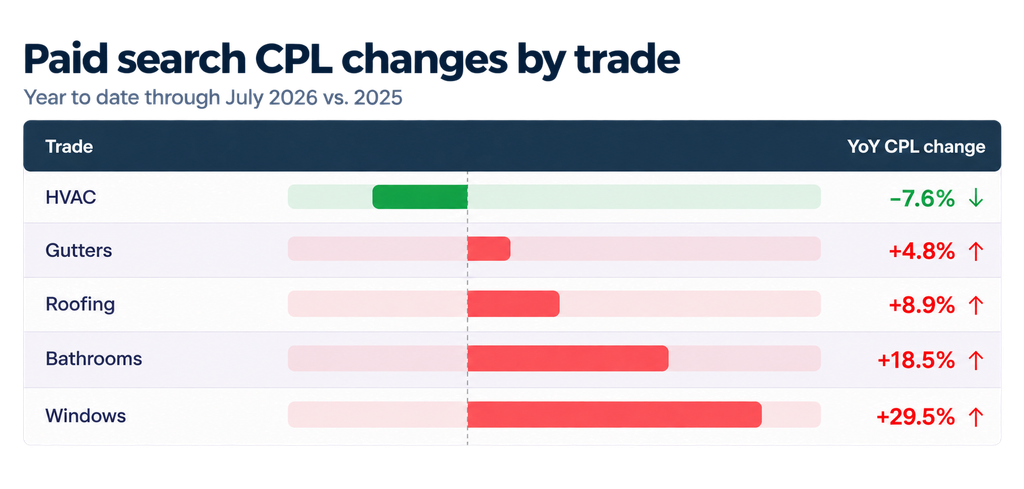
That’s a 37.1-percentage-point spread between windows and HVAC.A windows business relying on broad advertising benchmarks could miss the 29.5% increase in paid search CPL within its own category. An HVAC business might face a very different budget decision.
Even within the same trade, location changes the picture.
Geography Changes the Cost of a Lead
Modernize’s analysis found that windows CPL rose approximately 44% in Atlanta, 46% in Boston, 31% in New York, and 36% in Philadelphia. But that doesn’t mean every trade in those cities saw a similar increase.
In Atlanta, for example, windows lead costs climbed sharply while roofing costs remained essentially flat. Boston showed significant pressure across multiple trades.
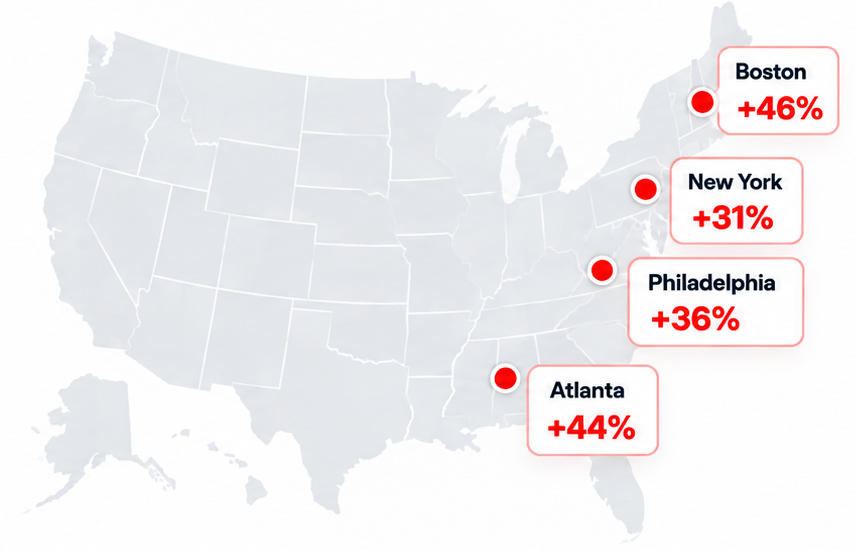
A national benchmark provides context. It can’t tell a roofing contractor in Atlanta what a lead should cost, or predict the economics of every location in a regional business.
What Does This Mean for Your 2026 Budget?
Higher CPL doesn’t automatically mean a campaign is failing. It may reflect local competition or shifting homeowner demand.
For example, a 29.5% increase in windows CPL means a fixed budget buys roughly 22.8% fewer leads, not 29.5% fewer, assuming stable conditions otherwise. That distinction matters when interpreting declines in volume.
The bottom line: U.S. media inflation is a useful baseline, and national search benchmarks offer context. But the more meaningful comparison is your own trade, geography, and year-over-year CPL. Two home services businesses can face completely different acquisition environments in the same year.
For the full category and market comparisons, explore Modernize’s 2026 Home Services Customer Acquisition Outlook.