

Sunrooms & Patios
Sunroom Installation and Design Guide
What Is a Sunroom?
A sunroom is a room addition designed to capture natural light and provide a bright, open living space. Also called a sun porch, solarium, or three-season room, sunrooms feature extensive glazing—typically walls and roofs made of glass or acrylic panels—that allow homeowners to enjoy outdoor views while remaining protected from the elements.
Sunrooms serve multiple purposes, functioning as relaxation spaces, home offices, dining areas, or plant rooms. Unlike traditional enclosed porches, sunrooms emphasize natural light and often incorporate climate control features, making them functional additions to homes in various climates. Modern sunrooms can increase property value, extend living space, and provide a connection to the outdoors year-round.
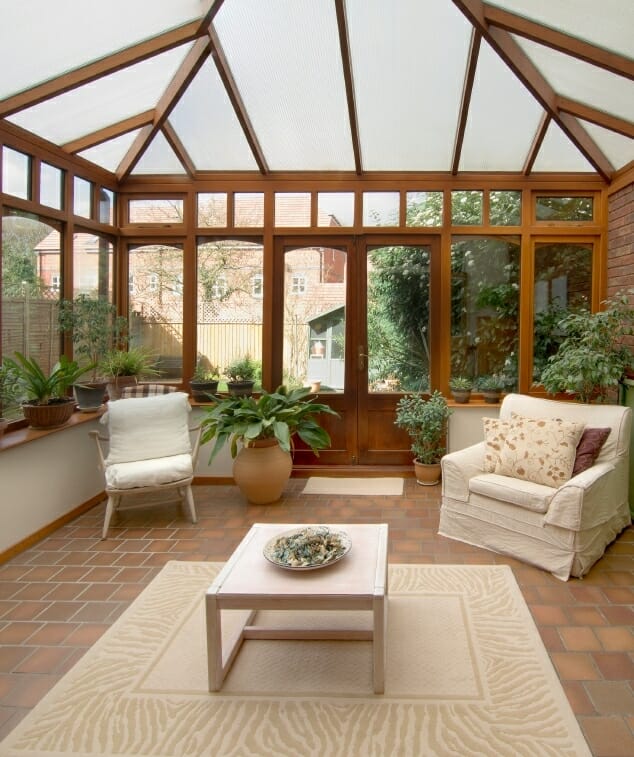
What is a Sunroom’s Main Function?
A sunroom functions as an extension of your home’s living space by using specialized glazing systems and structural components to maximize natural light while maintaining thermal comfort. The system works together to create a usable space that transitions between indoor and outdoor environments.
- Foundation and Framework: A sturdy foundation and structural frame support the weight of glazing materials. The frame is typically aluminum or vinyl, providing both durability and aesthetic appeal.
- Glazing System: Multiple layers of glass or acrylic panels form the roof and walls, allowing natural light to enter while providing weather protection. Energy-efficient glazing reduces heat loss and solar gain depending on climate needs.
- Ventilation: Operable windows and vents allow airflow to regulate temperature and humidity. Proper ventilation prevents condensation and maintains indoor air quality throughout seasons.
- Insulation and Weatherproofing: Insulated frames, weatherstripping, and proper sealing protect against air and water infiltration, ensuring year-round comfort in three-season or four-season rooms.
- Flooring and Drainage: Durable, moisture-resistant flooring prevents water damage. Proper drainage systems direct water away from the structure and home foundation.
Each component works together to create a space that maximizes natural light, controls temperature, and protects your home from weather elements.
Frequently Asked Questions
What Are the Different Types of Sunrooms?
Sunrooms come in various styles and configurations, each designed to meet different climate needs and seasonal usage patterns. Understanding the differences helps you choose the right option for your home and lifestyle.
- Three-Season Rooms: Designed for spring, summer, and fall use, three-season rooms provide basic insulation and ventilation. They are more affordable and may have limited heating or cooling capabilities. Ideal for mild climates or occasional use.
- Four-Season Sunrooms: Fully insulated and climate-controlled, four-season rooms remain comfortable year-round with proper heating and air conditioning. They feature high-performance glazing, insulated frames, and integrated HVAC systems, making them suitable for all climates.
- Solariums: Solariums feature a glass roof and walls designed to maximize solar heat gain in winter while managing summer heat. They often include automated venting and thermal mass for temperature regulation.
- Screen Rooms: Screen rooms use mesh panels instead of glass, providing protection from insects and wind while maintaining open-air ventilation. They are the most affordable option but offer no climate control.
- Hybrid Rooms: Combining fixed glass panels with operable windows and screens, hybrid rooms offer flexibility to transition between enclosed and open-air configurations. They work well in variable climates.
Frequently Asked Questions
How to Choose the Right Sunroom for Your Home
Selecting the right sunroom involves evaluating several key factors to ensure it meets your lifestyle needs, climate requirements, and budget. Taking time to assess these considerations will help you make an informed decision that adds lasting value to your home.
- Climate and Season: Determine how you intend to use the sunroom. In cold climates, invest in a four-season room with proper insulation and heating. In mild climates, a three-season room may suffice. Consider seasonal usage patterns to guide your choice.
- Intended Use: Will your sunroom serve as a relaxation space, home office, dining area, or plant room? Your intended use affects design choices like seating arrangements, flooring materials, and climate control requirements.
- Available Space and Layout: Assess your available outdoor space and how a sunroom will fit with your home’s architecture. Consider sight lines, access points, and how the room connects to existing living spaces.
- Budget: Sunroom costs vary significantly based on type, size, and features. Establish a realistic budget and prioritize features that matter most.
- Energy Efficiency: Choose high-performance glazing and insulation to minimize heating and cooling costs. Energy-efficient features reduce environmental impact and long-term operating expenses.
- Aesthetic Appeal: Select frame colors, glazing styles, and design elements that complement your home’s architectural style. Your sunroom should enhance your home’s curb appeal and overall appearance.
- Local Regulations: Check with local building departments about permits, zoning restrictions, and building codes that may apply to sunroom construction in your area.
A professional sunroom contractor can provide personalized recommendations based on your specific home and needs.
Sunroom Components and Features
Understanding the key components of a sunroom helps you evaluate quality and make informed decisions about materials and features. Each element contributes to the room’s functionality, durability, and comfort.
1. Glazing System
Glazing refers to the glass or acrylic panels that form the walls and roof. High-quality glazing includes multiple layers, low-emissivity coatings, and argon gas fills to improve insulation and reduce UV transmission. Energy-efficient glazing is essential for temperature control and comfort.
2. Frame Material
Sunroom frames are typically made from aluminum, vinyl, or wood. Aluminum is lightweight and low-maintenance but conducts heat readily. Vinyl offers good insulation and requires minimal upkeep. Wood provides aesthetic appeal but requires regular maintenance. Select frame material based on climate, appearance preferences, and maintenance tolerance.
3. Ventilation and Operable Windows
Operable windows and roof vents allow natural air circulation, helping regulate temperature and humidity. Automated venting systems can open and close windows based on temperature, enhancing comfort and reducing energy costs.
4. Insulation and Weatherproofing
Quality insulation in frames and flooring prevents heat loss and gain. Weatherstripping, caulking, and proper sealing prevent air and water infiltration. Four-season rooms require comprehensive insulation for year-round comfort.
5. Flooring
Sunroom flooring must be durable and moisture-resistant. Popular options include tile, sealed concrete, vinyl, or composite materials. Choose flooring that complements your decor while withstanding humidity and temperature fluctuations.
6. Climate Control System
Four-season rooms typically include heating and cooling systems. Options range from extending existing HVAC systems to installing dedicated units. Proper climate control maintains comfort year-round and protects furnishings from temperature extremes.
7. Shading and Sun Control
Motorized blinds, cellular shades, or exterior awnings help manage solar heat gain and glare. Strategic shading improves comfort and energy efficiency while protecting furnishings from UV damage.
By understanding these key components, you can evaluate sunroom options and ensure quality construction that meets your needs.
Frequently Asked Questions
How to Maintain Your Sunroom
Regular maintenance keeps your sunroom functioning properly and extends its lifespan. Proper care prevents damage, maintains the aesthetic appeal, and ensures year-round comfort in your space.
1. Clean Glazing Regularly
Clean glass and acrylic panels at least twice a year to maintain visibility and appearance. Use a soft cloth and glass cleaner to avoid scratching. For acrylic, avoid abrasive cleaners that can cloud the surface. Regular cleaning also allows you to inspect glazing for damage.
2. Inspect Seals and Caulking
Check caulking and weatherstripping annually for cracks or deterioration. Damaged seals allow water and air infiltration, compromising insulation and comfort. Recaulk as needed to maintain a weather-tight seal.
3. Maintain Ventilation Systems
Keep vents and operable windows clean and functioning properly. Clear debris from exterior vents to ensure proper airflow. Lubricate hinges and hardware annually to maintain smooth operation.
4. Check HVAC System
If your sunroom has a dedicated climate control system, have it professionally serviced annually. Replace filters regularly to maintain efficiency and air quality. Ensure ducts are clean and unobstructed.
5. Clean and Protect Flooring
Clean flooring regularly using appropriate products for your material type. Seal concrete or wood flooring as recommended by the manufacturer. Address spills promptly to prevent staining or water damage.
6. Inspect for Water Damage
After heavy storms or winter snow melt, inspect your sunroom for water intrusion. Check for leaks, condensation, or dampness. Address water damage immediately to prevent structural issues and mold growth.
7. Maintain Shading Systems
If you have motorized blinds or shades, test them regularly and keep track clean. Repair or replace damaged mechanisms promptly. Proper shading extends glazing life by blocking excessive UV exposure.

Frequently Asked Questions
How Much Should It Cost to Install a Sunroom?
Sunroom installation costs vary widely depending on the type, size, materials, and climate control features. For a typical 200-square-foot sunroom, average costs range from approximately $10,000 for a basic three-season room to $30,000 or more for a fully insulated four-season room. Per-square-foot costs typically range from $50 to $200, depending on complexity and features.
The primary cost factors include the sunroom type (three-season vs. four-season), glazing quality and type (glass vs. acrylic), frame material (aluminum, vinyl, or wood), climate control system integration, and any custom design features. Labor costs also vary by region and contractor experience.
Additional considerations that impact total cost include foundation preparation, permitting and inspections, HVAC extension or installation, electrical work for lighting or climate control, and site accessibility. Obtaining multiple quotes from reputable contractors helps you compare pricing and understand what’s included in each estimate.
Frequently Asked Questions
How to Choose the Right Sunroom Contractor
Selecting a qualified sunroom contractor is essential to ensure quality installation and a successful project outcome. Take time to vet contractors carefully and compare your options before making a decision.
- Get Multiple Quotes: Contact at least three contractors for detailed estimates. Compare pricing, materials, timelines, and warranty terms. Multiple quotes help you understand market rates and avoid overpaying.
- Check Credentials: Verify licensing, insurance, and bonding. Ask about industry certifications and manufacturer authorizations. Reputable contractors maintain all necessary credentials and licenses in your state.
- Review References: Request and contact at least three recent client references. Ask about their experience with the contractor, quality of work, adherence to timeline, and overall satisfaction. Visit completed projects if possible.
- Verify Experience: Ask about the contractor’s experience with sunroom projects similar to yours. Inquire about their experience with specific manufacturers or products you’re considering. Experienced contractors deliver better results.
- Review Contracts Carefully: Ensure the contract includes all costs, materials, timeline, warranty details, and payment terms. A detailed contract protects both parties and clarifies expectations.
- Understand Payment Terms: Avoid contractors demanding large upfront payments. Typical payment schedules include a deposit to start work, progress payments, and a final payment upon completion. Verify payment terms are clearly outlined.
- Warranty Coverage: Ask about warranties on materials and workmanship. Reputable contractors offer substantial warranties covering glazing, frames, and installation. Understand warranty terms and what’s covered.
Frequently Asked Questions
Sunroom Energy Efficiency and Value
Sunrooms can enhance your home’s value while potentially reducing energy costs when properly designed and installed. Choosing energy-efficient features and materials helps minimize operating expenses and environmental impact.
High-performance glazing with low-emissivity coatings reduces heat transfer, keeping spaces warmer in winter and cooler in summer. Insulated frames and proper weathersealing prevent air infiltration. Strategic placement, automated shading, and ventilation systems optimize energy performance. Four-season rooms typically offer better long-term value than three-season options due to year-round usability and potential for extending your home’s living space.
Real estate value typically increases by 70 to 80 percent of the project’s cost, making sunrooms a solid investment. Beyond financial returns, sunrooms enhance quality of life by providing light, views, and flexible living space.
Frequently Asked Questions
Ready to get your project started?
Let us find the best Sunrooms & Patios pros in your area, then easily request quotes, book a contractor, and get the job done. It’s that easy.

Homeowner Resources
Here are the top articles that homeowners found useful when planning their sunroom project and navigating the contractor hiring process:

Real Stories, Real Success
See how our solutions empower homeowner projects and experiences.