The Lock-In Effect Is Reshaping Home Improvement
Millions of homeowners locked in low mortgage rates between 2020 and 2021. Now, with rates lingering around 7%, most of them aren’t going anywhere. Moving means giving up a lower payment for one that costs hundreds more per month. So, they’re staying put, and they’re putting that money into the homes they already own.
This is the mortgage lock-in effect, and it’s driving a massive wave of renovation spending. Nearly half of all outstanding mortgages still carry a rate below 4%. These homeowners aren’t listing their homes. They’re remodeling them.
For contractors, this creates a large and growing pool of funded projects. But these homeowners are not impulse buyers. They research before you walk in the door. They compare contractors, look up project costs, and expect financing to be part of the conversation from the start.
What Rate-Locked Homeowners Actually Want
These aren’t the same customers that contractors worked with five or ten years ago. Rate-locked homeowners have a specific financial profile, and it shapes every renovation decision they make.
They’re rate-sensitive. They chose a fixed-rate mortgage for a reason. They don’t want variable rates on anything. When you show them financing, a fixed rate matters more to this group than almost any other detail.
They want transparency up front. According to the 2026 Houzz Renovation Plans Report, 91% of homeowners say they plan to move forward with renovation projects. But 93% also expect challenges during the process, with high prices and budget constraints topping the list. These homeowners do their homework. They want clear answers on rates, monthly payments, and fees. If you can’t answer those questions on the spot, another contractor will.
They think in monthly payments, not lump sums. A $60,000 kitchen remodel sounds expensive. A monthly payment of $400 or $500 a month sounds manageable. The contractor who frames the project in monthly terms early in the conversation keeps the homeowner focused on value, not sticker shock.
Why “Back-Pocket Financing” Is Costing You Deals
For years, contractors treated financing like a closer. You’d run the sales appointment, present the scope, give the price, and wait. If the homeowner hesitated, you’d pull out the financing option as a save: “Well, we do have monthly payment plans.”
That playbook made sense when homeowners had fewer options and less information. It doesn’t work anymore.
The New Playbook: Lead with Financing Early and Often
The contractors closing the most deals today are not saving financing for the end. They’re leading with it from the first conversation. Here’s what that looks like in practice.
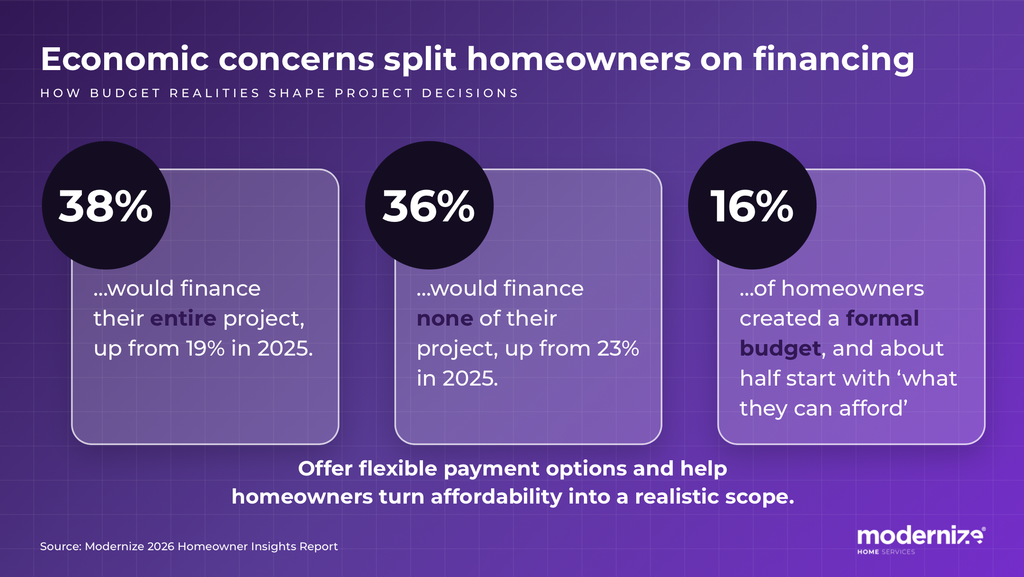
Financing is part of the buying process. Payment options should be brought up at the time you are quoting the project. Bring up payment options before you talk about the project scope. An easy conversation can start with: “Many of our homeowners finance their projects, and we can show you monthly payment options if you prefer.” This sets the expectation that financing is normal, not a fallback.
The Bottom Line
The lock-in effect may persist as long as mortgage rates stay higher than desired. Homeowners have little incentive to give up their lower rates. If that holds, renovation demand could stay strong. Contractors who treat financing as a first-touch conversation tool and not a last-resort closer are well positioned for that demand.
With 360 Finance, you have a financing tool built for this exact market: fixed-rate, direct-to-contractor, fast to close, and easy to present at the kitchen table. Use it early. Use it often. That’s how you can turn the lock-in effect into a larger pipeline and bigger projects.