Bathroom Remodel
Bidets: Types, Costs, Features, and Best Brands
Average Cost: $100–$1,000 (attachment or seat, installed)
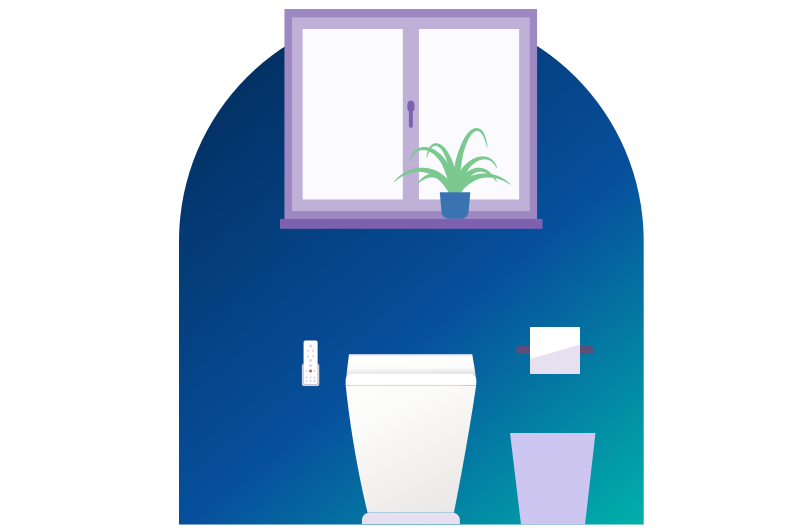
Most homeowners pay $100 to $1,000 to add a bidet attachment or seat, installed, with most homeowners spending around $640. A DIY attachment costs as little as $20 to $130, a bidet toilet seat costs $150 to $1,000 (installed $250 to $1,000), and a standalone bidet runs $700 to $2,600 installed. A seat or attachment installs in about 30 minutes, and electric seats need a ground fault circuit interrupter (GFCI) outlet near the toilet.
Find the best bathroom remodel pros in your area.

The Modernize Mission
We help homeowners make confident decisions through our reliable, up-to-date, and unbiased information and average project costs. All of our content is thoroughly reviewed and fact-checked by our team of home improvement experts. Learn more about how we maintain these values.
How Much Does a Bidet Cost?
Most homeowners pay $100 to $1,000 to add a bidet attachment or seat. The type of bidet is the biggest factor. A DIY attachment can cost $20 to $130, while a standalone bidet needs new plumbing and runs $700 to $2,600 installed.
| Bidet Type | Product Price | Installed Cost |
|---|---|---|
| Handheld sprayer | $20–$120 | $100–$250 |
| Bidet attachment | $20–$130 | $100–$300 |
| Bidet toilet seat | $150–$1,000 | $250–$1,000 |
| Standalone bidet | $200–$1,500 | $700–$2,600 |
| Bidet toilet | $1,000–$2,000 | $1,200–$2,500 |
Installed costs assume a pro does the work. If you install an attachment or seat yourself, you pay only the product price. Electric seats from the brands below sold for about $390 to $700 in recent Forbes Vetted tests, and models with every extra can pass $1,000.
Cost guides don’t agree. Angi puts the overall average at $640 (range $400 to $1,500) and lists attachments at $80 to $120, which includes installation. Some sources list standalone fixtures at $200 to $800, while Angi lists $500 to $1,500. Ask any quote what it includes: the fixture, labor, plumbing, and an outlet.
If you want to try a bidet first, start with an attachment. If you want warm water and a heated seat, an electric bidet seat is the best value for most bathrooms because it replaces your seat without touching the plumbing.
Types of Bidets
Five types of bidets cover most bathrooms. They range from a $20 sprayer you install in minutes to a separate fixture that needs its own plumbing.
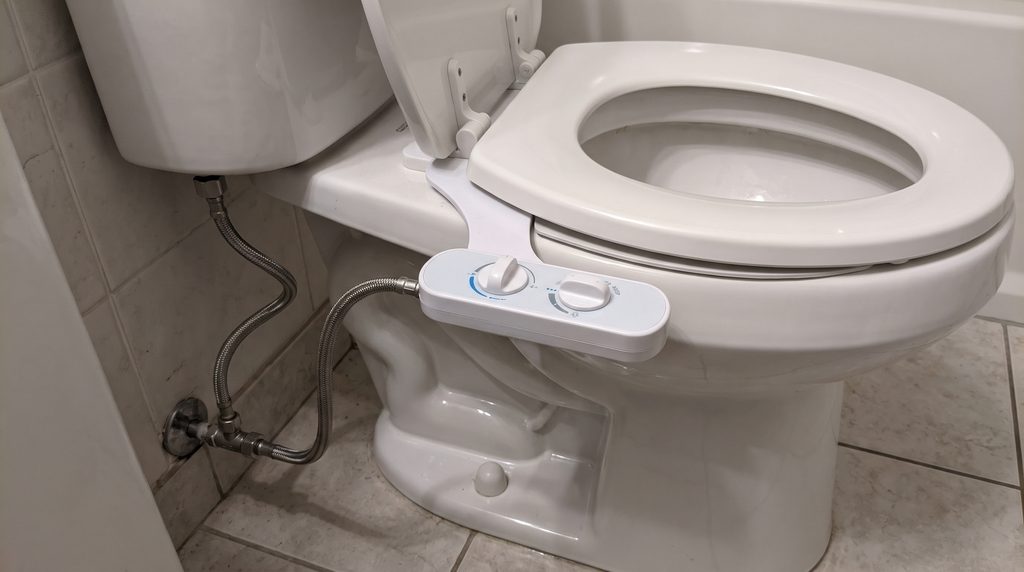
Bidet attachment
Typical cost: $20 to $130 (installed by a pro: $100 to $300)
A bidet attachment mounts under your existing toilet seat and connects to the toilet’s fresh water supply line. It doesn’t need batteries or electricity, and some models can hook up to warm water. It works with any toilet shape.
- Best for: First-time users and tight budgets.
Handheld bidet sprayer
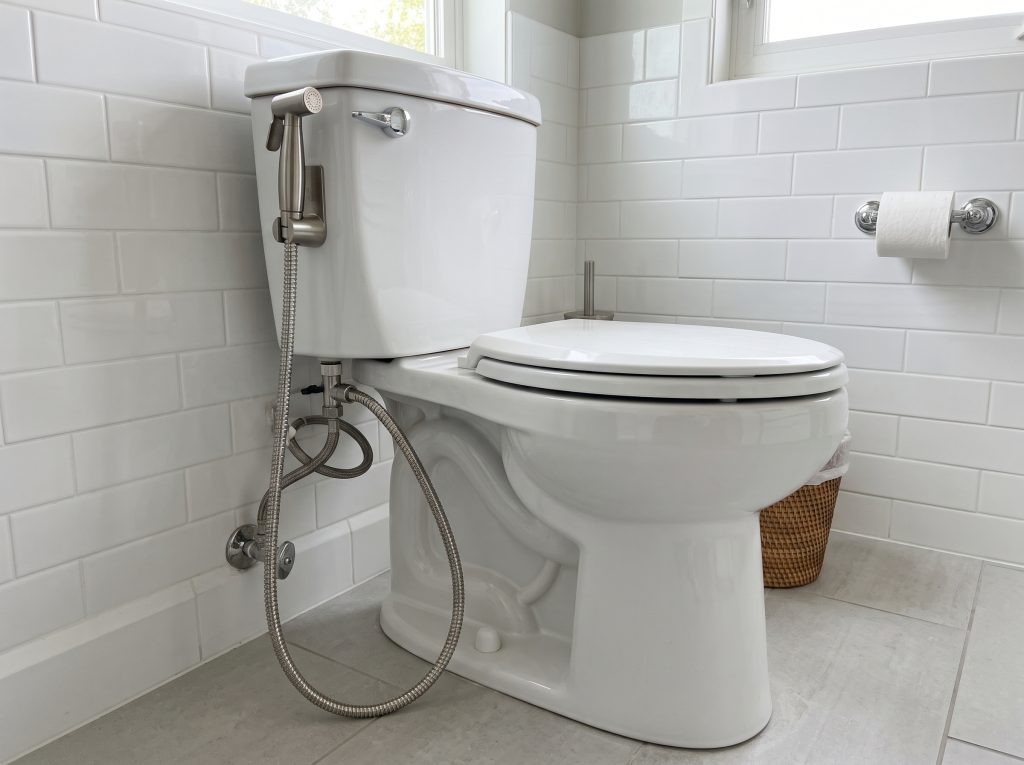
Typical cost: $20 to $120 (installed by a pro: $100 to $250)
A handheld sprayer is a nozzle on a hose that connects to the supply line and mounts to the side of the tank. You can aim the stream anywhere, but it can be awkward to use, especially if you have limited mobility.
- Best for: The lowest-cost way to add a bidet.
Bidet toilet seat
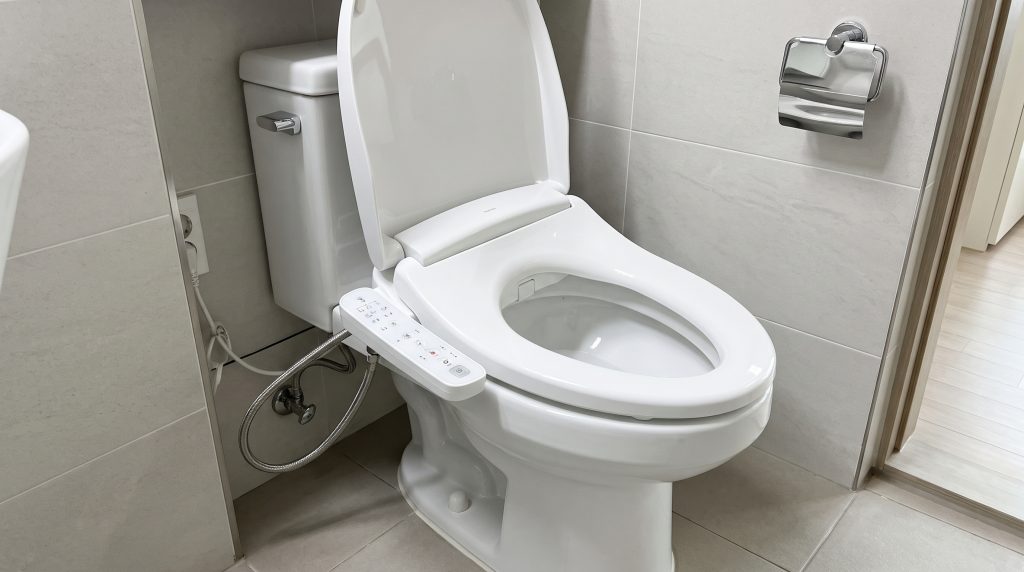
Typical cost: $150 to $1,000 (installed: $250 to $1,000)
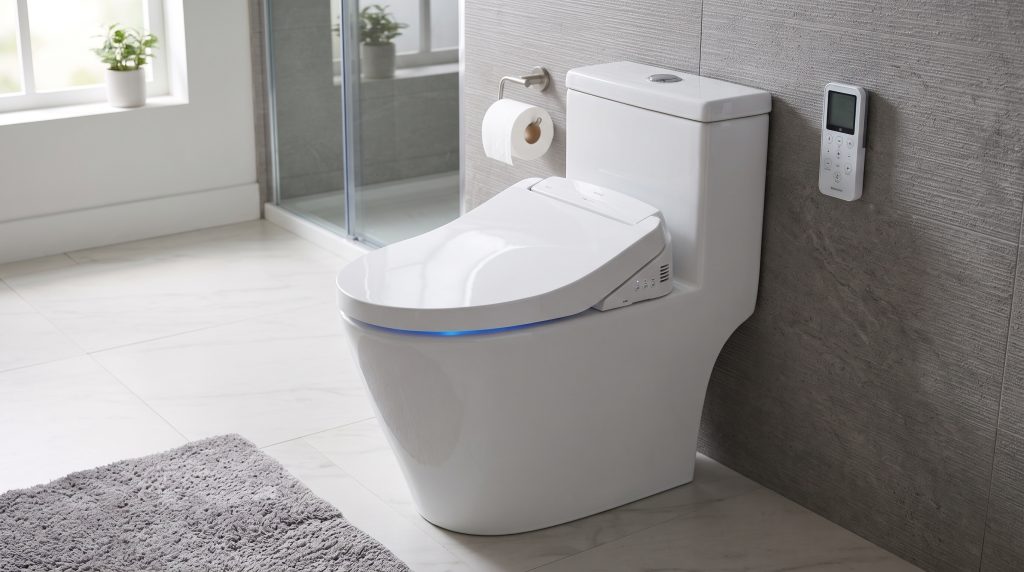
A bidet toilet seat replaces your current seat and has a built-in wand and nozzles. Non-electric seats use water pressure only. Electric seats add warm water, a heated seat, a dryer, and a remote. Most cost $150 to $700, and premium models run higher.
- Best for: Warm water and comfort features without replacing the toilet.
Bidet toilet
Typical cost: $1,000 to $2,000 (installed: $1,200 to $2,500)
A bidet toilet combines a toilet and a bidet in one fixture. It saves space and avoids the separate plumbing lines a standalone bidet needs. Higher-end models add deodorizers, night lights, dryers, and oscillating jets. See our guide to toilet installation cost for what the toilet side adds.
- Best for: Remodels where you’re replacing the toilet anyway.
Standalone bidet
Typical cost: $200 to $1,500 for the fixture (installed: $700 to $2,600)
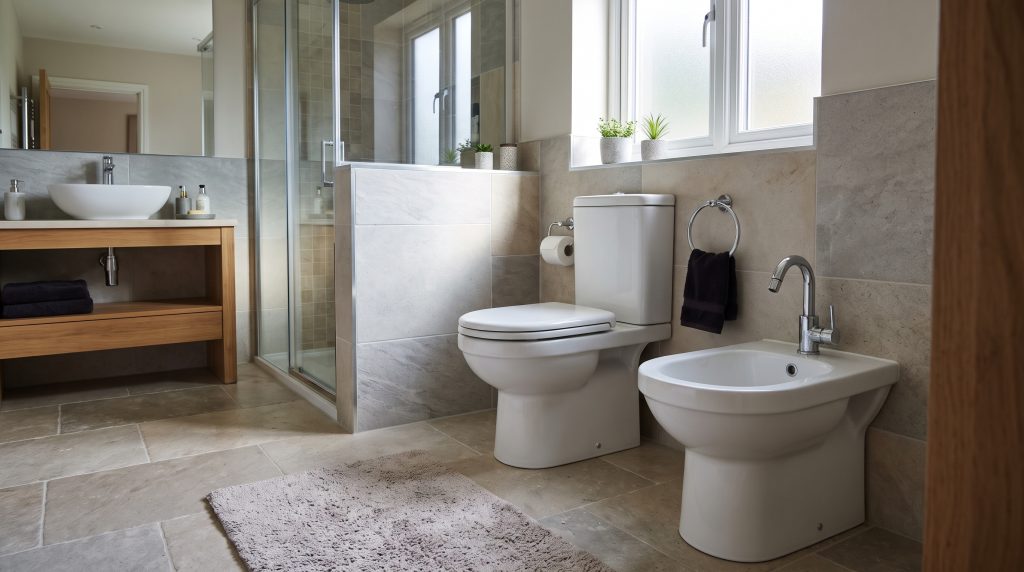
A standalone bidet is the original style: a ceramic fixture that sits next to the toilet. It needs its own supply and drain lines, so installation is the bigger cost. Angi puts the dedicated plumbing lines at about $1,180, plus about $220 for installation and materials.
- Best for: Large bathrooms during a full remodel.
Bidet Features to Look For
Features are what separate a $90 non-electric seat from a $700 electric one. Here’s what each feature does.
| Feature | What It Does |
|---|---|
| Warm water | Heats the wash water so it isn’t cold from the supply line |
| Heated seat | Warms the seat to an adjustable temperature |
| Warm-air dryer | Dries you after the wash, so you use less toilet paper |
| Self-cleaning nozzle | Rinses the nozzle before and after each use |
| Front and rear wash | Gives separate spray modes for different needs |
| Oscillating or pulsing spray | Moves or pulses the stream for a fuller clean |
| Adjustable pressure and position | Lets you fine-tune the stream and where it lands |
| Deodorizer | Pulls odor through a filter while you sit |
| Night light | Lights the bowl at night |
| Remote or side panel | Controls the settings from a remote or a panel on the seat |
Water heating: tank, hybrid, or tankless
The heater matters more than any other spec. Tank models store a small reservoir and can run out of warm water during a long wash. Tankless (instant) heaters warm water as it flows, so the temperature stays steady. Hybrid models combine a small tank with a booster heater, so they run longer than a tank but not forever. A tankless seat is the better pick if several people share the bathroom.
Electric vs. non-electric
Non-electric bidets use only water pressure, so they’re simple to install. Electric seats heat the water and seat, which requires a GFCI-protected outlet next to the toilet. If you don’t have one, an electrician charges about $120 to $350 to add it.
Round or elongated fit
Seats come in round and elongated shapes, and they aren’t interchangeable. Angi lists round bowls as 17 inches or less and elongated bowls as 17 inches or more. Measure your bowl before you buy. Attachments fit either shape.
Best Bidet Brands
No single brand wins every category. Angi advises choosing on features and reviews first, then comparing brands. The brands below come up most often in editorial roundups from Yahoo Shopping, Reviewed, Forbes Vetted, Popular Science, and Bob Vila. These are editors’ picks, not Modernize lab tests.
| Brand | Known For | Models Often Recommended |
|---|---|---|
| TOTO | Launched the Washlet in 1980; premium electric seats | Washlet C5, Washlet S550e |
| Brondell Swash | Mid-priced electric seats with instant heating | Swash 1400, Swash SE400 |
| Bio Bidet | Feature-rich electric seats | Bliss BB-2000 |
| Alpha Bidet | Low-profile seats with tankless heaters | UX Pearl |
| Kohler | Seats that match Kohler toilets; sold at big-box stores | PureWash series |
| Tushy | Popular non-electric attachments | Classic 3.0 |
| Luxe Bidet | Low-cost attachments | Neo 320 Plus, Neo 110 |
Editors at Reviewed picked the Brondell Swash 1400 as the best overall seat and the Luxe Bidet Neo 320 Plus as the best attachment. Yahoo Shopping editors chose the Alpha Bidet UX Pearl as best overall and the TOTO Washlet C5 as best electric. Prices change often, so check current listings.
For a sense of current prices, Forbes Vetted’s tested picks sold for about $390 to $700 for electric seats (Bio Bidet BB-2000, Alpha JX2, TOTO Washlet S5, and Brondell Swash Thinline T44) and about $40 to $130 for attachments (Bio Bidet SlimEdge and Tushy Classic 3.0).
What to check before you buy a brand
- Warranty: Electric seats often carry one to three years of coverage.
- Fit: Some models come in elongated only, so confirm your bowl shape.
- Parts: Look for replaceable filters and nozzles from the maker.
- Price: Compare current listings, since prices change often.
Related: Best Toilet Brands
Bidet Installation
A seat or attachment takes about 30 minutes, and a plumber typically charges $100 to $300 for it. A bidet toilet or standalone bidet takes 1 to 3 hours and costs much more because of the plumbing.
| Installation Item | Typical Cost |
|---|---|
| Plumber (hourly rate) | $45–$200 per hour |
| Professional install of an attachment or seat | $100–$300 |
| GFCI outlet (electrician) | $120–$350 |
| Standalone bidet, fully installed | $700–$2,600 |
| Dedicated plumbing lines for a standalone bidet (Angi) | About $1,180 |
How to install an attachment or seat
- Turn off the water valve to your toilet.
- Remove or loosen the toilet seat.
- Slide the attachment between the seat and bowl, or mount the new seat, and tighten it.
- Connect the bidet to the toilet’s water supply with a T-valve or Y-valve.
- For electric seats, plug into a GFCI outlet.
- Turn the water back on and check for leaks.
Before you start
- Outlet: An electric seat needs a GFCI outlet; look for the Test and Reset buttons.
- Shape: Check whether your bowl is round or elongated.
- Space: Make sure there’s room around the toilet for the unit and its mounting bolts.
- Supply line: Confirm a T-valve can connect to your existing water line.
Standalone bidet requirements
A standalone bidet is a plumbing job. Plumbing codes commonly require at least 15 inches from the bidet’s centerline to a side wall and 30 inches between a bidet and the toilet, though local rules vary. Many codes also require an air gap or vacuum breaker so toilet water can’t flow back into your drinking supply. Ask your plumber about permits and drain work before you commit.
DIY or hire a pro?
Attachments and seats are DIY-friendly. Hire a plumber for a standalone bidet or a bidet toilet, since the work involves new supply and drain lines. A plumber also lowers the risk of leaks on any install. Add an electrician if you need a new outlet.
Ongoing Costs and Maintenance
Non-electric bidets cost almost nothing to run. Electric seats use some power for heating. A retailer estimate puts the cost at $22 to $66 per year in electricity, depending on use and whether the heated seat and power-saving mode are on. Estimates vary widely, and light use can cost under $10 per year.
| Maintenance Task | How Often |
|---|---|
| Run the nozzle self-clean mode | Every day |
| Wipe and inspect the nozzle by hand | Once a month |
| Clean the deodorizer filter | Once a month (TOTO) |
| Clean the water filter | Every 6 months (TOTO) |
| Replace the deodorizer cartridge | About every 6 months (TOTO) |
Unplug electric seats before cleaning, and let any filter dry fully before you put it back.
Bidet Benefits
This guide focuses on choosing and installing a bidet. We cover the benefits in depth in a separate article, but here’s the short version:
- Less toilet paper: Angi says a bidet can cut toilet paper spending by up to 64%, about $50 per person per year.
- Less water per use: A bidet uses about 0.17 gallons per use, versus 1.6 gallons for a flush.
- Comfort features: Electric seats add warm water, a heated seat, and a dryer.
Read our full guide to bidet benefits for the details.
Is a Bidet Right for You?
The right type depends on your budget, your bathroom, and how many features you want.
- Trying one out: Start with an attachment at $20 to $130.
- Want warm water: Choose an electric seat and make sure you have a GFCI outlet.
- Replacing the toilet anyway: A bidet toilet ($1,200 to $2,500 installed) skips the separate seat.
- Remodeling a large bathroom: A standalone bidet needs floor space and its own plumbing lines.
- Limited mobility: Skip the handheld sprayer, which can be awkward, and look at a seat or attachment. See our guide to bathroom accessibility modifications for more ideas.
Bidet FAQs
Sources
- HomeGuide, bidet installation cost
- Angi, how much a bidet costs (2026)
- Forbes Vetted, best bidets of 2026
- Forbes Advisor, how much bidets cost
- HomeAdvisor, bidet installation cost
- Consumer Reports, is a bidet seat right for you
- Consumer Reports, how to clean a bidet seat or attachment
- TOTO USA, how to clean a Washlet bidet seat
- Yahoo Shopping, the best bidets of 2026
- Reviewed, best bidet toilet seats and attachments
- BestReviews, best bidets
- BidetKing, cost to operate a bidet seat
- This Old House, how to install a bidet