Bathroom Remodel
What Is a Walk-In Shower?
On this page
- Walk-in shower types, from curbed to curbless
- Sizes, costs, and accessibility-friendly points to consider
- Walk-in shower customization options, like doors
A walk-in shower is a tub-free shower you step into without climbing over a tub wall. Most have a low curb of a few inches. A curbless (zero-entry) walk-in shower has no step at all, so the shower floor sits level with your bathroom floor. Traditionally, walk-in showers have no door or curtain, though many homeowners now add a glass door. The installed cost averages about $9,500. Read on for styles, sizes, accessibility details, and costs.
Find the best bathroom-remodel pros in your area.

The Modernize Mission
We help homeowners make confident decisions through our reliable, up-to-date, and unbiased information and average project costs. All of our content is thoroughly reviewed and fact-checked by our team of home improvement experts. Learn more about how we maintain these values.
Table of Contents
- What Is a Walk-In Shower?
- Pros and Cons of Walk-In Showers
- Who Should Choose a Walk-In Shower?
- How Much Do Walk-In Showers Cost?
- What Size Walk-In Shower Should I Pick?
- Types of Walk-In Showers
- Walk-In Shower Doors: What Are Your Options?
- Accessibility Features for Walk-In Showers
- Walk-In Shower Q&A
- Next Steps
- Sources
What Is a Walk-In Shower?
A walk-in shower is a shower without a tub that you step into rather than climb into. It fits large and small bathrooms, gives the room an open, airy feel, and offers an easy entry that works for all ages and abilities. The classic walk-in shower enclosure uses:
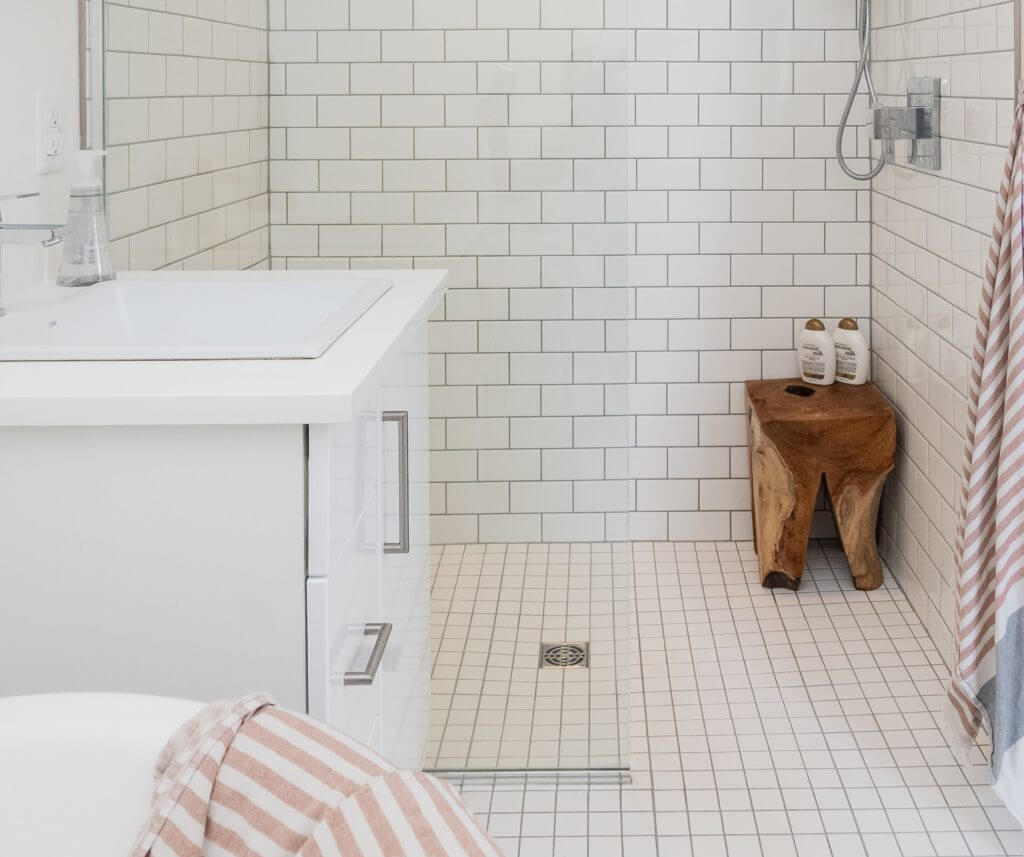
- No doors, curtains, or curbs.
- A gentle slope at the entryway.
- An optional half-glass shower wall or a full, fixed glass panel to keep water inside.
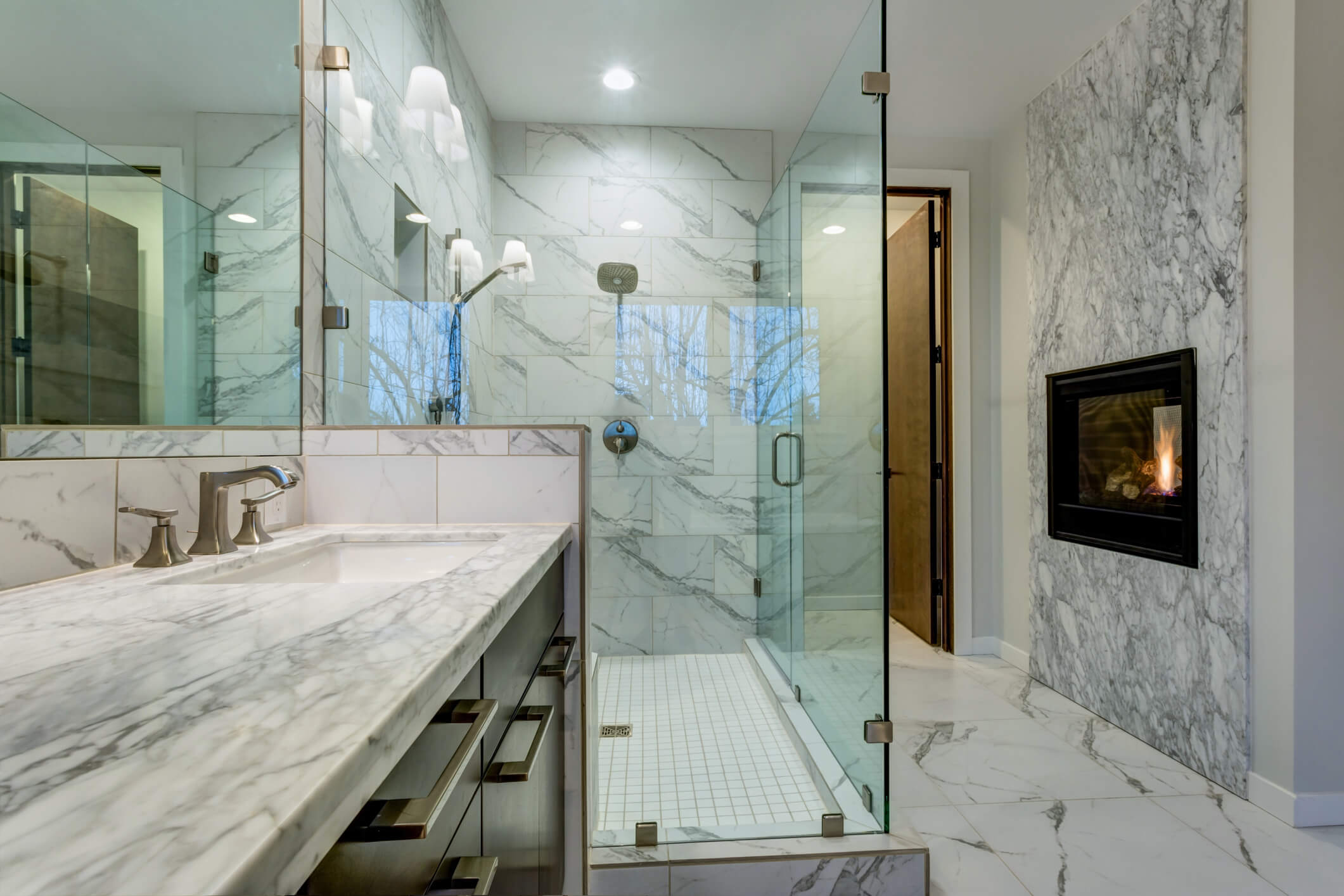
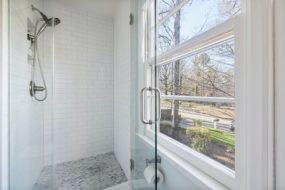
Many homeowners use the term more loosely. Some mean any shower that sits level with the floor, even with a door (like the photo above). Others mean a shower with a low curb and a glass panel. All of these are valid, so the terms below help you talk to contractors clearly.
Walk-in shower terms explained
| Term | What It Means | Entry Step |
|---|---|---|
| Walk-in shower | A tub-free shower you step into, often open or behind a fixed glass panel | Low curb or none |
| Curbed walk-in | A walk-in with a raised barrier that helps contain water | Typically 2 to 6 inches |
| Curbless (zero-entry) | A walk-in with the floor level from bathroom to shower | None |
| Doorless | A walk-in with an open entry, often with a fixed glass panel | Varies |
| Roll-in | A curbless shower sized for a wheelchair (at least 30 by 60 inches inside) | None (1/2 inch maximum) |
| Wet room | A bathroom where the whole floor is waterproofed and slopes to a drain | None |
Every curbless shower is a walk-in shower, but most walk-in showers have a curb. Our guide to shower types covers the other options.
Walk-in shower vs. regular shower vs. tub
A regular shower is either a shower-tub combo or an enclosed stall with a curtain or door and a raised threshold. A walk-in shower removes the tub wall and often the door. The table below compares them:
| Feature | Walk-In Shower | Shower-Tub Combo | Standard Shower Stall |
|---|---|---|---|
| Entry | Low curb or no step | Step over a tub wall | Step over a raised threshold |
| Door or curtain | Often none | Curtain or door | Door or curtain |
| Accessibility | Best | Limited | Moderate |
| Bathing option | No | Yes | No |
Our bathtub vs. shower comparison can help you decide between the two.
How a walk-in shower keeps water inside
Without a tub wall or a door, a walk-in shower relies on design to contain water. Contractors use four tools:
- Floor slope: The floor drops about 1/4 inch per foot toward the drain.
- Drain placement: A linear drain or properly sized center drain pulls water away quickly.
- Waterproofing: A continuous membrane protects the floor and walls, and often extends past the shower.
- Glass and layout: A fixed glass panel and a showerhead aimed away from the opening block spray.
Slope and waterproofing are the parts to leave to an experienced pro, especially for curbless designs.
Pros and Cons of Walk-In Showers
Walk-in showers trade a little water control for easy access and a clean look. Weigh both sides before you commit.
Pros
- Easy Entry: No tub wall to climb over, which lowers fall risk.
- Accessibility: Works for walkers, shower chairs, and wheelchairs when sized correctly.
- Open Look: Fewer doors and frames make small bathrooms feel larger.
- Easier Cleaning: Fewer tracks and seams mean less scrubbing.
- Resale Appeal: Buyers often like walk-in showers in primary bathrooms.
Cons
- Water Splashing: Shallow showers or poor slope let water reach the floor.
- Less Privacy: The open design can feel too exposed for some people.
- Colder Feel: Without a door to trap steam, the space can feel cooler.
- Higher Cost: Custom tile, glass, and waterproofing cost more than a standard stall.
- No Bathing Option: You lose the tub, which matters for families with young children.
Who Should Choose a Walk-In Shower?
- Homeowners with medium to large bathrooms. Doorless designs need depth to contain water, so more space helps. Very small bathrooms, like half-baths being converted to full baths, may not have room. Some small bathrooms can fit a walk-in shower, and there are plenty of ideas for walk-in showers in small bathrooms. Only a contractor can tell you for sure.
- Homeowners with a mid-sized or larger budget. Prefab walk-in shower kits can run as low as $900, but most walk-in showers aren’t budget projects. Keep reading for cost details.
- Older adults and anyone with limited mobility. A low or no-step entry and a doorless design make getting in and out easier and lower fall risk. You can add grab bars, a bench, and other safety features. Our guide to aging in place covers more ways to adapt your home.
- Homeowners who rarely take baths. If no one uses the tub, a walk-in shower can use that space better. If you have young children or a pet that needs bathing, a tub is more practical.
If this is your only tub, think twice before removing it. Some buyers expect at least one tub in a home, so many homeowners keep one in a second bathroom. Read more about primary bathroom tubs and resale.
How Much Do Walk-In Showers Cost?
The national average cost of a walk-in shower is about $9,500, and most homeowners spend $4,500 to $15,000. A prefab shower can cost $2,000 to $5,000 installed, while a large, custom tile shower can cost $12,000 or more.
| Project Type | Typical Cost |
|---|---|
| Prefab walk-in shower kit | $2,000 to $5,000 |
| Convert an existing shower | $4,000 to $10,000 |
| Replace a tub with a walk-in shower | $6,000 to $15,000 |
| New custom tile walk-in shower | $7,500 to $15,000+ |
Going curbless usually adds to the price because the floor needs extra framing work, slope, and waterproofing. Many contractors add roughly $500 to $2,000, and more if the subfloor must be lowered. Our walk-in shower cost guide breaks down every line item, and the shower cost calculator gives you an estimate for your bathroom. If you’re replacing a tub, see our guide to tub-to-shower conversions.

What Size Walk-In Shower Should I Pick?
Your choice depends on your budget and your bathroom size. These are the most popular sizes:
| Size | Best For |
|---|---|
| 32 by 32 inches | Compact bathrooms and secondary showers |
| 34 by 36 inches | Small bathrooms |
| 36 by 36 inches | The common minimum for a comfortable shower |
| 36 by 48 inches | The most popular all-around size |
| 48 by 60 inches or larger | Benches, multiple showerheads, and luxury layouts |
You can check out our shower sizes guide for more information.
Size tips for accessibility and doorless designs
- The National Kitchen and Bath Association (NKBA) recommends at least 36 by 36 inches for a comfortable shower.
- The 2010 ADA Standards call for a 36-by-36-inch transfer shower with a seat. A standard roll-in shower is at least 30 by 60 inches inside, with a 60-inch-wide entry and a threshold no higher than 1/2 inch.
- Doorless showers need more depth to keep water in. Many designers suggest at least 42 to 48 inches, and up to 60 inches, between the showerhead wall and the opening.
- Point the showerhead away from the entry, and add a fixed glass panel if space is tight.
- Custom sizes can fit unique layouts and add features like benches or multiple showerheads.
Types of Walk-In Showers
Walk-in shower designs vary widely. Below, we’ve broken your options into categories.
Curbed vs. curbless
A curbed walk-in has a low barrier that helps contain water and is simpler to build. A curbless shower has no barrier, which makes it better for accessibility and gives the room a clean, uninterrupted look. It costs more and depends on precise floor slope, so choose an experienced installer.
Standalone, niche, or corner
Where your shower goes determines your options.
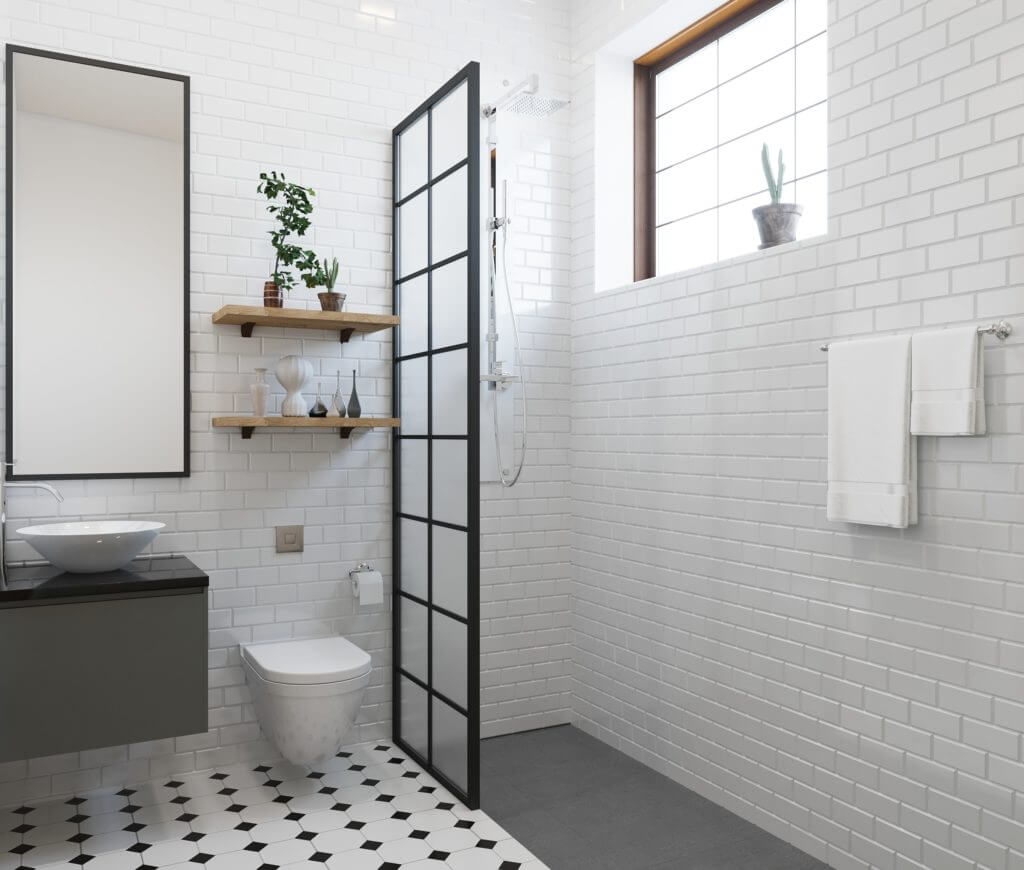
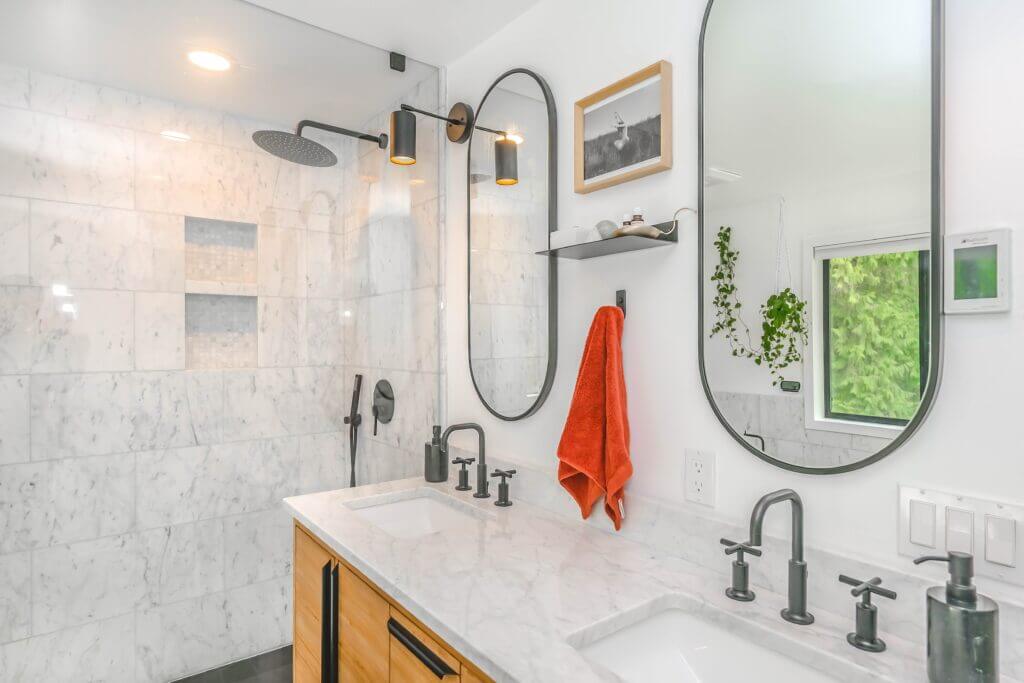
- A corner shower can have a fixed glass wall, a glass half-wall, or a wall plus a door. If you have the space, you can skip walls entirely for an open shower. Our guide to corner showers tells you more.
- A niche shower goes into an existing bathroom niche. Decide whether to close it off fully, perhaps with a sliding shower door, or partly with a shower screen. If the space is deep enough, you may not need a wall or door at all.
- A standalone shower will likely need at least one wall. If you’re designing a shower with two or three glass walls and a door, our guides to framed showers, frameless showers, and semi-frameless showers have more accurate pricing.
Prefab or custom walk-in shower?
- Prefab options come in standard sizes and shapes, so installation is quick and often more budget-friendly. Prefab units come in many styles and finishes, but your choices are limited to what’s on the market.
- Custom options are built to fit your bathroom’s exact dimensions and style. They offer endless choices in size, materials, and features like niches, benches, and multiple showerheads. They typically cost more and take longer to install.
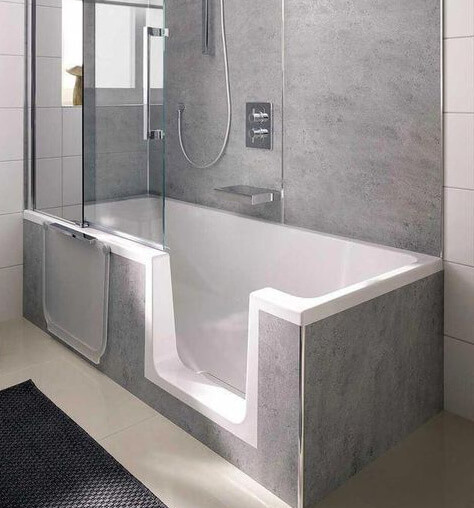
Walk-in tub and shower combo
A walk-in tub and shower combo sits at the higher end of the budget range, but it gives you the most ways to bathe. We rounded up the best walk-in tub and shower combo options on our blog, and we also have a walk-in tub and shower cost guide.
Doorless or add a door?
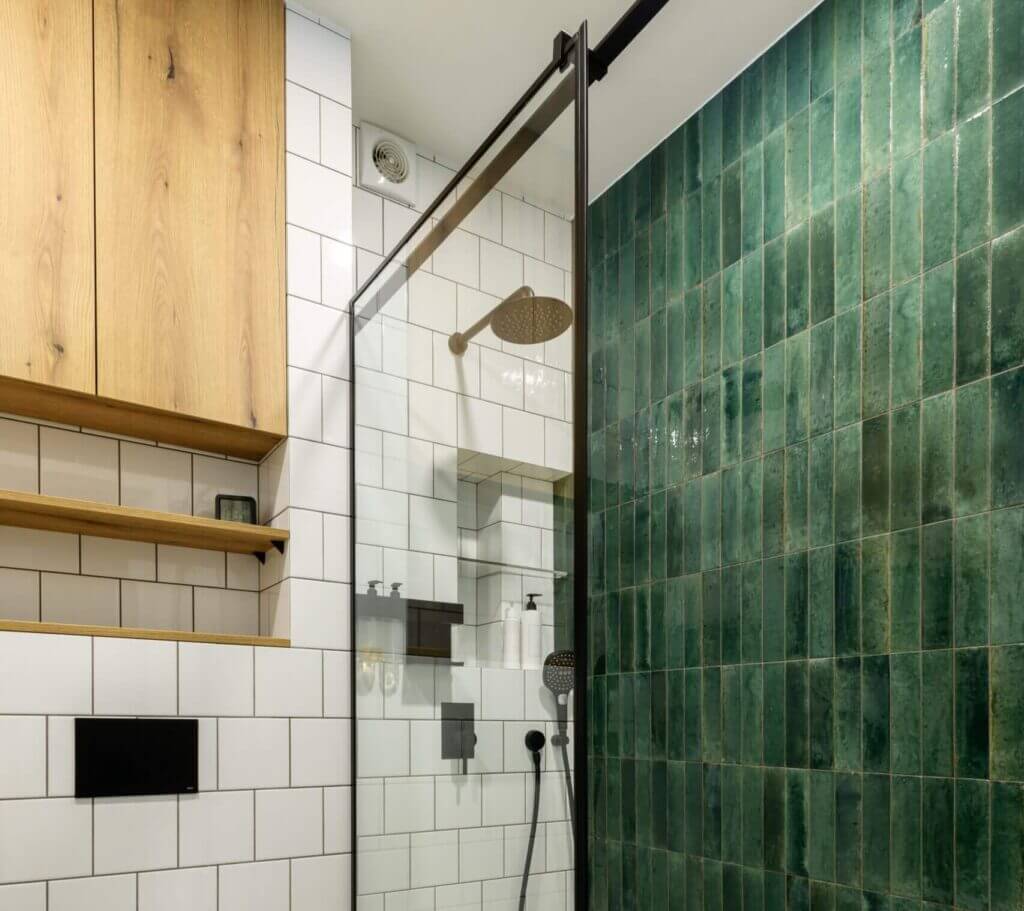
If you want a true walk-in shower, consider going doorless. It costs less and gives your bathroom an open, airy feel. If you love the look of a walk-in shower with a door, the options below can help.
Want to compare designs? See our picks for the best walk-in showers.
Walk-In Shower Doors: What Are Your Options?
Your door choice depends on your space and budget. Doors for a walk-in shower typically cost $300 to $2,500 or more. Here are the most popular options:
- Frameless. This all-glass option tends to be the most expensive, and it looks the most open.
- Semi-frameless. A good middle ground, semi-frameless doors offer many ways to open (such as pivot or slide).
- Framed. Framed doors cost the least, though the metal frame looks less open than glass alone.
- Sliding. Sliding doors technically fall under the semi-frameless category, but they’re popular enough to deserve their own call-out. They suit short-on-space bathrooms because they don’t need clearance to open. In some designs, a single glass panel slides so you can block part of the shower, which balances a shower with and without a door.
- Pivot. Also called a swing or hinged door, this door opens in or out. It comes in frameless, semi-frameless, or framed styles.
For more detail, see our guide to shower door types, our comparison of frameless vs. framed shower doors, and our shower door size chart.
Accessibility Features for Walk-In Showers
A walk-in shower already removes the biggest barrier, the tub wall. These features make it safer and more comfortable for everyone:
- Curbless entry: Gives walkers, shower chairs, and wheelchairs a smooth path. See our guide to roll-in showers.
- Built-in or fold-down bench: Lets you sit while you bathe. Browse shower bench ideas.
- Grab bars: Add support at the entry and on the back and side walls.
- Handheld showerhead: Works for seated bathing, and a slide bar adjusts the height.
- Slip-resistant floor tile: Small mosaic tiles add grip because they create more grout lines. See our picks for the best tile for showers.
- Easy-reach controls: Place valves near the entry so you can turn on water before you step in.
For a full list of upgrades, see our bathroom accessibility modifications guide. Keep your shower clean by following our tips on how to clean a shower.
Walk-In Shower Q&A
What is a walk-in shower?
A walk-in shower is a tub-free shower you step into rather than climb into. Most have a low curb, and curbless versions have no step at all. Many are doorless or use a fixed glass panel to keep water inside.
What is the difference between a walk-in shower and a regular shower?
A walk-in shower has an open or partially open entry and usually no door, curb, or tub edge to step over. It feels more spacious. A regular shower is either a shower-tub combo or an enclosed stall with a curtain or door and a raised threshold.
Is a walk-in shower the same as a curbless shower?
No. A curbless shower is one kind of walk-in shower. It has no curb, so the floor runs level into the shower. Most walk-in showers have a low curb of a few inches that helps contain water.
Do walk-in showers get water everywhere?
Walk-in showers can splash more than enclosed showers, but good design prevents most of it. The right showerhead placement, adequate depth, a properly sloped floor, and a fixed glass panel keep most water inside. Very small bathrooms and poorly sloped floors are more prone to leaks.
What are the disadvantages of a walk-in shower?
The main disadvantages are water splashing, less privacy, a cooler feel without a door, and higher cost for custom glass, tile, and waterproofing. A walk-in shower also removes the option to take a bath.
How much does a walk-in shower cost?
The national average is about $9,500, and most homeowners pay $4,500 to $15,000. A prefab walk-in shower costs about $2,000 to $5,000, while a custom tile shower costs $7,500 to $15,000 or more. Curbless designs typically add to the total.
What is a good size for a walk-in shower?
A good size is at least 36 by 36 inches, and 36 by 48 inches is the most popular. Choose 48 by 60 inches or larger for a bench or multiple showerheads. A standard ADA roll-in shower is at least 30 by 60 inches inside.
How big does a doorless walk-in shower need to be?
Doorless showers need enough depth to keep spray away from the opening. Many designers recommend at least 42 to 48 inches from the showerhead wall to the entry, and up to 60 inches for a fully open design. A fixed glass panel helps in smaller spaces.
Do walk-in showers need a door?
No. Traditional walk-in showers have no door, and a fixed glass panel is often enough to keep water in. Many homeowners add a sliding or pivot door for warmth and privacy. A door costs $300 to $2,500 or more.
Do walk-in showers add home value?
In many homes, yes, especially in primary bathrooms, because buyers like the open, modern look. Keep at least one bathtub in the home if you can. Removing the only tub can narrow your pool of buyers.
Are walk-in showers good for seniors?
Yes. A low or no-step entry lowers the risk of tripping or falling, and a doorless design is easy to enter with a walker or shower chair. Add grab bars, a bench, a handheld showerhead, and slip-resistant tile for extra safety.
Next Steps
If a walk-in shower is right for you, start with our guide to choosing a contractor to find top bathroom remodel pros in your area. Our shower remodel planning guide walks you through the project from start to finish.
Want to see what other showers might work best for you? Check out our shower remodel guide to narrow your options, or read about the seven types of showers.
Modernize can also help. If you’re ready for quotes but not ready to research and call around, we can match you with up to four pros in your area. Click below to answer a few questions about your project.