Foundations
How Much Does a Concrete Slab Cost? Price by Size and Type
Average Cost: $5 – $14 per sq. ft.
Concrete slab installation costs $5–$14 per square foot, with most projects running $4,500–$12,600 and a national average around $6,500. Final price depends on slab type, thickness, reinforcement, and your location.
Find the best foundation pros in your area.

The Modernize Mission
We help homeowners make confident decisions through our reliable, up-to-date, and unbiased information and average project costs. All of our content is thoroughly reviewed and fact-checked by our team of home improvement experts. Learn more about how we maintain these values.
Table of Contents
- What Is a Concrete Slab Foundation?
- Types of Concrete Slab Foundations
- How Much Does a Concrete Slab Cost?
- Concrete Slab Cost by Project Size
- Factors That Affect Concrete Slab Prices
- Concrete Slab Cost by Project Type
- Repair vs. Full Replacement
- Additional Costs and Upgrades
- DIY vs. Professional Concrete Slab Installation
- Life Expectancy and Long-Term Value
What Is a Concrete Slab Foundation?
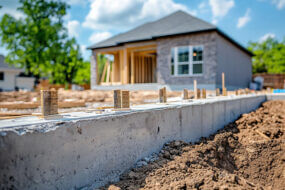
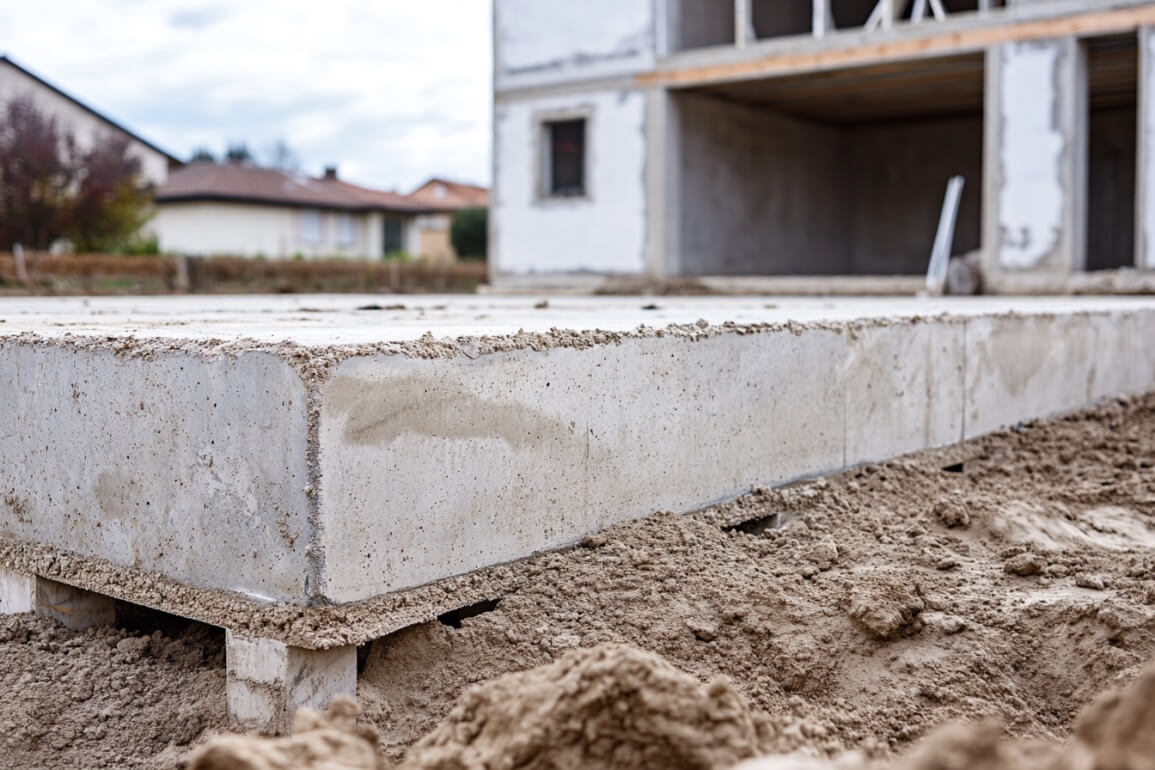
A concrete slab foundation is a flat layer of reinforced concrete (usually 4 to 8 inches thick) poured directly onto the ground to support a building. These foundations are affordable, durable, and most common in warm climates, used for garages, patios, driveways, and single-story homes. For a broader look at your options, see Modernize’s guide to all foundation types.
Unlike crawl space or pier-and-beam foundations, a slab sits right on the soil with no basement or open space underneath. That makes it one of the simplest and most affordable foundation types, though repairs can be more involved if the slab shifts or cracks over time.
See what your concrete slab project will cost.
Types of Concrete Slab Foundations
Not all concrete slabs are built the same way. The structure and installation method vary based on your climate, soil type, and what the slab needs to support. The three main types are slab-on-grade, floating slab, and monolithic slab (each with different use cases and cost profiles).
Slab-on-grade foundation
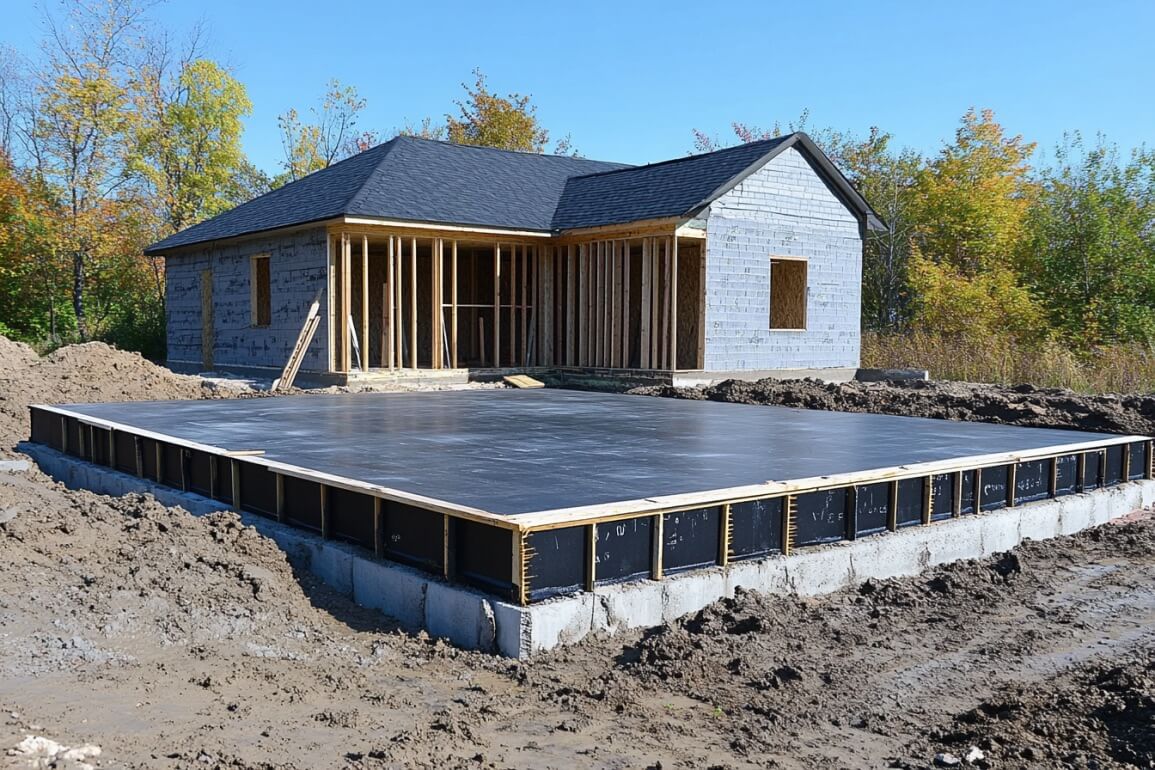
A slab-on-grade foundation is a single layer of concrete poured directly on the ground, usually over compacted gravel. It’s the most common slab type for homes in warm or moderate climates and one of the least expensive options to build.
Best for: Single-story homes, mobile homes, patios, and driveways in well-drained, stable soils with minimal frost depth.
Floating slab foundation
A floating slab foundation sits on top of the ground rather than being anchored with deep footings. It’s reinforced with steel and poured over compacted gravel, allowing it to shift slightly with freeze-thaw cycles without cracking.
Best for: Garages, sheds, and small cabins in cold or variable climates with shallow frost lines.
Monolithic slab foundation
A monolithic slab combines the slab and footings in one continuous pour. The edges are thickened to carry the building’s structural load while the center stays thinner for the floor. It’s faster to install than a slab with separate footings and is a common choice for home construction in warmer regions.
Best for: Homes in warm or moderate climates, heavy structures requiring added support, and projects where speed and strength are both priorities.
How Much Does a Concrete Slab Cost?
A concrete slab typically costs $5–$14 per square foot, including materials and labor. For a standard 900-square-foot slab, most homeowners pay $4,500–$12,600, with an average around $6,500. Final price depends on slab thickness, reinforcement type, project size, and your location.
- Low-end cost: Around $4,500 for a small, basic slab with minimal reinforcement
- Typical range: $4,500–$12,600 for a standard 30-foot by 30-foot slab
- High-end cost: $12,600 or more for large, reinforced, or specialty slabs
Concrete Slab Cost by Project Size
Slab cost scales directly with square footage, but thickness and reinforcement requirements also change as projects get larger, so the per-square-foot rate isn’t flat across all sizes.
| Project Size | Area (sq. ft.) | Estimated Cost Range | Typical Use Case |
|---|---|---|---|
| Small (10′ × 10′) | 100 | $500–$1,400 | Sheds, small patios, walkways |
| Medium (20′ × 20′) | 400 | $2,000–$5,600 | Detached garages, larger patios, small driveways |
| Large (30′ × 30′) | 900 | $4,500–$12,600 | Full home foundations, multi-car garages, large driveways |
- Small slabs are the most DIY-friendly, though costs rise if decorative finishes or heavier reinforcement are added.
- Medium slabs usually require professional installation, especially for driveways or garages where strength and thickness matter.
- Large slabs are typically used as home foundations and require careful grading, reinforcement, and professional labor for long-term durability.
Factors That Affect Concrete Slab Prices
Several variables determine where your project lands in the cost range — from the concrete mix you choose to site conditions and labor rates in your area. Here’s what typically moves the price up or down.
Concrete quality and mix type
Higher-grade mixes cost more upfront but can significantly extend slab lifespan, especially in climates with heavy freeze-thaw cycles or high structural loads.
- Standard mix: $4–$6 per sq. ft. — most common for patios, sheds, and driveways
- High-strength mix: $5–$7 per sq. ft. — better for structural loads, garages, and homes
- Fiber-reinforced concrete: $6–$8 per sq. ft. — adds durability and crack resistance
Labor and installation costs
Labor rates vary by region and project complexity. Hiring experienced contractors prevents costly mistakes with grading and drainage (which are far more expensive to correct after the pour than before it).
- Simple projects in lower-cost areas may stay closer to $4–$6 per sq. ft.
- Challenging projects — uneven terrain, tight access, heavy reinforcement — push labor costs higher.
- High-demand regions often carry premium contractor rates.
On-site poured vs. precast slabs
Your installation method affects both cost and flexibility.
- On-site poured concrete: $4–$8 per sq. ft. — mixed and poured at your property; works for any size or shape
- Precast slabs: $3–$6 per sq. ft. plus delivery fees — manufactured off-site; best for small, uniform projects
On-site pours are standard for full home foundations. Precast can save money on small additions or accessory structures where custom sizing isn’t needed.
Slab thickness
Thickness requirements are set by what the slab needs to support. Always match thickness to the load; underbuilding leads to cracking and costly repairs later.
- Patios and sheds: ~4 inches thick — $4–$6 per sq. ft.
- Garages and driveways: ~6 inches thick — $6–$10 per sq. ft.
- Homes and outbuildings: ~8 inches thick — $8–$14 per sq. ft.
Reinforcement materials
Reinforcement adds strength and reduces cracking. The right choice depends on soil conditions and expected load; your contractor should specify which type is appropriate for your project.
- Wire mesh: $0.30–$0.50 per sq. ft.
- Rebar: $1–$1.50 per sq. ft.
- Fibers: $0.75–$1.25 per sq. ft.
Concrete Slab Cost by Project Type
Different projects require different slab sizes, thicknesses, and reinforcement levels. A patio slab and a home foundation are both concrete; they’re built to entirely different specs and priced accordingly.
| Project Type | Typical Size | Cost Range |
|---|---|---|
| Shed | 100–200 sq. ft. | $500–$2,800 |
| Patio | 100–300 sq. ft. | $500–$4,200 |
| Garage floor | 400–600 sq. ft. | $2,000–$8,400 |
| Driveway | 600–1,000 sq. ft. | $3,000–$14,000 |
| Full home foundation | 1,000+ sq. ft. | $5,000–$14,000+ |
- Sheds and patios are the most budget-friendly, especially with standard concrete and basic finishes.
- Garages and driveways need extra reinforcement — rebar or mesh — to handle heavy use and vehicle loads.
- Full home slabs are the most complex, involving site grading, thicker pours, and professional labor throughout.
Repair vs. Full Replacement
If your existing slab has minor damage, repair is almost always less expensive than full replacement. Most repairs run $500–$2,000 depending on the extent of the damage. Not sure whether to repair or replace? See our guide to foundation repair vs. replacement or learn to identify and address a sinking foundation.
- Small crack repair: ~$0.20 per linear foot
- Full resurfacing: $3–$5 per square foot
- Full replacement with demolition: $6–$15 per square foot
Additional Costs and Upgrades
Beyond the basic pour, many homeowners choose finishes or features that improve durability, comfort, or curb appeal. These add-ons are worth budgeting for (some are optional upgrades, others may be necessary for safe, code-compliant operation), and can increase resale value — particularly heated slabs and decorative finishes in high-end markets.
| Upgrade Type | Additional Cost |
|---|---|
| Decorative finish | $2–$5 per sq. ft. |
| Staining or color | $1–$3 per sq. ft. |
| Stamped concrete | $8–$12 per sq. ft. |
| Heated slab system | $6–$16 per sq. ft. |
DIY vs. Professional Concrete Slab Installation
Small slabs — patios, shed pads — are within reach for an experienced DIYer with access to the right tools. Anything structural, anything requiring permits, or any slab over a few hundred square feet should go to a licensed contractor.
DIY concrete slab installation
Pros
- Labor savings: No crew costs for small pours like patios or shed pads
- Full schedule control: You set the timeline and manage materials directly
Cons
- Equipment rental adds up: Forms, tampers, and finishing tools can narrow the savings gap quickly
- Grading errors are costly: Improper slope or drainage causes pooling, cracking, and voids
- Permit risk: Structural slabs require licensed work to pass inspection in most jurisdictions
Hiring a professional
Pros
- Correct sizing and grading: Contractors handle drainage planning, reinforcement, and curing from the start
- Code compliance: Licensed pros pull permits and ensure the slab passes inspection
- Warranty coverage: Professional work typically comes with a labor warranty
Cons
- Higher upfront cost: Professional installation runs $4–$8 per sq. ft. for materials and labor
- Less scheduling flexibility: You’re working around the contractor’s availability
Life Expectancy and Long-Term Value
A well-installed concrete slab can last 30 to 50 years or longer with proper foundation maintenance. Sealing the slab every few years protects against moisture infiltration and freeze-thaw damage, especially important in northern climates. A well-maintained slab supports home value and gives buyers confidence that the structure was built to last. Consider scheduling a foundation inspection if you haven’t had one recently.
For homes with heated slab systems or decorative finishes, the investment tends to resonate with buyers in markets where those features are common. For structural slabs (foundations, garage floors, driveways), longevity and workmanship matter more than finish quality at resale.
If you’re ready to get started, connect with licensed foundation contractors in your area through Modernize for estimates and a project timeline that works for your schedule.
Ready to get concrete slab quotes from pros in your area?
Note: Concrete slab cost estimates are based on 2026 national and regional averages, cross-referenced against industry research and recent contractor quotes. Actual prices vary by location, slab type, soil conditions, and project scope.