Foundations
How Much Does Lawn Leveling and Yard Grading Cost?
Average Cost: $1,000 – $3,330 per project
Lawn leveling and yard grading cost $1,000–$3,330 for most homeowners, with a national average of $2,180. Small surface fixes run under $1,000, while large regrading projects with French drains or retaining walls can exceed $10,000.
Connect with the best lawn leveling pros in your area.

The Modernize Mission
We help homeowners make confident decisions through our reliable, up-to-date, and unbiased information and average project costs. All of our content is thoroughly reviewed and fact-checked by our team of home improvement experts. Learn more about how we maintain these values.
Table of Contents
- What Does It Mean to Level or Grade a Lawn?
- How Much Does It Cost to Level or Grade a Lawn in 2026?
- What Factors Affect Lawn Leveling Costs?
- Lawn Leveling Costs by Project Type
- Is It Cheaper to Level Your Lawn Yourself or Hire a Professional?
- Common Add-Ons That Increase Lawn Leveling Costs
- How to Save on Lawn Leveling Costs
- Long-Term Value of a Leveled Lawn
- FAQs About Lawn Leveling
What Does It Mean to Level or Grade a Lawn?
Lawn leveling and yard grading are two related but distinct landscaping processes. Both improve the usability and health of your yard, but they serve different purposes:
- Lawn leveling: Smooths out bumps and dips to create an even surface. This makes mowing easier, prevents puddling, and improves the overall appearance of your lawn.
- Yard grading: Reshapes the slope of your property to ensure proper water drainage. By directing water away from your home’s foundation, grading helps prevent pooling, erosion, and costly foundation damage.
Many lawn improvement projects involve a combination of both leveling and grading to achieve a safe, functional, and well-drained yard.
Not sure where to start? Connect with licensed lawn grading pros in your area.
How Much Does It Cost to Level or Grade a Lawn in 2026?
The average cost to level or grade a lawn in 2026 is about $2,180, with most homeowners paying between $1,000 and $3,330.
- Low-end costs: Under $1,000 for small projects, such as preparing a flat area for a pool or patio.
- Typical range: $1,000–$3,330 for standard yard leveling or grading.
- High-end costs: $10,000 or more for large properties or projects that require French drains, retaining walls, or major slope adjustments.
Lawn size, slope severity, soil conditions, and drainage needs are the biggest factors affecting price. We’ll break those down next.
What Factors Affect Lawn Leveling Costs?
The total price of lawn leveling or grading depends on several key variables. Some are related to the size and shape of your yard, while others depend on soil conditions or the work required. Here’s what typically influences costs.
Lawn size and slope severity
The larger the lawn and the steeper the slope, the more work and equipment are required. A gentle slope with minor dips may only need light grading, while correcting a steep incline could involve retaining walls or adding drainage systems. Here’s what you can expect to pay based on the size of your lawn:
| Square footage / acreage | Average cost range |
|---|---|
| 1,000 square feet | $1,000–$2,000 |
| 2,000 square feet | $2,000–$4,000 |
| 5,000 square feet | $5,000–$10,000 |
| 10,000 square feet | $10,000–$20,000 |
| 1/5 acre | $3,000–$9,000 |
| 1/4 acre | $4,200–$11,250 |
| 1/2 acre | $8,500–$22,500 |
| 1 acre | $17,000–$45,000 |
Soil condition and fill materials
The type of soil in your yard and the materials needed to fill low areas play a big role in overall cost. Basic fill dirt is inexpensive but unsuitable for growing grass, while topsoil and sod add functionality and appearance.
- Fill dirt: $5–$30 per cubic yard
- Topsoil: $12–$55 per cubic yard
- Sod installation: $1,050–$2,800 for a typical lawn
Labor and equipment
Most lawn leveling projects require specialized machinery and multiple workers. Contractors typically charge by the hour, and complex projects with tree removal or excavation take significantly longer.
- Labor: $50–$100 per hour per worker
- Typical project: 12 to 24 labor hours total
- Heavy equipment: Additional costs apply for large-scale grading or obstruction removal
Access and yard layout
The easier it is to access your yard, the less expensive the job will be. Tight spaces, obstacles like pools or large trees, or overhead restrictions such as power lines can all increase labor time and equipment needs.
Permits and land surveying
For small projects like leveling a patio area, you may not need permits. For larger jobs or projects near property lines, permits and surveys are often required to ensure compliance with local codes.
- Land survey: $375–$750
- Permits: $100–$500
Drainage and retaining walls
When leveling also involves improving drainage, costs increase. French drains, erosion control fabrics, or retaining walls may be necessary to ensure long-term stability and protect your foundation. If you’re not sure which drainage solution fits your yard, a grading contractor can assess your slope and soil before recommending a fix.
- French drains: $500–$18,000, depending on length and complexity
- Retaining walls: $3,200–$9,200 on average
Lawn Leveling Costs by Project Type
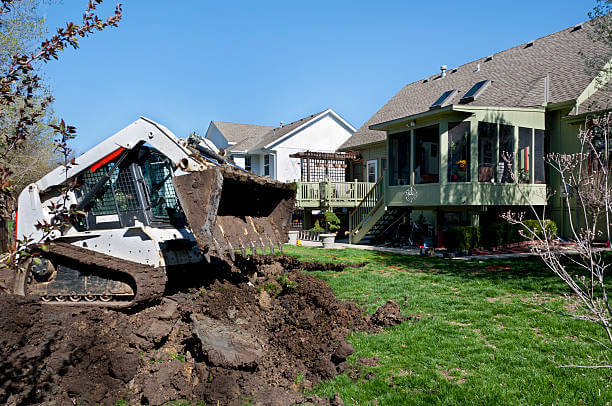
The type of project you’re planning often determines how much lawn leveling or grading will cost. Some jobs require simple surface smoothing, while others need slope correction, drainage improvements, or structural support.
| Project | Typical square footage | Cost range |
|---|---|---|
| Regrading near a foundation | About 200 square feet | $1,000–$3,000 |
| Slight slope leveling | About 5,000 square feet for a typical backyard | $1,000–$5,000 |
| Pool leveling | About 500 square feet for a 15-foot by 30-foot pool | $200–$900 |
| Fence leveling | About 300 square feet underneath the fence line | $900–$3,000 |
| Driveway leveling | 640 square feet for a two-car driveway | $1,500–$9,500 |
| General lawn leveling | 5,000 to 10,000 square feet | $500–$4,500 |
Regrading near a foundation
Cost: $1,000–$3,000 (about 200 square feet)
Regrading around a home ensures water drains away from the foundation, preventing basement leaks and costly structural damage. This is one of the most important grading projects for long-term home protection. Proper grading requires a slope of at least six inches over the first 10 feet away from the foundation — enough to direct water clearly away from the structure. If you’re already seeing cracks or settling, it’s worth reading up on how to tell normal settling from a real foundation problem before you start.
Slight slope leveling
Cost: $1,000–$5,000 (about 5,000 square feet)
Gentle slopes can make mowing difficult and lead to uneven water distribution. Leveling a slight slope creates a safer, more usable lawn and improves drainage without requiring major structural work.
Pool leveling
Cost: $200–$900 (about 500 square feet for a 15-foot by 30-foot pool)
Installing a pool on uneven ground can lead to cracks, leaks, or structural failure. Leveling ensures the base is stable and reduces long-term maintenance issues. Even a slight grade can cause an above-ground pool to shift or collapse under water pressure.
Fence leveling
Cost: $900–$3,000 (about 300 square feet)
Leveling the ground beneath a fence line prevents gaps, leaning posts, and storm-related damage. Some fencing contractors may include basic leveling in their installation services — worth confirming before you get separate bids.
Driveway leveling
Cost: $1,500–$9,500 (about 640 square feet for a two-car driveway)
Driveways need a firm, level base before concrete or asphalt is poured. Leveling prevents water pooling, which can cause cracks and shorten the lifespan of the surface significantly.
General lawn leveling
Cost: $500–$4,500 (5,000 to 10,000 square feet)
For everyday use, lawn leveling smooths out dips and bumps across larger areas. This improves safety, curb appeal, and overall lawn health — and makes routine mowing and maintenance easier.
Is It Cheaper to Level Your Lawn Yourself or Hire a Professional?
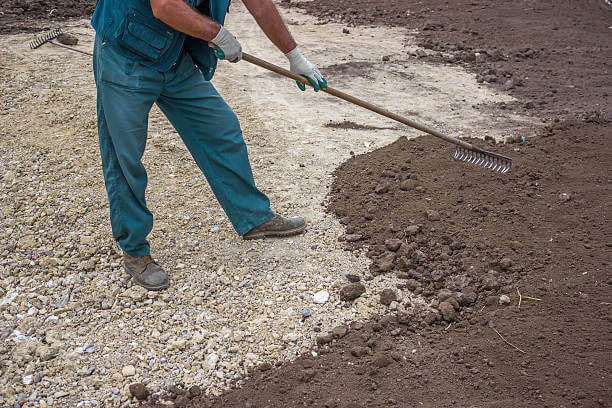
Some homeowners consider tackling lawn leveling or grading themselves to save money. DIY can work well for very small surface fixes, but for anything beyond filling shallow dips, the trade-offs in cost, time, and long-term results usually favor hiring a pro.
DIY lawn leveling
Pros
- Labor savings: No crew costs for small surface fixes like filling shallow dips with topsoil
- Low barrier to entry: Basic tamping and topsoil spreading are manageable for an experienced DIYer
Cons
- Equipment rental costs: Renting heavy machinery often runs nearly as much as hiring a crew
- Risk of drainage errors: Without professional grading knowledge, mistakes can cause water pooling or foundation damage
Professional lawn leveling
Pros
- Right equipment and expertise: Contractors handle large projects quickly and correctly
- Drainage insight: Pros can spot issues and recommend French drains, retaining walls, or slope corrections
- Code compliance: Professionals ensure the final slope meets local requirements
Cons
- Higher upfront cost: Standard projects typically run $1,000–$3,330 before add-ons
Common Add-Ons That Increase Lawn Leveling Costs
These common additions to lawn leveling projects may increase your total cost — but in some cases, only by a small amount. Here’s what to expect:
- Compost spreading: Compost helps lawns grow back quickly and evenly after leveling. It typically costs $15–$25 per cubic yard.
- Sod or seed installation: After leveling, reseeding or laying sod restores your lawn. Sod costs up to $1.75 per square foot, while seeding averages about $0.24 per square foot.
- Irrigation repair: Installing or repairing an irrigation system adds to the cost but supports long-term lawn health. Systems typically cost $1,000–$4,000.
- Drainage improvements: If water pools in your yard — especially near your foundation — solutions like French drains or a basement waterproofing system can help. Costs range from $500–$18,000 depending on length and complexity.
- Erosion control fabrics: Mesh prevents erosion in vulnerable areas while new grass grows in. Basic erosion mesh costs less than $2 per square foot.
How to Save on Lawn Leveling Costs
A few smart planning decisions can reduce your total without cutting corners on results:
- Schedule in the off-season. Many contractors offer discounts during slower months, typically late fall and winter in most regions.
- Get multiple quotes. Compare at least three to four detailed estimates to evaluate pricing, scope, and warranties before committing.
- Handle prep work yourself. While full leveling isn’t a DIY job, clearing the area of debris or marking obstacles yourself can reduce billable labor hours.
- Bundle services. Combining leveling with sod installation, drainage work, or irrigation repair in a single project often results in lower total labor costs.
Long-Term Value of a Leveled Lawn
Leveling your lawn offers both practical and financial benefits. A properly graded yard directs water away from your foundation, reducing the risk of basement leaks, erosion, and costly structural repairs down the line. It also improves day-to-day usability — safer footing, easier mowing, and better-looking outdoor spaces.
If you’re planning to sell, a leveled yard with good drainage is a visible signal to buyers that the property has been well maintained. And for homes with existing foundation concerns, proper grading is one of the most cost-effective preventative steps you can take before problems escalate. Pairing it with a solid foundation maintenance routine gives you the best long-term protection.
If you’re ready to get started, connect with licensed lawn leveling contractors in your area through Modernize for estimates and project timelines that fit your schedule.
Ready to level your lawn? Connect with local pros and compare estimates.
Note: Lawn leveling and yard grading cost estimates are based on 2026 national and regional averages, cross-referenced against industry research and recent contractor quotes. Actual prices vary by location, yard size, soil conditions, and project scope.