
Modernize Foundation & Basement Waterproofing Rating Methodology
Modernize rates foundation and basement waterproofing contractors and products using a weighted scoring framework across seven criteria. Contractors are evaluated on licensing, technical expertise, customer experience, and warranty quality. Products are scored on water management performance, durability, warranty coverage, and value. Because problems in this category can worsen quickly and cost a lot to fix, we hold contractors and products in this category to a higher standard for credentials and warranties than in most other home improvement projects.

How Our Rating System Works
Modernize scores every foundation and waterproofing contractor and product on a one-to-five scale using a weighted formula:
Final Score = Σ (Criterion Score × Criterion Weight)
In case you didn’t know: The symbol Σ (sigma) is standard math notation for summation — it means we add up the weighted score for each criterion to arrive at the final score.
Each criterion is weighted based on how much it actually affects the outcome for you as a homeowner. For foundation and waterproofing contractors, technical expertise and credentials carry more weight than in other categories — an inaccurate diagnosis or improper repair can leave structural problems unresolved and create far more expensive damage down the line. For products, water management effectiveness is the primary driver of the score.
Once the final score is calculated, it maps to a star rating:
- 4.75–5.00 stars: Excellent
- 4.25–4.74 stars: Very Good
- 3.50–4.24 stars: Good
- 2.75–3.49 stars: Fair
- 2.00–2.74 stars: Poor
- Below 2.00 stars: Very Poor
A five-star rating means a contractor or product is excellent relative to comparable options — not that it’s flawless. All ratings are evaluated within the same category. For a full explanation of the scoring formula and what each star tier represents, see our Rating Methodology overview.
Foundation and Basement Waterproofing Contractor Rating Methodology
When we rate foundation and basement waterproofing companies, we look at the factors that matter most for your home’s safety, moisture control, and long-term protection. Since issues in this area can get worse without warning and cost a lot to fix, we put extra emphasis on technical credentials, accurate diagnosis, and strong warranties compared to other home improvement categories.
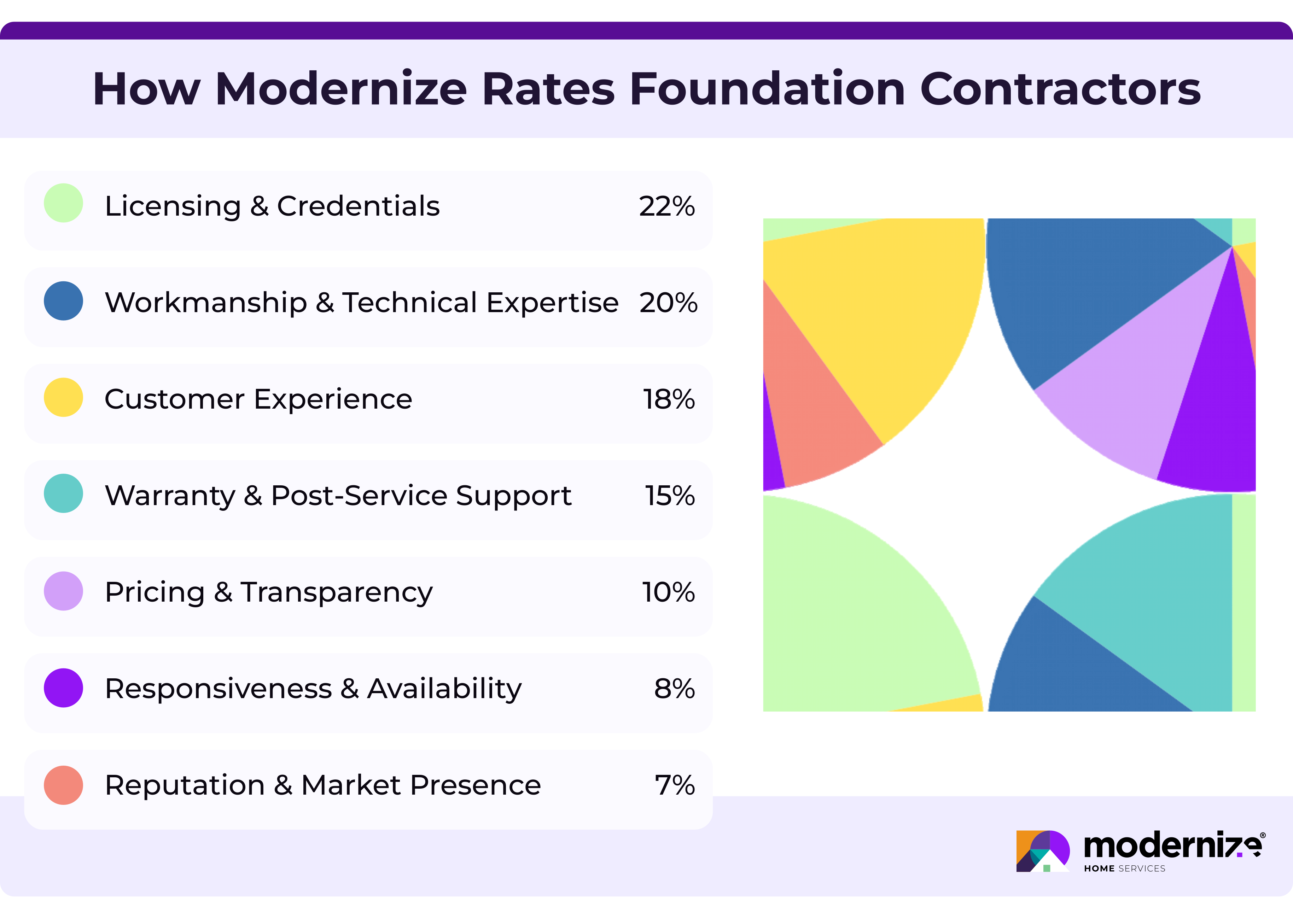
How we evaluate foundation and basement waterproofing contractors
Here’s how we break down each area we consider when scoring foundation and waterproofing contractors.
Licensing and credentials (22%)
We check that contractors have the right state and local licenses, carry proper insurance, and hold relevant certifications. For foundation work, we look for credentials from providers like Earth Contact Products (ECP), Supportworks, or the Helical Pier Institute. For waterproofing, we look for Basement Health Association (BHA) membership or Basement Systems network affiliation. Contractors with specialized credentials and a clean record score higher.
Workmanship and technical expertise (20%)
This work requires an accurate diagnosis before repairs start. We rate contractors on how well they identify the real cause of foundation movement or water leaks, recommend the right solutions, and carry out repairs — like pier installation, wall anchoring, interior drainage, and membrane application — according to manufacturer and engineering standards. Contractors who don’t oversell, do the job right the first time, and have few callbacks earn higher scores.
Customer experience (18%)
We measure customer experience by checking reviews from trusted sources. We look at overall satisfaction, how recent the feedback is, and whether results are consistent across different project types. In this category, we also look for patterns in long-term repair success and how contractors handle issues after the work is done.
Warranty and post-service support (15%)
Warranty quality is especially important here because foundation and waterproofing problems can take time to show up and are expensive to fix. We check how long the warranty lasts, if it can be transferred to a new homeowner, what it covers, and how well the contractor honors claims. Transferable warranties are a significant plus for resale value. Contractors with long, clear, transferable warranties and a strong follow-through record earn the highest scores.
Pricing & transparency (10%)
Unlike many home improvement categories, waterproofing and foundation repair costs are genuinely scope-dependent. An accurate price requires a physical assessment, and any contractor who quotes a firm number before inspecting your home is likely cutting corners on diagnosis. We don’t penalize contractors for this reality.
Instead, we evaluate whether contractors provide a written contract with a clearly defined scope of work before any work begins, whether they offer multiple solution options at different price points, whether they use high-pressure same-day signing tactics, and whether they offer financing for larger projects. Contractors who are straightforward about what they’re doing and why, without pressuring homeowners into quick decisions, earn higher scores.
Responsiveness and availability (8%)
We look at how quickly and reliably contractors respond to homeowners from first contact through project completion. Since foundation and water problems often need urgent attention, we also check if contractors can schedule assessments promptly without long wait times.
Reputation and market presence (7%)
We look at how long contractors have been in business, their reputation in the local area, and how they’re viewed by homeowners and industry peers. Contractors with a strong local track record and ties to respected industry organizations earn higher scores.
Scoring philosophy
Our contractor ratings for foundation and basement waterproofing focus on long-term results, not just first impressions. Since this work affects your home’s structure and safety, we set higher standards for credentials and warranty quality than in most other categories. Contractors who have proper licenses, diagnose problems accurately, do quality work, and provide reliable post-job support earn our highest ratings. Those who lack licenses, oversell repairs, or don’t honor warranties receive lower scores — even if their prices seem good.
Foundation and Basement Waterproofing Products and Brands Rating Methodology
Modernize rates foundation and basement waterproofing products based on how well they manage water, their durability, and their long-term reliability. While contractor ratings focus on installation and service, our product ratings look at engineering quality and real-world performance over time — not just what the manufacturer claims.
This framework covers all types of products used for foundation protection and basement waterproofing, including sump pumps, interior drainage systems, exterior waterproofing membranes, crack repair materials, vapor barriers, and crawl space encapsulation products.
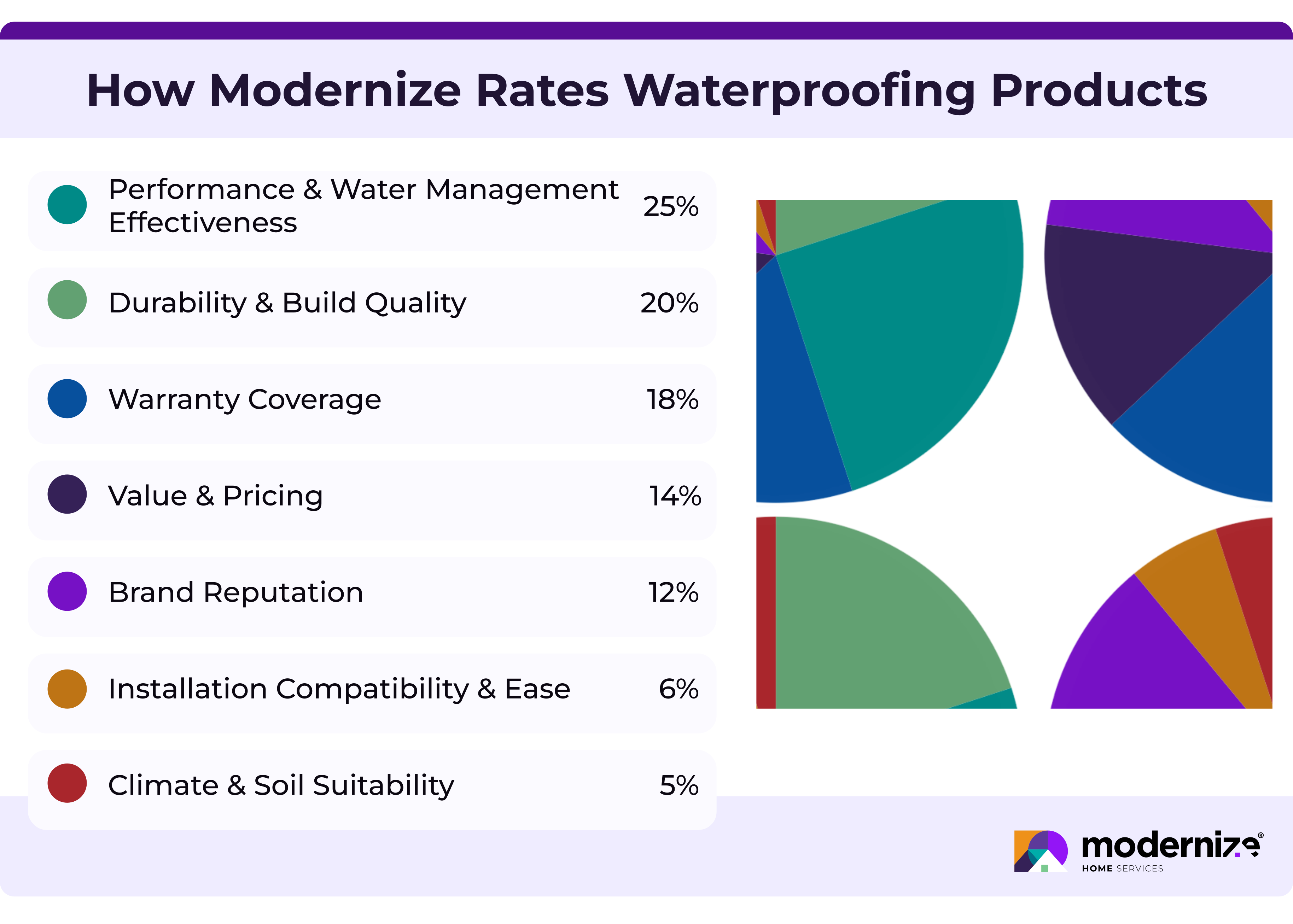
How we evaluate foundation and basement waterproofing products
Here’s how we break down each area we consider when scoring foundation and waterproofing products.
Performance and water management effectiveness (25%)
Performance is the most important factor for below-grade waterproofing products — water leaks, mold, and structural damage are serious and expensive to fix. We judge performance based on criteria for each product type. For sump pumps, we look at horsepower, gallons per hour (GPH) at different lift heights, switch reliability, and backup power. For membranes, we check hydrostatic pressure resistance and ASTM compliance. For crack repair materials, we look at strength, adhesion, and flexibility after curing. Products that consistently manage water well in real conditions earn higher scores.
Durability and build quality (20%)
Below-grade environments are tough. Products need to handle constant moisture, sediment, temperature changes, and debris without breaking down. For sump pumps, we check motor housing material, impeller type, corrosion resistance, and thermal overload protection. For drainage systems, we look at resistance to root intrusion and mineral buildup. For membranes and barriers, we check puncture resistance and freeze-thaw performance. Products made with high-quality materials and a strong track record in the field earn higher scores.
Warranty coverage (18%)
We check how long the manufacturer’s warranty lasts, how much it covers, whether it can be transferred to future homeowners, and how well the brand honors claims. Products with long, transferable, clearly written warranties and responsive claims support earn the highest scores.
Value and pricing (14%)
We judge value by looking at how a product’s price, expected lifespan, and real-world performance compare. A cheaper product that needs early replacement or doesn’t control moisture reliably is a worse value than a more expensive system that works dependably for years. Products that offer strong long-term protection for their price earn higher scores.
Brand reputation and support (12%)
We look at the manufacturer’s professional network, how easy it is to get replacement parts, and their industry reputation. For waterproofing products, this means checking the size of the authorized installer network, availability of parts like sump pump motors, switches, and battery backups, and whether products meet standards like UL listing, NSF certification, IAPMO, and ASTM. Brands with strong support and a reliable track record earn higher scores.
Installation compatibility and ease (6%)
Even the best products can fall short if they’re hard to install in typical homes. We check if products fit standard sump pit sizes, work with common drainage layouts, and suit typical subfloor and foundation wall conditions. Products that most contractors are familiar with and that come with clear installation instructions earn higher scores.
Climate and regional suitability (5%)
Product performance can vary by local conditions. We check how well products handle high water tables, heavy clay soils, freeze-thaw cycles in cold climates, and high humidity. Products designed for demanding regional conditions earn higher scores.
Scoring philosophy
Our product ratings for foundation and basement waterproofing help you understand what to expect for long-term water control, reliability, and protection. We use the same criteria for all products and compare them to others in their category — whether it’s a sump pump, drainage channel, exterior membrane, or crack repair material. Products that perform well, carry strong warranties, and are built to last earn the highest ratings. Systems that just meet the basics or tend to fail early receive lower scores.