Enter your ZIP to find local pros.
Please enter a valid 5 digit zip code

Best Garage Door Openers of 2026: Compare Costs, Features & Installation

Let Modernize help you compare drive types, smart features, pricing, and installation costs before you commit.
Share this article

I can’t tell you how many times I’ve pulled away from my house, made it halfway down the road, and suddenly been convinced I forgot to shut the garage door. I’ve turned around more times than I’d like to admit — and I’ve definitely had a few middle-of-the-night sprints to the garage just to double-check it was closed. A garage door opener isn’t just about convenience. It’s about security, peace of mind, and knowing your home isn’t sitting wide open while you’re gone.

Today’s garage door openers do far more than lift and lower a heavy door. Modern systems integrate with your phone, send real-time alerts, auto-close after a set time, and even include built-in cameras. Whether you’re upgrading an aging unit or installing one for a new garage door, choosing the right opener can dramatically improve daily convenience and long-term reliability.

Most garage door openers cost between $200 and $600 for the unit itself, depending on drive type, horsepower, and smart features. Professional installation typically adds $200 to $500, bringing the average total investment to $400 to $1,000. Wall-mounted jackshaft models or systems with integrated cameras and battery backup can push costs higher. While DIY installation is possible for experienced homeowners, many choose professional installation to ensure proper alignment, safety sensor calibration, and warranty protection.

When comparing garage door openers, the most important factors to consider include:

  • Smart features – Wi-Fi connectivity, app control, auto-close timers, and camera integration
  • Noise level – Belt drives and wall-mounted systems are much quieter than traditional chain drives
  • Functionality & power – Heavier wood or oversized doors require higher horsepower
  • Space constraints – Low ceilings or overhead storage may require a wall-mounted jackshaft
  • Budget – Chain drives are typically more affordable; belt and smart models cost more

Best Openers by Homeowner Need

Best Openers by Homeowner Need
Best ForRecommended ModelDescription
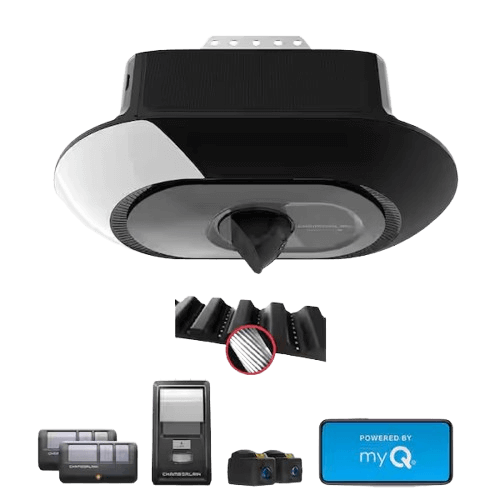
The Forgetful Homeowner (like me!)Chamberlain B6753TFeatures myQ smart control with customizable auto-close scheduling, helping ensure your garage door doesn’t stay open unintentionally.
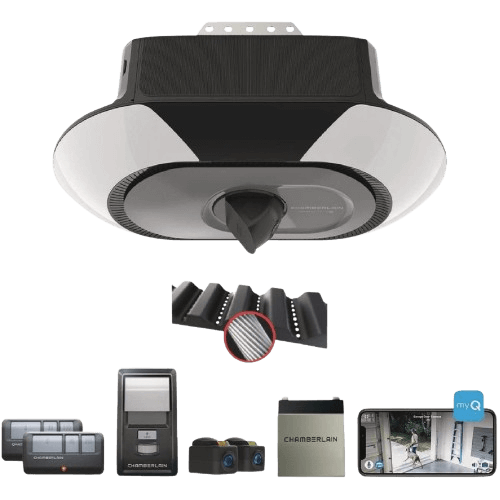
Noise-Sensitive HomesGenie StealthDrive 7155Ultra-quiet belt drive system ideal for garages located below bedrooms or adjacent to living spaces.
Smart Home IntegrationChamberlain B4603TStrong myQ app control and automation compatibility for homeowners who want seamless connectivity.
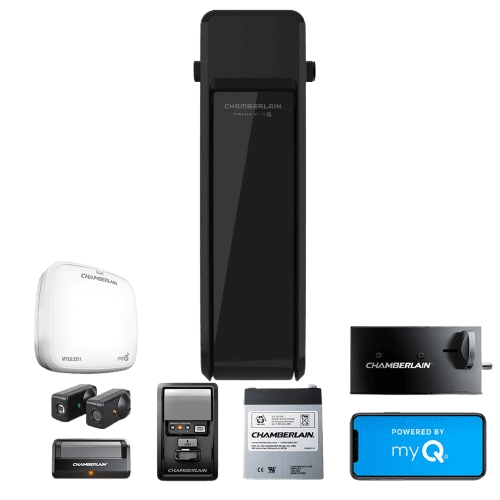
Low Ceilings or Overhead Storage NeedsChamberlain RJO101MC (Wall-Mounted Jackshaft)Wall-mounted design frees up ceiling space while delivering smooth, quiet operation.
Heavy or Oversized Garage DoorsCraftsman CMXEOCG982High-power motor designed to lift larger or heavier garage doors reliably.

What’s Changed in 2026?

Garage door openers in 2026 are smarter, quieter, and more security-focused than ever. Built-in Wi-Fi is now standard on many midrange models, and battery backup systems are increasingly required in certain states. Integrated cameras, motion detection, LED lighting upgrades, and customizable automation (like scheduled auto-close) are quickly becoming homeowner expectations rather than premium add-ons. At the same time, wall-mounted jackshaft openers are growing in popularity as homeowners prioritize overhead storage and cleaner garage layouts.

The right garage door opener doesn’t just open your garage — it protects your home, simplifies your routine, and gives you one less thing to worry about every time you leave the driveway.

Best Brands at a Glance
Best Garage Door Openers of 2026

Our team analyzed leading garage door openers using manufacturer specifications, warranty documentation, verified homeowner reviews, installer feedback, and current pricing data. We evaluated real-world performance factors such as motor strength, noise level, smart capabilities, and long-term reliability to determine which models deliver the strongest overall value for homeowners.

Our rankings are based strictly on research, objective performance criteria, and homeowner value. Modernize does not accept paid placements or sponsored influence in determining which products are included or how they rank.

  1. Genie StealthDrive
  2. Chamberlain B6753T
  3. Chamberlain B4603T
  4. Chamberlain RJO101MC
  5. Genie 3053-TKV
  6. Craftsman CMXEOCG982
  7. Chamberlain C2405
  8. Genie 750
1

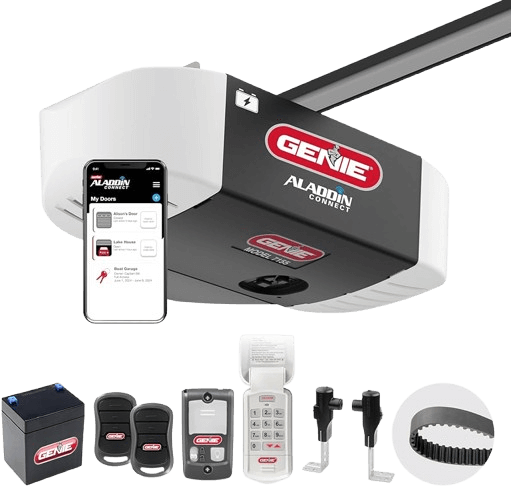
StealthDrive 7155 Connect (Genie)

4.5/5
  • Average Product Cost: $250 to $350
Best For: Homeowners with attached garages or living space above who want ultra-quiet performance with built-in battery backup.

What We Love

The StealthDrive 7155 Connect pairs a steel-reinforced belt system with a DC motor engineered to reduce vibration and operating noise. It’s designed specifically for residential settings where garage placement impacts daily comfort.

Its inclusion of both Wi-Fi connectivity and battery backup at a moderate price point strengthens its overall value proposition. It earned a 4.5/5 rating for delivering quiet reliability and modern convenience without pushing into premium pricing.

Good Fit If: You prioritize quiet performance and power outage protection.

Not Ideal If: You want integrated camera monitoring or advanced automation ecosystems.

Cost Information

The average cost for the Genie StealthDrive 7155 Connect ranges from $250 to $350 for the unit alone.

  • Single Door Installation: $200 to $350
  • Double Door Installation: $350 to $600

Additional costs may apply for outlet relocation, high ceilings, or removal of an old opener

Homeowners with mechanical experience may save $200 to $400 by handling installation themselves.

Best Feature

Its built-in battery backup at a midrange price stands out. Many competitors reserve backup systems for higher-tier models, making this opener especially appealing in areas prone to storms or power interruptions.

Extremely quiet belt-drive system
Integrated battery backup included
Built-in Wi-Fi with app control
Strong lifting power (1¼ HPc equivalent)
Good midrange value
No integrated camera
App interface is more basic than competitors
Limited advanced smart home integrations
Not ideal for very heavy solid wood doors
2

B6753T Smart Garage Door Opener (Chamberlain)

4.5/5
  • Average Product Cost: $450 to $650
Best For: Tech-forward homeowners who want integrated video monitoring and full smart control in one system.

What We Love

The B6753T combines performance and security by integrating a high-definition camera directly into the opener housing. Its reinforced belt-drive system ensures smooth, quiet operation even with insulated doors.

It earned a 4.5/5 rating for blending security, convenience, and reliability into one cohesive system, though its higher cost keeps it from a perfect score.

Good Fit If: You want remote monitoring and enhanced security.

Not Ideal If: You prefer a simpler, lower-cost opener.

Cost Information

The average cost for the Chamberlain B6753T ranges from $450 to $650 for the unit.

  • Single Door Installation: $250 to $400
  • Double Door Installation: $400 to $650

Costs may increase with camera setup, Wi-Fi configuration, or ceiling modifications

DIY installation may reduce labor costs, but professional installation is commonly recommended.

Best Feature

The integrated HD camera with motion alerts elevates this opener beyond basic smart functionality. It provides real-time visibility into garage activity without requiring a separate security device.

Built-in 1080p camera
Quiet belt-drive operation
Integrated battery backup
Customizable auto-close scheduling
Strong overall build quality
Higher upfront cost
Camera storage may require subscription
Professional installation recommended
May offer more features than some homeowners need
3

B4603T MYQ Smart Garage Door Opener (Chamberlain)

4.5/5
  • Average Product Cost: $300 to $450
Best For: Homeowners seeking dependable smart functionality and quiet operation at a balanced price.

What We Love

The B4603T delivers core features most homeowners want — quiet operation, Wi-Fi connectivity, and backup power — without inflating the price with premium extras.

Its consistent performance and practical feature set earned it a 4.5/5 rating as one of the most well-rounded midrange options available.

Good Fit If: You want modern smart access without premium pricing.

Not Ideal If: You need integrated video or advanced automation compatibility.

Cost Information

The average cost for the Chamberlain B4603T ranges from $300 to $450 for the unit.

  • Single Door Installation: $200 to $350
  • Double Door Installation: $350 to $600

Installation costs vary based on ceiling height, wiring, and old opener removal

DIY installation can reduce total project cost by $200 to $400.

Best Feature

Its balanced mix of smart connectivity and battery backup at a moderate price makes it one of the strongest overall value performers in today’s market.

Quiet belt-drive system
Built-in myQ Wi-Fi connectivity
Battery backup included
Reliable lifting capacity
Strong price-to-feature balance
No integrated camera
Limited compatibility outside myQ ecosystem
Lighting output is moderate
Rail assembly can take time
4

RJO101MC (Chamberlain)

4.5/5
  • Average Product Cost: $400 to $600
Best For: Garages with low ceilings or homeowners who want to free up overhead storage space.

What We Love

Unlike traditional ceiling-mounted openers, the RJO101MC mounts beside the garage door, eliminating the overhead rail system entirely. This allows for better storage use and cleaner garage layouts.

It earned a 4.5/5 rating for innovation and versatility, though installation requirements make it less universally compatible.

Good Fit If: You need overhead clearance or have high-lift track systems.

Not Ideal If: Your garage lacks a torsion bar configuration.

Cost Information

The average cost for the Chamberlain RJO101MC ranges from $400 to $600 for the unit.

  • Single Door Installation: $300 to $500
  • Double Door Installation: $500 to $800

Costs may increase if track modifications or compatibility upgrades are required

DIY installation is uncommon due to mechanical complexity, but experienced homeowners could reduce labor costs.

Best Feature

Its wall-mounted jackshaft design fundamentally changes garage layout possibilities, making it the best solution for maximizing ceiling storage and accommodating specialty door setups.

Space-saving wall-mounted design
Very quiet operation
Built-in Wi-Fi
Battery backup included
Sleek, compact profile
Requires torsion bar system
Higher installation complexity
Higher upfront cost
Professional installation recommended
5

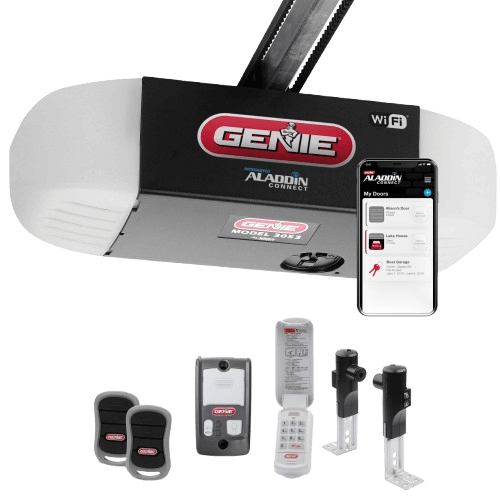
QuietLift Connect 3053-TKV (Genie)

4.5/5
  • Average Product Cost: $200 to $300
Best For: Budget-conscious homeowners who still want quiet belt-drive performance and Wi-Fi access.
What We Love

The QuietLift Connect brings belt-drive quietness into a lower price tier, making it accessible for homeowners upgrading from older chain systems.

It earned a 4.5/5 rating for strong value and quiet performance at an entry-level price.

Good Fit If: You want affordable quiet operation.

Not Ideal If: You live where battery backup is required by code.

Cost Information

The average cost for the Genie QuietLift Connect ranges from $200 to $300 for the unit.

  • Single Door Installation: $200 to $350
  • Double Door Installation: $350 to $600

Installation costs vary based on ceiling access and outlet location

DIY installation can significantly reduce project expenses.

Best Feature

It delivers belt-drive quiet performance at one of the lowest price points available, making it a strong upgrade choice for budget-focused homeowners.

Affordable belt-drive option
Built-in Wi-Fi connectivity
Smooth, quiet operation
Reliable daily performance
No battery backup
Limited premium integrations
Not ideal for extra-heavy doors
Basic lighting system
6

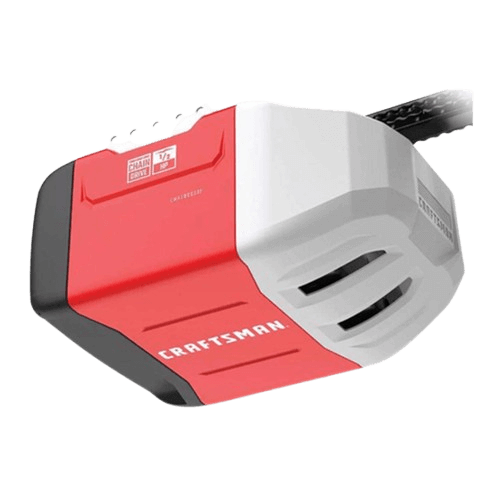
CMXEOCG982 High-Power Belt Drive (Craftsman)

4/5
  • Average Product Cost: $250 to $400
Best For: Homes with heavy insulated or oversized garage doors requiring additional lifting strength.
What We Love

This high-power belt-drive opener focuses on strength and durability. It’s designed to handle heavier residential doors without straining the motor.

It earned a 4/5 rating for lifting capability and affordability, though it lacks some advanced smart integrations found in higher-tier models.

Good Fit If: Your door is insulated or solid wood.

Not Ideal If: Smart home integration is your top priority.

Cost Information

The average cost for the Craftsman CMXEOCG982 ranges from $250 to $400 for the unit.

  • Single Door Installation: $200 to $350
  • Double Door Installation: $350 to $600

Additional charges may apply for heavy door balancing or wiring adjustments

DIY installation can reduce overall costs by several hundred dollars.

Best Feature

Its higher horsepower output provides added torque and lifting reliability for heavier doors, making it a dependable option where lower-powered openers may struggle.

Strong motor performance
Belt-drive reduces vibration
Competitive pricing
Suitable for heavier doors
Fewer premium smart features
App performance can vary
Warranty shorter than some competitors
Lighting system is basic
7

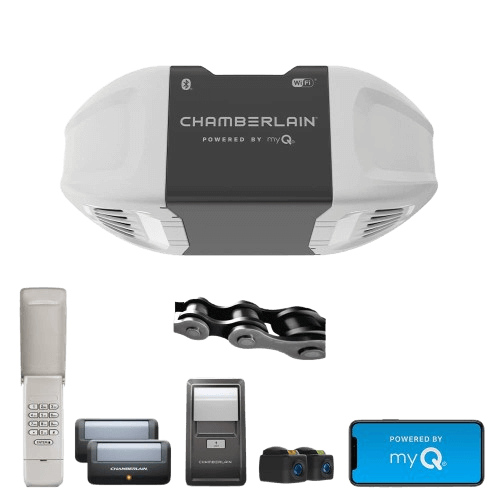
C2405 MYQ Smart Chain Drive Opener (Chamberlain)

4/5
  • Average Product Cost: $180 to $280
Best For: Detached garages where affordability and durability matter more than ultra-quiet operation.
What We Love

The C2405 proves that chain-drive openers remain practical and cost-effective. It combines durable mechanics with smart connectivity at a lower price point.

It earned a 4/5 rating for value and reliability, though noise levels limit its suitability for attached garages.

Good Fit If: Your garage is detached.

Not Ideal If: Noise reduction is a top concern.

Cost Information

The average cost for the Chamberlain C2405 ranges from $180 to $280 for the unit.

  • Single Door Installation: $200 to $350
  • Double Door Installation: $350 to $600

Removal of old chain systems may add minor labor costs

DIY installation can lower total project expenses.

Best Feature

Its combination of traditional chain-drive durability and built-in smart control makes it one of the most affordable Wi-Fi-enabled options available.

Budget-friendly
Durable chain-drive system
Built-in myQ Wi-Fi
Solid lifting capacity
Louder than belt drives
No battery backup
Increased vibration
Basic feature set
8

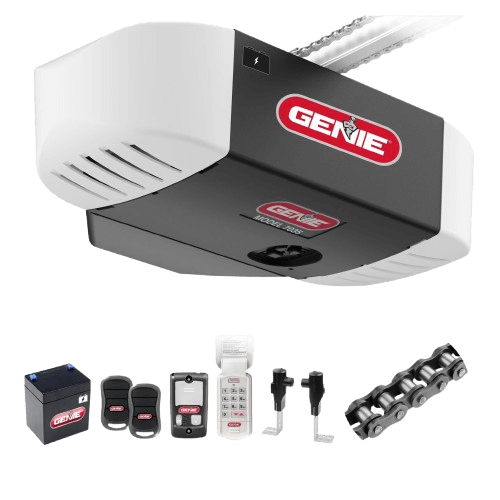
Chain Drive 750 (Genie)

4/5
  • Average Product Cost: $170 to $260
Best For: Homeowners looking for a dependable, entry-level opener with minimal features.
What We Love

The Chain Drive 750 focuses on straightforward, reliable operation without premium upgrades. It’s built for consistent everyday use at a lower price.

It earned a 4/5 rating for affordability and dependable performance, though it lacks modern smart enhancements.

Good Fit If: Budget is your primary concern.

Not Ideal If: You want advanced automation or ultra-quiet performance.

Cost Information

The average cost for the Genie Chain Drive 750 ranges from $170 to $260 for the unit.

  • Single Door Installation: $200 to $350
  • Double Door Installation: $350 to $600

Installation complexity is generally low compared to premium models

DIY installation can reduce labor costs significantly.

Best Feature

Its inclusion of battery backup at an entry-level price provides added security during outages, giving it an advantage over similarly priced competitors.

Very affordable
Durable chain-drive construction
Battery backup included
Easy-to-source replacement parts
Louder operation
Limited smart features
More vibration than belt systems
Basic design overall

Common Garage Door Dealbreakers

Even highly rated garage door openers can become frustrating if they don’t align with your home’s layout or your day-to-day habits. Before committing to a model, watch for these common dealbreakers that often lead to returns, upgrades, or premature replacements.

Excessive Noise: Chain-drive systems are durable but can be loud, especially in attached garages or homes with bedrooms above the garage.

Insufficient Lifting Power: Heavy insulated, carriage-style, or solid wood doors may strain lower-horsepower motors, leading to slower operation and long-term wear.

Compatibility Issues: Low ceilings, high-lift tracks, or limited headroom may require a wall-mounted jackshaft opener rather than a traditional rail system.

Missing Smart Features: If remote monitoring, alerts, or auto-close scheduling matter to you, confirm the opener includes built-in Wi-Fi and a well-reviewed app.

No Battery Backup: In areas prone to outages—or where backup systems are required—this feature can quickly shift from “nice to have” to essential.

Unexpected Costs: Installation, electrical adjustments, subscription-based video storage, or accessory upgrades can increase total project costs.

How to Choose the Best Garage Door Opener for Your Home

Start With Your Garage Door Type And Size

Your garage door opener should be selected based on the door it’s lifting. Begin by identifying whether your door is lightweight steel, insulated steel, carriage-style, or solid wood. Heavier doors require more lifting force and put additional strain on lower-powered motors. You’ll also want to confirm the height of your door. Most residential openers are configured for standard 7-foot doors, while 8-foot doors may require an extension kit. Double-wide doors may also benefit from a higher horsepower motor to ensure smoother, longer-lasting operation.

Choose The Right Drive System For Your Layout

Garage door openers operate using different drive systems, and each affects noise level, maintenance, and price. Chain-drive models are durable and typically more affordable, but they generate more vibration and sound. Belt-drive systems use reinforced belts instead of metal chains, making them significantly quieter and well suited for attached garages. Wall-mounted jackshaft openers eliminate the overhead rail system entirely, freeing ceiling space and accommodating garages with high-lift tracks or storage racks. Your garage configuration should guide this decision as much as your budget.

Select Adequate Power For Long-Term Reliability

Motor strength matters more than many homeowners realize. An opener that struggles to lift your door consistently will experience increased wear, potentially shortening its lifespan. Standard single steel doors often perform well with 1/2 to 3/4 HP equivalents, while insulated, oversized, or solid wood doors may require 1 HP or higher. Choosing slightly more power than the minimum requirement can help reduce strain and improve long-term performance.

Focus On Features That Fit Your Lifestyle

Modern garage door openers offer a range of convenience and security features. Built-in Wi-Fi allows you to monitor and control your door remotely, while auto-close scheduling can prevent accidental overnight openings. Some models include integrated cameras or enhanced LED lighting for additional visibility. Before upgrading, consider how you use your garage daily—whether you need guest access, motion alerts, voice assistant compatibility, or simply reliable remote operation. Prioritizing the features you’ll actively use can help you avoid overspending on unnecessary upgrades.

To better understand total project costs, explore garage door opener installation costs and what factors influence pricing. If your current system is malfunctioning, review typical garage door opener repair costs before deciding whether replacement makes more sense.


If you’re planning a project, it helps to understand the full cost picture. Learn more about garage door opener installation costs and what impacts pricing. If you’re troubleshooting an existing system, review typical garage door opener repair costs before deciding whether to repair or replace.

Frequently Asked Questions

How much does a garage door opener cost?

Most garage door openers cost between $200 and $600 for the unit alone, depending on drive type, horsepower, and smart features. When you factor in professional installation, the total project cost typically ranges from $400 to $1,000. Wall-mounted jackshaft models, integrated camera systems, or complex installations (such as high ceilings or electrical adjustments) can increase costs beyond that range.


How long does a garage door opener last?

A well-maintained garage door opener usually lasts 10 to 15 years. Lifespan depends on usage frequency, door weight, climate conditions, and whether the motor is properly sized for the door. Openers that strain to lift heavy doors or operate multiple times daily may wear out sooner. Regular maintenance — such as lubricating moving parts and checking balance — can extend longevity.


What horsepower do I need for my garage door opener?

For most standard single-car steel doors, a 1/2 to 3/4 HP equivalent motor is sufficient. If you have a heavier insulated door, a carriage-style door, or a double-wide garage door, stepping up to 1 HP or more is often recommended. Choosing slightly more power than the minimum requirement can reduce motor strain and improve long-term reliability.


Is a belt drive or chain drive opener better?

It depends on your priorities. Belt-drive openers operate more quietly and are ideal for attached garages or homes with living space above the garage. Chain-drive models are typically more affordable and durable but generate more vibration and noise. Both are reliable when properly installed, but belt drives are often preferred in noise-sensitive households.


Can I install a garage door opener myself?

Many ceiling-mounted openers are designed with DIY installation in mind, and experienced homeowners can often complete the project in a few hours. However, installation requires precise alignment, proper sensor calibration, and secure mounting. Wall-mounted jackshaft models and garages with electrical upgrades or structural modifications are usually better suited for professional installation.


Are smart garage door openers worth it?

For many homeowners, yes. Smart openers allow you to monitor and control your garage door remotely through a smartphone app. Features like real-time alerts, auto-close scheduling, guest access, and integration with voice assistants can improve both convenience and security. If you’ve ever worried about leaving the garage open, smart functionality can provide peace of mind.


Do garage door openers work during a power outage?

Only models equipped with battery backup can operate during a power outage. Some regions require battery backup by building code. Even where it’s not required, it’s a valuable feature in areas prone to storms or grid interruptions, allowing you to open and close the door without manual lifting.


How noisy are garage door openers?

Noise levels vary by drive type and installation quality. Belt-drive and wall-mounted systems are typically the quietest options, while chain-drive models produce more vibration and sound. Proper installation, insulated doors, and vibration-reducing mounts can also impact overall noise levels.


Can I replace just the opener without replacing the door?

In most cases, yes. As long as your garage door is structurally sound, properly balanced, and compatible with the new opener system, you can replace the opener independently. If the door is warped, damaged, or excessively heavy, replacing both at the same time may be more cost-effective in the long run.


What is a jackshaft garage door opener?

A jackshaft opener mounts on the wall beside the garage door rather than on the ceiling. It connects directly to the torsion bar system and eliminates the overhead rail. This design frees up ceiling space for storage or lighting and is often chosen for garages with high-lift tracks or limited headroom.


How much does garage door opener installation cost?

Professional opener installation generally ranges from $200 to $500 for a standard single-car garage. Double doors, high ceilings, outlet relocation, or removal of an older system can increase labor costs. While DIY installation can reduce expenses, professional installation helps ensure proper alignment and long-term performance.


Should I repair or replace my garage door opener?

If your opener is less than 8 to 10 years old and the issue is minor — such as a sensor problem or worn gear — repair may be a practical option. However, if the unit is older, lacks modern safety features, or requires repeated repairs, replacement is often the more economical long-term solution.


What if I need to replace my garage door, not just the opener?

If your garage door is damaged, outdated, poorly insulated, or incompatible with modern opener systems, replacing the door may be the better investment. A new garage door can improve curb appeal, energy efficiency, and overall home value. If you’re considering a full upgrade, reviewing the best garage door brands can help you compare materials, design options, insulation levels, and warranty coverage before making a decision.


Ready to get free quotes from local contractors?