
Modernize Gutter Guard Rating Methodology
We rate gutter guard brands by what actually matters: how well they keep debris out, how long they last, and whether the company stands behind the product. Gutter guards come in all shapes and sizes, so our system is built to compare them fairly.

How Our Rating System Works
Modernize scores every gutter guard brand on a one-to-five scale using a weighted formula:
Final Score = Σ (Criterion Score × Criterion Weight)
In case you didn’t know: The symbol Σ (sigma) is standard math notation for summation — it means we add up the weighted score for each criterion to arrive at the final score.
Each criterion is weighted based on how much it actually affects the outcome for homeowners. Debris protection performance carries the most weight — a gutter guard that doesn’t keep debris out isn’t doing its job, regardless of how well it scores elsewhere. Durability and warranty coverage follow closely, since a product that fails early or isn’t backed by a reliable warranty ends up costing more in the long run.
Once the final score is calculated, it maps to a star rating:
- 4.75–5.00 stars: Excellent
- 4.25–4.74 stars: Very Good
- 3.50–4.24 stars: Good
- 2.75–3.49 stars: Fair
- 2.00–2.74 stars: Poor
- Below 2.00 stars: Very Poor
A five-star rating means a brand is excellent relative to comparable options — not that it’s flawless. All ratings are evaluated within the same category. For a full explanation of the scoring formula and what each star tier represents, see our Rating Methodology overview.
Gutter Guard Rating Methodology
How we evaluate gutter guard brands and companies
Not every gutter guard company works the same way, and that changes how we score them. Here’s what you’ll see on this list:
- Full-service install companies — brands like LeafFilter and LeafGuard that sell a proprietary product and handle professional installation themselves. The product and the installer are the same company.
- Product brands sold through installer networks — brands like MasterShield and GutterGlove that manufacture a product and distribute it through certified local contractors. Installation quality can vary by dealer.
- Retail and DIY product brands — brands like Amerimax, FlexxPoint, and LeafX that are sold at home improvement stores or online. Homeowners install these themselves or hire any contractor they choose. Warranties cover the product only, not labor.
If a criterion doesn’t fit a brand’s model — like installation consistency for a retail-only product — we call that out instead of docking points for something that’s not in their control.
Related: Gutter Guards: What You Need to Know
Criteria and weights
Here’s how we break down each criterion and what we look for when scoring.
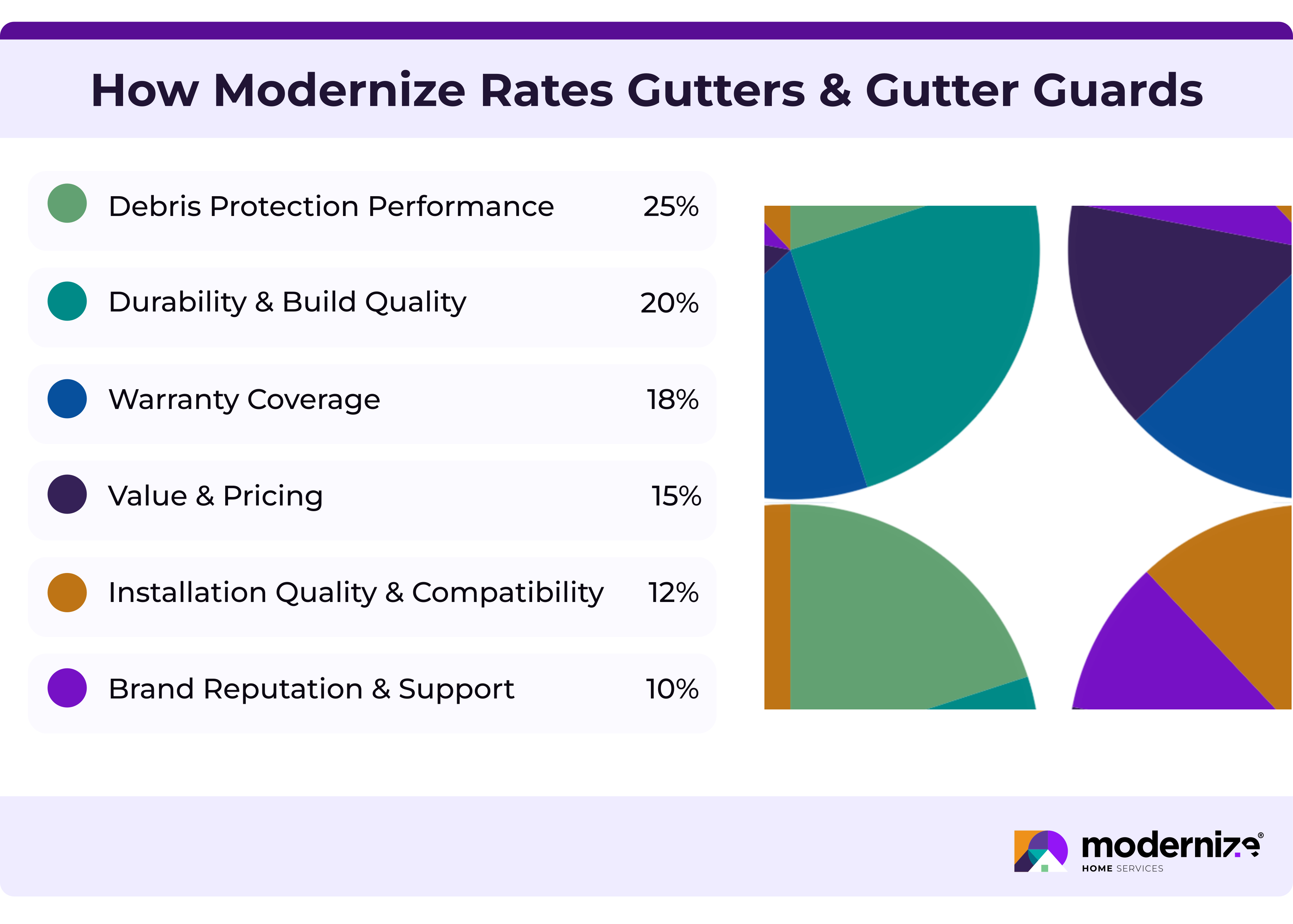
Debris protection performance (25%)
This is the main job of any gutter guard, so it gets the most weight. We look at how well a system keeps out leaves, pine needles, roof grit, and small debris in all kinds of rain. We consider the guard type — micro-mesh, reverse curve, solid cover, or screen — and how the design handles both big and small debris. Systems that work well in lots of real-world situations score higher than those that only do well in one.
Durability and build quality (20%)
We look at what the mesh and frame are made of — stainless steel and aluminum hold up better than plastic or vinyl. We also check for resistance to sun damage, rust, warping, and ice. For micro-mesh systems, we look at the mesh grade too. Products built to last 20 years or more in real conditions score higher than cheaper options that might need replacing after a few seasons.
Warranty coverage (18%)
We check what the warranty really covers, how long it lasts, and if you can transfer it to a new owner when you sell your home. For full-service install companies, we also look at labor coverage and whether the company actually honors claims. A warranty that looks good on paper but is full of loopholes or hard to use scores lower than a simple, transferable warranty from a company with a good track record.
Value and pricing (15%)
We look at value by comparing the cost per foot to how long the system should last, how well it works, and what’s included. A pro-installed system at $20–$30 per foot is judged differently than a DIY product at $1–$3 per foot — value depends on what you get. Systems that protect your gutters for years without a lot of upkeep or replacement get higher marks.
Installation quality and compatibility (12%)
For pro-installed brands, we look at how consistent the crews are, how the system is installed, if it needs you to lift or cut roof shingles (which can void your roof warranty), and how well the company handles different gutter sizes and roof types. For retail and DIY brands, we check how easy it is to install, how clear the instructions are, and if it fits most standard gutters. Products that go in smoothly without risking your roof or needing special tools score higher.
Brand reputation and customer experience (10%)
We look at customer experience by checking reviews on Google, BBB, Angi, Trustpilot, and more. We pay attention to overall ratings, how many reviews there are, how recent they are, and if good results show up in different places and types of jobs. For full-service companies, we also look at how they handle support after installation, how they respond to warranty claims, and if customers complain about pushy sales tactics.
Scoring philosophy
Our gutter guard ratings are here to help you compare very different products on a level playing field. A micro-mesh system from a national installer isn’t the same as a DIY aluminum screen from the hardware store, and we don’t treat them like they are. We score each product and company based on what they promise and how well they deliver.
Products and companies that keep out debris, use durable materials, and offer clear warranty coverage get our highest ratings. If there are gaps in performance, weak build quality, or a history of tough warranty claims, we score them lower — even if the marketing looks great.
Related: Are Gutter Guards Worth It?
How We Assign Scores: 1 Through 5
We score every brand and company here on a 1–5 scale across six criteria. Here’s what each score means, so you know how we rate — and companies know what it takes to do better.
A score of 3 means a product or company does what it should. A 4 or 5 means it stands out from the pack. A 1 or 2 means there are real gaps you should know about before you buy.
1. Debris protection performance (25%)
We evaluate how well a system keeps debris out across a range of debris types — leaves, pine needles, roof grit, seedpods, and small insects — and across light, moderate, and heavy rainfall conditions.
| Score | What it means | What we look for |
|---|---|---|
| 5 | Excellent — keeps gutters clear in virtually all conditions | Blocks fine debris including pine needles, roof grit, and seedpods — not just large leaves Handles heavy rainfall without overshooting or allowing water to bypass the guard Performance validated through independent testing or a very large volume of real-world reviews |
| 4 | Very good — strong performance across most conditions | Blocks the full range of common debris types reliably Performs well in moderate to heavy rainfall with minimal overflow May require occasional light maintenance in high-debris environments |
| 3 | Good — handles common debris dependably | Reliably blocks large debris like leaves and twigs Adequate for typical rainfall in most regions; may struggle in very heavy downpours Fine debris like pine needles or roof grit may occasionally accumulate |
| 2 | Fair — works in limited conditions | Effective primarily against large, flat debris; fine debris passes through or accumulates on top Known performance issues in heavy rain (overshooting) or high-debris environments |
| 1 | Poor — significant performance gaps | Fails to prevent clogs in normal conditions; gutters still require frequent cleaning after installation Documented pattern of water bypass, sagging, or debris accumulation in real-world reviews |
Note: Guard type matters here. Micro-mesh systems are generally better at blocking fine debris than reverse-curve or solid-cover designs, but all types are scored on actual documented performance — not design alone.
2. Durability and build quality (20%)
We assess materials, construction quality, and how well the system holds up over years of UV exposure, temperature swings, heavy rain, and ice loading.
| Score | What it means | What we look for |
|---|---|---|
| 5 | Excellent — built to last decades | Stainless steel micro-mesh (fine micron rating) with heavy-gauge aluminum or steel frame UV-stabilized, corrosion-resistant, and rated for freeze-thaw cycling and ice loading No documented pattern of warping, sagging, or mesh degradation over time |
| 4 | Very good — durable with minor trade-offs | Quality aluminum or stainless steel construction; designed for long-term outdoor use Holds up well in most climates with no significant durability complaints in reviews Minor trade-offs in material grade or frame thickness compared to top-tier systems |
| 3 | Good — adequate for standard residential use | Aluminum construction with a reasonable expected lifespan of 10 or more years Meets standard residential durability requirements; no systematic failure pattern May show wear in extreme climates or very high-debris environments over time |
| 2 | Fair — durability concerns | Plastic, vinyl, or low-gauge metal construction prone to UV degradation or cracking over time Documented pattern of warping, sagging, or failure within a few years of installation |
| 1 | Poor — likely to need replacement within a few years | Thin plastic or foam construction not designed for long-term outdoor exposure Widespread reviews reporting failure, breakage, or significant degradation within 1–3 years |
Note: A score of 3 reflects aluminum construction with a reasonable lifespan — adequate for most homes. Scores of 4 and 5 require stainless steel mesh or equivalent premium materials with a documented track record of long-term performance.
3. Warranty coverage (18%)
We look at what the warranty covers, how long it lasts, whether it transfers to a new homeowner, and whether the company has a track record of actually honoring it. For professionally installed systems, we also evaluate labor warranty coverage.
| Score | What it means | What we look for |
|---|---|---|
| 5 | Excellent — best-in-class coverage | Lifetime no-clog and product warranty, fully transferable to future homeowners at no cost Labor warranty included (for professionally installed systems) with clear coverage terms Reviews confirm claims are processed promptly and without friction |
| 4 | Very good — strong and transferable | Long-term or lifetime product warranty; transfers to future homeowners at no or low cost Coverage terms are clearly written with no significant gotcha exclusions Dedicated support for warranty claims; no dominant pattern of disputes |
| 3 | Good — adequate coverage | Written warranty with 10 or more years of product coverage Transfers to future homeowners in some form; transfer fee or partial coverage may apply No significant pattern of warranty denial or difficulty making claims |
| 2 | Fair — limited or hard to use | Warranty covers fewer than 10 years, or coverage terms are vague or heavily exclusion-laden Warranty does not transfer to a new homeowner, or transfer process is difficult |
| 1 | Poor — little to no protection | No meaningful written warranty, or a documented pattern of refusing or disputing valid claims Warranty exists on paper but reviews consistently describe it as difficult or impossible to use |
Note: Transferability matters — especially if you plan to sell your home. A score of 4 or 5 requires that the warranty transfers to a future owner. Retail and DIY products that don’t offer labor warranties are not penalized for that, since installation is outside their scope.
4. Value and pricing (15%)
We assess value by comparing cost per linear foot to actual performance, expected lifespan, and what’s included in the price. Value is always relative to the type of product — professionally installed systems and DIY retail products are evaluated on their own terms.
| Score | What it means | What we look for |
|---|---|---|
| 5 | Excellent — strong value for what you get | Cost per linear foot is competitive within its category (professional or DIY) Long expected lifespan and low ongoing maintenance requirements justify the upfront price Transparent, itemized pricing with no pattern of significant price inflation at time of sale |
| 4 | Very good — good value with minor caveats | Priced fairly relative to performance and longevity within its category Generally consistent pricing; isolated complaints about high quotes but no dominant pattern |
| 3 | Good — reasonable value at market rate | Priced in line with comparable products or services in its category No significant pattern of pricing complaints or surprise charges |
| 2 | Fair — value concerns | Priced significantly above comparable products without a clear performance or durability advantage Recurring complaints about high-pressure sales tactics inflating final price |
| 1 | Poor — poor value | Cost is difficult to justify given documented performance or durability issues Pattern of bait-and-switch pricing or significant unexplained gaps between quoted and final price |
Note: We don’t compare DIY products and professionally installed systems on absolute price — a $2/linear foot screen and a $25/linear foot installed micro-mesh system are evaluated for value within their own category.
Related: Gutter Guard Costs: What to Expect
5. Installation quality and compatibility (12%)
For professionally installed brands, we look at crew consistency, how the system is attached, and whether installation requires lifting or cutting roof shingles. For retail and DIY brands, we look at ease of installation, documentation quality, and gutter compatibility.
| Score | What it means | What we look for |
|---|---|---|
| 5 | Excellent — clean, consistent, and roof-safe | Professional brands: Installation doesn’t require lifting or cutting shingles; won’t void roof warranty; consistent crew quality across markets DIY brands: Straightforward installation with clear instructions; compatible with standard K-style and half-round gutters; secure without specialized tools |
| 4 | Very good — reliable installation with minor caveats | Professional brands: Generally consistent installation quality; minor variation by market; no shingle damage in standard installs DIY brands: Easy to install correctly; minor compatibility limitations with non-standard gutter profiles |
| 3 | Good — adequate for most homes | Works on standard gutter profiles without major compatibility issues Installation is straightforward for an experienced installer or a confident DIYer No systematic installation failure pattern in reviews |
| 2 | Fair — installation concerns | Recurring reviews noting installation difficulty, poor fit, or inconsistent quality by location Installation process requires lifting shingles, which can void a roof warranty |
| 1 | Poor — significant installation issues | Documented pattern of installation failures, loose guards, or improper fitting causing water damage Incompatible with common gutter profiles without significant modification |
Note: Whether a system requires lifting roof shingles is a key factor for professionally installed brands — doing so can void your roof warranty. We note this clearly in individual brand reviews when it applies.
6. Brand reputation and customer experience (10%)
We measure customer experience using review data from Google, BBB, Angi, Trustpilot, and other platforms. We look at overall ratings, volume, and recency — and for professionally installed companies, we pay close attention to post-installation support and sales practices.
| Score | What it means | What we look for |
|---|---|---|
| 5 | Excellent — consistently outstanding | Average rating of 4.6 or above across major platforms with 400 or more verified reviews No dominant pattern of high-pressure sales tactics, warranty disputes, or post-sale ghosting Industry recognition for customer satisfaction (BBB Torch Award, Angi Super Service Award, etc.) |
| 4 | Very good — strong and consistent | Average rating between 4.2 and 4.6 across multiple platforms, with 200 or more verified reviews Resolves customer issues when they arise; no systemic complaint patterns |
| 3 | Good — generally positive | Average rating between 3.7 and 4.2 with at least 50 verified reviews Generally positive feedback with some isolated complaints; responds to most reviews |
| 2 | Fair — recurring concerns | Average rating between 3.0 and 3.6, or a low volume of recent reviews Recurring complaint patterns around high-pressure sales, warranty disputes, or poor follow-through |
| 1 | Poor — significant concerns | Average rating below 3.0, or unresolved complaints with the BBB or consumer protection agencies Documented pattern of deceptive sales practices, refusal to honor warranties, or failure to complete work |
Note: For retail and DIY brands, this criterion focuses on product reviews and brand reputation rather than sales or installation practices, since those aren’t part of their model. Scores reflect what’s within each brand’s control.