
How to Use the Solar Calculator
The best way to learn about local rebates, your home’s energy potential, and your eventual return on investment is to use our ModSun Solar Cost Calculator (see above). Enter your home address in the box, then click Check My Roof. You’ll get an instant picture of your roof’s productivity, your average energy expenses, and installation costs in your area—whether you decide to buy or loan. We’ll also provide system size recommendations and information about rebates and incentives you may be eligible for. Just select More Info under each purchasing strategy to learn more, and then connect with a solar pro.
Solar State Buying Guide for Michigan
Anytime you invest in solar products for your home, you’re also investing in the health of the environment. Using solar products harnessing the sun’s rays that are free to use, we lessen the depletion of fossil fuels and save money monthly. It’s a win-win situation for residential and business owners. This guide lays out some of the basic information to help guide you to a successful solar installation project.
Michigan’s Climate for Solar Power
Michigan’s weather runs the gamut from very cold to moderately hot with ample snowfall during the winter season. Solar panels, for example, work well in cooler climates so don’t let the low temperatures keep you from using a solar heat system. On average, Michigan temperatures range from 30 degrees for the low and 82 degrees for the high with an average of 13 inches of snowfall December through February and rainfall averaging from 1.46 inches in February to 3.46 inches in June.
Types of Solar Products in Michigan
Solar water heaters – There are two types of solar water heating systems: the active system equipped with controls and circulating pumps and the passive system which does not have pumps and controls.
- Active systems are available as a direct circulation system that circulates water through its collectors then on to the home. This model works well in climates that do not experience frequent freezes.
- Indirect circulation systems use a non-freezing fluid that is pumped through the collectors and heat exchanger which then heats water for the home. This type is better served in climates that do experience frequent freezing temperatures.
Solar Panels (photovoltaic – PV) systems – There are three systems to choose from. Your contractor will be able to recommend the type of system you need.
- Grid-Tie systems generate electricity throughout the day to power your home. If the system is unable to generate enough power, you are locked into the main grid and draw from that source. When your system generates an excess of electricity, it is directed back to the utility grid. You will then receive a monthly credit toward your utility bill. This system is called net-metering and it saves you money each and every month.
- Off Grid System generates all the electricity to your home. Any excess is stored in a battery-powered backup system to use as needed. It is not rerouted to the grid.
- Grid Tie and Battery Backup systems combine both the grid and the battery system. Should there be an outage, the backup will provide power to designated areas of the home such as the stove and refrigerator.
Considerations for Solar Installation in Michigan
Energy Star products may cost more but each is certified by the EPA including solar water heating systems. These water heaters have an estimated life of 20 years which is longer than traditional fuel or electric models. A solar system is generally backed up by an electric or gas unit. Installing a solar water heating system will also cut your monthly bill by as much as half.
Michigan Solar Contractors
Hiring a contractor is one of the single most important steps involved in the installation of solar products. First and foremost, the contractor must have a valid license for the State of Michigan. You can verify licenses at the Department of Licensing and Regulatory Affairs (LARA) government website.
You have the option of hiring a private contractor as well as a solar system company specializing in water heaters and solar power systems. It is imperative that the person you hire has the appropriate license and insurance as the system will be inspected by a city inspector.
Your contractor will be your guide when it comes to the type of solar systems best suited for your home. In the case of solar panels, he will need to calculate the best location for the panels, if there is enough room for the number of panels you need to accommodate your home, and if your home is structurally sound and capable of holding the heavy panels. He’ll also be able to advise you if a ground-mounted unit is a better fit for your property instead of a roof-mounted solar system.
If using the services of a private contractor or a private company, it is recommended you get at least two estimates and compare. Solar installation can be costly due to the materials used that increase the manufacturing cost. While you don’t want to cut corners on quality materials or installation, it is to your advantage to see what range of prices is available.
The contractor or company you select should have extensive experience in solar installation as it requires quite a few steps to get everything wired correctly. And since the system will be inspected, you want it installed correctly from the start of the project. A company specializing in solar panel or water heater installation should have the appropriate licenses, certifications and insurance to back them up. Verify the license using the link above and contact the Better Business Bureau for your city to find out if there is any negative information concerning the company or private contractor.
Michigan Solar Permit Process
A permit to install solar products is likely required for your particular city. Contact the building or planning and development center to determine which type of license is required. In some cities, an electrical permit is required and in others, a mechanical permit is necessary. Usually your contractor will take care of applying for the permit so they can provide their state license information. An inspection must also be scheduled to ensure the work is up to code. Failure to get a permit prior to starting a project can result in fines up to $1000. Once the permit is assigned, it will have an expiration date for the project to begin. If the project isn’t started, you’ll have to reapply or find out if an extension is available. Getting a permit is a critical step to ensure you’re in compliance with city and state building requirements, and to ensure you’re getting a safe and secure installation.
Benefits of Solar Installation in Michigan
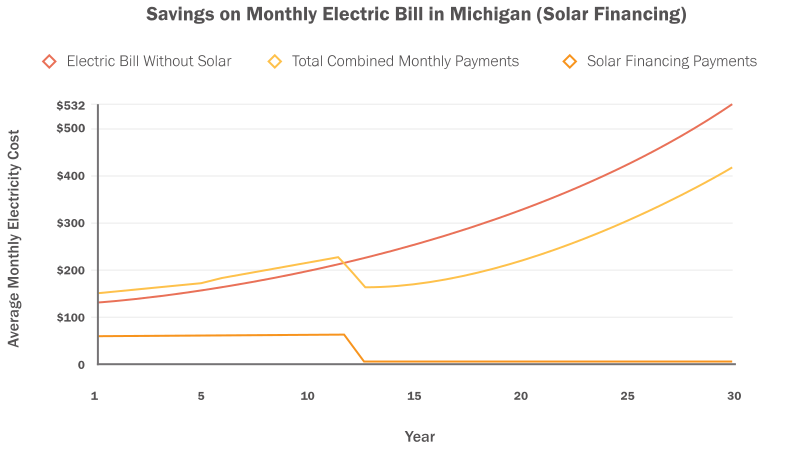
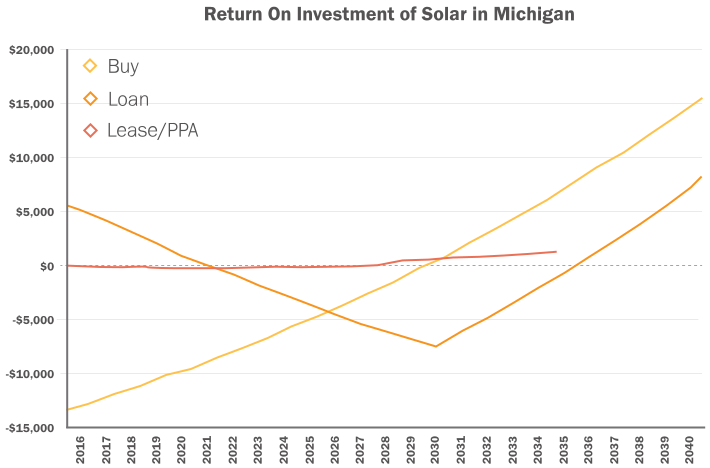
Anytime you install solar systems as an alternative to fossil fuels, you’ll see the difference in savings in your monthly utility bill. A solar water heater or solar paneling system can potentially cut your bill in half. Over time, the monthly savings add up significantly and will more than pay for the initial investment. Once you reach that plateau, all additional savings become money in your bank account.
When using solar power products, you are no longer totally dependent on electricity or fuel products. You’ll be using the free resources of the sun to maintain your home. It is a wise investment that saves you money in the long run and helps lessen the depletion of the planet’s natural resources.
There’s much talk in the media around the world about living a green lifestyle to lessen our carbon footprint on the environment. With solar systems installed in your home or business, you’ll be taking the first step to attaining that goal.
Installation of a solar system whether photovoltaic panels or a solar water heater immediately increases your property value. This is a plus for property owners planning to sell in the future. Listing your property as environmentally friendly is a great marketing tool as it will be of special interest to persons interested in energy efficiency. Even for those who are not up-to-speed on the importance of renewable energy, it is a positive selling point for the property.
As a property owner with new solar installation which includes a solar water heater, solar space heater, solar panel installation, solar thermal electric, and solar thermal process heat, you will receive a tax exemption. Developed in 2002, Michigan created a program to support alternative energies. With the exemption program, property tax is 100 percent exempt for the added value to the property due to solar installation.
Available Resources and Incentives in Michigan
For information about available state and federal resources, check these websites.
- Database of State Incentives for Renewable Energy (DSIRE) has many options available for home and business owners. From rebates to loans, Michigan currently has 76 programs to support customers converting to solar energy.
- When choosing a solar heating system, take advantage of the federal tax credit offered with the purchase of an Energy Star solar heating system. The current credit is 30 percent of the initial cost through December 31, 2019. After that, the credit decreases to 26 percent in 2020 and 22 percent in 2021. At this time, it is noted the tax credit will expire as of December 31, 2021.
- At the LARA Public Service Commission website, you’ll find information for residential owners about how to calculate tax credits and incentives for solar water heaters and solar photovoltaic (PV) systems. There’s additional information available for commercial and industrial projects. For all parties, make sure you understand the rules and regulations governing the project to be sure it qualifies.
- The Rural Energy for America Program Renewable Energy Systems & Energy Efficiency Improvement Loans & Grants website has information about guaranteed grants and loans for agricultural producers and small businesses installing solar systems.
Cost of Solar Products in Michigan
This portion of the project is where your contractor or the company you’re purchasing the product from will provide the necessary information. For solar panel systems, the cost will depend on the square footage necessary to provide optimum power to your home. With a quick calculation, the contractor will determine how many panels will be required.
For solar water heaters, your contractor will determine which type is best suited for the climate, the size needed to provide adequate hot water, and if you need an active or passive system.
From this checklist, you can save yourself some time and money by being prepared for any type of solar installation. The process takes time, from getting a permit and contractor to choosing the right system to accommodate your property and having financing in place. When all is said and done and the solar system is installed, you’ll be on your way to consistent monthly savings plus the knowledge you’re way ahead in the process of changing to an alternative power source that helps keep the planet healthy.