Bathroom Remodel
Cost to Install Recessed Lighting in a Bathroom + Ideas and Q&A
Average Cost: $150–$250 per light
The average cost to install recessed lighting in a bathroom is about $180 per light, including materials and professional labor. Most installs run $150 to $250 per light. Your price depends on how many fixtures you install, whether you can tap an existing circuit or need new wiring, and how easy it is to reach the space above your ceiling. Fixtures near a shower or tub also need the right moisture rating, which can raise your total.
Find the best bathroom remodel pros in your area.

The Modernize Mission
We help homeowners make confident decisions through our reliable, up-to-date, and unbiased information and average project costs. All of our content is thoroughly reviewed and fact-checked by our team of home improvement experts. Learn more about how we maintain these values.
How Much Does It Cost to Install Recessed Lighting in a Bathroom?
Bathroom recessed lighting costs $150 to $250 per fixture installed for most projects. Simple jobs can run as low as $100 per light, and complex installs can reach $300 or more. A fixture usually costs $20 to $125, depending on whether you choose a slim LED wafer or a full housing and trim. Professional labor adds about $100 to $175 per light, depending on the ceiling type, wiring access, and permit requirements.
A typical bathroom with four lights costs about $600 to $1,000 installed. Lighting is one line in your total bathroom remodel cost, so plan it early.
Cost by installation type
Your ceiling matters as much as your fixtures. Open ceilings are cheapest to wire, while finished ceilings without attic access take the most labor.
| Installation Type | Typical Cost Per Light | Notes |
|---|---|---|
| New construction or open ceiling | $100 to $175 | Wiring is easy to reach before drywall goes up. |
| Existing ceiling with attic access | $150 to $250 | The most common bathroom remodel scenario. |
| Existing ceiling with no attic access | $200 to $400 | Electricians fish wires through finished walls and patch drywall. |
| LED retrofit in an existing can | $75 to $150 | Swaps the trim and bulb only, with no new wiring. |
Cost by number of lights
Bathroom remodel projects often use more than one recessed light, especially in larger rooms or when you want to brighten zones like the shower, vanity, and toilet area. The national average is about $180 per light. Your total depends on how many fixtures you install and how hard they are to wire. These numbers assume $150 to $250 per recessed light, including materials and labor.
| Number of Recessed Lights | Typical Installed Cost Range | Notes |
|---|---|---|
| 2 lights | $300 to $500 | Works for a powder room or very small bathroom. |
| 4 lights | $600 to $1,000 | Common for small to medium bathrooms; one zone may share a fixture. |
| 6 lights | $900 to $1,500 | Good for larger bathrooms or layouts with separate tub and shower. |
| 8 lights | $1,200 to $2,000 | Suits primary bathrooms with a double vanity and separate tub. |
| 10 lights | $1,500 to $2,500 | Often used in primary suites or bathrooms with multiple activity zones. |
Factors that affect costs
Several factors can raise or lower the cost of installing recessed lighting in a bathroom:
- Existing Wiring: Tapping into existing circuits usually costs less than adding new wiring or a new circuit.
- Ceiling Type and Access: Open attic access makes installation easier and cheaper than working with concrete slabs or tight crawl spaces.
- Fixture Type: IC-rated, airtight, and wet-rated fixtures cost more than standard housings, while slim LED wafers cost less to install than cans.
- Trim and Bulb Style: Simple white trims and standard LED modules are more affordable than specialty finishes or smart LED kits.
- Dimmers and Switches: A dimmer typically adds $25 to $50, plus labor if the switch needs rewiring.
- Permits and Inspections: Some cities require permits and inspections for new circuits, and permits can run $50 to $500.
- Drywall Repair and Paint: Cutting holes in a finished ceiling often adds patching and painting to the bill.
- Labor Rates in Your Area: Electrician rates commonly run $75 to $150 per hour, depending on region and experience.

Code and safety rules for bathroom recessed lights
The National Electrical Code (NEC) treats the area around a tub or shower differently from the rest of the bathroom. These rules affect which fixtures you can buy:
- A light inside the footprint of a tub or shower, up to 8 feet above the tub rim or shower threshold, must be rated for damp locations.
- If shower spray can hit the light, it needs a wet-location rating.
- Within 3 feet horizontally and 8 feet vertically of the tub rim or shower threshold, the code bans cord-connected, chain-hung, and pendant lights, track lighting, and ceiling fans with light kits. Recessed lights are fine.
- If your ceiling has insulation, choose IC-rated housings. Airtight fixtures also keep bathroom humidity out of your attic.
Local codes vary, and some require GFCI protection or a permit. Your electrician and local inspector have the final say.
Bathroom Ceiling Recessed Lighting Ideas
Recessed lighting can be practical and stylish when you plan it well. Use these ideas as you design your bathroom layout:
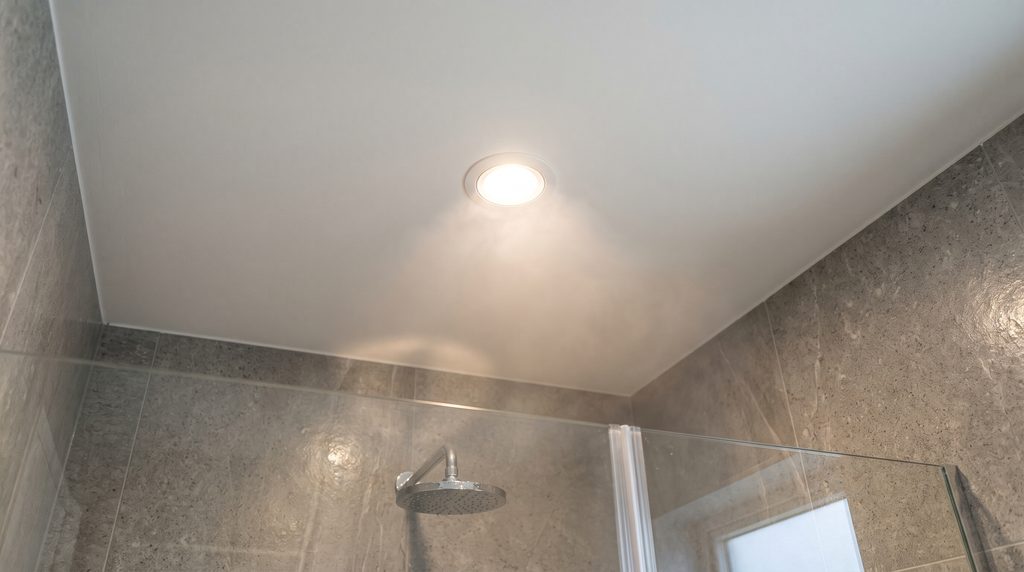
Shower Spotlight: Install a single wet-rated recessed light over the shower or tub, at least 12 inches from the showerhead.
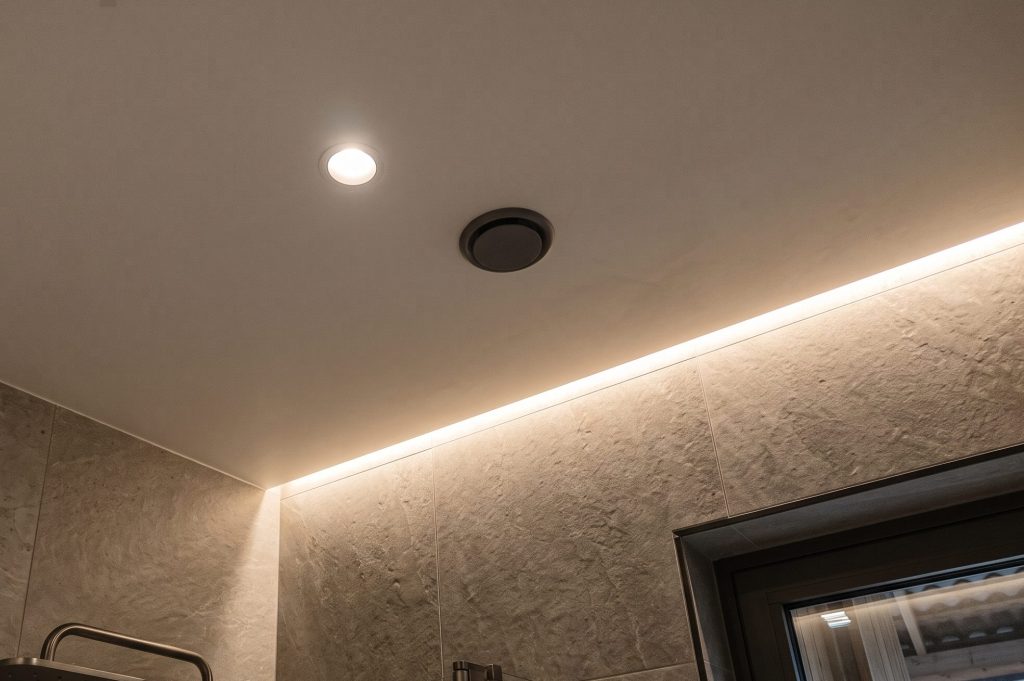
Perimeter Lighting: Place small recessed lights around the ceiling edge to wash walls with light and make the room feel bigger.
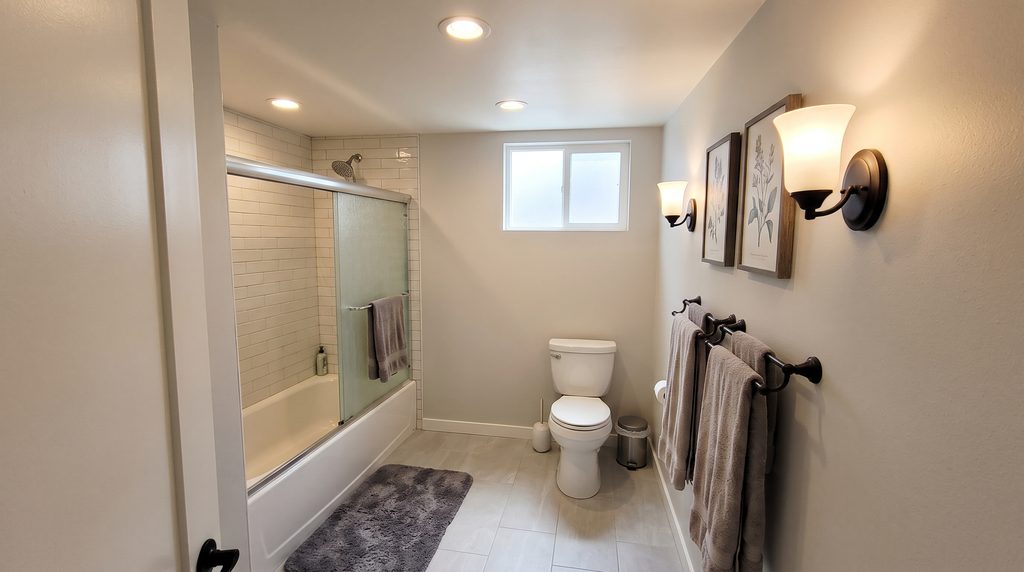
Layered Lighting: Combine recessed ceiling lights with wall sconces or a vanity light bar for better task lighting at the mirror.
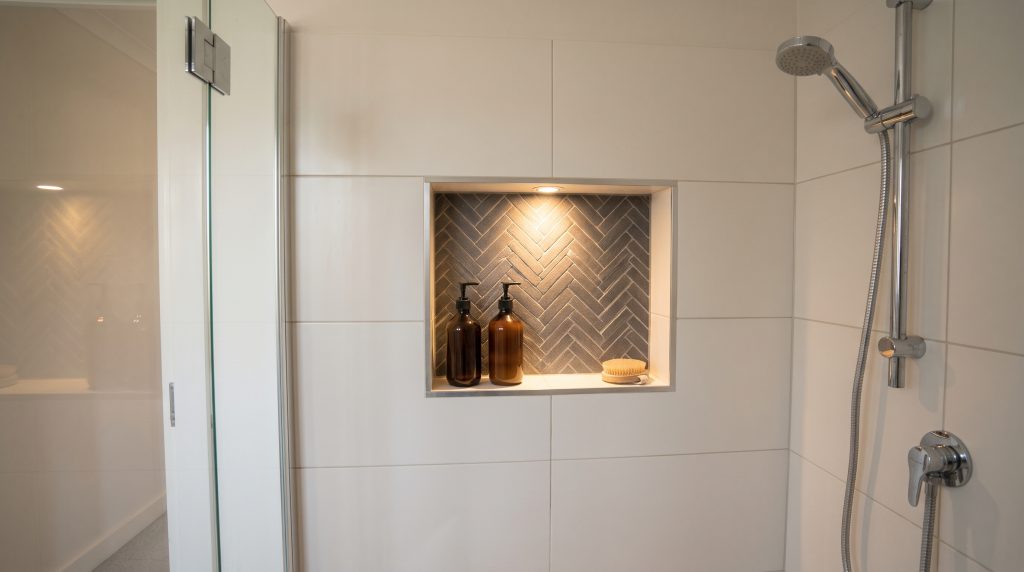
Accent Niches: Use mini recessed lights to highlight shelving, artwork, or built-in niches for a spa-like feel.
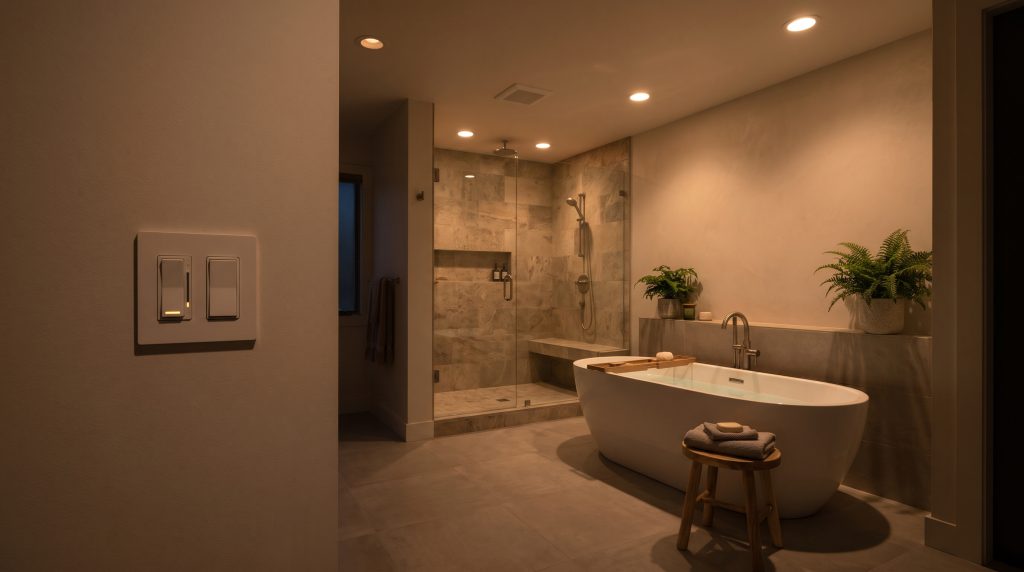
Dimmable Ambiance: Put recessed lights on dimmer switches for bright light when cleaning and soft light for relaxing baths.
Choose the right brightness and color
Brightness and color matter as much as placement. Aim for about 20 to 50 lumens per square foot across the room, with the higher end in task areas like the vanity, based on the Illuminating Engineering Society’s guidance. Choose LED fixtures with a color rendering index (CRI) of 90 or higher so skin tones and makeup look accurate. Warm white (2700K to 3000K) creates a calm, spa-like mood, while 3000K usually suits a main vanity best.
Recessed Bathroom Lighting Q&A
Is recessed lighting good for a bathroom?
Yes. Recessed lighting works well in bathrooms because it saves space, offers clean lines, and can be used safely in damp or wet areas when you choose the right rated fixtures. It’s especially useful in low ceilings or over showers and tubs where hanging fixtures aren’t practical. LED models also use less energy than older bulbs, and our lighting energy-saving tips show how to cut your bill further.
Where should recessed lights be placed in a bathroom?
Place recessed lights around the room’s perimeter, over the shower or tub (using rated fixtures), and near the center of the ceiling for general light. Avoid relying on a single recessed light directly above the vanity mirror, because it can cast shadows on your face. Pair recessed lights with sconces or a vanity bar for better face lighting.
How many recessed lights should be in a bathroom?
It depends on your bathroom’s size and layout. Small bathrooms may need only two to four fixtures, while larger primary bathrooms can use six or more to cover separate zones like the vanity, shower, tub, and toilet area. A common rule is to space lights about half your ceiling height apart, so about 4 feet apart with 8-foot ceilings.
Can you put a recessed light in a shower?
Yes, if the fixture has the right rating. A light inside the shower footprint must be damp-rated at minimum, and it must be wet-rated if shower spray can reach it. Many pros choose a wet-rated, sealed fixture for any light over a shower to remove the guesswork.
Are LED wafer lights better than traditional recessed cans?
For most bathroom remodels, yes. Slim LED wafers need no bulky housing, fit tight ceiling cavities, and install faster, which can lower labor costs. Traditional cans still make sense in new construction or when you want a specific trim style.
How much does it cost to install 20 recessed lights?
Installing 20 recessed lights usually costs around $3,000 to $5,000, based on an average installed price of $150 to $250 per light. Your final cost depends on wiring difficulty, ceiling access, fixture type, and local electrician rates. Whole-home installs and large bathroom suites tend to land at the higher end.
Do I need an electrician to install recessed lighting?
In most cases, yes. Hire a licensed electrician to install recessed lighting in a bathroom. The job involves cutting into the ceiling, adding or changing wiring, and making sure fixtures are grounded and properly rated for moisture. An electrician will also make sure the work meets local codes and pull permits when your area requires them. Swapping a trim or bulb in an existing can is a simpler task.
Next Steps: Finding the Right Contractor
Installing recessed lighting in a bathroom is more involved than replacing a standard light fixture. It often requires new wiring, rated housings, and code compliance, so hire a licensed, insured electrician or bathroom remodeler who regularly works with lighting in wet spaces.
When you interview contractors, ask these questions:
- How much experience do you have with bathroom lighting?
- Does my project need a permit?
- Which fixture types and brands do you prefer, and are they damp- or wet-rated, IC-rated, and airtight?
- Who handles cleanup and ceiling patching?
Collect at least three quotes so you can compare pricing, scope, and warranty details, and use this hiring checklist for bathroom remodelers to vet your options. If you’re budgeting a bigger project, try our bathroom remodel cost calculator. Modernize can connect you with reliable local pros who can design and install a recessed lighting plan that fits your bathroom, your style, and your budget.