Bathroom Remodel
How Much Does Bathroom Pendant Lighting Cost?
Average Cost: $150–$550
Installing a pendant light in a bathroom typically costs $150 to $550 per fixture, including the light and an electrician. The fixture itself usually runs $50 to $250, though designer pieces can top $500. Professional installation adds $100 to $300 when a ceiling box and wiring are already in place. New wiring or a new switch can add $200 to $600.
Find the best bathroom remodel pros in your area.

The Modernize Mission
We help homeowners make confident decisions through our reliable, up-to-date, and unbiased information and average project costs. All of our content is thoroughly reviewed and fact-checked by our team of home improvement experts. Learn more about how we maintain these values.
Pendant lights are a popular bathroom choice because they combine style with useful light. This guide covers pendant types, costs, safe placement, and the pros and cons. One safety rule matters before you buy anything: electrical code limits where pendants can hang near a tub or shower, so check your placement first.
Types of Pendant Lights
Pendants come in a few common styles. Each one suits a different bathroom size and lighting need.
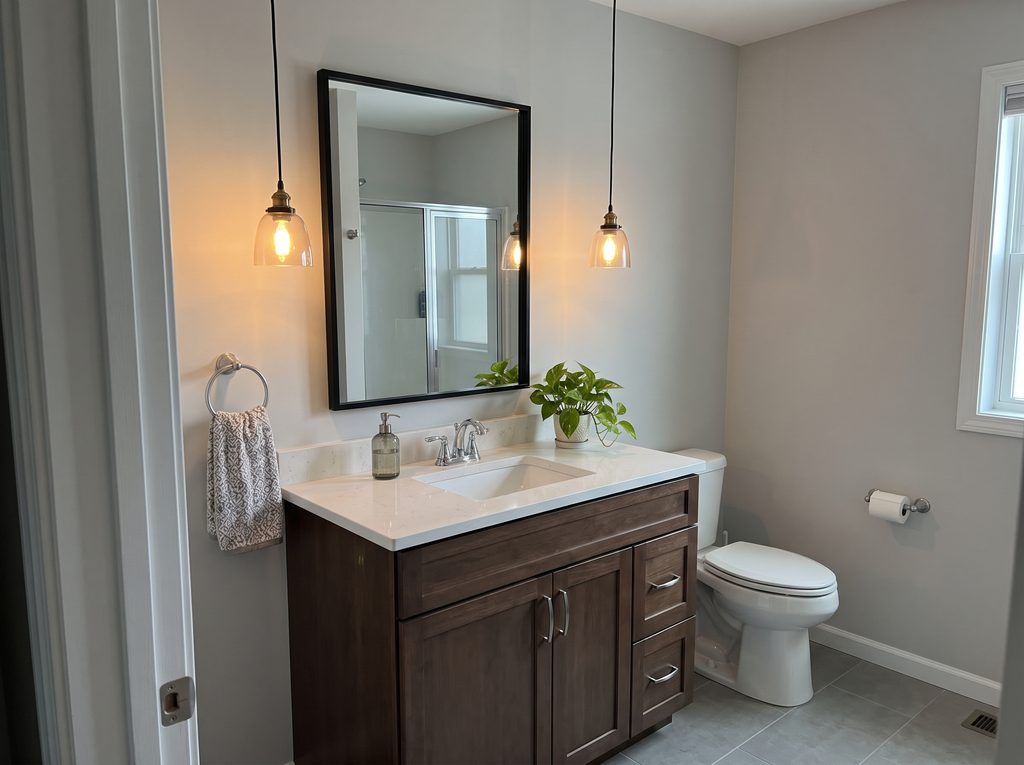
Mini Pendants: Ideal for smaller bathrooms or as accent lighting, mini pendants are compact and can hang in a series.
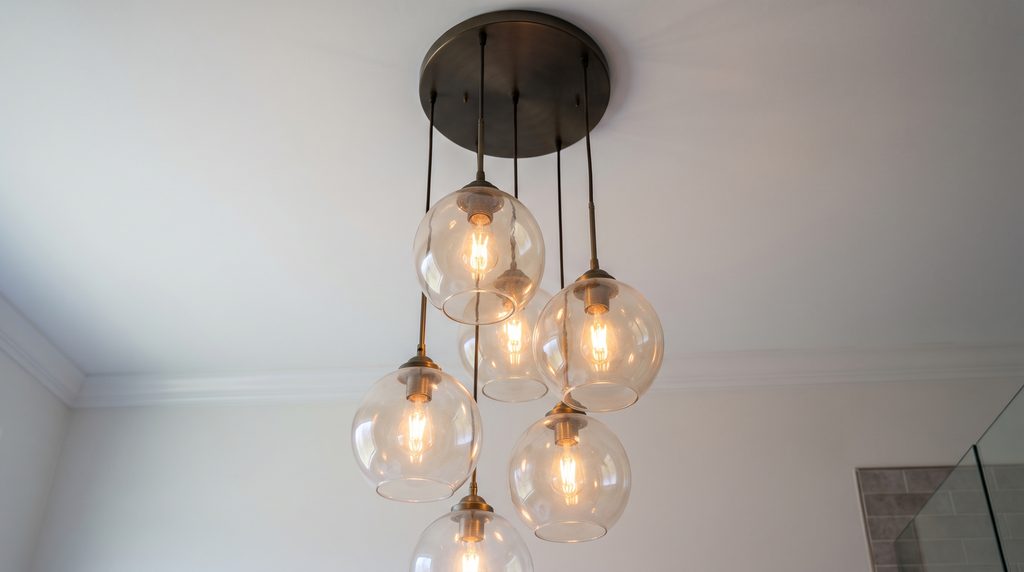
Multi-Light Pendants: These feature multiple light sources on one fixture, which suits larger bathrooms and primary bathrooms that need plenty of light.
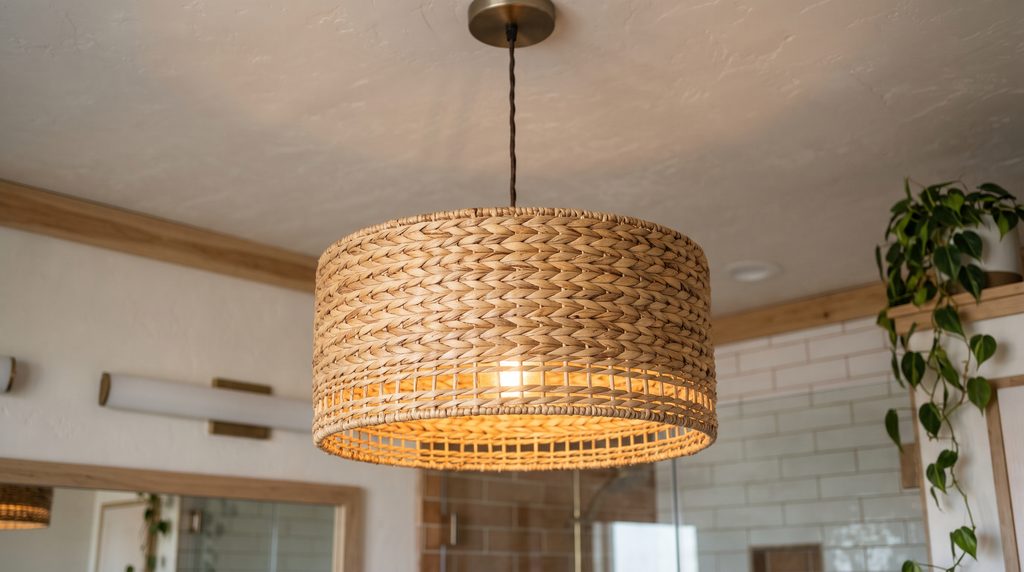
Drum Pendants: A cylindrical shade encloses the bulb, giving soft, diffused light that creates a calming mood.
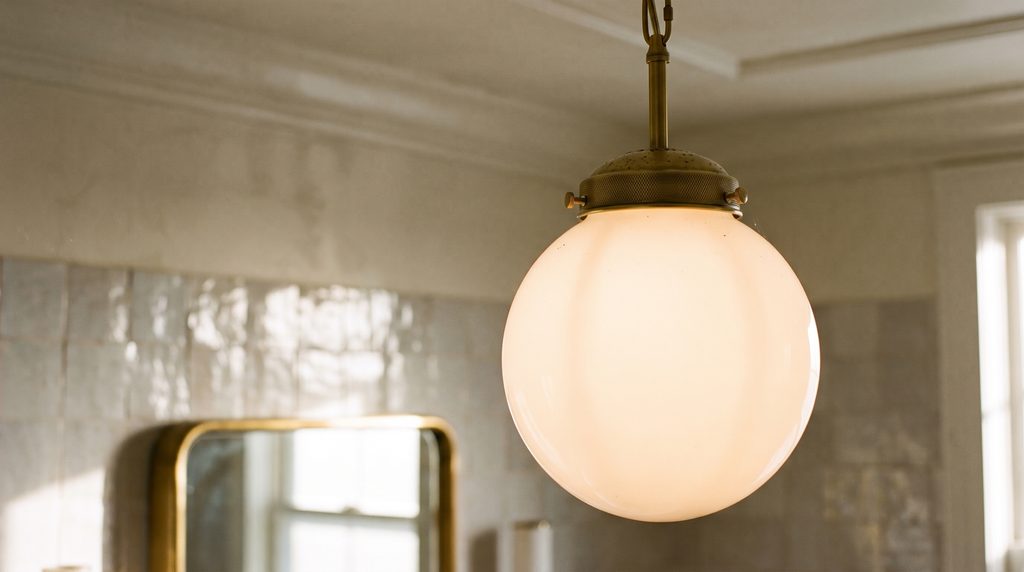
Globe Pendants: These spread light in every direction and add a modern touch with their round shape.
Whatever style you choose, look for a fixture labeled for damp locations. A damp rating covers steam and humidity, which every bathroom has.
Pros and Cons of Pendant Lights in the Bathroom
Pros
- Versatile: Designs fit nearly any bathroom style.
- Task and Ambient Lighting: One fixture can provide both, depending on where you hang it.
- Decorative: Pendants add a style element that flush lights can’t.
Cons
- Maintenance Required: They collect dust and moisture, so plan on regular cleaning.
- Spacing Constraints: They may not fit a very small bathroom with low ceilings.
- Code Restrictions: They can’t hang within a set zone around a tub or shower.
- Complex Installation: Wiring is harder than for standard ceiling fixtures, especially with new wiring.

How Much Do Bathroom Pendant Lights Cost?
Plan on $150 to $550 per pendant, installed. The fixture usually costs $50 to $250, and installation adds $100 to $300 at an existing ceiling box. Your total depends on the fixture’s style, material, and brand, and on how much electrical work your bathroom needs.
| Cost Item | Typical Range | Notes |
|---|---|---|
| Pendant fixture | $50 to $250 | Designer or handcrafted pieces can reach $500 to $1,000+ |
| Installation at an existing ceiling box | $100 to $300 per fixture | Usually 1 to 2 hours of electrician time |
| New wiring or a new switch | Add $200 to $600 | Needed if there’s no wiring at the new location |
| Electrician hourly rate | $50 to $150 | Many charge a $100 to $200 minimum service fee |
| Total installed (single pendant) | $150 to $550 | Assumes existing wiring |
Include lighting in your overall bathroom remodel budget so the fixture and the electrical work don’t surprise you later.
Price range
Pendant lights come in a wide range of prices, so you can match them to your budget and design.
- Budget (Under $50): Basic yet stylish designs with simpler materials and fewer features.
- Mid-Range ($50 to $250): A broad selection of styles, materials, and sizes that fit most bathrooms.
- High-End ($250 to $1,000+): Luxury pendants with unique designs, premium materials, and fine craftsmanship that double as statement pieces.
Installation costs
Hire a licensed electrician for installation. Rates run $50 to $150 per hour depending on your region, and a simple swap at an existing ceiling box usually takes 1 to 2 hours. Several factors raise the price:
- New wiring, a new switch, or a new ceiling box.
- High, vaulted, or sloped ceilings, which can add $100 to $300.
- Heavy or multi-light fixtures that need extra support, which can add $75 to $250.
- Installing several pendants, which adds alignment time.
- A permit, if your city requires one for new wiring.
Professional installation keeps your pendants safe and compliant with local building codes, which matters in a room where water and electricity are close together. Use this checklist for hiring a bathroom pro to vet your options.
Energy costs
Choose LED bulbs. The U.S. Department of Energy says LEDs use at least 75% less energy than incandescent bulbs and last up to 25 times longer. Look for ENERGY STAR certified fixtures, and use a dimmer that’s rated for LEDs. For more savings, see our tips for saving energy with lighting.tion offers peace of mind and ensures that your lights function properly and safely.


Where You Can Hang Pendant Lights in a Bathroom
Choose pendants that match your bathroom’s style and meet your functional lighting needs. A dimmer switch makes them more versatile, since you can adjust the mood for different times of day. If you’re planning layers of light, start with the three basic types of lighting.
Code check: The National Electrical Code (NEC) bars pendants, chain- or cord-hung fixtures, track lighting, and ceiling fans within 3 feet horizontally and 8 feet vertically of a tub rim or shower threshold. The zone includes the space directly over the tub or shower. Local codes vary, so confirm placement with your electrician or building department.
Over the vanity
Pendants on either side of the vanity mirror are a stylish way to get excellent task lighting. This setup works well for shaving or applying makeup. Symmetrical placement lights your face evenly and reduces shadows and glare. Vanity lighting sets the tone for the whole room, and sconces are a common alternative to pendants in this spot.
Size the fixtures to your mirror and vanity so the look stays balanced. Adjustable-height pendants help you set the light where each user needs it. Make sure the vanity sits outside the 3-foot tub zone before you finalize the spot.

Near the bathtub
A pendant over the tub may look like a luxury focal point, but code generally rules it out. The 3-foot by 8-foot zone applies even if the fixture is rated for wet locations. Lights placed inside the tub or shower footprint, up to 8 feet above the rim, must be marked for damp locations, and for wet locations if shower spray reaches them.
If you want a showpiece above a freestanding tub, ask an electrician what your local code allows. Otherwise, light the tub with a damp- or wet-rated recessed light or a flush-mount fixture, and save your pendants for the vanity or the room’s center.

In the center of the room
For general ambient light, a pendant in the middle of the bathroom is both practical and decorative. It spreads light evenly and fills gaps that task lighting misses. Keep it outside the tub and shower zone, and hang it high enough to clear heads.
Match the fixture’s size to your ceiling height and room size. A bold chandelier works in a large bathroom with a high ceiling, while a sleek drum or globe pendant suits a smaller space. This spot lets you add personal style, from modern to traditional.

Are Pendant Lights Right for Your Bathroom?
Pendant lights give a bathroom style and function in one fixture. They work best over the vanity or in the center of a room with enough ceiling height. If your top priority is lighting the tub, use a recessed or flush-mount fixture instead.
Weigh the types, placement, cost, and code rules, then choose a damp-rated, LED fixture that fits your space. Hire a licensed electrician for installation, because the bathroom’s moisture and the tub-zone rules make professional work the safer choice.