Bathroom Remodel
The Ultimate Guide to Bathroom Chandeliers
Average Cost: $120 – $1,400
A bathroom chandelier typically costs $350 to $1,250 installed, with a national average near $500. The fixture itself runs $120 to $1,400, depending on type and size. Labor adds $100 to $350 to replace an existing fixture, or $200 to $2,000 for a new location. High ceilings and heavy crystal can push the total to $3,400 or more.
Find the best bathroom remodel pros in your area.

The Modernize Mission
We help homeowners make confident decisions through our reliable, up-to-date, and unbiased information and average project costs. All of our content is thoroughly reviewed and fact-checked by our team of home improvement experts. Learn more about how we maintain these values.
Table of Contents
- Cost of Bathroom Chandeliers
- Types of Bathroom Chandeliers
- How to Size and Hang a Bathroom Chandelier
- Why Would You Choose a Bathroom Chandelier?
- Safety Considerations for Bathroom Chandeliers
- Bathroom Chandeliers vs. Pendant and Recessed Lighting
- Is a Bathroom Chandelier Right for You?
- Bathroom Chandelier Q&A
- Sources
Cost of Bathroom Chandeliers
Most homeowners pay $350 to $1,250 to buy and install a bathroom chandelier, with an average near $500. Your total depends on the fixture, your ceiling height, and whether you’re replacing an existing light or adding one in a new spot. Heavy fixtures and tall ceilings cost the most.
Chandelier prices by type
The fixture itself ranges from $120 to $1,400 for most homes. Mini chandeliers, which suit small bathrooms, start around $100, and designer pieces can cost far more.
| Chandelier Type | Typical Fixture Cost |
|---|---|
| Standard 5-light | $120 to $300 |
| Shaded | $120 to $400 |
| Tiered | $170 to $700 |
| Crystal | $220 to $1,400 |
| Antler or rustic | $250 to $1,000 |
Installation costs
Electricians charge about $50 to $200 per hour, and hanging a chandelier takes 2 to 4 hours on average. These ranges show labor only:
| Project | Standard Ceiling | High Ceiling |
|---|---|---|
| Replace an existing chandelier | $100 to $150 | $200 to $400 |
| Install a new chandelier | $150 to $400 | $700 to $2,000 |
A heavy fixture that needs structural reinforcement can bring the total to $800 to $3,000 or more. Permits, where required, add roughly $50 to $500.
Materials like crystal, glass, or metal, plus the design, brand, and size, all shape the price. New wiring or a ceiling box upgrade adds to the bill too. A chandelier is an investment, but it adds luxury and style to the room.


Types of Bathroom Chandeliers
Bathroom chandeliers come in many styles and materials to match your design.

Styles
- Traditional: Often features intricate designs with crystal elements and ornate metalwork.
- Modern: Uses minimalist lines, with materials like polished metal and glass.
- Rustic: Uses natural materials like wood and wrought iron for a cozy, organic feel.
Materials
Common materials include crystal, glass, metal, and occasionally wood or combinations. In 2026, designers favor warm metals like aged or unlacquered brass, polished nickel, and champagne bronze. Choose finishes made for humid rooms so they hold up to steam. For more ideas, see our guide to primary bathroom trends.
Popular types
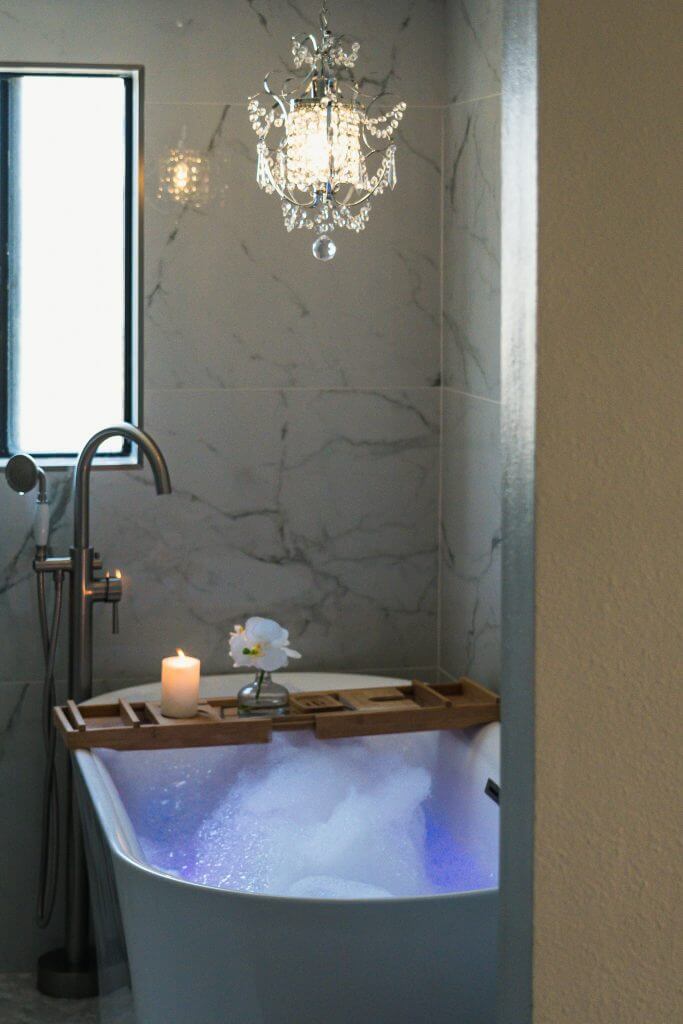
- Crystal Chandeliers: Known for their sparkle, which adds a luxurious touch.
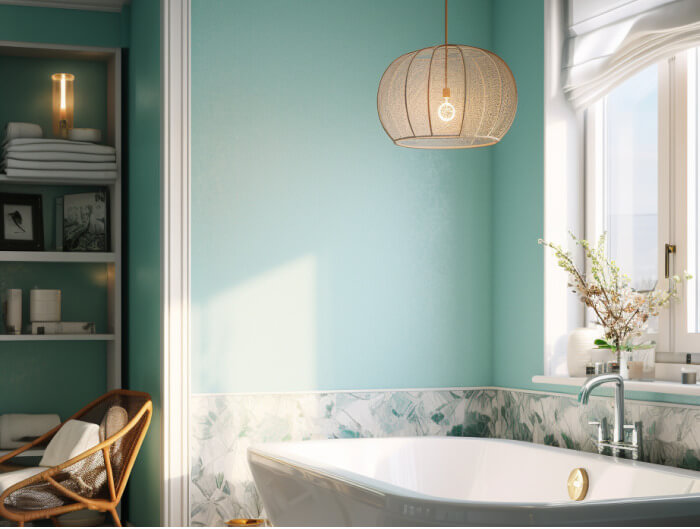
- Drum Chandeliers: Feature a circular shade for a contemporary look.
- Candle Chandeliers: Mimic candles, often used for a vintage or romantic style.
- Mini Chandeliers: Fit small bathrooms and low ceilings without crowding the room.
How to Size and Hang a Bathroom Chandelier
Size and height decide whether a chandelier looks right and passes inspection.
Choosing the right size
A good rule of thumb is to add the room’s length and width in feet. That number in inches gives you a general diameter for your chandelier. For example, an 8-by-10-foot bathroom works well with a fixture about 18 inches wide. In a small bathroom, choose a mini chandelier so the fixture doesn’t overwhelm the space.
Choosing the right height
Hang the bottom of the chandelier at least 7 feet above the floor so no one bumps it. Ceilings of 9 feet or more give you the most flexibility. With a standard 8-foot ceiling, choose a mini chandelier, a semi-flush mount, or place the fixture away from the tub.
If you’re building around a freestanding tub, center the chandelier on the room or the tub’s centerline. Check the clearance rules in the safety section below first.
Why Would You Choose a Bathroom Chandelier?
A chandelier does more than add a light fixture. It sets an atmosphere and elevates the room, and it can still light the space well.
Aesthetic appeal
Bathroom chandeliers can turn a functional space into an elegant retreat. They serve as a statement piece that adds sophistication to a primary bathroom.
Lighting effectiveness
Chandeliers provide ambient light and can add some direct light. They aren’t a substitute for grooming light at the mirror, though. Pair one with vanity lighting or sconces for task lighting, and see our guide to layered lighting for how the pieces fit together.urious touch, a chandelier or pendant light can add elegance without sacrificing function.
Pros and Cons of Bathroom Chandeliers
Pros
- Aesthetic Impact: Adds a luxurious, elegant touch to bathroom décor.
- Ambient Lighting: Provides a soft glow that sets a relaxing mood.
- Design Variety: Styles range from mini and modern to crystal.
- Focal Point: Draws the eye over a tub or between vanities.
Cons
- Cost: Fixture and installation both cost more than basic lights.
- Maintenance: Crystal and glass need regular cleaning in humid rooms.
- Size Limits: Small bathrooms and low ceilings may not fit one.
- Code Limits: Hanging fixtures can’t sit in the tub and shower zone.
Safety Considerations for Bathroom Chandeliers
Bathrooms combine moisture and electricity, so safety comes first during installation and daily use. Keep these points in mind.
Code rules for tubs and showers
- Hanging Fixtures: The National Electrical Code (NEC) bars chandeliers, pendants, and other chain- or cord-suspended fixtures from a zone 3 feet horizontally and 8 feet vertically from the tub rim or shower threshold, even if they’re wet-rated.
- Over a Tub: To hang a chandelier over a tub, keep its lowest point more than 8 feet above the rim. Otherwise, keep it more than 3 feet from the tub’s edge.
- Moisture Rating: Fixtures must be listed for damp locations at minimum, and wet locations if shower spray can reach them.
- Local Codes: Rules vary by area, so confirm requirements with your inspector.
Installation safety
- Professional Installation: Hire a licensed electrician to handle wiring and secure mounting.
- Ceiling Strength: Standard ceiling boxes support limited weight (often 50 pounds), so heavy fixtures need reinforcement.
Maintenance safety
- Regular Cleaning: Dust and wipe the fixture often, and use cleaners that suit its finish.
- Electrical Safety: Turn off the power before you change bulbs or do any maintenance.
- Ventilation: Run the exhaust fan to limit steam, which wears on finishes and wiring.
- Bulbs: Use LED candle or globe bulbs, which run cooler and last longer. See these tips for saving energy with lighting.

Bathroom Chandeliers vs. Pendant and Recessed Lighting
Several options can light a bathroom. Two of the most popular are pendant bathroom lighting and recessed bathroom lighting. The comparison below shows how they stack up against a chandelier.
Pendant lighting
Pendant lights give more focused illumination and come in many styles, though they offer less drama than a chandelier. They usually cost less and install more simply, which makes them a cost-effective option. Pendants face the same tub-zone rule as chandeliers.
Recessed lighting
Recessed lighting is sleek and unobtrusive, and it provides even light across the room. It’s less decorative but highly functional. Installation can be more complex, but recessed lights often cost less than chandeliers. They also avoid the hanging-fixture restrictions near the tub when they carry the right damp or wet rating.
Is a Bathroom Chandelier Right for You?
The right fixture depends on your style, your lighting needs, your ceiling height, and your budget. A chandelier suits a bathroom with higher ceilings and room to spare. Pendants and recessed lights suit smaller or lower rooms. Whichever you choose, hire a licensed electrician. Our guide to choosing a contractor and this hiring checklist can help you find the right pro.
Bathroom Chandelier Q&A
Can I put a chandelier in a bathroom?
Yes. A chandelier can serve as a focal point and elevate your design. Choose a fixture rated for damp locations, or wet locations if shower spray can reach it, and check the manufacturer’s specifications before you buy.
What type of light fixture is best for a bathroom?
It depends on your space and needs. Most bathrooms benefit from layered lighting that combines ambient, task, and accent light. Common choices include vanity lights at the mirror, recessed lights for general light, and sconces or LED strips for ambiance. A chandelier or pendant adds elegance without losing function.
How big should a chandelier be in a bathroom?
Add the room’s length and width in feet, and use that number in inches as the diameter. For an 8-by-10-foot bathroom, a chandelier about 18 inches wide works well. In smaller bathrooms, choose a mini chandelier.
Is it against code to hang a chandelier over a bathtub?
Not always, but strict clearance rules apply. The NEC bars hanging fixtures from a zone 3 feet horizontally and 8 feet vertically from the tub rim, even if they’re wet-rated. A chandelier over a tub must hang with its lowest point more than 8 feet above the rim, or sit more than 3 feet from the tub’s edge. Confirm local codes and use a licensed electrician.
How much does it cost to install a chandelier in a bathroom?
Most homeowners pay $350 to $1,250 for the fixture and installation, with an average near $500. Replacing an existing fixture costs $100 to $350 in labor. High ceilings or heavy fixtures can raise the total to $3,400 or more.
How high should a bathroom chandelier hang?
Keep the bottom at least 7 feet above the floor. Over a tub, the lowest point must be more than 8 feet above the rim. A ceiling of 9 feet or higher gives you the most room to work with.
Can I install a bathroom chandelier myself?
Swapping a light fixture is a manageable DIY job if you shut off the power and have a helper. New wiring, heavy fixtures, or work near a tub should go to a licensed electrician.
Is a chandelier enough light for a bathroom?
Usually not alone. A chandelier gives ambient light, but you also need task lighting at the mirror. Pair it with vanity lights or sconces.
Ready to upgrade your bathroom lighting?