Bathroom Remodel
Bathroom Sinks
On this page
- Best types of bathroom sinks
- Average cost to install a new sink
- Bathroom sink ideas, including materials, shapes, and more
Most homeowners pay $460–$1,476 to install a bathroom sink, with the average landing around $650–$1,100 depending on sink type. But cost is only part of the decision. The right sink depends on how much counter space you have, how much storage you need, and the look you’re going for. This guide covers six common sink types, the most popular materials, and what to consider before you buy.
Find the best bathroom remodel pros in your area.

The Modernize Mission
We help homeowners make confident decisions through our reliable, up-to-date, and unbiased information and average project costs. All of our content is thoroughly reviewed and fact-checked by our team of home improvement experts. Learn more about how we maintain these values.
Common Types of Bathroom Sinks
There are six main bathroom sink types, each with a different installation method, footprint, and look. The best one for your bathroom depends on your layout, storage needs, and style priorities.
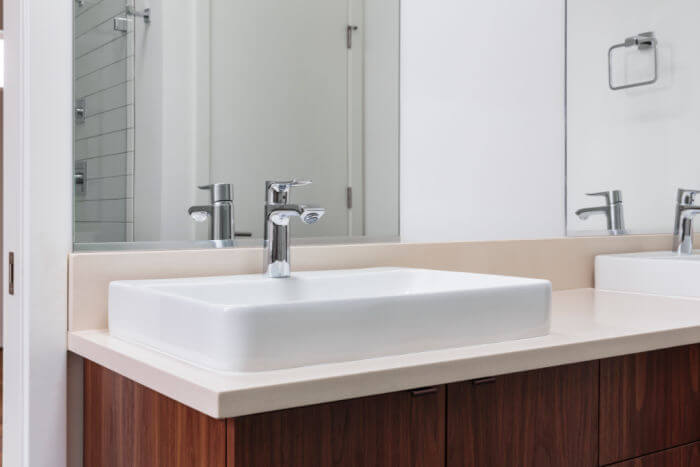
Drop-in sinks
A drop-in sink sits in a hole cut into the countertop, with a rim that overlaps the counter surface to hold it in place. It’s the most common bathroom sink type — easy to install in an existing vanity, widely available, and compatible with almost any countertop material.
The rim that makes drop-ins so easy to install is also their main drawback: it creates a seam where water and soap residue collect. For busy bathrooms or households where easy cleaning matters, that’s worth factoring in.
Pros
- Easy installation: Drops into an existing vanity without countertop modification
- Affordable: Among the least expensive sink types to buy and install
- Material options: Available in ceramic, porcelain, cast iron, stainless steel, and more
Cons
- Rim collects grime: The overlap seam traps soap scum and requires regular cleaning
- Reduces counter space: The rim takes up usable countertop area
- Requires a countertop: Not an option for wall-mounted or pedestal configurations
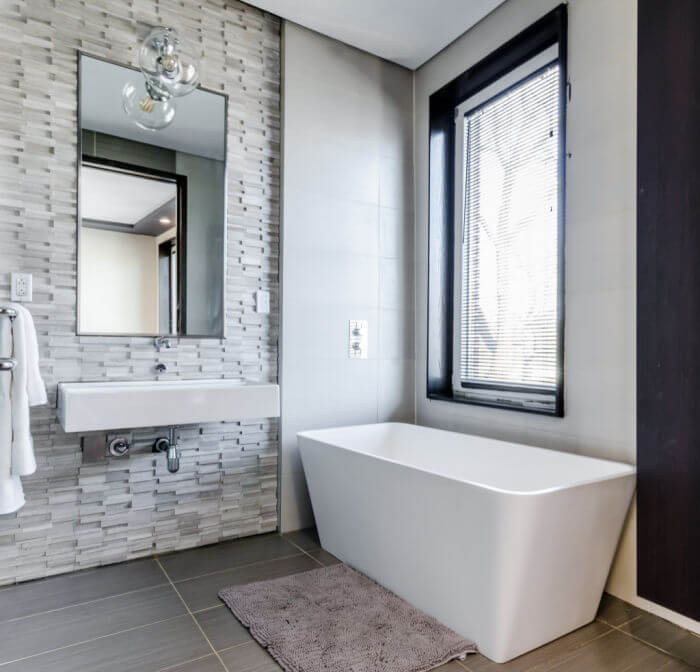
Wall-mounted sinks
A wall-mounted sink attaches directly to the wall with brackets, with no vanity or base cabinet underneath. The plumbing is exposed beneath the basin. They’re one of the best options for small bathrooms — they free up floor space and make a room feel larger.
The tradeoff is storage: wall-mounted sinks have none. If you’re installing one in a primary bath, plan for a separate storage solution (a medicine cabinet, floating shelves, or a freestanding unit). They work well in powder rooms and half-baths where storage is less critical.
Pros
- Space-efficient: Frees up floor space, a strong choice for small bathrooms
- Adjustable height: Can be mounted at any height, useful for accessibility needs
- Affordable: Generally less expensive than undermount or vessel options
Cons
- Exposed plumbing: Pipes are visible below the sink unless concealed separately
- No storage: No cabinet or vanity space below the basin
- Wall reinforcement needed: Studs or blocking required to support the mounting
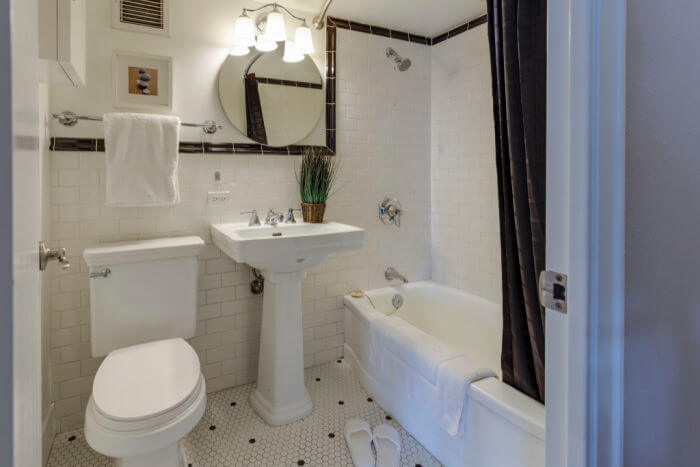
Pedestal sinks
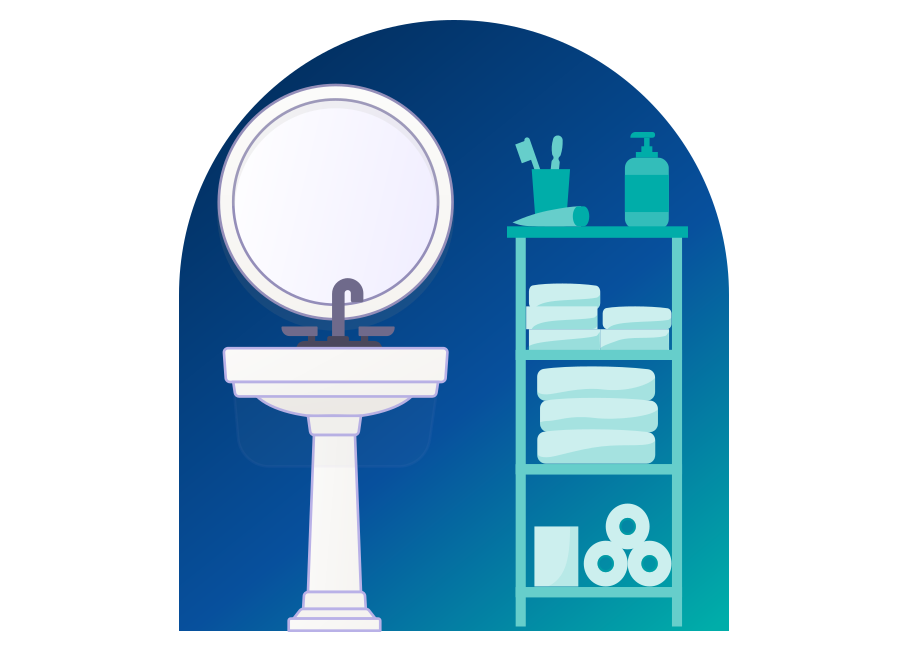
A pedestal sink is a freestanding unit where the basin sits on a column-shaped base that conceals the plumbing. No countertop required. They work in both small bathrooms (where a vanity would crowd the space) and larger bathrooms where the goal is a classic, sculptural look.
Like wall-mounted sinks, pedestal sinks offer no built-in storage. If you’re replacing a vanity with a pedestal, plan ahead for where toiletries and cleaning supplies will go. A creative storage solution — like recessed shelving or a narrow floor cabinet — can fill that gap without crowding the room.
Pros
- No vanity required: Installs without a countertop or base cabinet
- Classic look: Available in a wide range of styles, from traditional to modern
- Works in small spaces: A good fit for half-baths and narrow bathrooms
Cons
- No storage: No cabinet or drawer space below or beside the basin
- Layout change needed: Requires removing an existing countertop and vanity
- Trend-sensitive: Traditional pedestal styles can feel dated in modern bathrooms
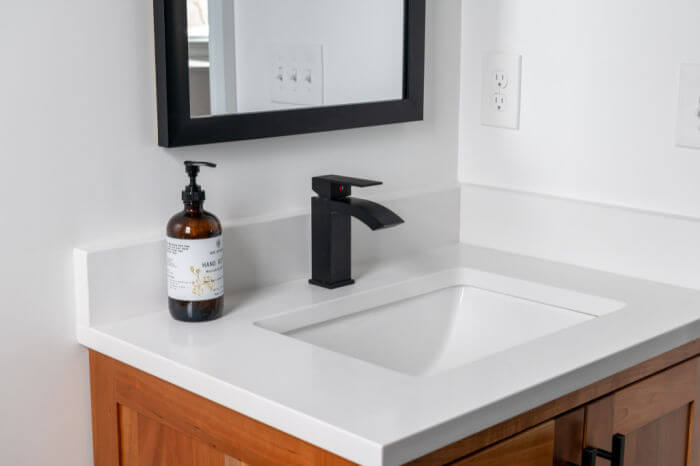
Undermount sinks
An undermount sink mounts from below the countertop, so the basin drops down with no rim visible on the counter surface. The result is a clean, seamless look and an easy-to-wipe counter with no lip to catch water or grime. Most homeowners consider undermount sinks the easiest type to keep clean.
One important caveat: undermount sinks are incompatible with tile countertops and most laminate surfaces. They work best with quartz, granite, marble, and solid surface materials. Ask your contractor about countertop compatibility before committing — this is a common source of unexpected cost.
Pros
- Clean counter surface: No rim to collect soap scum; easy to wipe down
- More counter space: The basin drops below the counter rather than sitting on it
- Modern look: Seamless appearance can add to resale value
Cons
- Limited countertop compatibility: Doesn’t work with tile or laminate
- Higher cost: More expensive than drop-in sinks to buy and install
- More water spillage risk: No rim means water can run off the counter edge more easily
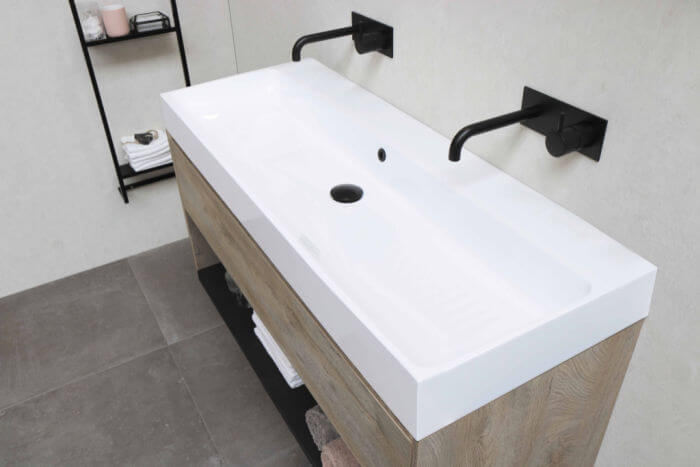
Trough sinks
A trough sink is a long, rectangular basin — deep and wide, often with two faucets. They’re seeing a revival in farmhouse and industrial-style bathrooms. The main advantage is that two people can use the sink comfortably at the same time, which makes them a popular choice for shared primary baths.
Trough sinks are available in both drop-in and undermount configurations, so your installation options depend on your countertop setup. Materials range from concrete and stone to stainless steel and wood — the material choice significantly affects both cost and maintenance.
Pros
- Fits two users: Long basin accommodates two people simultaneously
- Double-sink alternative: One basin, two faucets — less expensive than two separate sinks
- Design flexibility: Available in drop-in and undermount; multiple materials
Cons
- Requires counter space: Wide basin needs a substantial vanity or countertop
- Not for small bathrooms: The footprint limits this to larger bathrooms
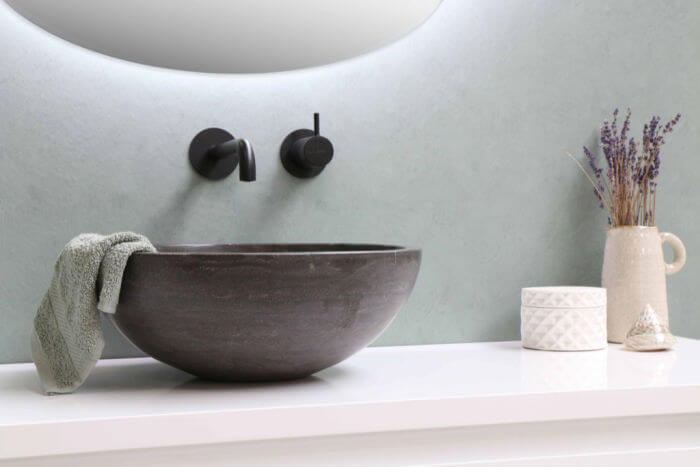
Vessel sinks
A vessel sink is a bowl that sits on top of the counter rather than dropping into it. The basin is fully visible, which makes it the most design-forward sink type — a vessel can serve as a focal point in the same way a piece of furniture does. Materials range from ceramic and glass to natural stone, copper, and wood.
The installation is more involved than a drop-in: the faucet must be mounted on the wall or countertop (not on the basin), and the drain needs to be positioned precisely. Factor installation complexity into your budget — vessel sinks aren’t expensive to buy, but getting the height and drain alignment right takes a skilled installer.
Pros
- Design statement: Fully visible basin can anchor the bathroom’s aesthetic
- Material variety: Available in stone, glass, copper, ceramic, wood, and more
- Counter space preserved: Basin sits on top, keeping the surrounding surface open
Cons
- Precise installation required: Drain alignment and faucet height need exact placement
- Can be expensive: Premium materials (stone, copper) raise costs significantly
- Splashing risk: High basin sides can cause water to splash onto the counter
Bathroom Sink Materials
Material affects how a sink looks, how long it lasts, how much it costs, and how easy it is to clean. Here’s a quick breakdown of the most common options and where each makes the most sense.
| Material | Best for | Durability | Relative cost |
|---|---|---|---|
| Ceramic/porcelain | Most bathrooms | Excellent | $ |
| Cast iron (enamel-coated) | High-use primary baths | Excellent | $$$ |
| Fireclay | Farmhouse and traditional styles | Excellent | $$$ |
| Stainless steel | Modern, minimalist bathrooms | Very good | $$ |
| Glass | Vessel sinks, modern baths | Good (chips under impact) | $$–$$$ |
| Natural stone | Statement vessel sinks | Good (requires sealing) | $$$$ |
| Copper/bronze | Rustic, eclectic styles | Good (develops patina) | $$$–$$$$ |
| Resin/composite | Budget-friendly modern look | Moderate | $–$$ |
| Wood | Spa and rustic bathrooms | Moderate (needs sealing) | $$$–$$$$ |
Ceramic and porcelain are the right call for most bathrooms: they’re durable, widely available, easy to clean, and compatible with almost every sink type. If you want something that makes more of a visual statement, natural stone and glass are worth the extra cost — just know that stone needs periodic sealing and glass will show water spots more readily.
How to Choose a Bathroom Sink: Key Decisions
Before you shop, work through these six decisions. Getting clear on each one will narrow your options quickly and help you avoid buying a sink that doesn’t fit your space or your plumbing.
Sink type and installation
Start here because your countertop material and vanity configuration will immediately rule some types out. Undermount sinks don’t work with tile countertops. Vessel sinks need wall- or deck-mounted faucets. If you’re keeping your existing countertop, a drop-in replacement is almost always the easiest and most affordable path.
Storage needs
Wall-mounted, pedestal, and vessel sinks all sacrifice storage for style. If your bathroom is short on storage, a vanity-integrated drop-in or undermount sink keeps cabinets and drawers in play. If you’re committed to a pedestal or wall-mounted look, budget for a separate storage solution.
Number of sinks
For a shared primary bath, you have three options: two separate sinks, a double-basin vanity, or a trough sink with two faucets. A trough is typically the least expensive of the three and takes up less linear counter space than two separate undermount sinks.
Size and basin depth
Measure your vanity or counter opening before buying — standard drop-in sinks run roughly 17″–24″ wide, but actual openings vary. For a primary bath where you wash your face daily, a deeper basin (5″–6″) reduces splashing. For a half-bath used mostly for hand-washing, a shallower basin works fine.
Color and finish
White ceramic is still the most popular choice because it’s easy to match with fixtures, tile, and hardware across remodels. If you want something different, match your sink finish to a fixture finish you already have — brushed nickel, matte black, or brass all pair consistently across sink, faucet, and hardware.
Countertops and cabinets
If you’re replacing only the sink and keeping your countertop, confirm material compatibility with your contractor before ordering. If you’re planning a phased remodel where you’ll replace countertops later, choose a sink style that works with multiple surface options — not one locked to a specific material.
For more on what’s popular right now, check out the latest bathroom sink ideas and trends.
Cost to Install a Bathroom Sink
Most homeowners pay $460–$1,476 to install a bathroom sink, including materials and labor. The national average is around $650–$1,140 depending on sink type, with undermount sinks averaging about $653 installed and pedestal sinks running closer to $1,140.
| Sink type | Typical installed cost | Notes |
|---|---|---|
| Drop-in | $460–$800 | Lowest installation complexity |
| Wall-mounted | $500–$1,000 | May require wall reinforcement |
| Undermount | $600–$1,200 | Countertop modification required |
| Pedestal | $700–$1,476 | Requires removing existing vanity |
| Vessel | $500–$2,500+ | Wide range; material drives cost |
| Trough | $800–$2,500+ | Two-faucet setup adds to labor |
Labor accounts for roughly 54% of total cost. Three factors push the price higher: removing an existing vanity or countertop, moving plumbing connections, and choosing a premium sink material. If you’re keeping your vanity and swapping only the sink, a drop-in replacement is the least expensive path.
Sink installation is usually part of a larger bathroom remodel — it’s worth knowing where the sink falls in your priorities before you set a budget. Spending less here can free up budget for the bathtub, shower, or tile work that tends to have more visual impact. Talk through your options and financing choices with your contractor before committing to a specific scope.


Once you know which bathroom sink fits your space, Modernize can connect you with the right contractor to handle installation. We’ll ask a few questions about your project and match you with up to four local pros. Learn what to look for when hiring a bathroom remodeler before you get quotes.