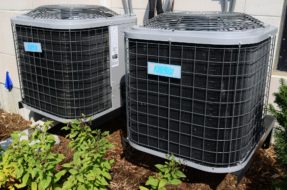
As energy efficiency becomes a national priority, numerous government programs offer rebates and incentives to homeowners who upgrade their HVAC systems. These programs can significantly offset the cost of installing new air conditioning and heating units, making energy-efficient options more affordable. Here’s an updated guide to government rebates for air conditioning and heating in 2026.
Please be aware: Modernize Home Services cannot guarantee that the HVAC contractors in our network will honor government rebates and grants as a form of payment toward your project. We recommend discussing your budget and payment options with your contractor at the time you receive your quote.

2026 Federal Tax Credits and Rebates
The terms and conditions of government rebates or grants can differ depending on the time of year, location, and other variables. Modernize recommends checking with the Database of State Incentives for Renewables & Efficiency to see if you’re eligible before applying or hiring a contractor. This maximizes your chances of securing the funds, and it also gives your contractor all the info they need before the project starts.
HVAC Tax Credits vs. HVAC Rebates: What’s the Difference?
When exploring financial incentives for upgrading to an energy-efficient HVAC system, it’s important to understand the distinctions between federal tax credits and state or local rebates. Knowing how these incentives work can help you maximize your savings.
Tax Credits: According to the IRS, a tax credit is a dollar-for-dollar reduction of the amount of tax you owe. These credits are typically claimed when you file your federal tax return and can significantly offset the cost of qualifying HVAC upgrades.
Rebates: A rebate is either a point-of-sale discount or a delayed refund. The specifics of how a rebate is applied depend on the organization offering it, whether it’s a state energy program, a utility company, or an HVAC manufacturer. Rebates are often immediate and reduce your upfront costs.
Both options provide valuable savings, but their application and timing differ. Let’s explore these incentives in more detail to help you take full advantage of them.
Energy-Efficient Home Improvement Tax Credit (Updated for 2026)
Important deadline change: As of January 1, 2026, the federal Energy-Efficient Home Improvement Tax Credit is no longer available for improvements placed in service after December 31, 2025. Homeowners must have completed and placed eligible upgrades in service on or before Dec. 31, 2025 to claim the credit.
- Credit Amount (through 2025): Prior to 2026, homeowners could claim 30% of qualifying costs, subject to annual limits. This included up to $2,000 for high-efficiency systems such as heat pumps, along with other category-specific caps and an overall annual maximum.
- Eligible Equipment (pre-2026): Qualifying improvements included energy-efficient HVAC systems (such as heat pumps and central air conditioners), insulation, and air sealing upgrades. Equipment needed to meet applicable federal efficiency requirements and be installed and placed in service by Dec. 31, 2025.
- Documentation: Homeowners should keep all receipts, manufacturer certification statements, and documentation showing installation and placed-in-service dates prior to 2026.
- Home Energy Audit Credit: A home energy audit could qualify for a credit of up to $150 under the same program, provided the audit was completed and placed in service by Dec. 31, 2025.
Key takeaway: For 2026 and beyond, this federal tax credit is no longer available unless extended by future legislation.
High-Efficiency Electric Home Rebate Act (HEEHRA)
Program Status: The High-Efficiency Electric Home Rebate Act (HEEHRA) is a rebate program, not a tax credit, and continues beyond 2025 under current law. Unlike the Energy-Efficient Home Improvement Tax Credit, HEEHRA was not repealed and remains available in 2026 and later years, subject to state implementation and funding availability.
Rebate Amounts: When available, rebate levels may include:
- Up to $8,000 for qualifying electric heat pump HVAC systems
- Up to $1,750 for heat pump water heaters
- Up to $840 for other qualifying electric HVAC components
Eligibility: Eligibility generally applies to households earning up to 150% of the area median income. Exact rebate amounts and qualification requirements vary based on income level and state program design.
Application Process: Rebates are typically administered through state or local programs and are often applied at the point of sale through participating contractors or approved rebate portals.
Important note: HEEHRA rebates are separate from federal tax credits and may remain available beyond 2025, depending on state participation, program rollout, and remaining funding.
What Changed Starting January 1, 2026
- The Energy-Efficient Home Improvement Tax Credit expired for improvements placed in service after Dec. 31, 2025.
- To claim the credit, homeowners must have completed installation and placed eligible equipment in service by the end of 2025.
- HEEHRA rebate programs continue beyond 2025 but are subject to state-level availability and funding limits.
For additional information on how HVAC incentives changed with the OBBBA, and to explore options available in your state, please visit our Life After OBBBA page.
ENERGY STAR Rebates
This program — which is run by the U.S. Environmental Protection Agency (EPA) and U.S. Department of Energy (DOE) to promote energy efficiency — offers rebates and special offers based on a homeowner’s location. Find out if you’re eligible for savings by visiting ENERGY STAR’s Rebate Finder.
The Residential Energy Efficient Property Credit
As noted by the IRS, there are a number of incentives offered by the federal government in exchange for making your home energy efficient. Homeowners should consult with their contractor for more insight on projects that are eligible for tax credits. For more information, visit the IRS’s page on energy incentives.
U.S. Department of Agriculture (USDA) Programs and Grants
The USDA offers funding to help low-income families secure housing as well as for home repairs and preservation. Homeowners can contact their local representative or RD State office for more information.
Weatherization Assistance Program
This program is offered by the U.S. DOE to help low-income families increase their home’s energy efficiency and in turn, reduce energy costs. It covers cleaning, tuning, repairing or replacing a house’s heating and/or cooling systems. The program also notes that by weatherizing a house with the department’s assistance, the home’s “energy burden” is in turn alleviated since the home can become better insulated, sealed, and ventilated. More information on the program is available through this fact sheet. To apply, contact your state weatherization agency.
Housing Improvement Program
An incentive offered by the U.S. Bureau of Indian Affairs (BIA), this program offers home repair assistance to eligible low-income American Indian and Alaska Native families. Interested homeowners can apply by filling out BIA Form 6407 with their closest housing office.
2026 State and Local Rebates
State and local governments also offer rebates and incentives, which can vary widely by location. Here are some examples:
California
- Rebate Programs: California offers rebates through the California Public Utilities Commission and local utility companies.
- Amount:
- Up to $6,000 for heat pumps.
- Up to $1,000 for energy-efficient air conditioning systems.
- Additional Programs: The Self-Generation Incentive Program (SGIP) provides incentives for energy storage systems paired with HVAC upgrades.
New York
- Rebate Programs: NYSERDA’s Home Performance with ENERGY STAR® program offers substantial rebates.
- Amount:
- Up to $5,000 for HVAC upgrades
- Additional rebates are available for low-income households.
- Additional Support: Free energy audits and low-interest financing options.
Texas
- Rebate Programs: Texas offers rebates through the Texas Efficiency Program and local utility providers.
- Amount: Up to $2,000 for qualifying HVAC systems.
- Special Programs: Some utilities offer additional rebates for installing smart thermostats and performing home energy audits.
Utility Company Rebates
Many utility companies provide rebates to encourage customers to upgrade to energy-efficient HVAC systems. These rebates can often be combined with federal and state incentives.
Examples of Utility Rebates
- PG&E (Pacific Gas and Electric): Rebates up to $900 for high-efficiency heat pumps.
- Duke Energy: Up to $300 for HVAC replacement.
- Con Edison: Rebates up to $8,000 for energy-efficient air source heat pumps and $10,000 for income qualifying households.
Manufacturer Rebates
In addition to government and utility rebates, many HVAC manufacturers offer their own incentives:
- Carrier: Seasonal promotions with rebates up to $1,650 on qualifying systems.
- Lennox: Rebates up to $1,200 during promotional periods.
- Trane: Offers trade-in allowances and rebates up to $1,000.


How to Apply for Rebates
Applying for these rebates generally involves a few straightforward steps:
- Research: Identify available rebates and eligibility requirements through federal, state, and local government websites, as well as your utility company.
- Purchase Qualifying Equipment: Ensure the HVAC system meets the specified energy efficiency standards.
- Save Documentation: Keep all receipts, certification statements, and any required forms.
- Submit Applications: Follow the application process outlined by the rebate provider, which may include online forms or mail-in applications.
- Consult Professionals: Work with a licensed HVAC contractor who can help navigate the rebate application process.
Government rebates for air conditioning and heating in 2026 make it easier and more affordable for homeowners to upgrade to energy-efficient HVAC systems. By taking advantage of these programs, you can reduce your upfront costs and enjoy long-term savings on your energy bills.
Ready to upgrade your HVAC system? Contact local professionals to learn more about available rebates and start your energy-efficient upgrade today!
Find the Right Contractor for Your HVAC Project
Whether you’re ready to begin your project now or need some expert advice, our network of contractors are here to help. With a few simple questions, we’ll find the best local professionals for you