HVAC
Central Air Conditioner Installation Cost in California
Average Cost: $3,500 – $9,500
California homeowners usually pay $5,800 on average for central air conditioner installation. Keep reading to see costs by city and factors that raise or reduce your final price.
Find the best HVAC pros in your area.

The Modernize Mission
We help homeowners make confident decisions through our reliable, up-to-date, and unbiased information and average project costs. All of our content is thoroughly reviewed and fact-checked by our team of home improvement experts. Learn more about how we maintain these values.
Table of Contents
- How Much Does It Cost to Install Central Air Conditioning in California?
- Central Air Conditioning Installation Cost by Metro Area in California
- Central Air Conditioning Installation Cost by System Type
- Cost by Home Size
- Cost by SEER2 Efficiency Rating
- California Rebates and Incentives for Central AC
- Factors That Affect Central AC Installation Cost in California
- Why Central Air Conditioning Matters in California
- Central AC vs. Ductless Mini-Split: Which Is Right for California Homes?
- How to Save on Central AC Installation in California
- Next Steps
How Much Does It Cost to Install Central Air Conditioning in California?
The average cost to install a central air conditioning system in California is $5,800. Most homeowners spend between $3,500 and $9,500 depending on the size of the home, the type of system, and local labor rates. In larger homes or those requiring new ductwork, total costs can reach $18,000 or more.
- Basic Installation (existing ductwork): $2,800 to $5,500
- Standard Installation: $5,500 to $10,000
- Full System with New Ductwork: $10,000 to $18,000+
Central Air Conditioning Installation Cost by Metro Area in California
Installation costs vary significantly across California based on local labor rates, permit requirements, and the climate demands of each region.
| Metro Area | Basic Install | Standard Install | Full System + Ductwork |
|---|---|---|---|
| Los Angeles | $3,200 to $6,000 | $6,000 to $11,500 | $12,000 to $20,000+ |
| San Diego | $3,000 to $5,800 | $5,800 to $11,000 | $11,500 to $19,000+ |
| San Francisco Bay Area | $3,500 to $6,500 | $6,500 to $12,500 | $13,000 to $22,000+ |
| Sacramento | $2,800 to $5,200 | $5,200 to $9,500 | $10,000 to $17,000+ |
| Fresno | $2,500 to $4,800 | $4,800 to $9,000 | $9,500 to $16,000+ |
| Riverside / Inland Empire | $2,800 to $5,200 | $5,200 to $9,800 | $10,500 to $17,500+ |
| San Jose | $3,500 to $6,500 | $6,500 to $12,000 | $12,500 to $21,000+ |
Los Angeles
Los Angeles has a wide range of installation costs depending on neighborhood, home age, and whether ductwork exists. Many older homes in areas like Silver Lake, Echo Park, and the San Fernando Valley were built without central air, making full duct installations common and costly. Newer construction in the suburbs typically has existing ductwork, which keeps costs lower. Find Los Angeles contractors near you.
San Diego
San Diego’s mild coastal climate means many homes were historically built without central AC, but increasing heat events and inland growth have driven strong demand. Homes in East County communities like El Cajon and Santee tend to need AC more urgently, and see more competitive pricing, than coastal neighborhoods like La Jolla or Coronado.
San Francisco Bay Area
The Bay Area has some of the highest installation costs in the state, driven by elevated labor rates, strict permitting requirements, and older housing throughout cities like Oakland, Berkeley, and San Francisco itself. For homes that can accommodate it, central AC installations in the $13,000 to $22,000 range are not uncommon.
Sacramento
Sacramento ranks among the hottest major cities in the state, with summer temperatures frequently topping 100°F. Central AC is considered a standard feature here, and because demand is high and consistent, contractor availability and pricing tend to be more competitive than coastal markets. Find Sacramento contractors.
Fresno
Fresno and the surrounding San Joaquin Valley experience some of the most extreme summer heat in the state, making central air conditioning essentially non-negotiable for comfortable living. Labor costs here are among the lowest in California, and the high local demand for HVAC services means installation timelines are often shorter than in larger metro areas.
Riverside / Inland Empire
The Inland Empire experiences intense heat from June through September, and central AC is a standard expectation in both new and existing homes. The region’s rapid growth has kept HVAC contractors plentiful and pricing relatively competitive. Find Riverside contractors near you.
San Jose
San Jose and the South Bay have seen a sharp rise in AC installation demand as Silicon Valley heat events have become more frequent and severe. High labor costs driven by the region’s cost of living make San Jose one of the pricier markets in the state, and older ranch-style homes without existing ductwork are common throughout neighborhoods like Willow Glen and Cambrian.
Central Air Conditioning Installation Cost by System Type
The type of air conditioning system you choose is one of the biggest factors in total installation cost. California homeowners have several options depending on their home’s existing infrastructure, budget, and efficiency goals.
- Central Split System (most common): $3,500 to $9,500
- Central Split System + New Ductwork: $10,000 to $18,000+
- Heat Pump System: $5,000 to $12,500
- Ductless Mini-Split System: $3,000 to $10,000
- Package Unit System: $4,000 to $9,000
Cost by Home Size
The size of your home directly determines the capacity of the system required, which affects both equipment and labor costs.
- Small (Under 1,200 Square Feet): $2,800 to $6,000, typically requires a 1.5 to 2 ton unit
- Medium (1,200 to 2,000 Square Feet): $4,500 to $9,000, typically requires a 2.5 to 3 ton unit
- Large (2,000 to 3,000 Square Feet): $6,500 to $12,000, typically requires a 3.5 to 4 ton unit
- Very Large (3,000+ Square Feet): $10,000 to $18,000+, may require a 5 ton unit or dual systems
Cost by SEER2 Efficiency Rating
California has some of the strictest energy efficiency requirements in the country. As of 2023, new AC systems installed in California must meet the updated SEER2 (Seasonal Energy Efficiency Ratio) standards, a higher bar than most other states.
- Minimum Efficiency (14.3 SEER2): $3,000 to $6,500. Meets California’s minimum code requirements but lower long-term energy savings.
- Mid-Efficiency (16 to 18 SEER2): $5,000 to $9,500. Good balance of upfront cost and long-term savings, the most common choice for California homeowners.
- High-Efficiency (20+ SEER2): $8,000 to $14,000+. Higher upfront cost offset by significantly lower utility bills, and may qualify for additional rebates through utilities like PG&E, SCE, and SDG&E.


California Rebates and Incentives for Central AC
California homeowners have access to a strong combination of federal, state, and utility rebates that can meaningfully offset installation costs, particularly for high-efficiency systems and heat pumps.
- TECH Clean California: A statewide initiative offering rebates for heat pump HVAC systems, with incentive amounts varying by income level and equipment type. Income-qualified households may receive significantly higher rebates.
- Utility Rebates: Major California utilities including PG&E, Southern California Edison (SCE), San Diego Gas & Electric (SDG&E), and LADWP offer rebates for qualifying high-efficiency AC and heat pump installations. Rebate amounts vary by utility and equipment. Check your utility’s website or ask your contractor for current offers.
- CHEEF Financing: The California Hub for Energy Efficiency Financing offers low-interest financing options for energy efficiency upgrades including HVAC systems.
Factors That Affect Central AC Installation Cost in California
- Whether existing ductwork is present and in good condition
- Home size and ceiling height
- System type and SEER2 efficiency rating
- Local labor rates, which vary significantly across California’s regions
- Permit and inspection fees, which can be substantial in cities like San Francisco and Los Angeles
- Electrical panel upgrades, which may be required for older homes
- Attic insulation quality, which affects system sizing and efficiency
- AC brand and equipment tier
Why Central Air Conditioning Matters in California
California’s climate ranges from mild coastal breezes to brutal inland heat, and depending on where you live, central air conditioning can go from a luxury to an outright necessity.
Inland valleys like the Central Valley and Inland Empire regularly see summer temperatures above 100°F, while even historically mild regions like the Bay Area and coastal Southern California have experienced more frequent heat waves in recent years.
For many California homeowners, particularly those in older homes that were built without cooling systems, installing central AC has become one of the highest-priority home improvements.
Beyond comfort, central air conditioning adds measurable value to a California home. In competitive real estate markets like Los Angeles, San Diego, and Sacramento, a home without central air is increasingly seen as a drawback by buyers, particularly as climate patterns continue shifting toward hotter summers statewide.
Central AC vs. Ductless Mini-Split: Which Is Right for California Homes?
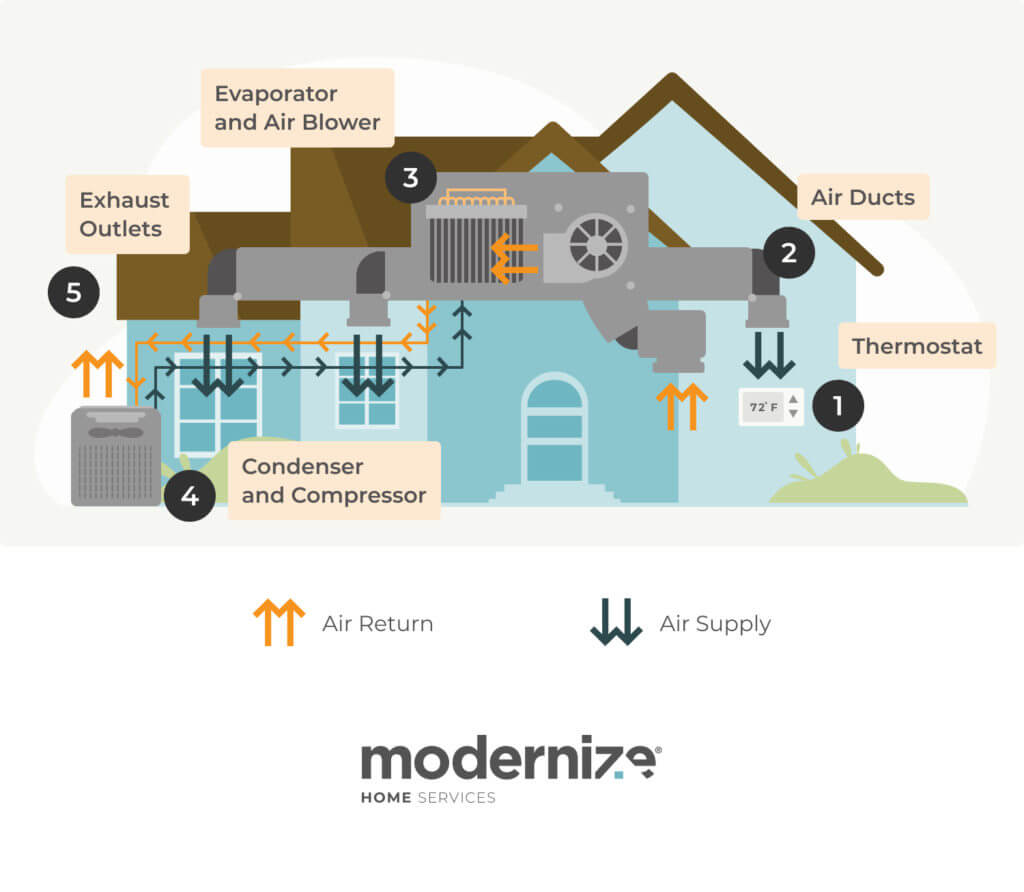
Many California homes, particularly older bungalows, craftsman houses, and mid-century ranches, weren’t built with ductwork. If that’s the case for you, you’ll need to choose between installing new ductwork for a traditional central system or going with a ductless mini-split.
- Central AC is generally the better choice when existing ductwork is already in place, when whole-home cooling is needed, and when resale value is a priority.
- Ductless mini-splits tend to make more sense for older homes without ducts, for homes where only certain rooms need cooling, or in mild coastal climates where a full central system may be more than what’s actually needed.
In many Bay Area and coastal Southern California homes, a well-placed two- or three-zone mini-split can provide excellent comfort at a fraction of the cost of running new ductwork.
How to Save on Central AC Installation in California
- Get Multiple Quotes: HVAC pricing varies widely. Comparing at least three contractors can save you $1,000 or more.
- Install in the Off-Season: Spring and fall installations often come with better pricing and faster scheduling than peak summer demand.
- Stack Rebates: Combine federal tax credits with utility rebates and state incentives for maximum savings, especially on heat pump systems.
- Upgrade Insulation First: Better attic and wall insulation can allow for a smaller, less expensive system while improving efficiency.
- Ask About Financing Options: Many HVAC contractors and utilities offer low- or zero-interest financing for qualifying installations.
Next Steps
Getting the right system starts with a professional load calculation. A proper Manual J assessment ensures you’re not overpaying for an oversized unit or undercooling with one that’s too small. Modernize can connect you with trusted California HVAC professionals so you can compare quotes and find the right system for your home and climate.