HVAC
Central AC Installation Cost in Texas
Average Cost: $3,200 – $9,500
On average, you’ll pay about $5,500 for central AC installation across Texas. Prices vary depending on your location within the state, the type of system you choose, and the size of your home. As a business based in Austin, we have a unique perspective on HVAC replacement costs. Read below for a breakdown of costs by city.
Find the best HVAC pros in your area.

The Modernize Mission
We help homeowners make confident decisions through our reliable, up-to-date, and unbiased information and average project costs. All of our content is thoroughly reviewed and fact-checked by our team of home improvement experts. Learn more about how we maintain these values.
Table of Contents
- How Much Does It Cost to Install Central Air Conditioning in Texas?
- Central Air Conditioning Installation Cost by Metro Area in Texas
- Central Air Conditioning Installation Cost by System Type
- Cost by Home Size
- Cost by SEER2 Efficiency Rating
- How to Save Money on Air Conditioner Installation in Texas
- Factors That Affect Central AC Installation Cost in Texas
- Central AC vs. Ductless Mini-Split: Which Is Right for Texas Homes?
- Next Steps
How Much Does It Cost to Install Central Air Conditioning in Texas?
The average cost to install a central air conditioning system in Texas is $5,500. Most homeowners spend between $3,200 and $9,500 depending on the size of the home, the type of system, and local labor rates. In larger homes or those requiring new ductwork, total costs can reach $18,000 or more.
- Basic Installation (existing ductwork): $2,800 to $5,500
- Standard Installation: $5,000 to $9,500
- Full System with New Ductwork: $10,000 to $18,000+
We’ll be upfront: Modernize is headquartered in Austin, so Texas is a market we know well. From our experience working with homeowners and contractors across the state, the numbers above reflect real-world pricing. But, where you live in Texas matters a lot, and we’ll break that down below.
Central Air Conditioning Installation Cost by Metro Area in Texas
Texas is a big state with a wide range of climates, labor markets, and housing. From what we’ve seen working with contractors across the state, pricing in a fast-growing city like Austin or Dallas looks very different from what you’d find in El Paso or the Panhandle.
| Metro Area | Basic Install | Standard Install | Full System + Ductwork |
|---|---|---|---|
| Austin | $3,200 to $6,000 | $6,000 to $11,000 | $11,500 to $19,000+ |
| Dallas / Fort Worth | $3,000 to $5,800 | $5,800 to $10,500 | $11,000 to $18,500+ |
| Houston | $3,000 to $5,800 | $5,800 to $10,500 | $11,000 to $18,500+ |
| San Antonio | $2,800 to $5,500 | $5,500 to $9,800 | $10,500 to $17,500+ |
| El Paso | $2,500 to $4,800 | $4,800 to $8,500 | $9,000 to $15,500+ |
| Corpus Christi | $2,600 to $5,000 | $5,000 to $9,000 | $9,500 to $16,000+ |
| Lubbock / Amarillo | $2,400 to $4,600 | $4,600 to $8,200 | $8,500 to $14,500+ |
Austin
As our home base, Austin is the market we know best. From our experience, it’s one of the priciest in the state right now. Labor costs have climbed steadily alongside the city’s explosive growth, and demand for HVAC services runs high year-round. Summers in Austin are brutal: triple-digit temperatures from June through September are the norm. Here’s a list of pre-vetted Austin contractors.
Dallas / Fort Worth
Dallas summers are long and relentlessly hot, which means HVAC contractors stay busy and scheduling during peak season can be a challenge. Find Dallas contractors.
Houston
Houston’s combination of extreme heat and extreme humidity makes it arguably the most demanding climate for AC systems in the entire country. Here’s a breakdown of AC costs in Houston. From our experience, Houston homeowners run their systems harder and replace them more frequently than in almost any other market. Find Houston contractors.
San Antonio
San Antonio has a strong, competitive HVAC contractor market and labor costs that are somewhat more moderate than Austin or Dallas. From what we’ve seen, San Antonio homeowners tend to get solid value relative to other major Texas cities. See your pre-vetted San Antonio contractors.


El Paso
El Paso’s climate is hot but notably drier than the rest of Texas, which changes the calculus on AC somewhat. Lower humidity means the heat feels more manageable at a given temperature, and evaporative cooling is still used in some older homes. Find El Paso contractors.
Corpus Christi
Corpus Christi sits on the Gulf Coast, which means heat, humidity, and salt air: a combination that’s hard on HVAC equipment and drives fairly consistent replacement demand. Homeowners here should factor in equipment corrosion over time, which can affect system lifespan and the long-term value of investing in higher-efficiency equipment. Find Corpus Christi contractors.
Lubbock / Amarillo
West Texas and the Panhandle are a different climate story than the rest of the state: still hot in summer, but drier and with cooler nights, and genuinely cold in winter. Labor costs in this region are the most affordable in Texas, and the contractor market is less crowded than in the major metros. Find Lubbock contractors.
Central Air Conditioning Installation Cost by System Type
The type of air conditioning system you choose is one of the biggest factors in total installation cost. Texas homeowners have several options depending on their home’s existing infrastructure, budget, and the specific demands of their local climate.
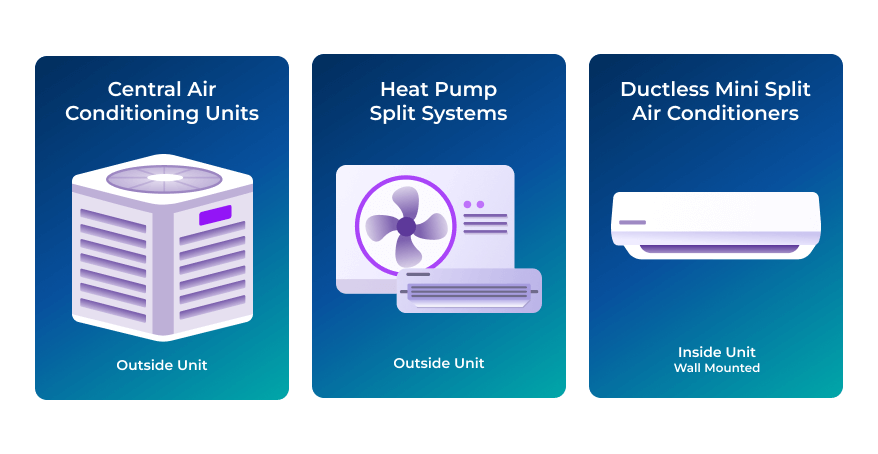
- Central Split System (most common): $3,200 to $9,500
- Central Split System + New Ductwork: $10,000 to $18,000+
- Heat Pump System: $5,000 to $13,000
- Ductless Mini-Split System: $3,000 to $10,000
- Package Unit System: $4,000 to $8,500
Cost by Home Size
The size of your home directly determines the capacity of the system required, which affects both equipment and labor costs.
- Small (Under 1,200 Square Feet): $2,800 to $5,800, typically requires a 1.5 to 2 ton unit
- Medium (1,200 to 2,000 Square Feet): $4,500 to $8,500, typically requires a 2.5 to 3 ton unit
- Large (2,000 to 3,000 Square Feet): $6,500 to $12,000, typically requires a 3.5 to 4 ton unit
- Very Large (3,000+ Square Feet): $10,000 to $18,000+, may require a 5 ton unit or dual systems
Cost by SEER2 Efficiency Rating
As of 2023, new AC systems installed in Texas must meet updated SEER2 (Seasonal Energy Efficiency Ratio) standards. Texas falls in the southern climate zone, which carries a higher minimum efficiency requirement than northern states — and from our experience, the upgrade to a mid- or high-efficiency system pays off faster in Texas than almost anywhere else in the country, given how long and hard the cooling season runs.
- Minimum Efficiency (14.3 SEER2): $3,000 to $6,000. Meets Texas’s minimum code requirement; lower upfront cost but higher long-term energy use — and in Texas, that adds up fast.
- Mid-Efficiency (16 to 18 SEER2): $5,000 to $9,500. The most popular choice among Texas homeowners we work with — a strong balance of upfront cost and monthly utility savings over the system’s lifespan.
- High-Efficiency (20+ SEER2): $8,500 to $15,000+. Higher upfront investment offset by significantly lower utility bills. In a market like Houston or Austin where AC runs six or more months a year, the payback period on a high-efficiency system is shorter than most homeowners expect.
How to Save Money on Air Conditioner Installation in Texas
- Oncor / AEP Texas Rebates: Oncor and AEP Texas offer rebates for qualifying high-efficiency central AC and heat pump installations in their respective service territories.
- Oncor WeatherizATION and Austin Energy: Austin Energy offers rebates for high-efficiency AC.
- Install in the Off-Season: Texas contractors are slammed from May through September. A spring installation (March–April) or fall installation (October–November) will typically get you better pricing and faster scheduling.
- Ask About Financing: There are plenty of financing options that can offset your initial costs, including utility-backed programs and contractor financing.
Factors That Affect Central AC Installation Cost in Texas
- Whether existing ductwork is present, accessible, and in good condition
- Home size and ceiling height
- System type and SEER2 efficiency rating
- Local labor rates, which vary significantly across Texas’s regions
- Permit and inspection fees, which vary by municipality
- Electrical panel upgrades, which are common in older Texas homes
- Attic insulation quality, critical in Texas, where attic temperatures can exceed 150°F in summer and drastically affect system performance
- AC brand and equipment tier
- Seasonal timing; peak-summer installations carry a premium in most Texas markets
Central AC vs. Ductless Mini-Split: Which Is Right for Texas Homes?
- Central AC is the right call for most Texas homes. Whole-home cooling is a necessity here, not a preference, and buyers in every major Texas market expect central air. If you have existing ductwork in reasonable condition, a central split system is almost always the most cost-effective path.
- Ductless mini-splits make more sense for older homes without ductwork where a full duct installation would be extremely disruptive, for additions or casitas not connected to the main system, or for specific rooms that run hotter than the rest of the house, a common issue in Texas homes with west-facing rooms or poorly insulated attics.
A qualified contractor can help you assess which approach makes sense for your specific home, budget, and goals.
Next Steps
Getting the right system starts with a professional load calculation. A proper Manual J assessment, something any reputable Texas HVAC contractor should perform before sizing a system, ensures you’re not overpaying for an oversized unit or struggling through a Texas summer with one that’s too small. From our experience, undersized systems are one of the most common and costly mistakes Texas homeowners make — especially in newer, larger homes where builders sometimes cut corners on system sizing. Modernize can connect you with trusted Texas HVAC professionals so you can compare quotes and find the right system for your home.
Looking for more Texas home project costs?