Water Filtration & Treatment Systems
How Much Does a Reverse Osmosis System Cost In 2026?
Average Cost: $1,000 – $4,000
The average cost to install a reverse osmosis water filtration system ranges from $1,000 to $4,000, with most homeowners spending around $2,500. These costs include both the system and the professional labor for installation. The type and size of the system, capacity, and number of filtration stages can significantly impact the project’s cost. Additional long-term costs like replacement filters, water testing, and regular maintenance should also be considered.
Find the best water treatment pros in your area.

The Modernize Mission
We help homeowners make confident decisions through our reliable, up-to-date, and unbiased information and average project costs. All of our content is thoroughly reviewed and fact-checked by our team of home improvement experts. Learn more about how we maintain these values.
Table of Contents
- How Much Does a Reverse Osmosis System Cost?
- Average Costs of Different Reverse Osmosis Systems
- What Is a Reverse Osmosis System?
- Factors Affecting the Cost of a Reverse Osmosis System
- Reverse Osmosis System Costs vs. Other Water Filtration Methods
- Additional Costs to Consider
- Tips for Saving Money on a Reverse Osmosis System
- Find a Reverse Osmosis System Installer
How Much Does a Reverse Osmosis System Cost?
The cost of a reverse osmosis (RO) system typically ranges from $150 to $6,000, depending on the system type and installation scope. Installing a whole-home reverse osmosis system offers numerous benefits, ensuring your family enjoys high-quality, clean water throughout the house. These advanced filtration systems remove contaminants, improve taste, and protect against impurities, providing long-term value and peace of mind.
The average cost for a whole-house reverse osmosis system is $1,000 to $4,000, with most homeowners paying around $2,500. For under-sink reverse osmosis systems, prices usually fall between $150 and $600, with an average cost of about $300. Professional installation typically adds $100 to $500, depending on plumbing complexity and system size.
Factors such as the number of filtration stages, membrane quality, system capacity, and optional features like booster pumps or UV lights all influence total cost.
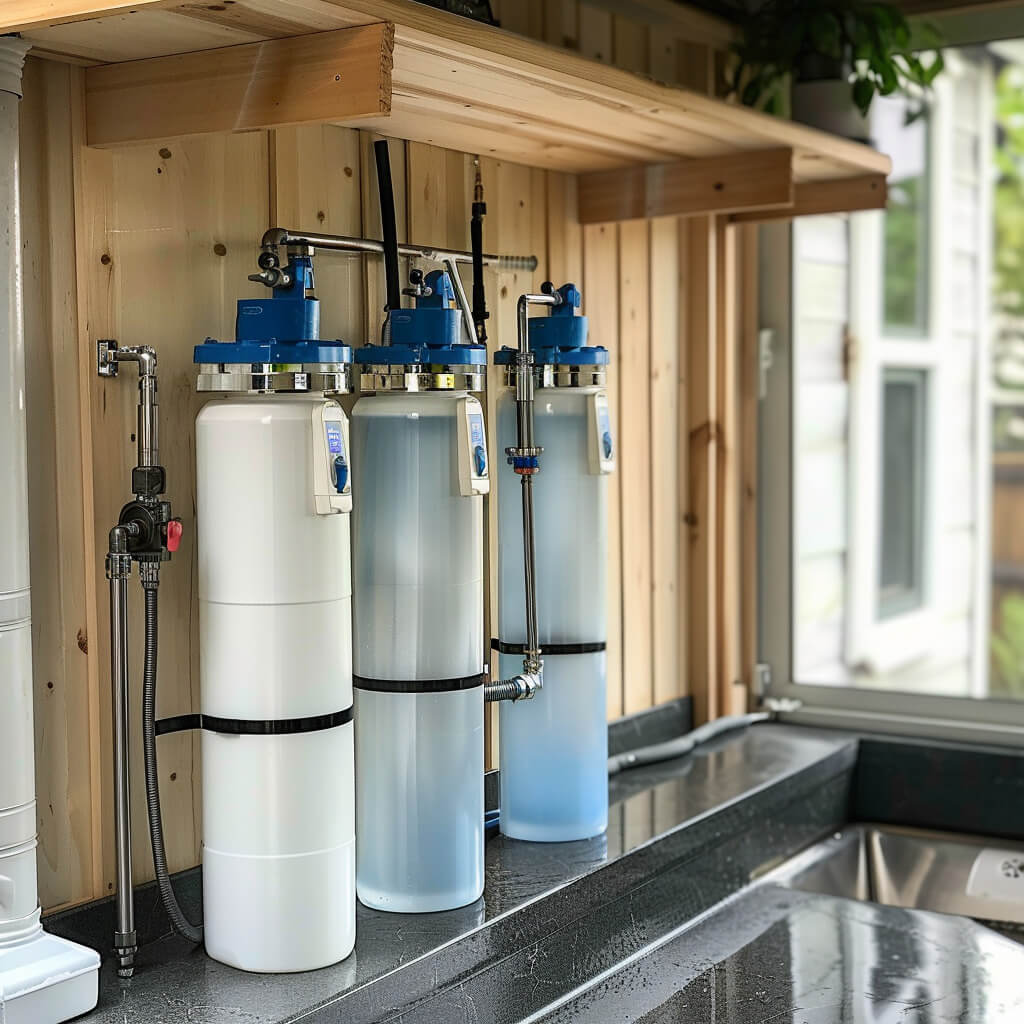
Reverse Osmosis Water Filtration Systems
Average Installation Cost
$1,000 – $4,000
Cost Breakdown
- Materials 88.9%
- Labor 11.1%
Average Costs of Different Reverse Osmosis Systems
There are multiple types of reverse osmosis systems, ranging from as low as $200 for a point-of-use system to $6,000 for a top-tier whole-home system. Here’s what you can expect to pay:
Countertop Reverse Osmosis Systems
Countertop reverse osmosis systems cost between $250 and $500 on average. These portable units require no installation, making them a budget-friendly option for renters or small households. Pricing depends on filtration stages, build quality, and overall durability.
Under-Sink Reverse Osmosis Systems
Under-sink reverse osmosis systems typically cost between $200 and $600. Installed beneath the kitchen sink, these systems provide reliable, high-quality drinking water. Costs vary based on filtration stages, daily output capacity, and optional features like booster pumps.
Tankless Reverse Osmosis Systems
Tankless reverse osmosis systems generally cost $350 to $600. These compact systems deliver filtered water on demand without a storage tank. Their higher price reflects advanced filtration technology and space-saving design, ideal for modern kitchens.
Whole Home Reverse Osmosis Systems
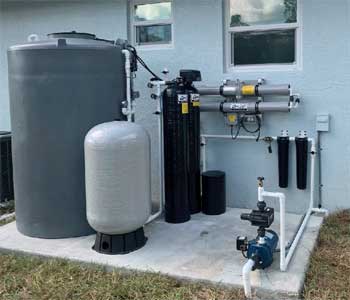
A whole-house reverse osmosis system costs between $1,000 and $6,000. These systems filter all water entering your home and are best for households with poor water quality or well water. Price varies based on system capacity, brand, installation complexity, and features like UV sterilization.
What Is a Reverse Osmosis System?
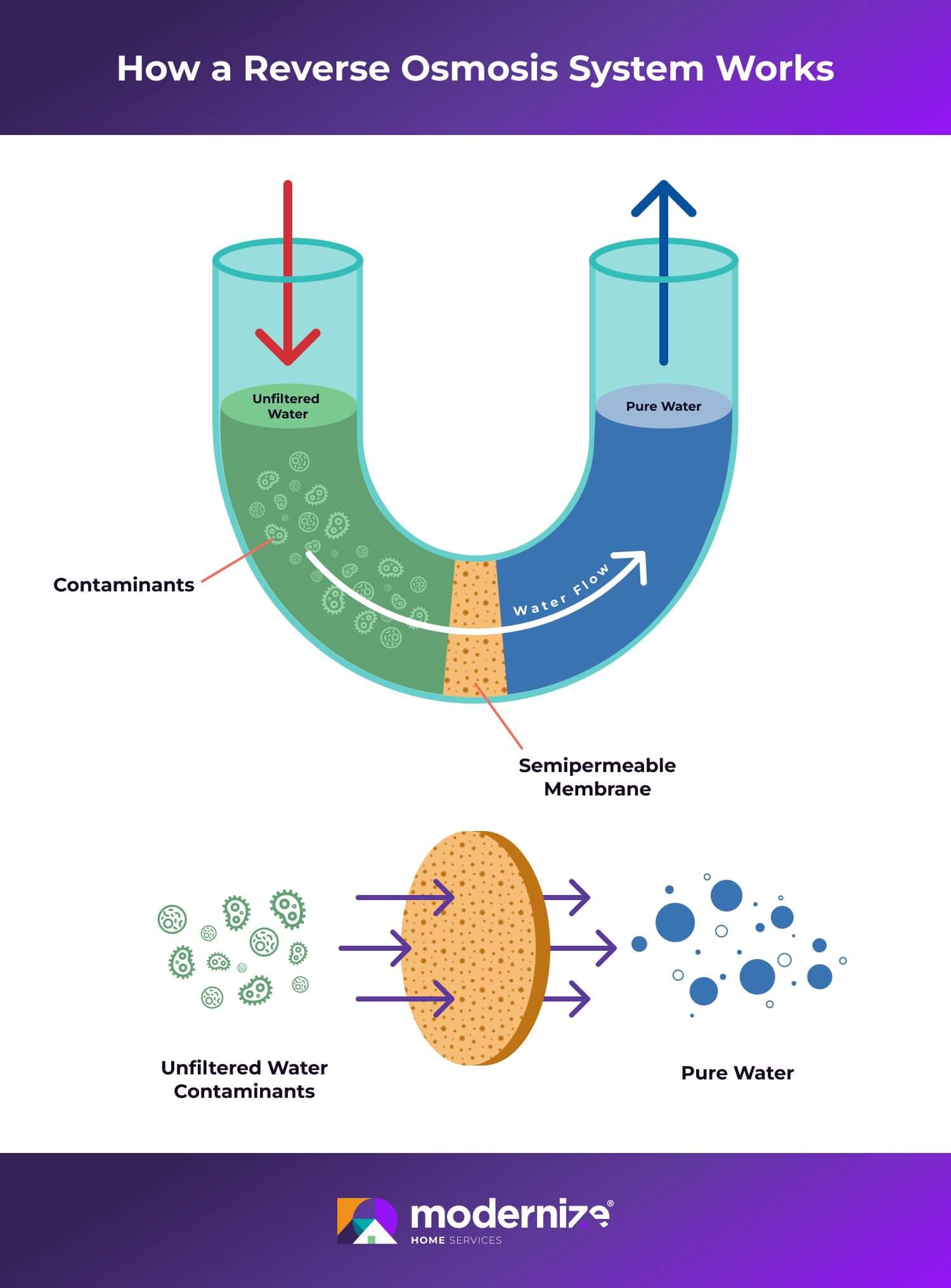
A reverse osmosis system is a type of water filtration system that removes contaminants from household water using pressure and a semipermeable membrane. Reverse osmosis systems are available as under-sink, countertop, and whole-house units, offering reliable contaminant removal and consistent water quality.
How Reverse Osmosis Works
Water is first pre-filtered to remove sediment and larger particles. It is then pushed through a semipermeable membrane that blocks contaminants while allowing clean water molecules to pass through. Purified water is collected for household use, while impurities are flushed away.
Here’s a quick look at that process:
Benefits of a Reverse Osmosis System
Reverse osmosis systems remove more contaminants than most filtration methods, including bacteria, viruses, chlorine, lead, pesticides, sulfates, and dissolved minerals.
- High level of filtration for the cost
- Better-tasting and odor-free water
- Reduced scale buildup in plumbing
- Longer lifespan for appliances
- Cleaner laundry
- Softer-feeling hair and skin
Related: Compare Different Types of Water Treatment Systems
Factors Affecting the Cost of a Reverse Osmosis System
Your home’s water quality plays a major role in determining which reverse osmosis system you need. Higher contaminant levels often require more filtration stages, increasing overall cost.
System Type and Features
Countertop and under-sink systems are the most affordable. Whole-home reverse osmosis systems and units with multiple filtration stages, UV lights, or ionization features cost more. Systems certified by the National Sanitation Foundation (NSF) under NSF/ANSI Standard 58 often carry higher prices due to verified performance.
Related: Best Reverse Osmosis System Brands of 2026
Size and Capacity
The amount of water you want to filter impacts system cost. Point-of-use systems are ideal for taste and odor issues, while well water or unsafe water conditions may require whole-house or light commercial systems with higher installation costs.
Installation Costs
Professional installation typically costs $300 to $500, depending on system complexity and local labor rates. Faucet and under-sink units are less expensive to install, while whole-house systems require more extensive plumbing work.
Maintenance and Replacement Parts
Annual maintenance costs average around $100 for filter and membrane replacement. Whole-house systems may require professional inspections, adding $100 to $200 per year.
Reverse Osmosis System Costs vs. Other Water Filtration Methods
Reverse osmosis systems are among the more expensive water filtration options, but they also remove the widest range of contaminants.
| Type of Water Filtration System | Average Cost |
|---|---|
| Reverse Osmosis | $1,000 to $4,000 |
| Well Water | $1,000 to $5,000 |
| Activated Carbon | $300 to $900 |
| Ionization | $1,000 to $2,000 |
| U/V Light | $500 to $1,500 |
| Water Softeners | $600 to $5,000 |
Reverse Osmosis Return on Investment
While reverse osmosis systems have higher upfront costs, they provide comprehensive filtration and may eliminate the need for multiple treatment systems in homes with unsafe water.
Environmental Impacts
Using a reverse osmosis system long-term can reduce bottled water consumption and plastic waste. Some systems produce wastewater during filtration, so point-of-use systems may be preferable for environmentally conscious households.
Additional Costs to Consider
- Additional Parts and Accessories: Tubing, fittings, and replacement housings may be required over time.
- Plumbing Costs: Homes needing plumbing repairs may incur additional labor expenses.
- Water Testing: Routine testing before and after installation helps ensure optimal system performance.
Tips for Saving Money on a Reverse Osmosis System
Although reverse osmosis systems have higher upfront costs, strategic choices can reduce your total investment.
DIY Installation
Installing basic countertop or under-sink systems yourself can save $300 to $500. Whole-house systems typically require professional installation.
Regular Maintenance
Routine cleaning and timely filter replacement extend system life and prevent costly repairs.
Research and Reviews
Customer reviews and third-party evaluations offer insight into system reliability, warranty support, and overall value.
Find a Reverse Osmosis System Installer
Ready to move forward? Use Modernize’s pro finder tool to receive competitive quotes from local installers, or explore our list of the Best Water Treatment Companies to compare trusted providers.