Water Filtration & Treatment Systems
Types of Water Softeners: Which System Is Right for Your Home?
On this page
- Standard water hardness scale
- Five different types of water softener systems
- Recommended water softener systems by type
Ready to stop fighting hard water? Connect with a local water treatment pro today.

The Modernize Mission
We help homeowners make confident decisions through our reliable, up-to-date, and unbiased information and average project costs. All of our content is thoroughly reviewed and fact-checked by our team of home improvement experts. Learn more about how we maintain these values.
Table of Contents
- Key Takeaways
- Do You Actually Have Hard Water?
- The 5 Types of Water Softeners, Explained
- Quick Comparison: Which Water Softener Type Is Right for You?
- How to Size Your Water Softener
- Recommended Brands by System Type
- What Does Water Softener Installation Involve?
- The Bottom Line
- Frequently Asked Questions About Water Softeners
Key Takeaways
- Hard water affects an estimated 85% of U.S. homes, according to the U.S. Geological Survey, but not every home needs the same fix.
- There are five main types of water softeners: salt-based ion exchange, salt-free (TAC) conditioners, dual-tank, magnetic/electronic descalers, and reverse osmosis systems.
- Salt-based ion exchange is the most effective option for moderate to very hard water (7+ GPG); salt-free conditioners work well for mild hardness or low-sodium households.
- Most homeowners spend $1,000–$3,000 for a unit plus professional installation.
- The right system depends on your water hardness level, household size, budget, and local regulations — not just what costs the least upfront.
Do You Actually Have Hard Water?
You’ve probably noticed the signs: white scale on your faucets, soap that won’t lather, spots on clean dishes, and shower glass that never quite looks clean. Hard water is behind all of it — and it’s one of the most common home maintenance problems in the country.
But before shopping for a softener, it helps to know exactly what you’re dealing with. Water hardness is measured in grains per gallon (GPG) — and what’s considered “hard” matters for which system you buy.
Here’s the standard hardness scale used by the Water Quality Association (WQA):
| Hardness Level | GPG | PPM | What You Might Notice |
|---|---|---|---|
| Soft | 0–3.5 | 0–60 | No visible issues |
| Moderately hard | 3.5–7 | 60–120 | Mild soap residue, occasional spots |
| Hard | 7–10.5 | 120–180 | Scale buildup, reduced lather, dry skin |
| Very hard | 10.5–14.5 | 180–250 | Significant scale, appliance damage |
| Extremely hard | 14.5+ | 250+ | Rapid scale, clogging risk, high energy costs |
You can test your water hardness yourself with an inexpensive kit from a hardware store, or request a free in-home water test from many local plumbers and water treatment companies. Municipal water customers can also check their annual Consumer Confidence Report (CCR), which utilities are required to publish.
Hard water isn’t a health risk — the World Health Organization confirms that. But it does cost you money. Scale buildup forces water heaters to work harder, cutting efficiency by up to 29%, according to the Water Quality Research Foundation (WQRF). The same buildup shortens the lifespan of dishwashers, washing machines, and other appliances. That’s why the WQRF estimates that most homeowners recoup their softener investment within 1.5–3 years through energy, soap, and appliance savings.
Where in the U.S. is hard water most common?
Geography is your first clue. These are the five states with the hardest water in the country, according to U.S. Geological Survey data and state environmental reports:
- Arizona (200–350+ PPM; 11.7–20+ GPG)
- Nevada (200–350+ PPM; 11.7–20+ GPG)
- Texas (150–350+ PPM; 8.8–20+ GPG)
- New Mexico (150–350+ PPM; 8.8–20+ GPG)
- Indiana (150–350 PPM; 8.8–20 GPG)
If you’re on well water, the calculus is a little different; check out our guide to well water systems for more on what to test for before you buy.
The 5 Types of Water Softeners, Explained
1. Salt-based ion exchange softeners
The most effective option for true hard water removal. Recommended for homes with hardness above 7 GPG.
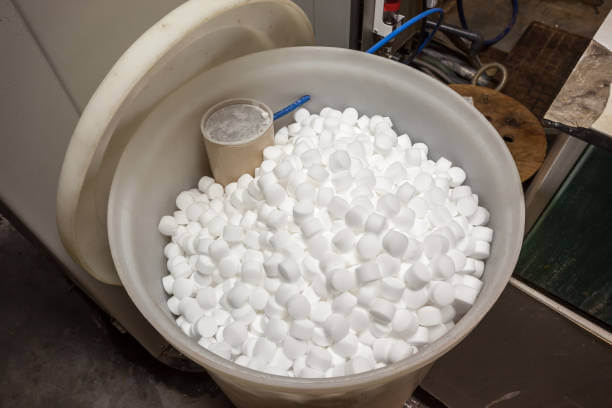
Salt-based ion exchange softeners are the gold standard of water treatment. They work by passing hard water through a resin tank loaded with sodium-coated beads. Calcium and magnesium ions (the minerals responsible for hardness) bind to the beads, and sodium ions are released in their place. The result is genuinely softened water throughout your entire home.
When the resin becomes saturated with calcium and magnesium, the system automatically regenerates: a brine solution (salt dissolved in water) flushes the resin, pushing the hardness minerals down the drain and reloading the beads with sodium.
Benefits you’ll see
- Water heater efficiency improves immediately, sometimes visibly within a few weeks
- Soap and shampoo lather significantly better
- Scale on fixtures, showerheads, and appliances stops accumulating
- Laundry comes out softer, and you’ll typically use 30%–50% less detergent
The tradeoffs
- Ongoing cost: you’ll need to add salt every four to eight weeks (roughly $5–$15 per bag; most households use 40–100 lbs. per month)
- Adds a small amount of sodium to your water — typically 30 mg per 8-ounce glass at 10 GPG
- Salt discharge can affect wastewater; some California cities and counties restrict or ban salt-based systems
- Requires a drain connection and electrical outlet for the control head
- Single-tank systems go offline briefly during regeneration (usually overnight)
Who it’s best for
Homeowners in hard-to-extremely hard water regions, households with iron in their water (fine mesh resin variant), and anyone who wants the most complete, verifiable softening available. Browse our roundup of the best water softener brands to compare top-rated options.
Typical cost: $400–$3,000 for the unit; $1,000–$3,500 installed
2. Salt-free water conditioners (template-assisted crystallization)
A lower-maintenance alternative for mild to moderately hard water. Does not remove hardness minerals but changes their behavior.
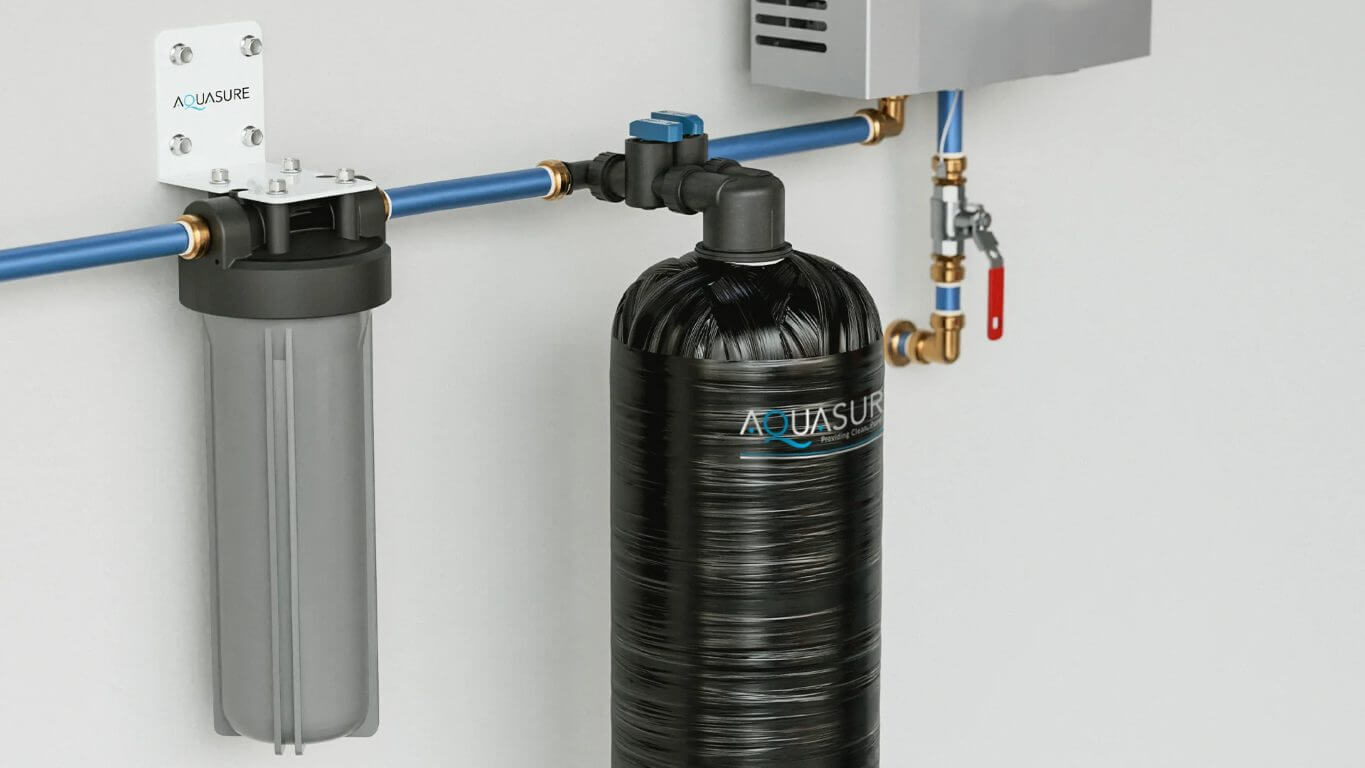
Salt-free systems are often marketed as “water softeners,” but they’re technically water conditioners. The distinction matters. Instead of removing calcium and magnesium, they use a process called template-assisted crystallization (TAC) to convert those minerals into microscopic crystals that can’t adhere to pipe walls or appliance surfaces. The minerals stay in your water — they just stop forming scale.
This is a legitimate and effective technology for scale prevention in the right conditions. It works best when water hardness is below about 10–12 GPG. In very hard water regions (above 15 GPG), most water treatment professionals agree that TAC systems struggle to keep up.
Pros
- No salt required: Zero chemicals needed — ever.
- Zero waste water: No regeneration cycle means nothing wasted.
- Low maintenance: Media typically lasts three to five years.
- No electricity required: Works without power or a drain connection.
- Renter-friendly: Easy to install without major plumbing work.
Cons
- Minerals stay in: Water isn't technically 'soft' — hardness minerals remain.
- Less effective above 12–15 GPG: May not keep up in very hard water regions.
- No soft-water feel: You won't get the slick, slippery feel of softened water.
- Appliance protection: May not protect appliances as thoroughly in very hard water.
- No sodium reduction: Minerals stay in drinking water.
Who it’s best for
Households with moderately hard water (under 10 GPG), renters or homeowners who can’t install a salt-based system, anyone on a low-sodium diet, and homes in regions where salt discharge is restricted. See how salt-free conditioning stacks up in our water softener vs. water conditioner guide.
Typical cost: $500–$4,000 for the unit; installed totals vary based on plumbing access.
3. Dual-tank (twin-tank) softeners
The best choice for large families or households that can’t tolerate any downtime in soft water.
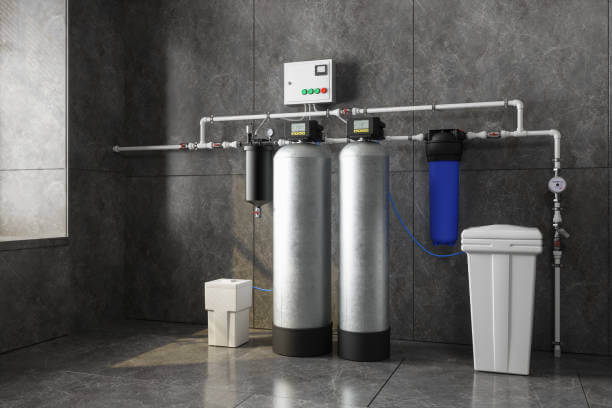
Standard single-tank softeners regenerate periodically — usually overnight — and you temporarily lose soft water during that cycle. For most families, this isn’t a problem. For large households, shift workers, or homes with unusually high water demand, it can be frustrating.
Dual-tank systems solve this by alternating between two resin tanks. While one tank is regenerating, the other is actively softening. The result is uninterrupted soft water, 24 hours a day.
The tradeoffs are space and cost: dual-tank systems are larger (you’ll need room in your utility area or garage) and cost significantly more upfront. They’re also typically dealer-installed rather than DIY-friendly.
Who it’s best for
Households of five or more people, homes with very high water usage, hospitality properties, and households where someone works overnight or uses a lot of water at irregular hours.
Typical cost: $1,500–$3,000 for the unit; $2,500–$6,000 installed
4. Magnetic and electronic descalers
A low-cost, low-commitment option — but with limited evidence of effectiveness for true hard water.
Magnetic and electronic descalers attach to your existing pipes and use a magnetic or electrical field to alter the behavior of minerals in your water. The idea is that minerals pass through in a changed state and are less likely to form scale.
These are among the most affordable options upfront ($200–$600) and require no salt, no drain, and no plumbing modifications. That makes them appealing — especially for renters or homeowners who want to avoid a major installation.
The catch: independent research on their effectiveness is mixed at best. Most water treatment professionals, including those certified by the WQA, are skeptical about whether magnetic descalers meaningfully reduce scale in moderate or hard water conditions. They may offer some benefit as a supplemental measure in areas with mild hardness, but they shouldn’t be treated as a replacement for a proper softening system in hard water regions.
Who it’s best for
Light-duty use, very mild hardness (under 3.5 GPG), supplemental scale reduction, or as a stopgap measure while you evaluate a full system.
Typical cost: $200–$600.
5. Reverse osmosis systems
The most thorough water purification option — but typically limited to a single point of use.
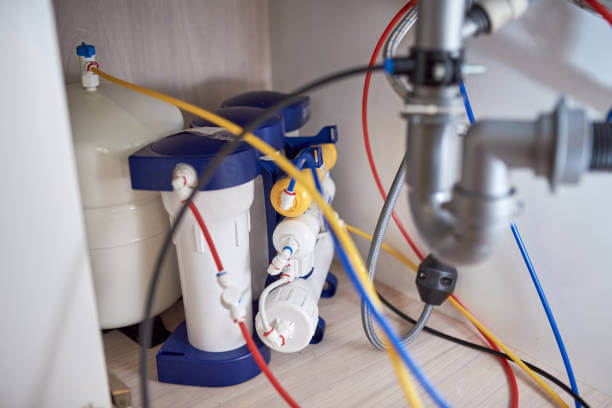
Reverse osmosis (RO) systems push water through a semipermeable membrane that removes a wide range of contaminants, including hardness minerals, chlorine, heavy metals, nitrates, and more. The result is exceptionally pure water.
The limitation: most residential RO systems are installed under a single kitchen sink (or at the refrigerator) and treat only drinking and cooking water. They’re not designed for whole-home water softening. Running whole-home water through an RO system is technically possible but expensive and impractical for most homeowners.
Where RO really shines is as a companion to a salt-based softener: the softener handles the whole-home hardness problem, while the RO system provides pure, great-tasting drinking water at the tap — and removes the trace sodium that softening adds. See our picks for the best reverse osmosis system brands if you’re considering this combination.
Who it’s best for
Homeowners who want the purest possible drinking water, households pairing it with a whole-home softener, or anyone addressing multiple water quality concerns (hardness, chlorine, and heavy metals) simultaneously.
Typical cost: $150–$600 for a point-of-use unit; $1,000–$11,000 for whole-home RO configurations
Quick Comparison: Which Water Softener Type Is Right for You?
| Type | Removes Hardness? | Best For | Hardness Range | Typical Installed Cost |
|---|---|---|---|---|
| Salt-based ion exchange | Yes — fully | Most homes with hard water | 7–25+ GPG | $1,000–$3,500 |
| Salt-free conditioner (TAC) | No — prevents scale | Mild hardness, low-sodium households | Under 10–12 GPG | $600–$2,500 |
| Dual-tank softener | Yes — fully | Large families, high usage | 7–25+ GPG | $2,500–$6,000 |
| Magnetic/electronic descaler | Debated | Very mild hardness, supplemental use | Under 3.5 GPG | $200–$600 |
| Reverse osmosis | Yes — at point of use | Drinking water purity, pairing with softener | Any | $150–$11,000 |
How to Size Your Water Softener
Buying the wrong size is one of the most common mistakes homeowners make. Too small, and the system regenerates too frequently — burning through salt and water faster than necessary. Too large, and you’re paying for capacity you’ll never use.
Here’s the sizing formula water treatment professionals use:
Daily grain requirement = (number of people) × (75 gallons per person) × (GPG hardness)
For a family of four with 12 GPG hardness: 4 × 75 × 12 = 3,600 grains per day.
Multiply that by the number of days between regeneration cycles (seven to 10 days is typical for efficiency): 3,600 × 7 = 25,200 grains minimum capacity.
Most four-person households in moderately hard water regions need a system rated for 24,000–40,000 grains. If you have iron in your well water, add additional capacity — iron competes with hardness minerals for resin space.
Common capacity ranges by household size:
- One to two people, up to 10 GPG: 16,000–24,000 grains
- Three to four people, 10–20 GPG: 32,000–48,000 grains
- Five+ people or 20+ GPG: 64,000+ grains (consider dual-tank)
Recommended Brands by System Type
The water softener market includes a wide range of options, from DIY-friendly retail systems to professionally installed, dealer-serviced units. Here’s an honest look at the major players by category.
Best for professional installation and full-service support
Culligan has been in the water treatment business for over 85 years and operates through a dealer network in all 50 states. Their Aquasential Smart HE softener is Wi-Fi-enabled and adjusts salt and water use based on actual consumption — not a preset schedule. Culligan’s in-home water testing and white-glove installation make it a strong option for homeowners who want expert guidance. Installed costs typically run $1,800–$6,500. Read Modernize’s full Culligan review for details.
Leaf Home Water Solutions offers professionally installed systems with a focus on custom configurations — useful if you’re dealing with a combination of hardness and other water quality concerns (iron, bacteria, and chlorine). Their pricing runs $1,500–$4,000 for most whole-home setups.
Kinetico uses a non-electric, twin-tank design that delivers continuous soft water without electricity. Because the system is demand-driven (it regenerates based on actual water use, not a timer), it tends to be efficient in salt and water consumption. Kinetico requires dealer installation and service, and costs typically exceed other professional options — but the no-power design appeals to homeowners in areas with frequent outages or those who want a simpler system architecture.
Best for DIY or retail purchase
Fleck 5600SXT is one of the most widely recommended residential valves among water treatment professionals. The control valve is serviceable, replacement parts are widely available, and it supports meter-based (on-demand) regeneration — meaning it only regenerates when it needs to, not on a fixed schedule. It’s a strong choice for handy homeowners who want to buy the components themselves and hire a plumber for installation. Retail pricing runs $400–$900 for the unit.
GE Appliances and Whirlpool offer widely available mid-range systems through major retailers. They’re well-suited for first-time buyers who want straightforward controls, reasonable performance, and broad availability of replacement parts. Best for homes with moderate hardness (7–15 GPG) and households of two to four people.
Aquasure is a cost-effective option available through Home Depot and online. Their Fine Mesh (FM) models are specifically designed to handle clear-water iron in addition to hardness — a common combination for well water homeowners.
Best salt-free option
SpringWell FutureSoft and Aquasana EQ-1000 are the two most-cited salt-free conditioner systems in the category. SpringWell uses TAC media with a whole-home flow rate that works for most households. Aquasana combines salt-free conditioning with carbon filtration, making it a solid choice for city water homeowners who want both scale prevention and chlorine reduction. Neither removes hardness minerals — if you’re in a very hard water region, confirm your GPG before committing to either.
What Does Water Softener Installation Involve?
Most salt-based softeners are installed at the point where your water supply enters the home; typically near the water meter in a basement, garage, or utility room. The installer taps into the main supply line before it branches to your water heater and fixtures.
A standard installation includes:
- Cutting into the supply line and adding bypass valves (so you can take the softener offline for maintenance)
- Connecting the brine (salt) tank and resin tank
- Running a drain line for regeneration waste
- Connecting to a nearby electrical outlet for the control head (salt-based systems only)
- Programming the control head to your hardness level and household size
Most installations take two to four hours. Some homes need additional plumbing work (e.g., rerouting pipes, adding a drain connection, or running an electrical line), which can add $200–$800 to the total.
Jeff Botelho, a Massachusetts-licensed journeyman plumber and expert reviewer for HomeAdvisor, recommends this:
“Whether you decide to DIY your softener project or hire a pro, it’s important to follow up the installation with further water testing to ensure that your water softness level is correct. Many times, homeowners skip this step and end up using too much sodium or potassium, which can be quite costly.”
Should you DIY or hire a pro?
Salt-free conditioners and some compact salt-based units are genuinely DIY-friendly if you’re comfortable with basic plumbing. For most whole-home salt-based systems — especially if you need plumbing modifications — professional installation ensures your warranty stays valid and the system is calibrated correctly for your water. Wondering whether a softener or filter is the right first step? Our softener vs. filter guide breaks down the difference.
Get matched with a water treatment professional in your area — free, no obligation.
The Bottom Line
Hard water is one of those problems that’s easy to ignore until it starts costing you — in appliance repairs, energy bills, and plumbing maintenance. The right water softener pays for itself, protects your home, and makes daily tasks noticeably easier.
Here’s a quick decision framework before you start getting quotes:
- Water hardness above 7 GPG? A salt-based ion exchange system is usually the best choice.
- Mild hardness or low-sodium household? A salt-free TAC conditioner is worth considering.
- Large family or 24/7 water demand? Look at dual-tank systems.
- Renter or looking for minimal commitment? A salt-free conditioner or magnetic descaler is low-barrier to install.
- Want the purest drinking water possible? Pair any whole-home softener with an under-sink reverse osmosis filter.
Whatever direction you go, start with a water test. Knowing your actual GPG number takes the guesswork out of every decision that follows.
Sources: U.S. Geological Survey (USGS) Water Hardness Data; Water Quality Association (WQA) Consumer Insights Report; Water Quality Research Foundation (WQRF); California Water Boards; Minnesota Department of Health, Home Water Softening FAQ