Water Filtration & Treatment Systems
How Much Does It Cost to Install a Water Filtration System in 2026?
Average Cost: $850–$5,400 (whole-house, installed)
A whole-house water filtration system costs $850 to $5,400 installed, including the unit and labor. Most homeowners pay $1,129 to $3,540, and the average is about $2,270. If you only want better drinking water, an under-sink filter costs $170 to $580 installed. Plan on $50 to $300 a year for replacement filters and upkeep.
Find the best water treatment pros in your area.

The Modernize Mission
We help homeowners make confident decisions through our reliable, up-to-date, and unbiased information and average project costs. All of our content is thoroughly reviewed and fact-checked by our team of home improvement experts. Learn more about how we maintain these values.
Table of Contents
- How Much Does a Water Filtration System Cost?
- What Is a Water Filtration System?
- Benefits of Water Filtration Systems
- Types and Costs of Residential Water Filtration Systems
- Average Costs of Different Water Filtration Systems
- Factors Affecting the Cost of a Water Filtration System
- Water Filtration System Installation Costs
- Ongoing Costs of Water Filtration Systems
- Additional Water Filtration Costs to Consider
- Cost Comparisons and Return on Investment
- Tips for Saving Money on a Water Filtration System
- FAQs About Water Filtration Systems
- Find a Water Filtration System Installer
- Sources
How Much Does a Water Filtration System Cost?
A whole-house water filtration system costs $850 to $5,400 installed. Most of the difference comes from how many treatment stages you add. A basic carbon and sediment system sits at the low end. Adding UV light and a water softener moves you up, and whole-house reverse osmosis (RO) tops the range. Some homeowners pay as little as $200 or as much as $6,000, depending on the system.
| Type of Water Filtration System | Installed Cost |
|---|---|
| Whole-house carbon, mineral, and sediment filters | $850–$1,400 |
| Whole-house carbon, mineral, sediment, and UV filters | $1,850–$2,900 |
| Whole-house carbon, mineral, sediment, UV, and water softener | $2,650–$5,400 |
| Whole-house reverse osmosis | $4,800–$8,000 |
| Well water filtration | $800–$4,000 |
| Under-sink filter | $170–$580 |
Start with a water test. Pay for extra stages only if your results call for them, because filtering contaminants that aren’t in your water is the easiest way to overspend. If you only want better drinking and cooking water, an under-sink filter does the job for a fraction of the price.
What Is a Water Filtration System?
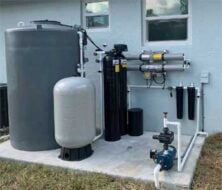
A water filtration system removes unwanted contaminants from the water you use at home. Point-of-use systems treat water at one spot, like an under-sink filter or a faucet-mounted unit. Whole-house systems treat all the water coming into your home, and installers usually place them near your main water shut-off valve. This guide focuses on whole-house systems.
How whole-home filtration works
The steps and filter types vary by system (we’ll cover those below), but the idea stays the same. Water enters your home, passes through one or more filters, and flows on to your faucets, showers, and appliances. Here’s a quick look at that process:
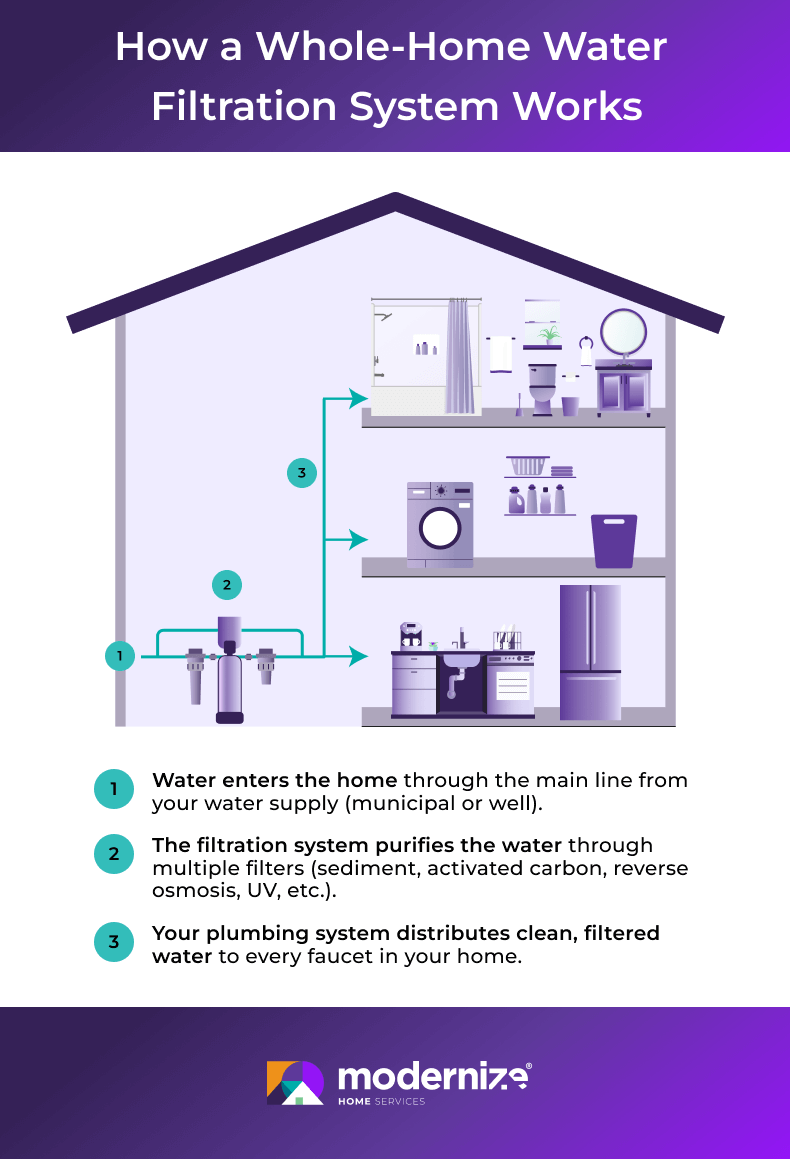
Filtering and softening are different jobs. A filter removes contaminants, and a softener treats hard water. Many homes use both.
Benefits of Water Filtration Systems
Safer, better-tasting water is the main reason homeowners install a whole-house system. Here’s what you can expect:
- Better-tasting, better-smelling tap water
- Fewer contaminants, such as lead, other heavy metals, and sediment
- Filtered water at every tap, shower, and appliance
- Less sediment moving through your plumbing
Some benefits you may have heard about, like softer skin and hair or less scale buildup, come from water softeners rather than filters. If hard water is your main problem, a softener is the system to price.
Related: Not sure you need one? Read about the signs you need water treatment.
Types and Costs of Residential Water Filtration Systems
Each type of water filtration system features a type of water treatment technology that removes or neutralizes specific contaminants, including chemicals, lead, dust, particles, minerals, and bacteria.
The table below shows broad national ranges for each method. Some methods cover a wide range because they include everything from a single under-sink unit to a whole-house setup. The sections after the table give installed costs in more detail.
| Type of Water Filtration System | Average Cost |
|---|---|
| Reverse Osmosis (under sink) | $300 to $950 |
| Reverse Osmosis (whole home) | $4,800 to $8,000 |
| Well Water | $800 to $4,000 |
| Activated Carbon | $180 to $1,400 |
| Ionization | $400 to $1,900 |
| U/V Light | $350 to $1,500 |
| Water Softeners | $800 to $2,500 |
Reverse osmosis
RO forces pre-filtered water through a semipermeable membrane that traps contaminants while letting water molecules pass through. It removes the widest range of dissolved contaminants, but it also produces the most wastewater. An under-sink RO system costs $300 to $950 installed. A whole-house RO system costs $4,800 to $8,000 installed.
Average Cost: $300–$950 (under-sink), $4,800–$8,000 (whole-house)
Well water systems
Well water quality varies by location, so these systems often combine several stages, such as activated carbon, UV, RO, particle filters, and softeners. Well water also tends to need more treatment than city water. A chemical injector, which adds chlorine or hydrogen peroxide, treats iron, bacteria, and hydrogen sulfide and costs $500 to $1,500 installed.
Average Cost: $800–$4,000
Activated carbon filters
Activated carbon filters absorb chlorine, pesticides, organic chemicals, and the compounds that cause bad taste and odors. They improve your water’s taste and overall safety, but they don’t remove bacteria or other microorganisms. An under-sink carbon system costs $180 to $550 installed. A whole-house system with carbon, mineral, and sediment filters costs $850 to $1,400 installed.
Average Cost: $180–$1,400
Ionization
Water ionizers use electrolysis to make alkaline water for drinking and acidic water for cleaning. Most are countertop units that you can install yourself, and they need an electrical outlet nearby.
Average Cost: $400–$1,900
UV purification
Ultraviolet light is used to kill harmful bacteria before water enters your home’s plumbing. U/V filtration only removes bacteria and microorganisms, so it is usually installed with another filtration system that treats chemicals, minerals, and other contaminants.
Average Cost: $350–$1,500
Water softeners
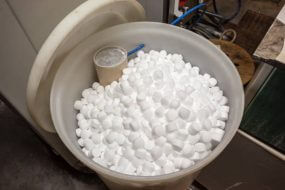
These systems treat hard water by removing excess minerals. Water softeners are available using various methods and are often installed alongside another filtration system. Expect to spend $10 to $20 a month on salt, and most softeners last 10 to 15 years.
Average Cost: $800–$2,500
Learn about the difference between water softeners and water filters in our guide.
Water distillers
A water distiller boils water and condenses the steam, which leaves bacteria, heavy metals, and most chemicals behind. A distiller costs $1,300 to $3,600 installed for drinking water through your kitchen pipes, and it purifies four to 12 gallons per day. Countertop models cost $100 to $350 and are easy to install yourself.
Average Cost: $1,300–$3,600 (installed)
Average Costs of Different Water Filtration Systems
Your cost depends mostly on the type of system, the filtration method, and the number of stages. A simple point-of-use filter on a faucet or under a sink is the most budget-friendly. RO systems and well water treatments cost more. The table below groups systems into tiers, and the ranges overlap.
| System Quality | Types of Filtration Systems | Average Cost |
|---|---|---|
| Basic Systems | Faucet, under-sink, single carbon filter | $50 – $500 |
| Mid-Range Systems | Activated carbon filters, U/V, Ionization | $600 – $1,500 |
| High-End Systems | Reverse osmosis, well water, water softener | $900 – $8,000 |
Factors Affecting the Cost of a Water Filtration System
Every household’s costs are different. Your water quality and how much water you use drive most of the price.
Type of filtration system
The type of system usually has the biggest impact on cost. A simple carbon filter costs less than an RO or UV system. Systems designed for lead removal or with multiple filtration steps cost the most.
Water condition
Your water quality determines which filtration you need to remove specific contaminants. Well water, or any water that doesn’t come from a municipal treatment facility, often needs more specific and more expensive filtration. A comprehensive water test shows what’s actually in your water.
Number of filtration stages
More stages generally mean a larger, more complex system, and a higher price. That isn’t always true across brands, though. A four-stage system from one company can cost less than a three-stage system from another.
Brand and quality
Entry-level systems cost $750 to $3,000. Higher-quality units cost $4,000 to $8,000, and they often come with better warranties and customer service.
System size and capacity
Your household’s water use sets the capacity and flow rate you need. Larger systems with higher flow rates cost more. Installers size systems based on your home’s peak water flow, measured in gallons per minute. Some manufacturers also offer a flow rate calculator.
Certification
The National Sanitation Foundation (NSF) rates filters by what they remove. NSF/ANSI 42 covers chlorine, taste, and odor. NSF/ANSI 53 covers contaminants with health effects, such as lead. NSF/ANSI 58 covers RO systems, and NSF/ANSI 401 covers emerging contaminants such as certain pharmaceuticals. Filters certified for more contaminants cost more than a basic chlorine filter. Check the label before you buy, and learn more in NSF’s guide to water treatment standards.
Installation location
Installers usually put whole-house systems near the main water shut-off, often in a basement. If that spot is tight or hard to reach, such as an attic or a crawl space, expect extra labor costs.
Water Filtration System Installation Costs
Labor costs $200 to $600 for a whole-house system, and most homeowners pay $300 to $500. Under-sink filters cost $120 to $330 to install. Plumbers typically charge $45 to $200 per hour, and complex jobs take longer. A pro can usually finish a whole-house system in one day, though multistage systems take more time.
- Whole-house: $200–$600 (labor)
- Under-sink: $120–$330 (labor)
Where to install a whole-house filter
Install the filter next to your main water shut-off valve, before the line splits into branches. Basements, garages, and utility closets usually work best. For best results, select a professional water treatment company with experience installing your preferred system.
DIY vs. hiring a pro
Faucet and under-sink filters are DIY-friendly, and doing the work yourself saves $120 to $330 in labor. Whole-house systems are a different job. You have to shut off your main water supply and connect to the main line, and a mistake can cause leaks and water damage. Hire a pro for these. Also check with your manufacturer, since some require professional installation to keep your warranty.
Ongoing Costs of Water Filtration Systems
Budget $50 to $300 a year for filters, inspections, and repairs. Most whole-house filters need replacing about once a year, and some need it more often. With regular care, a whole-house system lasts 10 to 20 years.
| Ongoing Cost | Price |
|---|---|
| Carbon, sediment, or iron filter (whole-house) | $15–$65 each |
| RO filter (whole-house) | $150–$250 each |
| RO filter (under-sink) | $20–$100 each |
| Alkaline filter | $20–$60 |
| UV lamp replacement | $20–$100 |
| Technician labor to change filters | $65–$180 |
| Repairs | $50–$800 |
These are material prices unless noted. Costs rise with the number of filters in your system, your local water quality, and how much water you use.
Don’t forget to include ongoing maintenance costs. Schedule annual water testing and a professional inspection to keep your filtration system in good working order.
Additional Water Filtration Costs to Consider
Several extra costs can come with a water filtration system.
- Water testing: A DIY kit starts around $30, and laboratory testing costs $100 to $300. Test before you buy.
- Permits: Plumbing permits cost $30 to $500 where they’re required. Check with your local building department.
- Drain connection: Systems that discharge wastewater need a drain, and a new drain connection costs $300 to $800.
- Electrical work: Many whole-house systems need an outlet within 10 to 15 feet of the tank, and a new outlet costs $150 to $350.
- Pipe extensions: Connections that run 25 feet or more cost $150 to $850.
- Plumbing repairs: If your home needs plumbing repairs, expect to make them before the filtration system goes in.
- Drywall repair: Patching a hole made for water lines costs $100 to $400.
- Old system removal: Hauling away an existing system costs $40 to $300, depending on its size.
Cost Comparisons and Return on Investment
A filtration system costs more up front than bottled water, but the gap can close over time. Here’s our estimate of the 10-year cost, which adds the installed price to 10 years of filters and upkeep:
| System | Installed Cost | Yearly Upkeep | Estimated 10-Year Cost |
|---|---|---|---|
| Under-sink filter | $170–$580 | $20–$100 | $370–$1,580 |
| Whole-house system | $850–$5,400 | $50–$300 | $1,350–$8,400 |
That works out to roughly $3 to $13 a month for an under-sink filter and $11 to $70 a month for a whole-house system. Compare those numbers with what your household spends on bottled water today. If drinking water is your only goal, an under-sink filter costs far less.
A whole-house system can also help when you sell. Buyers tend to value safe water, especially in areas with known contamination or hard water, so a recently installed system can be a selling point. That’s most likely if your water comes from a well or has quality problems.
Tips for Saving Money on a Water Filtration System
A whole-house system can be a big expense. Here are a few ways to lower your upfront and long-term costs.
Test your water first
A comprehensive water test shows which contaminants you actually have. You’ll avoid paying to filter things that aren’t in your water.
Match the system to your goal
If you only need better drinking water, an under-sink filter costs $170 to $580 installed. A whole-house system costs $850 to $5,400. Our roundup of the best water filters can help you compare options.
Get at least three quotes
Installation prices vary by company. Ask for itemized quotes that cover the same equipment and work so you can compare them fairly.
Install simple systems yourself
Doing a faucet or under-sink install yourself saves $120 to $330 in labor. Leave whole-house systems to a pro.
Look for rebates
Some cities and utilities offer rebates or incentives for water filtering or efficient equipment. Check with yours before you buy.
Keep up with maintenance
On-schedule filter replacement, inspections, and water testing help your system last longer and reduce expensive repairs or early replacement.
Research brands and reviews
When researching water filtration system brands, read company reviews from recent customers and on the Better Business Bureau website. Compare costs, performance, and warranty coverage so you get years of worry-free operation.
FAQs About Water Filtration Systems
Find a Water Filtration System Installer
Because most whole-house water filtration systems are installed along your home’s piping, an experienced plumber is recommended. For water filtration installation experts in your area, use Modernize’s pro finder tool for personalized quotes.