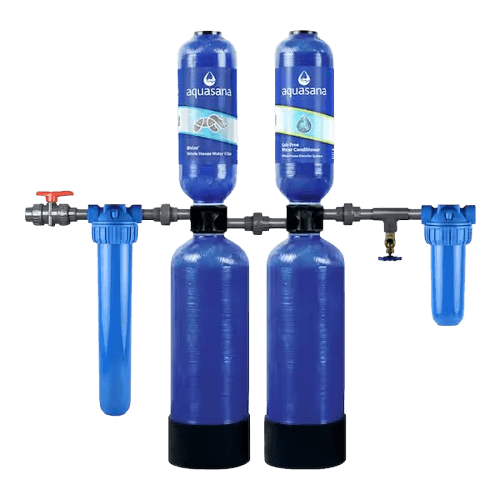
Aquasana Rhino Whole House Water Filtration System Review 2026
Average Cost: $1,600 to $3,200
Key Features
- Up to 1,000,000 gallons of rated capacity
- Independently tested to reduce up to 97% of chlorine
- Whole-home filtration with 7.0 GPM rated flow

The Modernize Mission
Modernize maintains homeowner-first editorial integrity, meaning we accept no commissions and no partner links for this review. Our reviews are thoroughly fact-checked by our home improvement experts. Ratings are determined by a sophisticated algorithm to rate brands, including analyses of products, materials, quality, costs, sizes, durability, energy efficiency, and warranties.
Table of Contents
- Overview
- Specifications
- Key Benefits
- Compatibility and Ownership Considerations
- Competitive Comparison
- Best Use Cases
- Regional Information: Where the Rhino Makes the Most Sense
- What Water Situations Is the Aquasana Rhino Best For?
- When This Product May Be Overkill
- Warranty: What the 10-Year Coverage Actually Means
- Cost and Installation Breakdown
- Regional Pricing and Incentives
- Maintenance, Longevity, and Ownership Costs
- Real Homeowner Feedback
- Final Verdict
- Frequently Asked Questions
Overview
The Aquasana Rhino Whole House Water Filtration System is made for homes that use city water. It installs at the main water line and helps reduce chlorine, improve taste and smell, and provide cleaner water for showers, faucets, appliances, and laundry.
The Rhino is one of Aquasana’s most popular whole-house systems for city water. Homeowners often choose it when they want better water quality throughout the house, not just at one sink. Its main feature is a large media tank that lasts a long time with regular filter changes.
Ready to find the right whole-house filtration system for your home?
Specifications
For homeowners comparing whole-house filtration systems, the core specs help explain where the Aquasana Rhino fits best. The system is aimed at municipal-water homes that want chlorine reduction, better-tasting water, and lower-maintenance ownership compared with shorter-life filter setups.
| Specification | Details |
|---|---|
| Product name | Aquasana Rhino Whole House Water Filtration System |
| Model family | WH-1000 / EQ-1000 |
| Water source fit | Municipal water |
| Primary treatment focus | Chlorine, taste, odor, and sediment |
| Main tank capacity | Up to 1,000,000 gallons |
| Estimated lifespan | Up to 10 years |
| Rated flow rate | 7.0 GPM |
| Peak flow | Up to 14.6 GPM |
| Operating pressure | 20 to 100 psi |
| Operating temperature | 40°F to 90°F |
| Certification/testing | NSF/ANSI 42 chlorine reduction testing; WQA-certified tank materials and structural standards |
| Warranty | 10-year limited warranty on main tank; pre- and post-filter housings covered 12 months only; non-transferable; labor not covered (see warranty section) |
Key Benefits
The real value of the Aquasana Rhino shows up in everyday use, especially in showers, kitchens, and laundry rooms. Its technical features lead to benefits that homeowners can notice if their water matches what the system is designed for.
Reduces chlorine smell and taste throughout the home
The Rhino is known for cutting down chlorine in city water. This can make tap water taste better and lessen the strong chemical smell that some people notice in showers, baths, and sinks.
Improves shower, laundry, and cooking water
Since this is a whole-house system, the benefits go beyond just one faucet. Homeowners often see better water quality for bathing, laundry, and cooking, not just for drinking.
Offers long-term filtration capacity
One of the Rhino’s main selling points is its 1,000,000-gallon capacity. This makes it a good choice for people planning to stay in their home for years. Keep in mind, though, this rating depends on changing the filters as recommended. See the maintenance section for details.
Avoids the upkeep of salt-based softening
The standard Rhino filters water but does not soften it with salt. This means you don’t need to refill salt, run a regeneration cycle, or connect a drain for softener discharge.
Compatibility and Ownership Considerations
The Aquasana Rhino works best for homes with city water, not private wells. It’s mainly for people who want to cut down on chlorine and improve their home’s water quality.
Before buying, confirm whether your utility uses chlorine or chloramines, whether the home has hard water scale issues, and whether local water conditions include moderate or heavy sediment. The standard Rhino isn’t designed to solve every water issue on its own. Homes with chloramine-treated water, severe hard water, or well-water contaminants may need a different setup or additional treatment equipment.
Planning for installation is important. These systems need enough space near the main water line and easy plumbing access for shutoff and bypass. Checking your local water quality report before buying helps make sure you pick the right system.
Questions to ask before buying
- Does your utility use chlorine or chloramines? (The standard Rhino is optimized for chlorine; chloramine-treated water may need a different media configuration)
- Does your water report show hard water, iron, or other contaminants beyond chlorine?
- Is there enough space near the main water line with proper shutoff and bypass access?
- What is the sediment load in your water? Higher sediment means more frequent pre-filter changes and can affect the system’s effective lifespan.
- Are you comfortable sourcing replacement filters only from Aquasana? Third-party parts void the warranty.
Competitive Comparison
When comparing whole-house water filters, homeowners should look at their water source, home size, and what they want to treat, not just the brand. The table below compares the Aquasana Rhino with other popular options for city water.
| Model | Filtration focus | Operation type | Comfort outcome | Typical installed cost | Best for |
|---|---|---|---|---|---|
| Aquasana Rhino WH-1000 | Chlorine, taste, odor, sediment | Whole-house filtration | Better-tasting water and less chlorine smell | $1,600–$3,200 | City-water homes focused on chlorine reduction |
| SpringWell CF1 | City-water contaminants with broader sizing options | Whole-house filtration | Stronger fit for larger homes with multiple bathrooms | $1,700–$3,800 | Larger homes needing sizing flexibility |
| Kind E-1000 | Chlorine, sediment, and chemical contaminants | Two-stage whole-house filtration | Compact system footprint | $1,500–$3,100 | Homes with limited installation space |
The Rhino is known for its long-lasting filter and wide availability. When comparing systems, buyers should pay attention to the type of disinfectant used, how much water they need to filter, and the specific water issues they want to fix.
Best Use Cases
The Aquasana Rhino is best for homeowners with city water who mainly want to get rid of chlorine taste or smell, want filtered water throughout the house, and plan to stay in their home for several years. It’s not as good for hard water, chloramines, or well-water problems.
The Rhino isn’t a one-size-fits-all water treatment system, but it has several strong use cases.
Best for homes with chlorine-heavy city water
This system makes the most sense for homeowners whose municipal water has a noticeable chlorine smell or taste. That’s the clearest and most direct fit for the standard Rhino configuration.
Good fit for households wanting whole-home coverage
Homeowners who want filtered water in showers, bathrooms, laundry, and kitchens may find this system more useful than filters for just one faucet. It’s especially helpful for families who care about water quality for bathing and laundry as much as for the kitchen.
Strong option for long-term homeowners
Since the Rhino’s main tank lasts a long time, it’s a better investment for people who plan to stay in their home for years. Keep in mind, the 10-year warranty does not transfer if you sell your house.
Helpful for moderate sediment, but not extreme water conditions
The Rhino can help with light to moderate sediment in the water, but it is not meant to handle heavy well-water contamination, iron, sulfur, or biological problems.
Regional Information: Where the Rhino Makes the Most Sense
Regional fit matters because water quality varies widely by location.
South and Southeast
The Rhino is often a good choice in Southern and Southeastern cities where people use city water and want to cut down on chlorine smell, get better shower water, and improve taste and odor overall.
Southwest and parts of Texas
This system can help with chlorine problems in these areas, but many homes also have hard water. In those cases, the Rhino may make water taste and smell better but won’t do much for scale buildup on fixtures, glass, and appliances. It’s important to talk about this with your installer before buying.
Midwest and Northeast municipal-water homes
The Rhino can be a good fit in older city and suburban homes where people want whole-house filtration and may have chlorine taste or sediment issues from old pipes.
Rural and private-well regions
This system is usually not the best choice for homes with private wells unless water tests show a problem the Rhino can fix. Well-water homes often need special treatment for bacteria, sulfur, iron, manganese, or nitrates.
What Water Situations Is the Aquasana Rhino Best For?
In simple terms, this system works best if your main problem is too much chlorine in city water, not hard water or special well-water issues.
The Rhino is a strong fit for:
- Municipal water with a strong chlorine taste or odor
- Homes where shower and bath water quality matter as much as drinking water
- Households that want lower-maintenance whole-house filtration
- Homes with light to moderate sediment, not severe well-water contamination
- Long-term homeowners who want a larger-capacity system
The Rhino is not the best choice if your main problem is hard water scale, chloramine-treated city water, private well contamination, iron or sulfur stains, or if you need UV or other special treatment for germs.
When This Product May Be Overkill
Not everyone needs a whole-house filtration system. The Aquasana Rhino might be more than you need if you only want filtered drinking water at one faucet or have a specific water issue to solve.
It may not be the right choice if chlorine isn’t your main problem. If you have issues with scale, stains, or well-water contamination, you might need a softener or a different type of filter instead of a standard whole-house system focused on chlorine.
Warranty: What the 10-Year Coverage Actually Means
The Aquasana Rhino WH-1000 comes with a 10-year limited warranty on the main filtration tank, which is longer than many other whole-house filters you can buy directly. It’s important to understand the limits of this warranty before you install the system.
- Labor is not covered by the warranty. Aquasana will replace faulty parts, but you have to pay for removal, reinstallation, shipping, and return costs. Since professional installation can cost $200 to $600, making a warranty claim could mean paying for a plumber twice.
- The warranty does not transfer if you sell your home. If the system is moved from where it was first installed, the warranty ends. So, if you see the Rhino as a home upgrade, remember the warranty won’t cover the next owner.
- Using parts that are not from Aquasana will void the warranty. Only use Aquasana replacement filters, faucets, or diverter valves. Buy all replacement filters from Aquasana or an authorized seller.
- The pre- and post-filter housings are only covered for 12 months, not the full 10 years of the tank warranty. The installation kit that comes with the system is also covered for just 12 months.
- If you buy a bundle with a UV filter, it has its own separate warranty. The UV part is not covered by the Rhino tank warranty.
The full Aquasana warranty document is available at aquasana.com/warranty-documents.html. For warranty service, contact Aquasana at 1-866-662-6885 or [email protected] within the warranty period with proof of purchase and documentation of proper installation.
Cost and Installation Breakdown
Installed cost is one of the most common homeowner questions about the Aquasana Rhino. Equipment price is only one part of the project. Plumbing access, regional labor rates, and added treatment components can all affect the final installed total.
How much does the Aquasana Rhino cost installed?
Most homeowners can expect to pay between $1,600 and $3,200 for installation. In some cases, the total can range from $1,300 to $4,500, depending on how complex the job is, local labor costs, and any extras or plumbing upgrades. The system itself usually costs about $999, but professional installation can add a lot to the total.
What affects installation cost?
Main cost drivers include:
- Main water line access and available space
- Plumbing modifications required
- Permit requirements by jurisdiction
- Regional labor rates
- Bypass valve or shutoff upgrades
- Add-ons such as salt-free conditioning or UV treatment
Regional Pricing and Incentives
The price for whole-house water filters can change a lot depending on where you live, especially when you add in labor, permits, and plumbing access. That’s why it’s important to get quotes from local installers when figuring out your total cost.
Installation costs are usually lower in places with easy plumbing access and cheaper labor. In big cities, costs can go up fast if you need permits, have tight spaces, or need plumbing updates. Unlike HVAC or solar, rebates for whole-house filters are not common, so it’s best to compare quotes from local installers instead of expecting big discounts.
Maintenance, Longevity, and Ownership Costs
The Rhino’s main tank is built to last for up to 1 million gallons or about 10 years, but only if you change the filters on time. Owner feedback shows that skipping or delaying filter changes can cause the system to stop working well before it reaches its full lifespan.
Ongoing maintenance typically includes:
- Standard pre-filter replacement: Every two months
- Low-maintenance pre-filter replacement: Every six months
- Post-filter replacement: Every six months
- Filter housing replacement: About every five years
How often you need to change filters depends on how much sediment is in your water and your local water quality. Homes with a lot of sediment may need to change filters more often than the standard schedule. Ask your installer to check your water before deciding how often to change filters.
Real Homeowner Feedback
Most homeowners give the Aquasana Rhino good reviews for reducing chlorine, improving water taste, and showing what it filters out. The main complaints are about installation costs, some small parts not being very sturdy, and a few cases where performance dropped after a few years. These are things to consider before buying.
Positive experiences
“I went with the whole house filter because it’s city water so it’s clean but I hated the chlorine smell to it. The whole house filter removes the chlorine. We had a plumber install ours, which cost around $250.” — Reddit Reviewer (Pittsburgh, PA)
“The filter was spendy for me to install but worth it so far. The taste of the water was immediately different and then I discovered that my hair and skin are really loving it. Things are easier to clean and my whites come out whiter less dingy.” — MelodyRN, Home Depot
“Who knew how filthy the water coming into my house was. I left the installation to the professionals. The results were amazing — sooner than expected to replace both filters. I am very happy with my purchase and cannot imagine not having this filtration sooner.” — Jacque M., Home Depot
Negative and mixed experiences
“The plastic pressure relief piece is very flimsy. The o-ring came out of mine and the plastic disintegrated when I tried to tighten it to stop the water spewing. This part can’t cost 10 cents, but it is not available to purchase as a spare and the filter will not work without it. Aquasana sent me one for the cost of shipping. Aquasana — step up and add this part to your filter subscriptions.” — Marty Martin, Trustpilot
“Had mine installed with the UV light. Everything worked fine for about three months then water got really yellow and hard. Bought new filters and installed them — didn’t make a difference. Spent $2,500 on the system and $800 on installation. Just flushed my money down the toilet.” — Home Depot Reviewer
“We installed the Rhino in October 2021. Three years later we started having skin issues after showering and significant pressure drops when running multiple fixtures simultaneously. We bypassed the filtration system and the pressure issue was gone. I called customer support and they said we didn’t change the pre-filter and post-filter often enough. My recommendation is stay away from this brand unless you want to keep buying a new system every three years.” — Marketas, Trustpilot
Issues to consider
Three patterns in the reviews deserve direct attention before you purchase.
Filter change frequency
How often you change the filters is more important than the 10-year lifespan claim. In one review, Aquasana said a customer’s problems after three years were because filters weren’t changed often enough. Whether that’s true or not, the main point is that the 1,000,000-gallon or 10-year rating depends on regular filter changes. If your water has a lot of sediment, you may need to replace the pre-filter more often than every two months. Ask your installer to check your water and suggest a realistic filter change schedule before you buy
Pressure relief piece
The pressure relief part is a known fragility point. Marty Martin’s experience (a flimsy plastic pressure relief piece that failed during routine maintenance and wasn’t available as a spare part) is a documented component quality issue. Aquasana resolved it by shipping a replacement at cost of shipping, but the part isn’t included in filter subscriptions. When your system is installed, ask Aquasana how to obtain spare pressure relief parts before you need one.
Product and problem mismatch
The review about yellow water shows a common mismatch between the product and the problem. The Rhino is made to handle chlorine, taste, odor, and sediment, but not iron or hard water. This is why it’s important to test your water and make sure the Rhino will solve your main issue before you buy. If your main problem is hard water or iron, you’ll need a different solution.
Final Verdict
The Aquasana Rhino Whole House Water Filtration System is a good choice for people with city water who want to cut down on chlorine, improve taste and smell, and have cleaner water all over the house. It’s best for those who care about water quality for showers, laundry, and the whole home, not just for drinking water at one sink. Its long lifespan also makes it a good pick for homeowners planning to stay put for years.
It may not be the best choice for homes with hard water, chloramines, or well-water contaminants. In those cases, a more specialized system might be a better investment. The 10-year warranty looks good, but it can’t be transferred, doesn’t cover labor, and only stays valid if you use Aquasana replacement parts.
For homeowners with city water, chlorine as the main issue, and a goal of filtering the whole house, the Rhino is a solid option. It’s worth comparing with other local choices and installer quotes.
Sources
This review was developed using manufacturer materials, retailer information, public water-quality guidance, and homeowner discussion sources to support product accuracy and homeowner-fit recommendations.
- Aquasana Rhino product page
- Performance data sheet
- Installation guide
- Aquasana Rhino filter replacement guide
- Warranty documents
- Home Depot Aquasana Rhino listing
- Reddit homeowner discussion on Aquasana whole-house systems
- EPA guide to chloramines in drinking water
- Consumer Confidence Report guidance
- EPA private well guidance
- CDC guide to reading drinking water quality reports
- USGS map of water hardness in the United States