Bathroom Remodel
Best Types of Bathroom Countertops
On this page
- Bathroom countertop comparison table
- Best countertop material by bathroom type
- Replacement costs and ways to save
Find the best bathroom remodel pros in your area.

The Modernize Mission
We help homeowners make confident decisions through our reliable, up-to-date, and unbiased information and average project costs. All of our content is thoroughly reviewed and fact-checked by our team of home improvement experts. Learn more about how we maintain these values.
Table of Contents
- What Are the Best Countertops for Bathrooms?
- Bathroom Countertop Comparison Table
- What Is the Best Bathroom Countertop Material?
- Best Countertops by Bathroom Type
- Best Bathroom Countertop According to Reddit
- How Much Does It Cost to Replace a Bathroom Countertop?
- Inexpensive Bathroom Countertop Options
- How to Match Your Countertop to Your Sink and Vanity
- How to Care for Bathroom Countertops
- Conclusion: Best Countertops for Bathrooms
- Frequently Asked Questions
- Sources
What Are the Best Countertops for Bathrooms?
For most homeowners, quartz is the best bathroom countertop. It resists stains, never needs sealing, and comes in many colors and patterns. Granite is the best natural stone for heavy use, and laminate is the best budget pick. Prices range from $2–$30 per square foot for tile to $107–$196 for marble. Replacing a bathroom countertop averages $2,300, and most projects cost between $400 and $4,300.
Quick picks by need
- Best overall: Quartz, for low upkeep and the widest range of styles
- Best natural stone: Granite, for heat and scratch resistance
- Best luxury look: Marble or quartzite, for dramatic veining
- Best no-sealing alternative: Porcelain slab, for heat, stain, and scratch resistance
- Best seamless sink: Solid surface, for an integrated bowl and easy repairs
- Best on a budget: Laminate or tile, for the lowest cost per square foot
Countertop cost per square foot
Most countertop prices are quoted per square foot. Installation, cutouts, and edge work add to the total.
| Material | Materials Cost (per sq. ft.) |
|---|---|
| Marble | $107 to $196 |
| Granite | $40 to $100 |
| Quartzite | $80 to $200 |
| Quartz (Engineered) | $50 to $150 |
| Soapstone | $85 to $150 |
| Tile | $2 to $30 |
| Laminate | $46 to $84 |
| Concrete | $65 to $135+ |
| Tempered Glass | $75 to $175 |
| Solid Surface (e.g., Corian) | $40 to $60 |
How to size your countertop
Measure your vanity before you shop. Single-sink vanities are typically 24–48 inches wide, doubles are 60–72 inches, and standard depth is about 20 inches. Add an inch or two to each measurement for overhang. To find square footage, multiply width by depth in inches and divide by 144. A 48-by-22-inch top comes to about 7 square feet.
Most bathroom vanity tops land between 6 and 10 square feet. At $50–$100 per square foot, a 7-square-foot top runs roughly $350–$700 before cutouts, edges, and any shop minimum. A local pro can confirm square footage, talk through materials, and give you a precise quote.
Bathroom Countertop Comparison Table
Bathrooms are hard on countertops. Humidity, cosmetics, hair tools, and cleaning products all take a toll. This table compares how each material handles them.
| Material | Sealing Needed | Heat Resistance | Stain Resistance | Upkeep |
|---|---|---|---|---|
| Marble | Yes, often | Moderate | Low | High |
| Granite | Yes, periodically | High | Good when sealed | Moderate |
| Quartzite | Yes, periodically | High | Good when sealed | Moderate |
| Quartz | No | Moderate (resin can scorch) | High | Low |
| Soapstone | No (oil optional) | High | High | Moderate |
| Porcelain Slab | No | High | High | Low |
| Tile | Grout only | High | High (grout stains) | Moderate to high |
| Laminate | No | Low | Good | Low |
| Concrete | Yes, regularly | High | Good when sealed | Moderate to high |
| Tempered Glass | No | Varies by product | High | Low |
| Solid Surface | No | Low | High | Low |
Ratings summarize guidance from industry sources and manufacturers. Confirm details for your specific product with your fabricator.
What Is the Best Bathroom Countertop Material?
Different homes and budgets call for different choices. Use this list to match each material to your needs. Lifespans are typical ranges and vary with care.
Marble
- Best For: Classic, high-end bathrooms and low-traffic powder rooms
- Materials Cost: $107–$196 per square foot
- Pros: Unique veining and colors; fairly heat-resistant
- Cons: Scratches, stains, and etches easily; needs regular sealing
- Lifespan: 50–100 years

Granite
- Best For: Heavy-use bathrooms that need natural stone durability
- Materials Cost: $40–$100 per square foot installed
- Pros: Heat- and scratch-resistant; every slab is unique; many colors
- Cons: Very heavy to install; needs periodic sealing
- Lifespan: 50–100 years

Quartzite
- Best For: A marble look with more durability
- Materials Cost: $80–$200 per square foot installed
- Pros: Harder than granite; heat- and chemical-resistant; marble-like veining
- Cons: Needs sealing; limited availability raises the price
- Lifespan: 50–100 years
Quartzite is a natural stone. It isn’t the same as engineered quartz, which is a man-made product.
Quartz
- Best For: Low-maintenance stone look on a moderate budget
- Materials Cost: $50–$150 per square foot
- Pros: Non-porous; no sealing; resists stains; many colors and styles
- Cons: Resin can scorch from hot styling tools
- Lifespan: 50–100 years

A note on quartz and silica
Engineered quartz contains high levels of crystalline silica. Cutting and polishing slabs releases dust that can cause silicosis, an incurable lung disease in fabrication workers. California regulators released a draft emergency rule on September 16, 2026, that would prohibit fabricating and installing engineered stone with more than 1% crystalline silica. As of this update, the state hasn’t adopted it. Australia banned engineered stone in 2024.
The documented harm falls on workers who cut, grind, and polish slabs. If you’re buying quartz, ask your fabricator how they control dust (for example, with wet cutting), and check whether rules in your state could affect availability. Porcelain slab and solid surface are alternatives that regulators have mentioned.
Soapstone
- Best For: Matte, dark, non-porous surfaces that darken with age
- Materials Cost: $85–$150 per square foot
- Pros: Stain-resistant without sealing; highly heat-resistant
- Cons: Scratches easily; limited color range
- Lifespan: 20–80 years

Porcelain slab
- Best For: Sleek, modern bathrooms and seamless wall-to-counter looks
- Materials Cost: $50–$100 per square foot installed
- Pros: No sealing; resists heat, scratches, and fading; stone and wood looks
- Cons: Edges can chip; fewer fabricators have experience with it
- Lifespan: About 50 years
Tile
- Best For: Creative designs and tight budgets
- Materials Cost: $2–$30 per square foot
- Pros: Widest selection of materials and finishes; easy spot repairs
- Cons: Grout traps grime and needs sealing; slower to install
- Lifespan: 40–100 years

Laminate
- Best For: Affordable updates with many design options
- Materials Cost: $46–$84 per square foot
- Pros: Budget-friendly; non-porous; stone-look patterns; DIY-friendly
- Cons: Burns, dents, and dulls; lower resale value than stone
- Lifespan: 15–30 years

Concrete
- Best For: Modern, custom shapes and integrated designs
- Materials Cost: $65–$135+ per square foot
- Pros: Custom colors, textures, and shapes; durable when sealed
- Cons: Needs routine sealing; can crack; takes a month or more to cure
- Lifespan: 20–30 years

Tempered glass
- Best For: Sleek, contemporary spaces or statement vanities
- Materials Cost: $75–$175 per square foot
- Pros: Hygienic; no sealing; resists stains and chemicals
- Cons: Chips can’t be repaired; smooth glass shows fingerprints
- Lifespan: Up to 100 years

Solid surface (e.g., Corian)
- Best For: Seamless, mid-range projects and integrated sinks
- Materials Cost: $40–$60 per square foot
- Pros: Non-porous; no sealing; scratches often buff out; many colors
- Cons: Scorches or discolors with high heat and harsh chemicals
- Lifespan: 20–30 years

Best Countertops by Bathroom Type
Your bathroom’s use should shape your choice as much as its style does. A main bathroom with daily routines needs a tougher surface than a powder room that sees an occasional guest.
- Powder room or guest bath: Light use lets you pick delicate stone like marble. The small size also stretches your budget.
- Primary bathroom: Quartz, granite, quartzite, or porcelain handle daily moisture and products well.
- Kids’ bathroom: Quartz, porcelain, and solid surface resist stains and scratches. A rounded bullnose edge softens corners.
- Small bathroom: Light tones like white, beige, or soft gray make the room feel larger. Choose subtle veining over busy patterns.
- Rental or flip: Laminate, tile, or a prefabricated top keeps costs low and cleaning easy.
If you plan to sell, match your countertop quality to the rest of your home. Real estate agents often advise against upgrades that stand far above the other finishes.
Best Bathroom Countertop According to Reddit
These picks reflect common recommendations from homeowners in bathroom remodel threads. They’re community opinions, not tested results.
- Quartz for everyday life: Easy to wipe clean, consistent in color, and no regular sealing to track
- Granite for long-term durability: Handles water, makeup, and daily use; seal it now and then
- Marble for the look, with care: Timeless and beautiful; wipe spills quickly to prevent etching and stains
- Laminate and tile for tight budgets: Laminate installs fast; tile stays affordable with a simple layout
- Solid surface for seamless sinks: One smooth piece with an integrated bowl; minor scuffs often buff out
How Much Does It Cost to Replace a Bathroom Countertop?
Most homeowners spend $400–$4,300 to replace a bathroom countertop, and the average is $2,300. Material is the biggest factor. Fabrication, installation, and plumbing add to the total. For a wider look at vanity and cabinet costs, see our bathroom remodel cost guide.
| Cost Item | Typical Cost |
|---|---|
| Total to replace (most projects) | $400–$4,300 |
| Removal and disposal of the old top | $115–$500 |
| Professional installation | $200–$1,000 |
| Plumbing (disconnect and reconnect sink and faucet) | $350–$1,800 |
| New sink installation | $220–$630 |
| Backsplash installation | $15–$40 per sq. ft. |
| Prefabricated top | $100–$2,600 |
| Custom top | $500–$2,800 |
What drives the price
- Material and rarity: Rare stone colors and thicker slabs cost more.
- Size and layout: Pricing is per square foot, and curves or multiple cutouts add fabrication work.
- Edge profile: A simple eased edge usually costs less than a bullnose or ogee.
- Prefab or custom: Prefab tops fit standard vanity sizes and cost less. Custom tops fit unusual layouts.
- Installation: Tight spaces, heavy slabs, and leveling cabinets raise labor costs.
Set aside an extra 10%–20% for surprises like water-damaged cabinets or plumbing fixes. Hire a pro to install stone; slabs are heavy and can crack if mishandled. You can often handle demolition and painting the vanity base yourself.


Inexpensive Bathroom Countertop Options
Keeping costs down starts with materials that look good, install quickly, and don’t demand constant upkeep. These options deliver the best value for most bathroom remodels.
- Laminate: $46–$84 per square foot. A true budget pick with many stone-look patterns. It’s non-porous, easy to clean, and usually faster to install than stone.
- Ceramic or porcelain tile: $2–$30 per square foot. Mix sizes and finishes for a custom look on a small budget. Seal grout regularly to keep stains at bay. Tile takes longer to install, so labor can erase the savings.
- Entry-level solid surface (cultured marble or Corian): $40–$60 per square foot. A mid-range price with a seamless, non-porous surface that’s easy to wipe clean.
For most homeowners, laminate or tile keeps the project affordable while refreshing the space. If you want a sleeker, seamless look without jumping to natural stone, entry-level solid surface is a smart middle ground.
More ways to save
- Shop early: You’ll find more deals before you commit to a color scheme.
- Ask about remnants: Fabricators sell leftover slabs, and a vanity top needs very little stone.
- Buy prefab: Standard sizes with finished edges cost less than custom fabrication.
- Keep the edge simple: Decorative profiles and special finishes add fabrication charges.
- Stick to standard sinks and faucets: Unusual cutouts raise fabrication and installation costs.
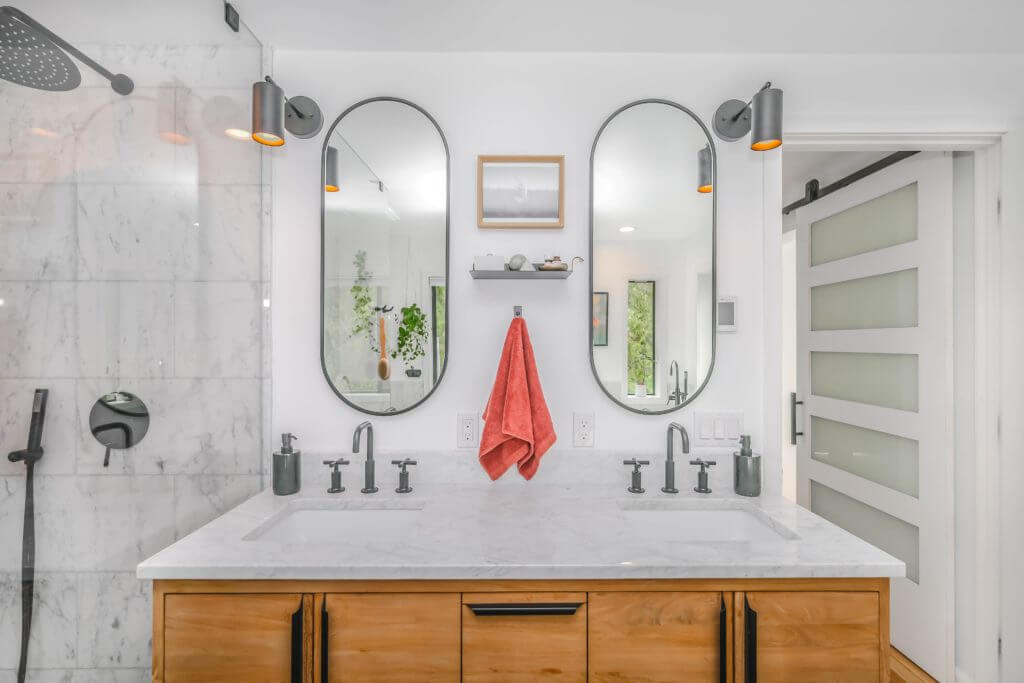
How to Match Your Countertop to Your Sink and Vanity
Your countertop material affects which sinks, edges, and heights work best. Settle these details before you order.
Sink type
- Undermount: Gives a clean look and pairs well with stone and quartz.
- Drop-in (top-mount): Costs less and suits laminate and tile.
- Vessel: Sits on top and works with almost any surface, so it keeps attention on the bowl.
- Integrated: Sink and top form one piece in solid surface, concrete, glass, porcelain, and metal. A natural stone sink is built separately and can cost more than the countertop.
With integrated sinks, a problem with either part means repairing or replacing both. Laminate can take an undermount sink, but the seam is a weak point for moisture damage.
Thickness and edge profile
Thick countertops are a leading design trend. Thickness can affect plumbing, vanity support, and overhang options. Heavy materials like concrete over 2 inches thick may need a stronger base. Stone, quartz, solid surface, and recycled paper accept detailed edges. Slate, porcelain, glass, and wood have limited edge options, so stick with what the manufacturer recommends to avoid chipping.
Vanity height
Standard vanity height used to be 29–32 inches. Comfort height for taller users can reach 36 inches. Under Americans with Disabilities Act (ADA) guidelines, an accessible vanity tops out at 34 inches and needs at least 29 inches of knee clearance so wheelchair users can roll underneath. A thick countertop or vessel sink raises your working height, so mock up your options before you buy.
How to Care for Bathroom Countertops
Maintenance varies a lot by material. Ask your supplier what yours requires and what repair options exist.
Sealing
Natural stone is porous to varying degrees, and most types need an initial sealing. Reseal when water no longer beads on the surface. Marble, limestone, and travertine can need resealing about every six months. Granite and quartzite need it less often. Concrete and wood also need sealing, plus periodic oil or wax. Quartz, porcelain, solid surface, laminate, and glass don’t need sealing, but cement-based grout does.
Cleaning
Wipe up spills right away. Clean most surfaces with gentle dish soap, water, and a microfiber cloth. For stone, use a pH-neutral cleaner, since acidic or abrasive products dull marble, travertine, and limestone. To disinfect granite, concrete, laminate, or quartz, spray 70% alcohol, wait three to five minutes, and wipe clean.
Repairs
- Minor etching and scratches: Many stones and solid surface can be polished or sanded lightly.
- Chips: Color-matched epoxy or a stone repair kit fixes most of them.
- Cracks and major damage: Call a pro, because large cracks are hard to repair yourself.
- Burns: Plastic-based tops like laminate and solid surface have limited repair options.
Conclusion: Best Countertops for Bathrooms
We covered 11 popular bathroom countertop options: marble, granite, quartzite, quartz, soapstone, porcelain slab, tile, laminate, concrete, tempered glass, and solid surface. The best choice for your home comes down to budget, maintenance, and the look you love. For most busy bathrooms, quartz or porcelain gives you the most for the least upkeep.
Not sure which material is right for your vanity? Let Modernize connect you with a trusted bathroom professional to compare costs and timelines.
Frequently Asked Questions
Sources
- Countertop lifespans and advice, Angi
- How Much Does It Cost to Replace Bathroom Countertops? Angi (2026)
- Affordable countertop materials, Block Renovation
- Choosing Bathroom Countertops, HGTV
- California regulators move toward a ban on engineered stone fabrication, Public Health Watch (May 2026)
- California poised to ban quartz countertop production, Woodworking Network (October 2026)