Flooring
How Much Does It Cost to Replace Carpet on Stairs?
Average Cost: $300 – $450 per project
Most people pay $300–$450 to replace carpet on a standard staircase with 13–15 steps. The total can be as low as $150 or as high as $600+, depending on your choices and who you hire.
Find the best flooring pros in your area.

The Modernize Mission
We help homeowners make confident decisions through our reliable, up-to-date, and unbiased information and average project costs. All of our content is thoroughly reviewed and fact-checked by our team of home improvement experts. Learn more about how we maintain these values.
Key Takeaways
- The carpet you pick makes the biggest difference in price. Low-pile polyester is the cheapest, while wool and patterned cut pile cost significantly more.
- Labor typically runs $75–$200 for a standard staircase, but complex layouts, such as curved stairs, open risers, or bullnose edges, can push that higher.
- According to the Modernize 2025 Homeowner Insights Report, 36% of homeowners start home improvement projects to repair or replace due to damage — worn stair carpet is a common trigger for this type of renovation.
- Get at least two or three quotes from local flooring pros to find out what your project will really cost in your area.
How Much Does Stair Carpet Replacement Cost?
Replacing carpet on a standard flight of stairs (typically 13–15 steps) costs $150–$600 in total, with most homeowners landing between $300 and $450 when using a professional installer. That works out to roughly $15–$40 per step, including both materials and labor.
Three things drive the price: the carpet you pick, how complex your stairs are, and what labor costs in your area. If you have a straight staircase and choose basic polyester, you’ll pay less. Curved or L-shaped stairs with patterned wool carpet cost much more.
Here’s a quick overview of typical stair carpet costs by carpet type:
| Carpet type | Average installed cost | Best for |
|---|---|---|
| Low-pile polyester | $15–$22 | Budget-conscious, high-traffic homes |
| Berber (looped) | $18–$28 | Durability, casual spaces |
| Frieze / textured cut pile | $22–$35 | Hiding footprints and wear |
| Patterned Axminster or Wilton | $35–$55+ | Formal or traditional interiors |
| Wool or wool-blend | $40–$65+ | Longevity, premium feel |
Prices reflect national averages for professional installation as of 2026. Local labor markets will vary.
What Factors Affect the Cost of Replacing Stair Carpet?
Several variables have a significant impact on what you’ll actually pay, sometimes doubling the price of what looks like a similar job.
Staircase type and layout
Straight staircases are the easiest and cheapest to carpet. L-shaped or U-shaped stairs take more time and use more material, since the carpet has to be cut and fitted at each landing. Curved or spiral stairs are the toughest and most expensive, sometimes doubling labor costs because each step needs a custom fit.
Open risers — stairs without a back panel — make the job harder. The installer has to wrap and secure each tread one by one, and the finished look is more noticeable. If your stairs have rounded front edges, called bullnose, plan to spend an extra $5–$10 per step for the extra work.
Carpet material and pile type
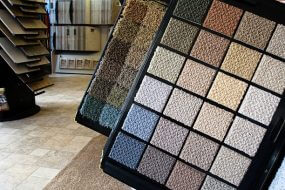
Material is usually the biggest factor in your total cost. Low-pile polyester and olefin are the cheapest options and work fine for most stairs. Berber is tough, but its looped design can snag and unravel at the edges — so talk to your installer before choosing it.
Cut-pile carpets like frieze and textured saxony work better on stairs. They hide wear and don’t snag like looped styles. Wool is the top choice if you want something that lasts and bounces back from heavy use, but it costs two to four times more than basic polyester. Browse our guide to best carpet brands to compare options before you shop.
If you want a patterned carpet, plan to buy extra. Matching patterns on stairs usually takes 15%–25% more material than a solid color, since each piece has to line up.
Removal of old carpet
Most installers include old carpet removal in their price, but always double-check before you agree to anything. If removal costs extra, expect to pay $1–$3 per step, plus possible disposal fees. For a deeper look at what this can run, see our full guide to carpet removal costs.
If there’s old padding under your carpet, that has to go too. Old tack strips and staples also need to be removed, which adds to labor time and cost.
Padding
Stair padding is made thinner and denser than regular floor padding because you want a firm feel underfoot. Expect to pay $0.50–$1.50 per step for padding, on top of the carpet cost. Some installers include it in their price, but others don’t, so be sure to ask.
Labor and local market rates
Labor for a straight staircase usually costs $75–$200 total. If you live in a large city like New York, San Francisco, or Boston, expect to pay more. In smaller or less expensive areas, you’ll likely pay closer to $75.
The more complicated your stairs, the longer the job takes and the more it costs. If your installer charges by the hour, a simple staircase might take two to three hours. Curved or patterned stairs can take all day.
How Does DIY Compare to Professional Installation?
If you install stair carpet yourself, you can save 30%–50% compared to hiring a pro. But there are some real trade-offs.
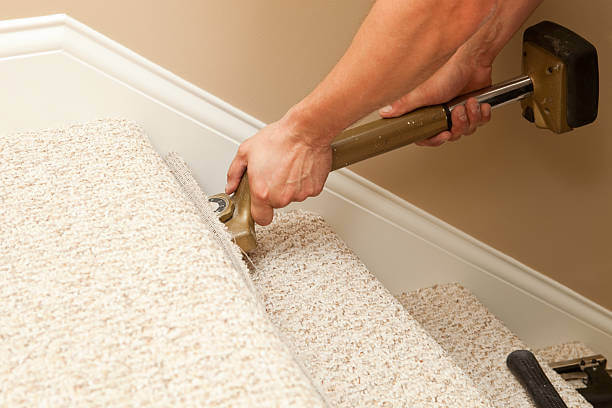
If you have a straight staircase and pick a solid-color, low-pile carpet, you can get good results as a DIYer with basic tools like a knee kicker, carpet tucker, and utility knife. Video tutorials are widely available, and the technique, while fiddly, is learnable.
DIY gets tricky with curved stairs, patterns, or open risers. If you cut the carpet wrong, it’s hard or impossible to fix, and you might lose any savings. Pros have better tools and materials, so their work usually lasts longer and looks cleaner.
We recommend hiring a pro for anything more complicated than a straight staircase, especially if you want a pattern or have an unusual stair shape. If you’re working with a basic straight run and solid-color carpet, DIY is a good option if you’re ready to spend a weekend learning as you go.
How to Get an Accurate Quote for Stair Carpet
If you’re not sure where to start, you’re in good company. The Modernize 2025 Homeowner Insights Report found that 32% of homeowners feel uncertain before starting a project. The best way to feel confident is to prepare your questions before you talk to a contractor.
Before calling contractors:
- Count your steps (including any landings)
- Note whether your stairs are straight, L-shaped, curved, or spiral
- Measure the width of your staircase (standard is 36 inches; wider stairs cost more)
- Identify whether you have open or closed risers
- Note the condition of any existing padding and tack strips
Once you have those details, you can get real quotes by phone or during a short in-home visit. Ask each contractor to break out materials and labor in their quote. That way, you can compare bids and see exactly where your money goes.
The same survey found that warranty or guarantees are the top non-price factor homeowners consider when selecting a contractor, followed closely by project timeline and expertise. When you’re evaluating flooring quotes, ask each contractor directly: what does your workmanship warranty cover, and how long does it last?
When it comes to quotes, 41% of homeowners now compare two bids before making a decision. For stair carpet, aim for two or three quotes so you can feel confident about your choice. If you’re still deciding who to call, our reviews of top flooring companies, including Empire Today, Floor & Decor, and Floor Coverings International, can help you narrow down your options.
Financing Your Stair Carpet Project
If you’re on a tight budget, you’re not alone. According to the Homeowner Insights Report, about 32% of homeowners say they’d finance up to half of a project if they could. Many flooring stores and contractors now offer financing, so be sure to ask when you get quotes.
Not having enough money is the top reason people put off home projects, according to 29% of homeowners in the same survey. If you’re worried about cost, start by replacing the most worn steps first — usually the top three to five. You can finish the rest of the stairs later.
The Bottom Line
Most homeowners pay $300–$450 to replace carpet on a standard staircase. If your project is simple and you pick budget materials, you might pay less than $200. If you choose premium carpet or have a tricky staircase, it can go over $600. The biggest factors are the material you pick and how complex your stairs are.
According to our 2025 survey data, 36% of homeowners cite damage repair as their primary motivation for home improvement projects — and worn stair carpet fits squarely in that category. If yours is matted, fraying, or visibly worn at the tread edges, it’s time to replace it. Getting two or three quotes from licensed carpet and flooring contractors in your area is the fastest way to know exactly what you’ll pay.
Source: Modernize 2025 Homeowner Insights Report. Survey conducted July–October 2025 across 150,000+ homeowners. Full report available at Modernize.com/homeowner-insights.