

Average Cork Flooring Installation Cost
Cork flooring typically costs $5 to $19 per square foot installed, including materials and labor. Most homeowners spend $1,500 to $5,700 for a standard 300-square-foot room, with a national average of about $2,500 to $3,500, depending on material quality, installation method, and location.
- Materials: $3 to $8 per sq. ft.
- Labor: $2 to $7 per sq. ft.
Here’s what that looks like based on room size:
- Small room (~150 sq. ft.): $750 to $2,850
- Average room (~300 sq. ft.): $1,500 to $5,700
- Large project (~600 sq. ft.): $3,000 to $11,400
These estimates are based on national contractor pricing data and industry cost averages from sources like Angi, HomeAdvisor, and flooring professionals.
Cork Flooring Cost by Type
You can choose from several types of cork flooring, such as glue-down tiles, floating planks, waterproof cork, and luxury vinyl-clad cork. Each type has its own price range and installation needs.
| Cork type | Material cost (per square foot) |
|---|---|
| Cork tiles | $3 to $7 |
| Cork planks | $4 to $9 |
| Luxury vinyl-clad cork | $3 to $7 |
| Waterproof cork | $5 to $9 |
| Printed/striata cork | $8 to $20 |
Cork Tiles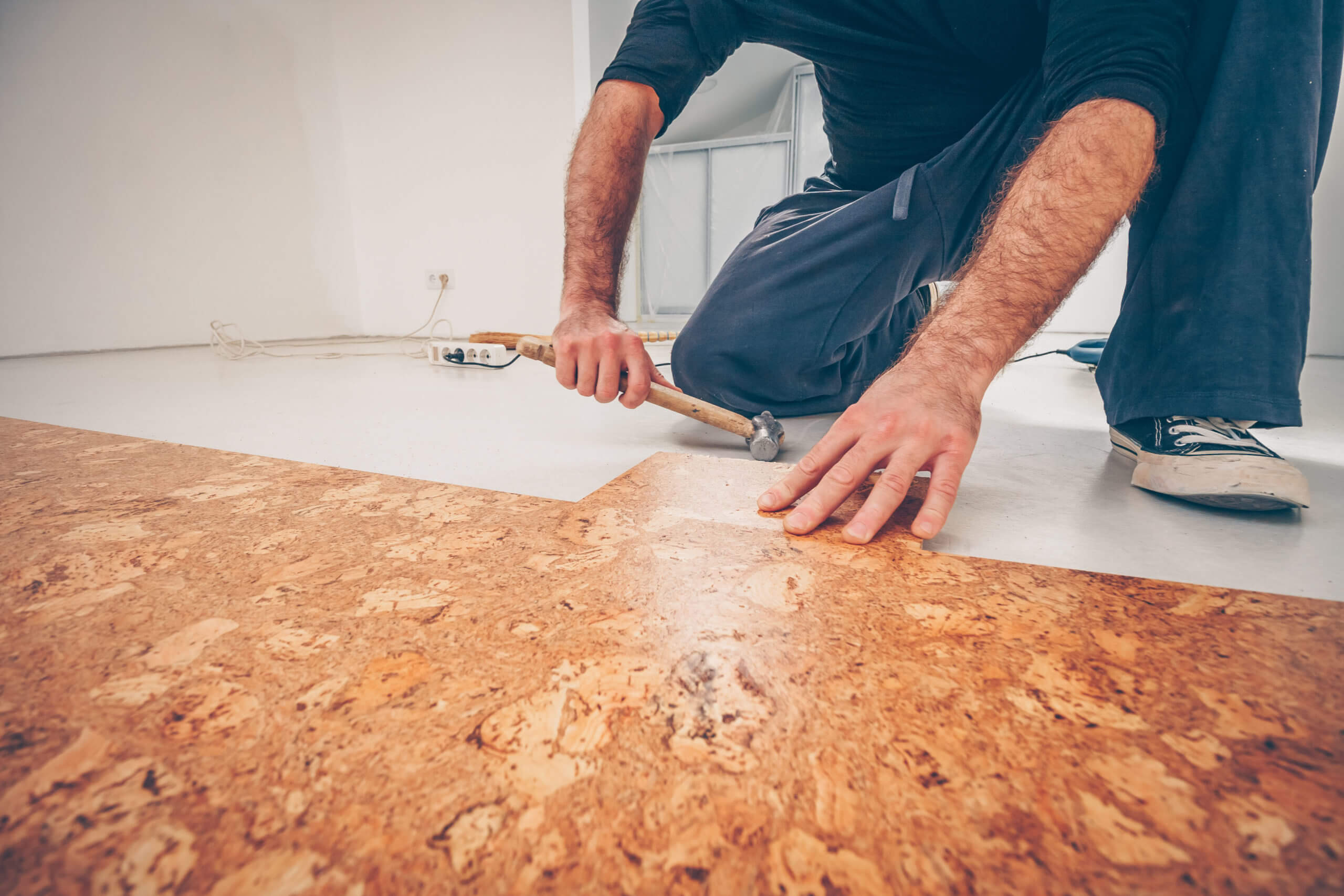
Cork tiles work well in areas with moisture because they are made from 100% natural cork. Most are glue-down, which is less expensive to install. With a polyurethane coating, cork tiles are very durable and come in more colors and patterns than planks. Standard sizes are 12 inches by 12 inches or 12 inches by 24 inches.
- Material cost: $3 to $7 per square foot
- Best for: Bathrooms, kitchens, custom pattern layouts
Cork Planks 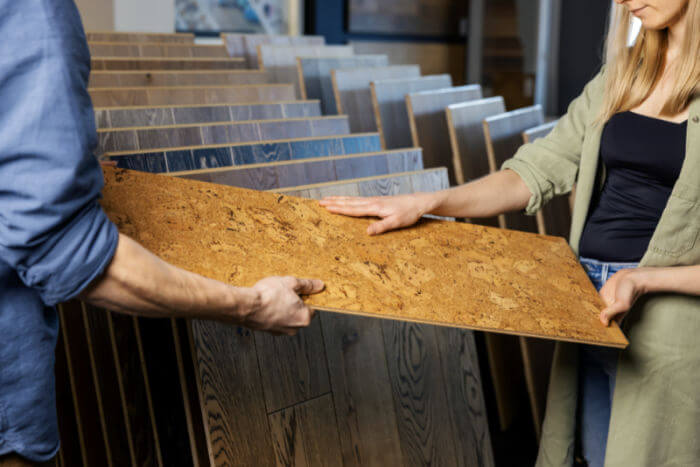
Cork planks have a wood fiberboard core sandwiched between layers of cork, making them a good choice for installing over existing floors. The click-lock floating system is easier for DIY installation compared to glue-down tiles. Planks are usually 10 millimeters to 12 millimeters thick.
- Material cost: $4 to $9 per square foot
- Best for: Living rooms, bedrooms, installations over existing flooring
Luxury Vinyl-Clad Cork
Luxury vinyl cork flooring has a clear vinyl layer on top of natural cork, which protects it from stains and wear. This type is the most water-resistant cork flooring and is ideal for rooms that often get wet.
- Material cost: $3 to $7 per square foot
- Best for: Kitchens, bathrooms, laundry rooms
Waterproof Cork
Waterproof cork flooring is made with extra sealant layers or moisture-resistant cores, offering more protection than standard cork. Some products, such as glue-down cork tiles with extra sealing, are especially good for bathrooms or basements.
- Material cost: $5 to $9 per square foot
- Best for: Basements, bathrooms, below-grade installations
Cork Flooring Labor Costs
The cost to hire a contractor for cork flooring depends on how it is installed. Floating floors are easier and cost $2 to $4 per square foot. Glue-down cork tiles are more difficult, so installation costs rise to $4 to $9 per square foot.
Additional Costs to Budget For
Most cork flooring projects also include some extra costs beyond materials and basic installation:
- Subfloor preparation: Contractors usually need to level the subfloor before installing cork, which costs about $3 to $5 per square foot. If repairs are needed, subfloor repairs cost $2 to $10 per square foot, and fixing joists can cost $10 to $60 per square foot.
- Underlayment: Adding new underlayment costs an extra $0.50 to $3.50 per square foot with installation. It is required for floating floors and is included in most cork plank products.
- Sealing: To seal cork flooring, a clear polyurethane sealer is applied. Labor costs range from $0.30 to $0.70 per square foot, and materials cost $45 to $100. Some prefinished products come with sealant already applied. Resealing is needed every three to five years.
- Old flooring removal: Removing old flooring costs $1 to $4 per square foot, depending on the material and how hard it is to remove.
- Radiant heat compatibility: Adding radiant heat flooring costs $11 to $22.50 per square foot. Cork can be installed over hot water radiant heat, but not over electric radiant heat.
Be sure to ask your contractor for an itemized quote that lists materials, labor, subfloor preparation, and removal separately. Projects that seem similar in price at first can end up costing very different amounts once all the details are included.
What Factors Affect Cork Flooring Cost?
- Cork thickness: Cork flooring ranges from 4 to 12 millimeters thick. Thicker cork gives you more cushion, durability, and insulation. Thicker cork can also be refinished — choose at least 6 millimeters if you plan to refinish, since 4 millimeters is the minimum needed.
- Color and pattern: Natural tan cork is the most eco-friendly and affordable, costing about $3 to $6 per square foot. Colored cork costs $7 to $8.50, and striata cork with a marbled look is about $8 to $8.50. Printed cork that looks like wood or stone is the most expensive.
- Installation method: Floating floors are quicker and require less labor, so they cost less to install. Glue-down floors feel more solid and are better for areas with heavy foot traffic.
- Subfloor condition: If your subfloor is flat, dry, and in good shape, it will not add to your costs. Cork is more sensitive to uneven subfloors than harder floors, so any bumps or dips will show over time. Set aside 10% to 15% extra in your budget for subfloor problems that might appear after removing old flooring.
- Room size and layout: Add 10% to your measured square footage for waste in regular rooms. For rooms with odd shapes, diagonal layouts, or lots of obstacles, add 15%.
- Geographic location: Labor costs can vary depending on where you live. In cities with a high cost of living, rates are usually 20% to 40% higher than the national average. Get three or four local quotes to understand what to expect.
Benefits and Drawbacks of Cork Flooring
Benefits
- Comfort underfoot: Cork’s natural structure is full of tiny air pockets, making it softer and more cushioned than other hard floors. It is one of the most comfortable surfaces for standing for long periods, which is why it is popular in kitchens and home offices.
- Sound insulation: Cork absorbs sound and vibration, so it reduces noise from footsteps and helps keep noise from traveling between floors. It is a good choice for multi-story homes or rooms where you want a quieter environment.
- Thermal insulation: Cork naturally insulates, so it stays closer to room temperature than tile, stone, or hardwood. This makes it feel warmer underfoot, even in colder climates without radiant heat.
- Eco-friendly: Cork comes from the bark of cork oak trees, which grows back after harvesting. Bark can be collected every eight to 14 years, and the trees live for about 150 years. No trees are cut down to make cork flooring.
- Hypoallergenic: Cork naturally resists mold, mildew, and dust mites, making it a good option for people with allergies.
Drawbacks
- Susceptible to scratching and denting: Cork is softer than hardwood, so it can get scratched, dented, or faded by sunlight. Heavy furniture, pet claws, and high heels can leave marks. It is important to use felt pads under furniture legs.
- Fades in direct sunlight: UV rays can make cork flooring lighter and cause it to lose color over time. Using UV-filtering window treatments helps in rooms with large south- or west-facing windows.
- Requires periodic resealing: Cork needs to be resealed every three to five years to maintain its moisture resistance and appearance. If cork is not sealed properly in wet areas, it can swell, warp, or discolor.
- Not fully waterproof in standard products: Cork is water-resistant but not waterproof. If it stays wet for too long, it can warp or develop mold. Specialized waterproof cork products are available for wet rooms, but they cost more.
Best Rooms for Cork Flooring
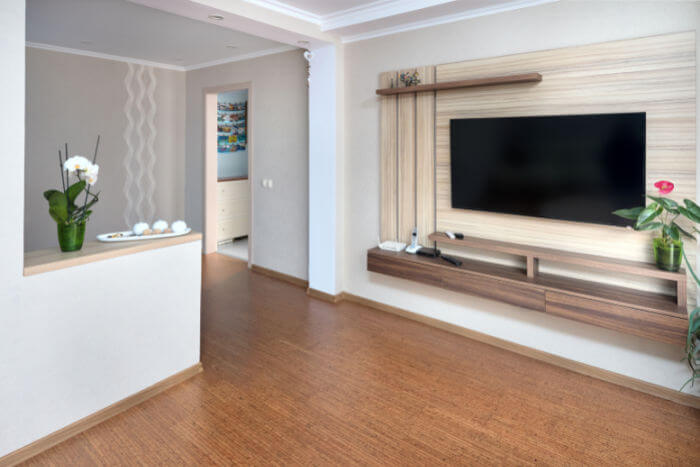
Cork flooring works best in spaces where comfort and sound control matter. Here is how it performs in different areas of your home:
- Bedrooms: Cork is soft, warm, and absorbs sound, making it a great choice for bedrooms. Since bedrooms have low traffic and little moisture, cork floors are easy to maintain.
- Home offices and libraries: Cork is often recommended for offices and study spaces because it insulates sound and feels comfortable underfoot. Its quiet, warm surface helps reduce fatigue from standing or walking for long periods.
- Living rooms: Cork is a practical option for living rooms where comfort matters and foot traffic is moderate. For better durability, choose a thicker plank (10 millimeters or more) and a protective finish.
- Kitchens: Waterproof cork or luxury vinyl-clad cork are good choices for kitchens if they are properly sealed. Standard cork tiles or planks can also work, but you will need to clean up spills quickly and reseal the floor regularly.
- Basements: Floating cork planks or waterproof cork work well in finished basements. Do not let water sit on cork floors, and use rugs near sinks or laundry areas. A good moisture barrier is essential for any below-grade installation.
Can You Install Cork Flooring Yourself?
Floating cork planks with click-lock systems are one of the easier DIY flooring projects. You will spend $116 to $406 on tools and materials (not including the flooring), depending on the saw you use. The process is similar to installing laminate, as the planks click together over underlayment without glue.
Glue-down cork tiles are more challenging to install. You must spread the adhesive evenly, the subfloor needs to be perfectly flat and clean, and tiles must be placed carefully since it is hard to move them once they stick. First-time DIYers often have trouble with bonding and uneven surfaces when using glue-down tiles.
If you install floating cork flooring yourself in a 300-square-foot room, you could save $600 to $1,200 in labor costs. However, mistakes like poor subfloor preparation, not letting the flooring adjust to the room, or skipping the moisture barrier can void the warranty and cause the floor to fail early.
How to Maintain Cork Flooring
Sweep or vacuum regularly with a soft brush to remove debris that could scratch the floor. Use a damp mop and a pH-neutral wood-safe cleaner as needed, but avoid too much water and never wet mop unsealed cork. Apply sealant after installation and reapply it every five years. Use felt pads under furniture and area rugs in busy areas to prevent dents and wear.
Compare top-rated flooring pros in your area.
Read real homeowner reviews, explore qualifications, and view promotions. Modernize makes it easy to browse professionals and find one that will be perfect for your project.



FAQs About Cork Flooring
-
Subfloor Replacement Costs
Key Takeaways Most subfloor replacement projects cost $1,500 to $5,000, with labor typically making up the largest share A well-installed subfloor lasts up to 30 years — problems arise sooner... -
Flooring Installation Cost
How Much Does Flooring Installation Cost? Flooring installation costs can vary more than most other home improvement projects. For example, a basic vinyl update and a high-end hardwood installation can... -
Types of Flooring
Types of Flooring: A Complete Comparison Guide The most popular flooring types include hardwood, luxury vinyl plank (LVP), tile, laminate, carpet, engineered hardwood, and vinyl sheet. Your best option depends... -
Best Flooring Companies
Best National Flooring Companies & Retailers In the U.S., the biggest flooring companies fit into two main groups. Some are full-service installers that manage everything from your first consultation to... -
Tile Flooring Installation
Tile Installation Cost by Type Tile materials vary widely in price. Ceramic is the most budget-friendly option, while natural stone and custom designs are at the higher end. Installed cost... -
How Much Does Empire Today Flooring Cost?
Empire Today Flooring Cost: What to Know Empire Today uses all-inclusive pricing, which means materials, installation, cleanup, and extras are bundled into one upfront estimate. The company does not list...