Foundations
A Complete Guide to Basement Foundations
On this page
- What a basement foundation is
- Types of basement foundations
- How to maintain a basement foundation
Find the best foundation pros near you.

The Modernize Mission
We help homeowners make confident decisions through our reliable, up-to-date, and unbiased information and average project costs. All of our content is thoroughly reviewed and fact-checked by our team of home improvement experts. Learn more about how we maintain these values.
Table of Contents
- What Is a Basement Foundation?
- Types of Basement Foundations
- How Are Basement Foundations Built?
- Common Basement Foundation Problems
- How Do You Maintain a Basement Foundation?
- When to Repair or Reinforce Your Basement Foundation
- How Do You Waterproof a Basement Foundation?
- Basement Foundation vs. Other Foundation Types
- FAQs About Basement Foundations
What Is a Basement Foundation?
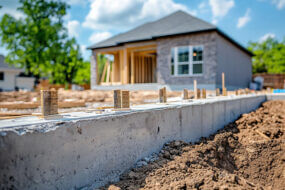
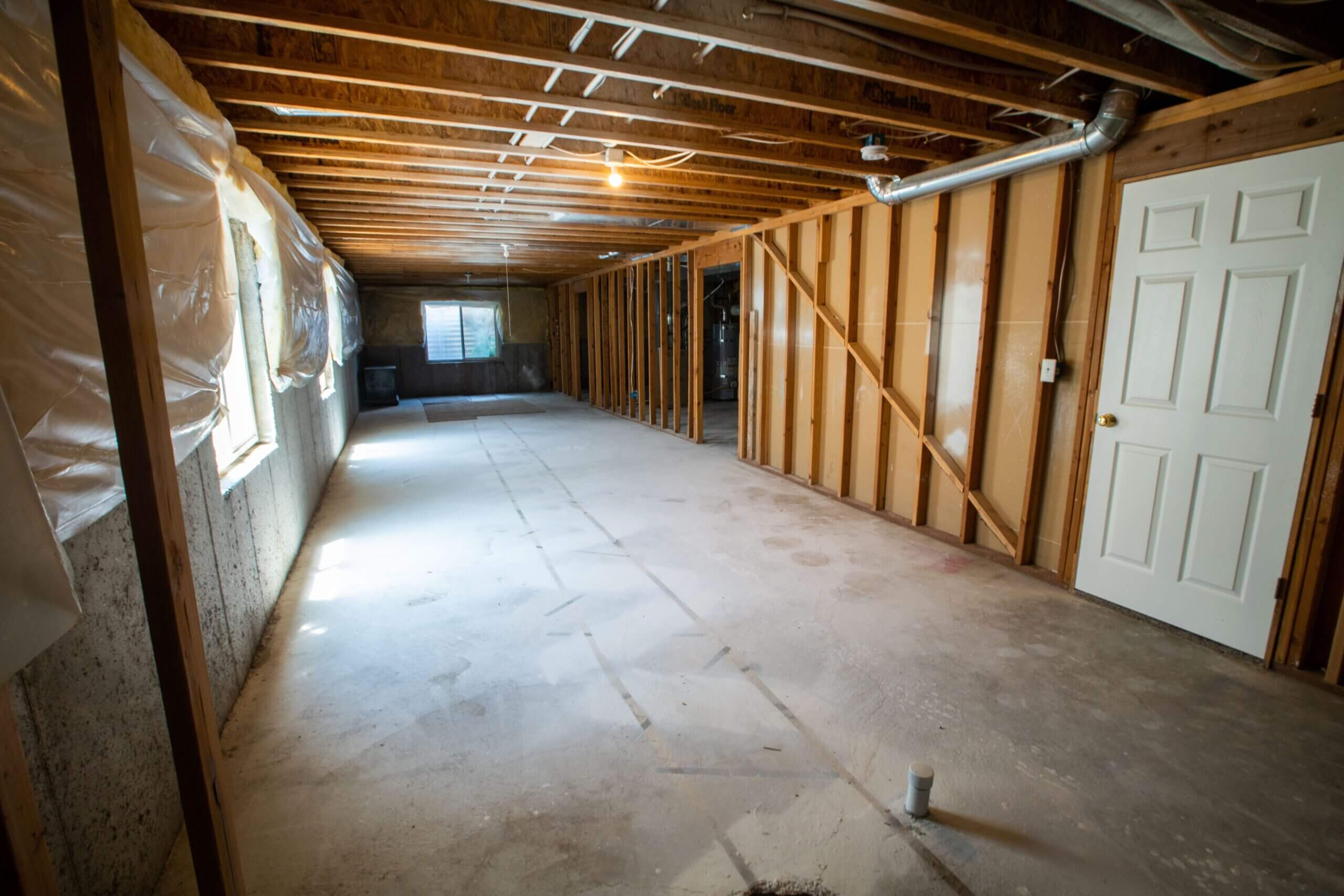
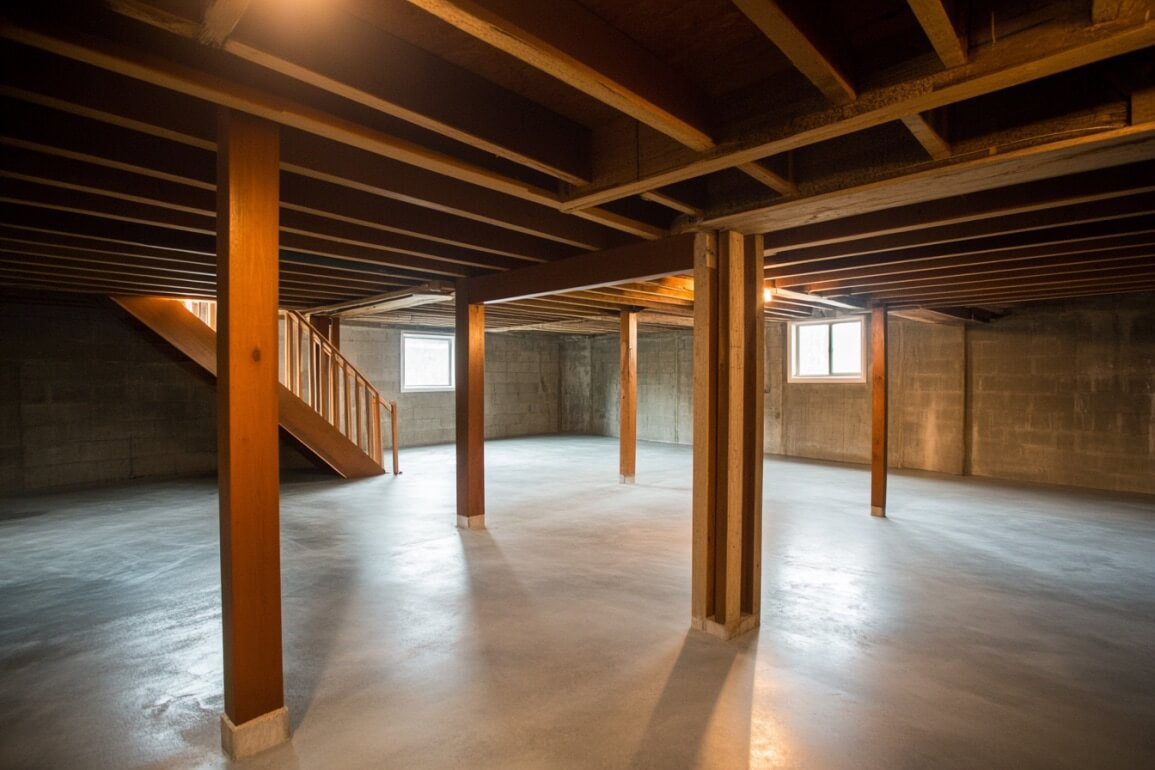
A foundation forms the base of your home. A basement foundation is one in which the walls of the home extend below ground level to create usable space underneath the main floor. This area can serve as storage, a garage, finished living space, or a place to house utilities and mechanical systems.
The basement foundation carries the vertical load of the home while resisting lateral pressure from soil and groundwater. Unlike a shallow slab or crawl space, a basement foundation anchors the home and provides additional structural stability.
Types of Basement Foundations
There are several types of basement foundations. The one you choose depends on your climate, soil conditions, construction practices, and regional challenges such as rocky terrain. Below are the main types of basement foundations.
Full Basement Foundations
A full basement matches the home’s main-level footprint. The basement walls align with the perimeter of the house, typically with full-height ceilings suitable for living space. This area often includes bedrooms, storage, or mechanical systems such as boilers or HVAC units.
Pros
- Adds significant usable space
- Excellent access to plumbing, appliances, and mechanical systems
- Expands square footage and resale value
Cons
- Higher initial cost
- Potential for water intrusion or moisture buildup
- Regular maintenance is required
Daylight or Walk-Out Basements
Walk-out or daylight basements are built so that one side of the wall is at or above ground level, commonly seen on sloped lots. This open side often includes windows and doors that lead outdoors.
Pros
- Can expand egress options
- More natural light comes into the basement
- Might boost resale value
Cons
- Requires different types of waterproofing
- Initial excavation and construction might cost more
- Room shape or height may vary due to the slope
Partial or Cellar-Style Basements
Partial basements are shallower and smaller than full basements, often extending under only part of the home. Cellar-style basements have low ceilings and limited usable space and are common storage areas, especially for items requiring cooler temperatures.
Pros
- Work well in areas where full basements aren’t possible
- Cost less to build than a larger basement
- Provides excellent storage space for staples
Cons
- Typically have a low height, limiting usable space
- Less natural light
- May need more maintenance than other types
How Are Basement Foundations Built?
Basement foundations are typically constructed during the home’s initial build, though some homes can be retrofitted later. Here is the general process.
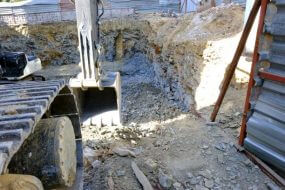
- Basement excavation: Soil is removed to the required depth and leveled for footings and walls.
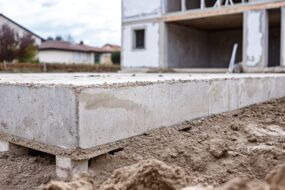
- Pouring the Footings: Thick concrete footings spread the load of the foundation walls.
- Basement Walls: Poured concrete or masonry blocks reinforced with rebar support the home above.
- Floor or Slab: A concrete floor is poured, often over gravel, vapor barriers, or insulation.
- Backfilling: Soil is added around the foundation once the walls are stable.
- Grading: The ground is sloped away from the home to direct water runoff.
- Waterproofing and Drainage: Membranes, coatings, and drainage systems are installed. Sump pumps may be added.
- Finishing: Framing, insulation, and drywall are installed if the basement will be finished.
Common Basement Foundation Problems
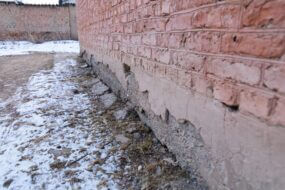
Even well-built basement foundations can develop issues such as cracks, moisture intrusion, settling, and shifting over time. Below are some common concerns.
Cracks and Shifting Walls
Natural soil movement can affect basement walls. Watch for these indicators:
- Hairline vertical cracks under 1/8 inch
- Diagonal or horizontal cracks, or cracks that widen over time
- Bowing walls caused by soil pressure
- Sticking doors or windows, uneven floors, or cracks near trim
If cracks exceed 1/4 inch or walls are bowing, contact a professional immediately.
Water or Moisture Problems
Basements are naturally exposed to groundwater. Even strong waterproofing can fail when clogged gutters, poor grading, or improper drainage allow water to accumulate. Watch for the following:
- Wet or damp walls and floors, especially after rain
- White powder on concrete walls (efflorescence)
- Water seeping into corners
- Dark spots indicating mold
Moisture issues can weaken concrete and jeopardize structural integrity, so contact a professional if you notice these signs.
Mold and Air Quality Concerns
Moisture intrusion can lead to mold, which poses health risks. Look for:
- A musty odor or mildew
- Condensation on walls and elevated humidity
- Visible mold growth
Call a professional promptly if mold is present.
How Do You Maintain a Basement Foundation?
Regular maintenance helps prevent costly issues. Here are key steps to keep your basement foundation in good condition.
- Inspect the Basement: Check quarterly for cracks, damp spots, and efflorescence. Mark cracks to monitor movement.
- Maintain Good Drainage: Ensure soil slopes at least six inches over 10 feet.
- Maintain the Gutters: Keep gutters clear and extend downspouts four to six feet away from the foundation.
- Monitor Humidity: Use a dehumidifier or improve ventilation as needed.
- Seal Small Cracks: Use masonry sealant or hydraulic cement and monitor for widening.
- Maintain the Sump Pump: Test regularly and schedule an annual check.
- Keep Drains Open: Ensure French and footing drains function properly.
- Mind the Gap: Avoid placing soil or mulch directly against basement walls.
Pay close attention during extreme weather, and inspect the basement after heavy rain or flooding.
When to Repair or Reinforce Your Basement Foundation
If your basement foundation needs attention, a professional evaluation is essential. Repairs vary widely depending on the issue.
Minor Repairs vs. Major Structural Fixes
| Minor Repairs | Major Repairs |
|---|---|
| Sealing hairline cracks | Reinforcement of bowing walls |
| Adding or cleaning drainage systems | Underpinning or adding piers |
| Installing a sump pump or dehumidifier | Exterior waterproofing |
| Interior waterproof coatings | Installing new drains and membranes |
Professional Inspection and Cost Expectations
During an inspection, a contractor will assess wall conditions, floor leveling, moisture levels, drainage, and grading. They may use lasers or levels to measure cracks and wall tilt and will provide a full report.
| Problem | Cost Range |
|---|---|
| Repairing cracks with epoxy injections | $500 to $3,000 |
| Underpinning or structural reinforcement | $10,000 to $30,000 |
| Full exterior waterproofing | $5,000 to $15,000 |
| Mold remediation | $1,500 to $9,000+ |
How Do You Waterproof a Basement Foundation?
Basement waterproofing can be interior, exterior, or both. Here is what each method involves.
- Interior Waterproofing: A drain channel is installed around the interior perimeter and connected to a sump pump. Sealants manage moisture but do not stop exterior water pressure.
- Exterior Waterproofing: Excavation exposes foundation walls for membrane application, drainage installation, and backfilling. This is the most effective long-term solution.
Proper grading and gutter maintenance can reduce the need for major waterproofing. If you live in an area with a high water table, proactive waterproofing may be beneficial.
Basement Foundation vs. Other Foundation Types
Basement foundations differ from slab-on-grade and crawl space foundations. Here is how they compare.
| Category | Basement Foundation | Slab-On-Grade | Crawl Space |
|---|---|---|---|
| What It Is | Deep excavation with full-height space | Concrete slab poured on grade | Raised space up to 3 feet |
| Cost Considerations | $20,000 to $40,000+ | $10,000 to $25,000 | $15,000 to $35,000 |
| Pros | Extra living space; easy access | Simpler build; fewer leak risks | Moderate storage and access |
| Cons | Requires moisture management | Limited access or storage | Moisture and pests possible |
| Climate Considerations | Best in cold climates | Best in warm climates | Works in various climates |
| Best Uses | Living space and resale value | Low maintenance | Moderate storage and utility access |