Gutters
Best Gutters for Heavy Rain: What to Buy and Install In 2026
If you live in an area with a lot of heavy rain, your gutters are essential for keeping your home safe. When gutters overflow, you could face problems like foundation erosion, basement flooding, damaged siding, and ruined landscaping. Picking the right gutter system, sized and installed for your local weather, helps prevent these issues.
This guide covers the best gutter materials, sizes, and styles for heavy rain. It will also help you compare your choices and decide when it’s time to replace your gutters.
Find the best gutters pros in your area.

The Modernize Mission
We help homeowners make confident decisions through our reliable, up-to-date, and unbiased information and average project costs. All of our content is thoroughly reviewed and fact-checked by our team of home improvement experts. Learn more about how we maintain these values.
Table of Contents
- What Makes a Gutter Good for Heavy Rain?
- Best Gutter Sizes for Heavy Rain
- Best Gutter Materials for Heavy Rain
- Best Gutter Styles for Heavy Rain
- Seamless vs. Sectional Gutters for Heavy Rain
- Do You Need Gutter Guards in a Heavy Rain Climate?
- Signs Your Current Gutters Aren't Handling Heavy Rain
- How Much Do Heavy Rain Gutters Cost?
- How to Find the Right Contractor
- Frequently Asked Questions
What Makes a Gutter Good for Heavy Rain?
Not all gutters can handle the same amount of water. In places with lots of rain, the most important things to consider are capacity, durability, and drainage efficiency. A gutter that works well in a dry area might fail during a heavy storm in the Pacific Northwest or Gulf Coast.
- Capacity means how much water a gutter can hold and move at once, which mostly depends on its size. Wider gutters can move more water.
- Durability is about whether the material can handle the weight of water, debris, and repeated soaking.
- Drainage efficiency depends on how many downspouts you have, where they are placed, the slope of the gutters, and whether the system is seamless or made from sections.
If you live in a heavy-rain area, it’s usually best to choose 6-inch gutters instead of the standard 5-inch size, go with seamless construction instead of sectional, and pick aluminum or steel instead of vinyl. We’ll explain each of these choices in more detail below.
Best Gutter Sizes for Heavy Rain
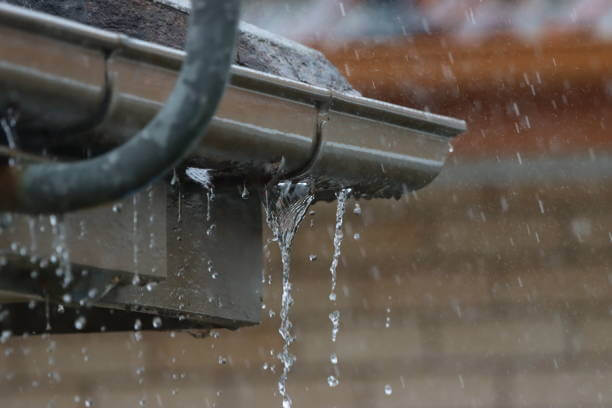
Gutter size is the most important factor for homes in areas with lots of rain. Most houses have 5-inch K-style gutters, which work for moderate rainfall. But if you often get heavy or long-lasting downpours, 6-inch gutters are a better choice. They can handle about 40% more water than a 5-inch gutter of the same length.
For very large roofs, steep slopes, or areas with extreme rainfall, some contractors suggest using oversized 7-inch gutters or box gutters. These are less common for homes but can be helpful in special cases.
Downspouts
Downspout sizing matters just as much as gutter width. Standard 2×3-inch downspouts are typically paired with 5-inch gutters, while 6-inch gutters should be matched with 3×4-inch downspouts. In heavy rain, undersized downspouts become the bottleneck — water backs up in the gutter and overflows regardless of how well the gutter itself is sized. A good rule of thumb is one downspout for every 30 to 40 linear feet of gutter, with additional downspouts added for longer runs or high-volume areas like roof valleys.
Best Gutter Materials for Heavy Rain
Not every gutter material holds up well in areas with heavy rain. Aluminum is often the best option, but copper and steel work well, too. Vinyl isn’t recommended, as it is more prone to cracking in extreme weather.
Aluminum
Aluminum is the best all-around material for heavy rain climates. It’s rust-resistant, lightweight, strong enough to handle sustained water volume, and available in seamless configurations that eliminate the leak-prone joints found in sectional systems. Most professional gutter installations use aluminum, and it performs reliably across a wide range of climates and rainfall levels. Aluminum gutters typically last 20 to 30 years with proper maintenance.
Steel
Steel is a stronger choice for homes that face heavy rain along with high winds, hail, or other severe weather. Heavy-gauge steel gutters are less likely to dent or get damaged than aluminum, and they can handle lots of water without warping. However, steel needs more maintenance to prevent rust, especially in humid coastal areas. Galvanized steel gutters usually last 20 to 30 years, while stainless steel can last much longer.
Copper
Copper is the premium choice for homeowners who want maximum longevity and don’t mind the upfront investment. It is naturally rust-resistant, extremely durable, and can last 50 years or more with minimal maintenance. It’s an excellent performer in heavy rain and develops a distinctive patina over time that many homeowners find appealing. The cost is significantly higher than aluminum or steel, and copper is typically reserved for higher-end homes or historic restoration projects.
Vinyl
Vinyl is not a good choice for areas with heavy rain. It’s cheap and easy to install, but vinyl gutters can crack and warp when exposed to big temperature changes and lots of water. In places with frequent heavy rain, vinyl gutters usually fail sooner and need to be replaced more often than other materials.
Ready to upgrade your gutters? Modernize can connect you with the best pros in your area.
Best Gutter Styles for Heavy Rain
Some gutter styles are more suited to managing heavy rainfall. Here’s a look at how the most common styles hold up:
K-Style
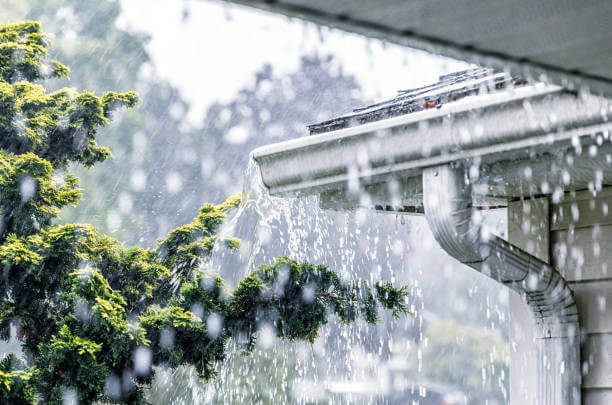
K-style gutters are the most common type used on homes in the U.S. and are usually the best choice for areas with heavy rain. Their flat back and decorative front let them hold more water than half-round gutters of the same width, which is important when you have a lot of rain. They’re also easier to attach directly to the fascia board, making for a more secure installation.
Half-Round Gutters
Half-round gutters have a curved, U-shaped design that drains water well but holds less than a K-style gutter of the same width. They’re better for homes in places with moderate rain and are often found on older or historic houses. In heavy-rain areas, half-round gutters can work if you use a bigger size—a 6-inch half-round holds more water than a 5-inch K-style—but for most people in rainy regions, K-style is the more practical option.
Box Gutters
Box gutters are less common but work well for homes with very large roofs or commercial-style buildings. They have a square shape and can hold much more water than K-style or half-round gutters, so they’re great for heavy rain. However, they are more complicated and expensive to install and are usually found on older homes or custom projects.
Seamless vs. Sectional Gutters for Heavy Rain
In areas with heavy rain, seamless gutters are much better than sectional ones. Sectional gutters are made from pre-cut pieces joined at seams, and these seams are the most common place for problems. Leaks, debris buildup, and water pressure during storms all put stress on the seams. Over time, the joints loosen, sealant wears out, and the system works less effectively.
Seamless gutters are made on-site to fit your roof as one continuous piece, which removes most of the weak spots. They cost more at first than sectional gutters, but they need less maintenance, last longer, and handle heavy rain much better. For people living in rainy areas, seamless gutters are almost always the best choice.
See how these two stack up in our guide to seamless vs. sectional gutters.
Do You Need Gutter Guards in a Heavy Rain Climate?
Gutter guards can be helpful in areas with heavy rain, but you need to choose the right type. If you pick the wrong kind, it can actually cause overflow by blocking water from getting into the gutter.
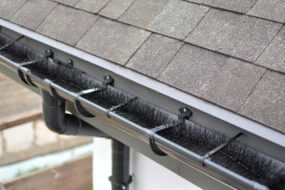
Micro-mesh guards are the best option for heavy rain. They allow water to pass through freely while blocking debris, and high-quality versions are engineered to handle significant water volume without causing overflow. Brands like LeafFilter are well-regarded in this category.
Reverse-curve and solid cover guards do a good job of keeping out debris, but they are more likely to let water overshoot the gutter during heavy rain. Water can follow the curve and miss the gutter completely in a downpour. If you live in a rainy area and want gutter guards, choose micro-mesh and check the product’s water flow rating before you buy.
Signs Your Current Gutters Aren’t Handling Heavy Rain
If your gutters aren’t working well during heavy rain, you’ll usually see signs within a day or two after a storm.
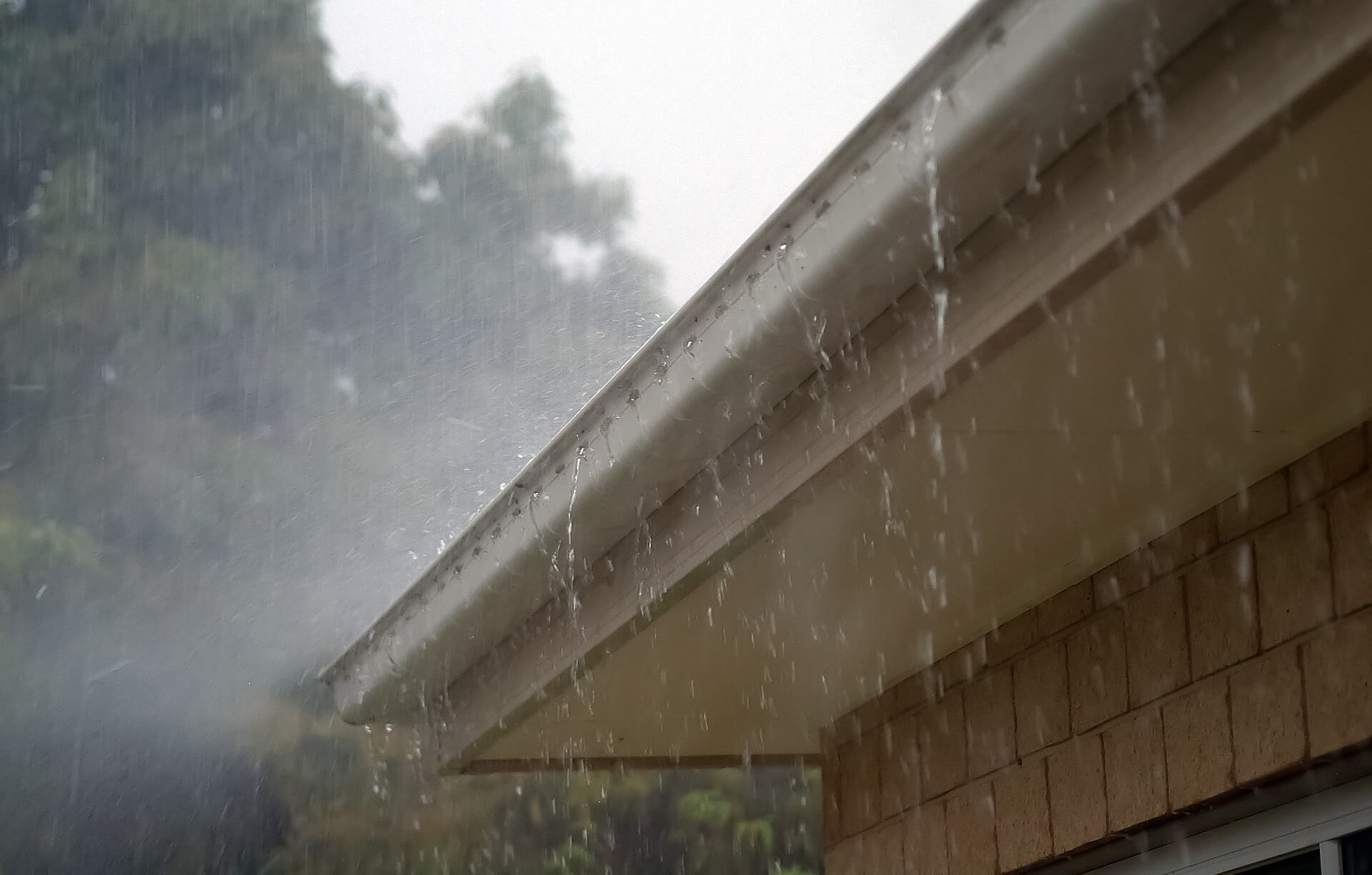
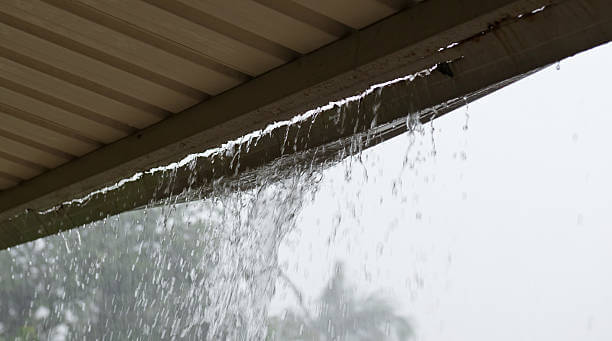
- Water spilling over the front edge during rain often means the gutter is clogged, too small, or not sloped correctly.
- If you see water dripping behind the gutter and down the fascia board, the gutter may be pulling away from the house or there could be a gap between the gutter and the roof.
- Water pooling near your foundation after a storm is a clear sign your drainage system isn’t moving water far enough from your home.
If your gutters are sagging, coming apart at the seams, or showing rust and corrosion, it’s better to replace them instead of trying to repair them. This is especially true in areas with heavy rain, where the system is under extra stress.
How Much Do Heavy Rain Gutters Cost?
The cost to replace or upgrade your gutters depends on the material, size, and how big the project is. Most homeowners spend between $2,800 to $5,200 for a full seamless aluminum gutter installation, with the national average around $4,000. Upgrading to 6-inch gutters usually adds 10 to 20 percent to the total cost compared to standard 5-inch systems.
Steel gutters cost more, usually $9 to $18 per foot installed, while copper can be $20 to $40 per foot or even higher. Adding gutter guards can cost between $800 and $5,000, depending on the type and the size of your home.
For homes in heavy-rain regions, the cost of a proper gutter upgrade is almost always less than the cost of repairing water damage to a foundation, basement, or siding — making it one of the better home improvement investments available.
Cost by material, installed:
- Aluminum: $6 to $12 per linear foot
- Steel: $9 to $18 per linear foot
- Copper: $20 to $40+ per linear foot
- Vinyl: $5 to $10 per linear foot (not recommended for heavy rain)
- Upgrading from 5-inch to 6-inch gutters: adds roughly $1 to $3 per linear foot
How to Find the Right Contractor
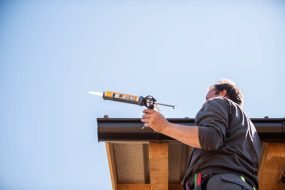
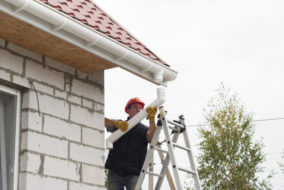
The quality of the gutter installation is just as important as the material you choose. Even the best gutters won’t work well if they’re installed with the wrong slope, not enough downspouts, or poor fastening. When choosing a contractor, look for someone with experience installing seamless gutters, who is licensed and insured in your state, and who provides a written estimate that lists materials, gutter size, downspout placement, and warranty details.
If you live in a rainy area, ask contractors how they handle downspout sizing and placement, how they calculate the slope, and if they recommend larger gutters for your roof. Contractors who give clear, thoughtful answers to these questions are more likely to install a system that works well when it rains.
Get at least two or three quotes before you decide, and compare what each contractor includes, not just the price. The lowest bid isn’t always the best value, especially when your gutters need to handle years of heavy rain.
Connect with the best gutter pros near you. Get quotes and compare prices.