Gutters
Best Gutter Guards for Pine Needles
Pine needles can slip through gaps that would stop bigger debris, pack tightly in gutters and downspouts, and hold moisture against the gutter, which leads to rust and decay. If you have pine trees nearby, regular gutter guards can sometimes make things worse by letting pine needles pile up and block water flow.
This guide explains what to look for in a gutter guard that protects against pine needles. It covers which types work, which ones don’t, brand suggestions, and what you can expect for cost and installation.
Find the best gutters pros in your area.

The Modernize Mission
We help homeowners make confident decisions through our reliable, up-to-date, and unbiased information and average project costs. All of our content is thoroughly reviewed and fact-checked by our team of home improvement experts. Learn more about how we maintain these values.
Table of Contents
- Why Pine Needles Are a Unique Problem
- What to Look for in a Gutter Guard for Pine Needles
- Gutter Guard Types Ranked for Pine Needle Protection
- Does Guard Installation Angle Matter?
- How Often Will You Still Need to Clean Gutters?
- Brand Recommendations
- What to Avoid
- How Much Do Gutter Guards for Pine Needles Cost?
- Signs Your Current Gutters Are Losing the Pine Needle Battle
- Frequently Asked Questions
Why Pine Needles Are a Unique Problem
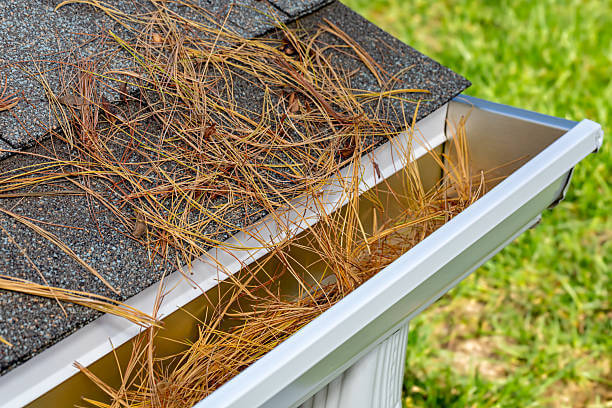
Most gutter guards are made to block leaves. Leaves are big enough that almost any cover or screen will keep them out of the gutter. Pine needles are a different problem. They are usually one to four inches long and only a millimeter or two wide, so they can slip through mesh openings, get past reverse-curve covers, and work into perforated panels that would stop most other debris.
When pine needles get into the gutter, they pack down under their own weight and soak up water like a sponge. A gutter full of wet pine needles is much heavier than one filled with leaves, which puts extra strain on brackets and fasteners. The trapped moisture also encourages mold, mildew, and rust. Packed pine needles are much harder to clean out than loose leaves.
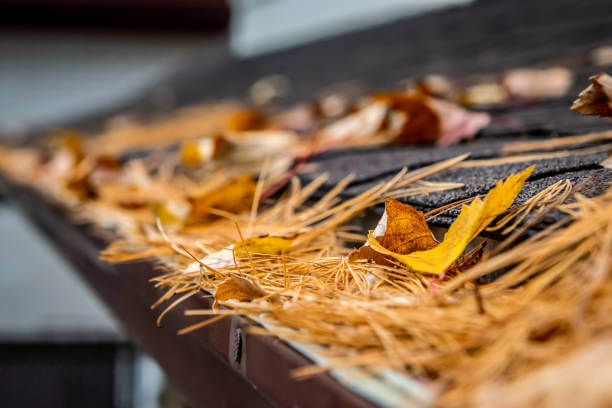
Another challenge is the amount of debris. Pine trees drop needles all year, not just in one season. This means gutters near pine trees need protection that works in every season, not just in the fall.
What to Look for in a Gutter Guard for Pine Needles
When looking for gutter guards for pine needles, consider mesh size, installation angle, materials, and installation quality.
Mesh Size
The most important thing to check when choosing gutter guards for pine needles is the size of the mesh openings. This is what separates gutter guards that work from those that don’t. Pine needles can get through openings as large as 50 microns, so you need a fine micro-mesh guard with openings of 50 microns or smaller for good protection. Anything with bigger openings, like perforated panels, basic screen guards, or foam inserts, will let pine needles through.
Installation Angle
Besides mesh size, look for guards that are raised or installed at an angle. Guards that sit flat on top of the gutter give pine needles a place to settle and build up. Guards installed at the same angle as the roof help debris slide off, making them much better at preventing pine needle buildup.
Materials
Material quality is important too. Stainless steel mesh works better than aluminum mesh for blocking pine needles because its openings stay the same size over time. Aluminum mesh can bend under the weight of debris, making the holes bigger. The best option is a powder-coated aluminum frame with stainless steel micro-mesh.
Installation Quality
Finally, consider how the guard is installed. To block pine needles, you need a guard that fits tightly and is fastened securely. Guards that are loose or don’t fit well can develop gaps over time, which pine needles will find. If you have a lot of pine trees, paying for professional installation is usually worth it.
Gutter Guard Types Ranked for Pine Needle Protection
The type of gutter guard directly impacts its effectiveness in preventing pine needle buildup.
Micro Mesh (Best Option)
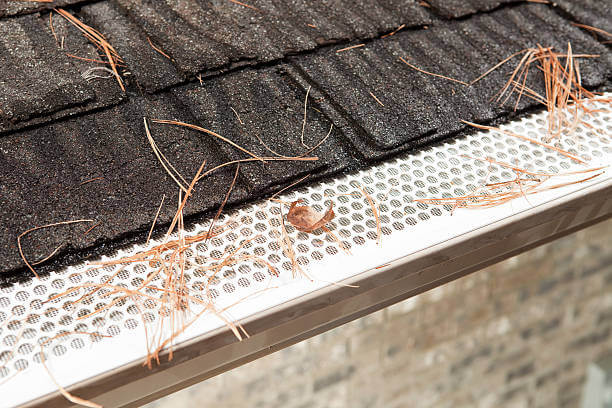
Experts consistently recommend micro-mesh guards for blocking pine needles. If the mesh is fine enough and the guard is installed correctly, micro-mesh will stop pine needles but still let water through. The key is the mesh grade. Not all micro-mesh guards have small enough openings. Look for surgical-grade or stainless steel mesh with clearly listed opening sizes, not just marketing claims.
Perforated Guards (Runner-Up)
Perforated or screen guards are a middle-ground option. Basic aluminum screens with bigger holes will block some pine needles, but not the smaller ones. They’re better than nothing, but not nearly as good as a quality micro-mesh system. If you have only a moderate amount of pine needles, a screen guard might be enough. For heavy pine needle coverage, micro-mesh is the better choice.
Reverse-Curve (Not Good for Pine Needles)
Reverse-curve guards don’t work well for pine needles. The curved surface, which is meant to send leaves over the edge, actually catches pine needles. Pine needles are light, so they don’t fall off, and they’re thin enough to get into the opening. Over time, pine needles pile up on the curve and can block water from getting into the gutter. Reverse-curve guards are fine for leaves, but not a good choice if you have pine trees.
Foam and Brush (The Worst for Pine Needles)
Foam and brush inserts are the worst choice for blocking pine needles. Pine needles get stuck in the foam or brush bristles and are almost impossible to remove without taking out the whole insert. These guards can actually trap more pine needles in the gutter than if you had no guard at all.
Does Guard Installation Angle Matter?
Yes, the angle matters a lot, especially for pine needles. Most gutter guards are installed flat across the top of the gutter, which gives pine needles a place to settle and build up. When the guard gets covered with pine needles, water can’t flow through well and ends up running off the outside instead of into the gutter.
Guards angled upward toward the roofline shed pine needles more naturally. Because the surface is angled rather than flat, pine needles slide off during rain and wind rather than resting on top.
MasterShield is the best-known brand that specifically engineers their guards to be installed at roof pitch, and it’s one of the reasons they’re consistently recommended for pine needle environments.
Get connected with the best gutter guard pros in your area today!
How Often Will You Still Need to Clean Gutters?
No gutter guard will get rid of cleaning completely, especially if you have pine needles. A good micro-mesh guard will cut down how often you need to clean and stop pine needles from packing tightly in the gutter. Instead of cleaning two to four times a year, most people with a quality micro-mesh guard only need to clean once a year, and the job is easier because the needles haven’t packed inside the gutter.
Pine needles will still accumulate on top of the guard surface over time. This is normal and manageable. A leaf blower or gentle rinse with a garden hose is usually enough to clear the surface.
Brand Recommendations
A few gutter guard brands stand out above the rest as the best options for pine needles.
LeafFilter
LeafFilter is the most widely available professional installation option and works well for pine needle protection. Their stainless steel micro-mesh is fine enough to stop pine needles, and the installation includes gutter cleaning and any needed repairs before the guard is installed. The transferable lifetime warranty is one of the best in the category.
The main drawbacks are the price, since LeafFilter is one of the more expensive options, and some homeowners have reported aggressive sales tactics. Be sure to get a quote and compare it to at least one other professional estimate before deciding.
MasterShield
MasterShield is the top recommendation for pine needle environments. Its fine stainless steel mesh, copper wire reinforcement, and pitch-aligned installation make it the best technical choice for this problem. Installing at roof pitch helps pine needles shed off the surface more effectively than any flat-mounted guard.
MasterShield also offers a heated option for homeowners in cold climates where pine needle buildup and ice dams are a risk. It’s a premium product with a premium price, and availability varies by region, so confirm service area before getting a quote.
Gutterglove
Gutterglove Pro is a good option for homeowners who want a high-performing professional installation at a somewhat lower price than LeafFilter or MasterShield. The stainless steel raised-mesh design lifts debris, including pine needles, off the surface so it can dry and blow away naturally.
Gutterglove also offers retail DIY options through home improvement stores, making it one of the few brands where a homeowner comfortable on a ladder can get reasonable pine needle protection without a professional installation contract.
HomeCraft Gutter Protection
HomeCraft Gutter Protection is a strong option for heavily wooded properties. Their raised-diamond micro-mesh pattern is designed to lift debris so it doesn’t sit in contact with the mesh surface. This is important in pine needle environments where surface buildup is the main problem. HomeCraft is not available everywhere, so check if they serve your area.
Champion Gutter Guard
Champion Gutter Guard uses surgical-grade stainless steel mesh, which is among the finest available for homes. It’s designed to stop shingle granules, which are smaller than most pine needles, so it provides reliable pine needle protection. The main drawback is maintenance access. The guard fits tightly over the gutter, so any debris that gets inside requires removing the guard to clean. In areas with lots of pine needles, keep this in mind before buying.
What to Avoid
Foam inserts should be avoided entirely for pine needle environments. Pine needles embed in the foam and cannot be removed without replacing the insert.
Basic aluminum screen guards sold at hardware stores for under $1 per foot are not fine enough to stop pine needles. They’re better suited to leaf-only environments. If your primary problem is pine needles, these guards will disappoint.
Reverse-curve guards, including Gutter Helmet and LeafX, are not recommended for homes with heavy pine tree coverage. The design works well for leaves but catches and holds pine needles rather than shedding them.
How Much Do Gutter Guards for Pine Needles Cost?
Professional micro-mesh gutter guard installation typically ranges from $1,500 to $7,500 for most homes, depending on linear footage, product tier, and roof complexity. Per-foot pricing for professional installation generally falls between $10 and $30 per linear foot depending on the brand and system.
DIY options like Gutterglove’s retail line run $3 to $6 per linear foot for materials, with total project costs of $300 to $800 for most single-story homes. Performance is solid but generally below professional-grade systems.
Cost by brand, approximate installed ranges:
- LeafFilter: $1,800 to $6,000
- MasterShield: $2,500 to $7,500
- Gutterglove Pro: $1,800 to $6,000
- HomeCraft: $1,800 to $5,000
- Champion: $1,500 to $4,500
For homes with a lot of pine trees, investing in a quality micro-mesh guard usually pays for itself within two to three years through lower cleaning costs and less gutter damage, especially if pine needle buildup has been causing frequent clogs or water damage.
Signs Your Current Gutters Are Losing the Pine Needle Battle
- Water spilling over the front edge of your gutters during rain is the most visible sign that pine needles have likely compacted inside the gutter or on top of a guard, blocking the flow.
- Gutters that sag between brackets may be carrying the extra weight of wet, packed pine needles.
- Dark stains on the siding below the gutter suggest water is overflowing instead of draining through the downspouts.
- Downspout blockages are also common in pine needle environments. Needles that get into the gutter often move toward the downspout opening and pack tightly, sometimes requiring complete removal to clear.
If you are cleaning your gutters more than twice a year because of pine needles, that’s a clear sign that your current setup, whether you have guards or not, isn’t enough for your tree situation.
Get connected with the best gutter guard pros in your area today!