

Bathroom Accessibility and Aging in Place
Most people want to stay in their own homes as they get older, and the bathroom is the best place to start. It’s where many falls happen. A 2011 CDC report on 2008 data estimated 234,094 bathroom injuries among people 15 and older were treated in U.S. emergency departments, and 81.1% were caused by falls. Injuries in and around the tub or shower rose from 49.7 per 100,000 people ages 15 to 24 to 200.2 per 100,000 people ages 85 and older.
Aging in place means living in your own home, safely and independently, for as long as you can. The right bathroom modifications make that possible, whether you’re planning ahead for yourself or helping a parent or another loved one. Some upgrades take an afternoon. Others are full remodels.
Bathroom Accessibility Modifications and Costs
A full accessible bathroom remodel costs $3,000 to $25,000, and single upgrades cost $100 to $7,500. A new bathroom built to ADA standards can reach $50,000. The scope decides the price: a few grab bars cost a fraction of a curbless shower. These are typical project costs from Angi’s 2026 data, except the bidet seat, which comes from our bidet guide.
| Upgrade | Typical Cost |
|---|---|
| Grab bar | $100–$500 each |
| Accessible sink and faucet | $100–$1,000 |
| Modified (comfort-height) toilet | $400–$1,000 |
| Bidet seat (installed) | $250–$1,000 |
| Nonslip flooring | $3–$22 per square foot |
| Widen a doorway | $700–$2,500 |
| Lower the vanity and cabinets | $1,200–$2,500 |
| Wheelchair-accessible shower | $2,000–$7,500 |
| Walk-in tub | $1,100–$17,000 |
| Full accessible bathroom remodel | $3,000–$25,000 |
If you can only do one thing this month, install grab bars. They cost the least and address the most common risk. Then add better lighting, nonslip surfaces, and a handheld showerhead with a seat before you take on a bigger project. Use our bathroom remodel cost calculator to estimate a larger remodel.


Bathroom Accessibility Home Improvements
These upgrades range from small tweaks to entire remodels, and many don’t need a contractor. The ADA sets accessible design standards for public buildings. It doesn’t apply to private homes, but many homeowners use its measurements as a guide, and the numbers below come from the 2010 ADA Standards.
Grab bars
Install grab bars in the shower, beside the tub, and next to the toilet. The ADA calls for horizontal bars 33 to 36 inches above the floor, rated to support 250 pounds. A bar only works if it’s anchored into wall studs or solid blocking, so have a pro install them. Grab bars cost $100 to $500 each.
Toilets
The ADA puts the top of the toilet seat 17 to 19 inches above the floor. Many standard toilets sit lower, which makes sitting down and standing up harder. A raised seat is a quick DIY fix. Replacing the toilet with a comfort-height model costs $400 to $1,000 for the modified toilet, and our guide to toilet installation cost covers labor and fixtures.
Bidet seats
A bidet seat is one of the most useful bathroom upgrades for people with limited mobility. A Cleveland Clinic gastroenterologist told the Washington Post that bidets are often helpful for people with arthritis, severe obesity, or Parkinson’s disease. Wiping takes reaching and twisting. A seat with a remote control and a warm-air dryer reduces both, and it pairs well with a comfort-height toilet.
- Cost: A seat costs $150 to $1,000, or $250 to $1,000 installed, and attachments cost $20 to $130.
- Power: Electric seats need a GFCI-protected outlet by the toilet, which adds $120 to $350 if you need one.
- Style: Choose a seat or attachment over a handheld sprayer, which can be awkward to use.
See our complete bidet guide for types, brands, and installation, and our article on bidet benefits for what the research shows.
Walk-in and curbless showers
For most people, a walk-in or curbless shower is the best bathing upgrade because it removes the step you have to climb over. Most prefab showers come with a 7-inch curb, so going curbless takes a custom pan, which costs about $2,500. Angi puts a wheelchair-accessible shower at $2,000 to $7,500 and a full walk-in shower at $6,000 to $12,000.
Under the ADA, a roll-in shower is at least 30 by 60 inches with no curb. A transfer shower is 36 by 36 inches with a seat and a threshold no taller than half an inch. Add these features to either style:
- Seat: Mount a fixed or fold-down seat with the top 17 to 19 inches above the floor.
- Handheld showerhead: Choose one on a hose at least 59 inches long that also works as a fixed head.
- Nonslip floor: Pick a textured tile or surface that stays grippy when wet.
- Safe water temperature: The ADA limits shower spray to 120 degrees Fahrenheit.
Visit our walk-in shower cost guide for pricing, or read about tub-to-shower conversions if you’re replacing a tub.
Walk-in tubs
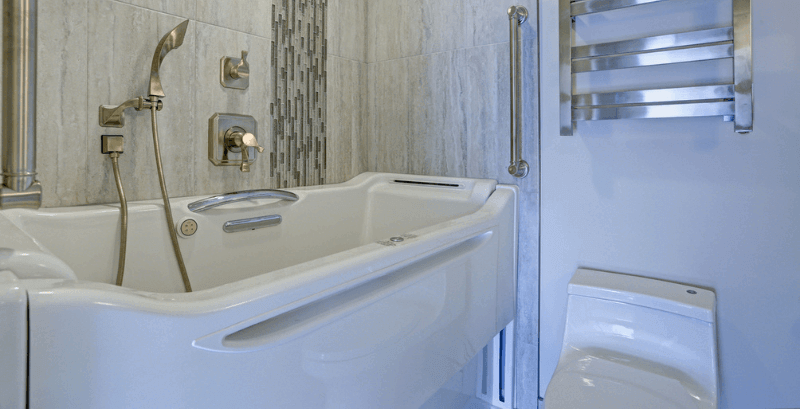
A walk-in tub has a leak-proof door, a low threshold, and a built-in seat, so you step in instead of over a tub wall. That helps if you like to soak or can’t stand for a shower, and it works in a multigenerational household. Angi puts a walk-in tub at $1,100 to $17,000.
The tradeoff is time. You sit in the tub while it fills and drains with the door closed. We think a walk-in shower with a seat is the better choice for most people, and a walk-in tub makes sense when soaking matters to you. Explore the best walk-in tubs to compare costs and features.
Sinks and faucets
Replace twist handles with lever or motion-sensing faucets, which don’t require a strong grip. A lowered vanity with open space underneath works for people who sit at the sink. An accessible sink and faucet costs $100 to $1,000, and lowering cabinets and vanities costs $1,200 to $2,500.
Floors, lighting, and space
Non-slip flooring costs $3 to $22 per square foot, so see our picks for non-slip flooring options. Brighter bathroom lighting and night lights help people see clearly. Doorways should be at least 32 inches wide for a walker or wheelchair. Widening a doorway costs $700 to $2,500.
Easy Upgrades vs. Bigger Projects
This table sorts common bathroom accessibility upgrades by difficulty. Basic improvements are possible to DIY and may not need a contractor or permits. Minor and major improvements are more involved and likely need a contractor.
| Accessibility Improvement | Difficulty Level |
|---|---|
| Install raised toilets or add an adjustable seat | Minor |
| Add a fold-down seat in the shower | Basic |
| Replace your tub with a walk-in tub | Major |
| Replace lightbulbs with a brighter option | Basic |
| Replace bathroom faucets with levered or motion-sensing models | Basic |
| Choose detachable and adjustable showerheads with at least a six-inch reach | Basic |
Use our home accessibility checklist to plan changes in the rest of your home too.
What to Anticipate for an Accessible Bathroom Renovation
Remodeling a bathroom for accessibility can bring your aging in place goals within reach. Plan for these things before work starts:
- Alternative bathroom: Depending on the project, you may need another bathroom for a while. In a multigenerational home, you might designate one accessible bathroom for older family members.
- Water access: Find out when your water will be off. Make backup plans for bathing, using the toilet, and washing up.
- Budgeting: Plan your bathroom remodel budget ahead of time, including parts, labor, and any permit fees.
How to Pay for Bathroom Accessibility Modifications
Grab bars and walk-in tubs usually come out of pocket, but several programs can help. Amounts and rules change, so confirm details with the agency before you apply.
- Medicare: Original Medicare generally doesn’t cover grab bars, walk-in tubs, or other permanent home modifications, though some Medicare Advantage plans offer a home safety allowance. Read our guide to Medicare coverage.
- Medicaid waivers: Home and community-based services waivers may cover home modifications for people who qualify, and rules vary by state.
- VA grants: Veterans with qualifying disabilities may get a Specially Adapted Housing grant of up to $126,526 or a Special Home Adaptation grant of up to $25,350 for fiscal year 2026. The Home Improvements and Structural Alterations (HISA) benefit is another option.
- USDA grants: Rural homeowners 62 and older may qualify for Section 504 Home Repair grants of up to $10,000.
- Tax deduction: Changes made for medical reasons, such as grab bars or wider doorways, may count as medical expenses under IRS Publication 502. Talk to a tax professional first.
- Financing: If you can’t pay up front, ask contractors about financing, and see our guide to financing a bathroom remodel.
- Local help: Your Area Agency on Aging and nonprofits such as Rebuilding Together can point you to local programs.
Planning with a Qualified Contractor
Hire a contractor who has built accessible bathrooms before. The National Association of Home Builders (NAHB) offers a Certified Aging-in-Place Specialist (CAPS) designation that shows training in aging-in-place remodeling, and you can search for CAPS holders in the NAHB designation directory.
Ask each contractor these questions:
- Have you built accessible bathrooms, and can you show photos?
- Will you follow ADA measurements for toilet height, grab bars, and shower size?
- Who handles the plumbing, electrical work, and permits?
- How long will the project take, and will I have a usable bathroom?
Download our contractor checklist, and read how to evaluate contractor quotes before you sign. Modernize can connect you with local contractors who have experience with accessible bathroom remodels. We’ll help you find one who can make your bathroom safer, easier to use, and attractive.
Bathroom Accessibility FAQs
Find the Right Contractor for Your Bathroom Remodel Project
Whether you’re ready to begin your project now or need some expert advice, our network of contractors are here to help. With a few simple questions, we’ll find the best local professionals for you
Sources
- Angi, cost to make a home accessible (2026)
- Angi, walk-in shower cost (2026)
- CDC, nonfatal bathroom injuries among people 15 and older (2011)
- ADA.gov, 2010 ADA Standards shower and toilet requirements
- Washington Post, bidets are big, but do you really need one (2021)
- Disability Resources, paying for home modifications
- Fall Prevention Foundation, how to pay for home modifications
- NAHB, Certified Aging-in-Place Specialist (CAPS)


