Keeping your home warm and comfortable starts with your furnace and boiler. However, where there’s heat, there’s often fire and combustible materials. To ensure safety, strict rules and codes — like furnace clearance requirements — are in place.
Heating your home is essential, but it’s not a simple DIY project. The complexity and safety requirements involved make professional help necessary. Building codes also vary by state, so it’s crucial to check your local regulations. Contacting a local professional ensures you follow the correct safety guidelines.
In this article, we’ll cover key safety considerations and required clearances for installing furnaces and boilers to ensure they remain both safe and accessible for maintenance.
How Furnaces Work
Furnaces come in different shapes, sizes, and fuel types, but they all serve the same purpose — keeping your home warm. The process starts with the thermostat. When the home’s temperature drops below the set level, the furnace activates. Gas fuel is then ignited using either a pilot light or an ignition switch. The heat generated is distributed through the air ducts, warming your home.
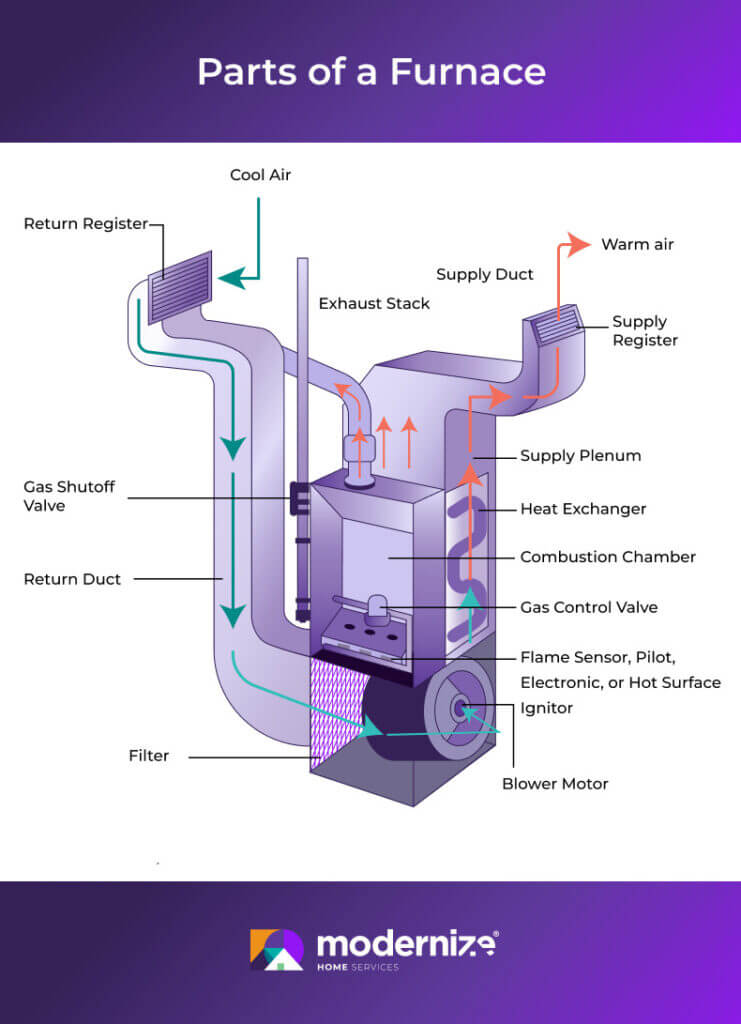
Understanding how your furnace works will help you appreciate these safety considerations, although we always recommend that a pro handle installation and repairs.
Boilers use water to create steam and heat that feeds radiators and baseboard heating systems in your home, which then warm things up. While they work slightly differently, there are similar considerations and clearances required for these systems given that heat is involved. The U.S. Department of Energy has a good guide on the differences between these two systems.
Furnace Clearance Requirements: What Makes Heating Units Dangerous?
Furnaces are categorized by the type of fuel they use — gas, electric, or oil — and understanding these distinctions is crucial for adhering to furnace clearance requirements that ensure safe operation.
Gas furnaces, the most common type in HVAC systems, operate by igniting natural gas, with a thermostat controlling the temperature. Electric furnaces function similarly, utilizing electrical heating elements to produce heat instead of gas. Additionally, some systems incorporate an oil tank as a reserve, where the oil is filtered into a burner to generate warmth. Each type of furnace presents unique safety considerations, highlighting the importance of maintaining proper clearances to mitigate the risks associated with combustible materials and ensure safe heating in your home.
Accessing Furnaces
Furnaces must remain easily accessible for regular maintenance and repairs. This maintenance includes changing and cleaning filters. Hot air passes through the furnace and ductwork in your home to remove dust and debris. Neglecting to clean these filters can strain the system, leading to motor issues.
Common furnace repairs include fixing pilot lights, faulty thermostats, fan limit switches, and blown fuses. To diagnose and resolve these problems, professionals need easy access to the system, which starts with proper installation and clearances. Furnace clearance requirements ensure safe use and facilitate maintenance.
Safe Operation with Furnace Clearance Requirements
As mentioned previously, furnaces and boilers need to be treated carefully because they have the potential to cause damage if neglected. Furnace clearance requirements are key to safe operation and maintenance.

Clearances are essential for furnaces and boilers due to risks associated with combustible materials. Furnaces typically use oil, propane, gas, or electricity, all of which can lead to explosions and fires if not handled properly. Maintaining these clearances ensures that these materials don’t come into contact with heat sources.
Clearances also provide access for repairs. When issues arise, trained professionals need easy access to service the system. Regular annual maintenance is crucial, as is cleaning filters to allow proper airflow.
Local municipalities establish furnace clearance requirements, so check your city and state regulations. You can find general rules in the International Residential Code (IRC) and your appliance manual, which should specify the required clearances.
Typically, the minimum clearance for most furnaces is 3 feet, with an additional 2-foot clearance in the front for maintenance. Install your furnace on a non-combustible floor, avoiding carpets and rugs nearby.
To ensure your furnace is properly sized for your home, use our furnace size calculator — especially if you’re replacing your system or expanding your home.


Enclosing Furnace and Boiler Rooms
Furnaces and boilers are often unsightly, leading many homeowners to hide them away in basements. If you want to further conceal your system, you can safely enclose it in its own room or crawl space. While standard furnace clearance requirements still apply, local regulations may impose additional size and egress requirements.
Furnace and boiler installation
Installing a furnace or boiler is not a DIY project. Always hire qualified professionals who understand local codes and safety standards.
Ash storage for solid-fuel furnaces
Older furnaces may run on coal or wood, leaving behind ash that requires regular cleaning. Accumulated ash can hinder fire performance and damage your system due to its acidity. Solid-fuel furnaces also need clearances, including a 3-foot safe zone around the appliance, at least 3 feet from combustible surfaces with a heat shield, and an 18-inch distance from the flue to the wall.
Furnace and boiler exit requirements
Furnace and boiler rooms must include specific exitways for safety. Codes typically specify a minimum number of doorways based on room size. Check your local codes for details.
Furnace and boiler ventilation
Proper ventilation is crucial in rooms housing furnaces and boilers. Ensure gaps around doorways and consider installing fans and carbon monoxide detectors. Professionals can help design effective ventilation systems with both intake and exhaust vents.
Energy requirements
Lastly, energy efficiency standards exist to keep your systems operating safely and effectively. These minimum requirements are established by the Office of Energy Efficiency & Renewable Energy.



Ensuring Safe Heating in Your Home
Keeping your home warm and comfortable relies heavily on the safe installation and operation of furnaces and boilers. Adhering to furnace clearance requirements and local codes is essential to minimize risks associated with combustible materials. Always prioritize safety by consulting qualified professionals for installation and maintenance, as well as for any necessary repairs. Regular upkeep — including filter cleaning and annual servicing — is crucial to ensure the efficiency and longevity of your heating systems. By understanding the importance of these safety considerations, you can enjoy a warm home while protecting your loved ones and property.
Find the Right Contractor for Your HVAC Project
Whether you’re ready to begin your project now or need some expert advice, our network of contractors are here to help. With a few simple questions, we’ll find the best local professionals for you