Plumbing
How Do Garbage Disposals Work? A Complete Guide
On this page
- How garbage disposals work
- Repair vs. replacement cost and advice
- Troubleshooting and maintenance tips
Find the best professional plumbers in your area.

The Modernize Mission
We help homeowners make confident decisions through our reliable, up-to-date, and unbiased information and average project costs. All of our content is thoroughly reviewed and fact-checked by our team of home improvement experts. Learn more about how we maintain these values.
Table of Contents
- What Is a Garbage Disposal?
- How Garbage Disposals Work
- Main Components of Garbage Disposal Systems
- Types of Garbage Disposals
- How Much Does It Cost to Replace, Install, or Repair a Garbage Disposal?
- Garbage Disposal Repair vs. Replacement
- Importance of Proper Installation and Maintenance
- How to Clean a Garbage Disposal
- Garbage Disposal Safety Tips
- Garbage Disposal Not Working: Common Problems and Solutions
- How Do I Install a Garbage Disposal Myself?
- When to Call a Pro for Installation
What Is a Garbage Disposal?
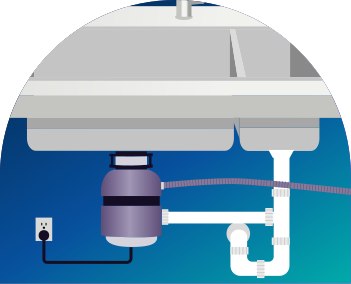
A garbage disposal is an electric device installed under a kitchen sink that grinds food scraps into small particles so they can flow through your plumbing system more easily.
Garbage disposals help manage food waste and reduce kitchen odors. When used correctly, they can keep food scraps out of the trash and help prevent sink clogs caused by small leftover bits.
How Garbage Disposals Work
Garbage disposals use an electric motor to spin a flywheel at the base of the unit. Blunt impellers push food waste against a stationary shredder, or grind, ring with ridged grooves. This process breaks food into fine particles — without sharp blades. Running water then carries the ground food through your drain line and into your sewer or septic system. Some models also include anti-jam features and sound insulation for quieter operation.
Main Components of Garbage Disposal Systems
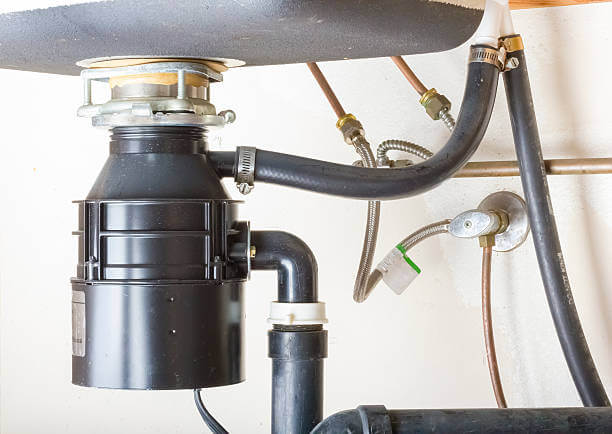
A garbage disposal may look simple from the outside, but several parts work together to grind food and move it safely through your plumbing. Use the infographic below to see where each component sits and what it does.
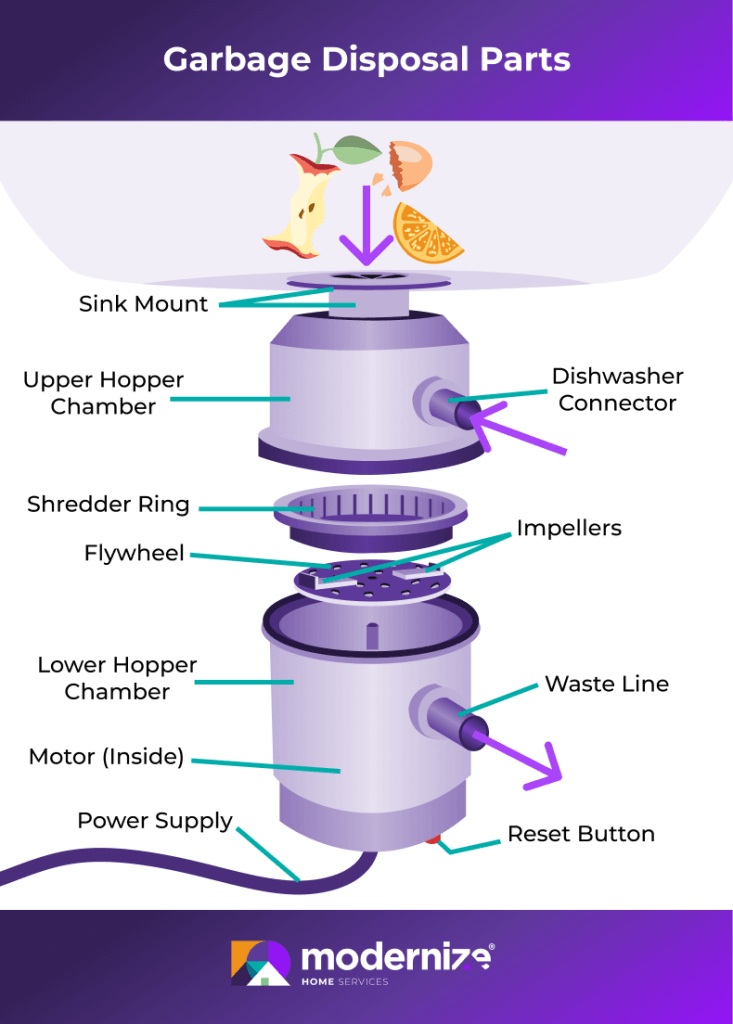
Role of each component:
- Motor: Powers the grinding mechanism.
- Flywheel and impellers: Spin to push food waste against the shredder ring.
- Shredder ring: Breaks food down into small particles.
- Upper and lower hoppers: House and protect internal components.
- Mounting assembly: Connects the disposal to the sink.
- Reset button: Restores power after an overload or jam.
- Waste line: Path where ground particles exit the unit.
- Power supply: Provides electricity to the motor.
Types of Garbage Disposals
Garbage disposals come in two main types: continuous feed and batch feed. Batch feed models only run when a stopper is locked in place, while continuous feed models run using a switch.
Continuous Feed Disposal Systems
Continuous feed disposals activate with a wall switch and allow you to add food scraps while the unit is running.
Best for:
- Busy kitchens that generate a lot of food waste.
- Homeowners who want fast, uninterrupted operation.
- Homes where disposals are used frequently.
Pros:
- Easy to use — flip the switch and feed scraps as needed.
- Typically more affordable.
- Good for clearing larger amounts of waste quickly.
Cons:
- Slightly higher risk of objects falling in while running.
- Requires careful use to avoid damage or accidents.
Batch Feed Disposal Systems
Batch feed units only run when a special stopper, or cover, locks into place. You load scraps, seal the lid, then activate the disposal.
Best for:
- Families with children.
- Households focused on safety.
- Occasional-use kitchens with lighter food waste.
Pros:
- Safer — nothing can fall in while it is operating.
- Reduces the chance of foreign object damage.
Cons:
- Usually more expensive than continuous feed models.
- Slower for large amounts of waste since you load in batches.
How Much Does It Cost to Replace, Install, or Repair a Garbage Disposal?
Most homeowners spend $100 to $550 to replace or install a garbage disposal, depending on DIY versus professional installation. Costs vary based on disposal type, installation complexity, and local labor rates.
→→→ Explore Our Top-Ranked Garbage Disposal Brands
DIY Replacement
For DIY replacement, most homeowners spend $100 to $300 for the unit, plus tools or supplies if needed. If wiring and the mounting bracket are compatible, this is often a straightforward swap.
Professional Installation
For professional installation or replacement, most homeowners spend $200 to $550, which typically includes labor, basic materials, and removal of the old unit.
Hiring a licensed professional is recommended when wiring needs updating, plumbing must be modified, the sink mount is incompatible, or access is difficult — especially in older homes or when leaks or electrical issues are involved.
Repair
Most homeowners spend $100 to $450 for garbage disposal repairs, depending on the issue and parts needed. Jams, minor leaks, and power resets often fall on the lower end, while motor or internal component failures cost more and may approach replacement pricing.
Garbage Disposal Repair vs. Replacement
In general, repairs make sense for jams, minor leaks, or power issues. Consider replacement for recurring failures, cracks, rust, or units that are more than 10 years old.
When a Repair Makes Sense
- Minor jams or clogs: Often cleared with an Allen wrench or by removing debris.
- Loose connections or small leaks: Tightening fittings or replacing gaskets may solve the issue.
- Reset or overload problems: A tripped reset may only need clearing or cleaning.
- Strange noises: Rattling may indicate a non-food item caught inside.
When to Consider a Full Replacement
- Frequent breakdowns: Repeated resets or recurring clogs may mean the motor is wearing out.
- Rust or visible cracks: These can lead to leaks and water damage.
- Declining performance: Poor grinding or slow drainage despite upkeep can signal end of life.
- Outdated or underpowered units: Newer models often offer better safety and performance.
- Over 10 years old: Replacement is often more cost-effective than ongoing repairs.
If you are unsure whether repair or replacement is the best move, consult a licensed plumber for a quick diagnosis and safe fix.
Importance of Proper Installation and Maintenance
Proper installation and regular maintenance play a major role in how well your garbage disposal performs over time.
Why Proper Installation Matters
Correct installation helps prevent leaks, vibration, and electrical issues. Understanding what the job involves can help you decide whether it is a simple DIY replacement or a project best handled by a professional — especially if wiring, plumbing adjustments, or incompatible mounting hardware are involved.
Why Regular Maintenance Is Essential
Routine care reduces jams, clogs, odors, and motor strain. Simple habits — like cleaning regularly, running cold water during use, and avoiding damaging items — can extend your disposal’s lifespan.
When to Consider Replacing a Disposal
If your disposal frequently jams, leaks, makes unusual noises, or stops working entirely, it may be time for a replacement. When in doubt, a licensed professional can help you choose the safest option.
How to Clean a Garbage Disposal
Cleaning helps extend lifespan, prevent clogs, and reduce odors. Try these methods:
- Ice and salt: Grind ice cubes with coarse salt to scrub the grind ring and impellers.
- Baking soda and vinegar: Add 1/2 cup baking soda and 1 cup vinegar, wait 10 minutes, then rinse.
- Citrus peels: Grind lemon or orange peels to help deodorize.
Avoid harsh chemicals like bleach or drain cleaners, which can damage internal components and create unsafe fumes. Stick to non-corrosive options like baking soda, vinegar, and citrus.
Garbage Disposal Safety Tips
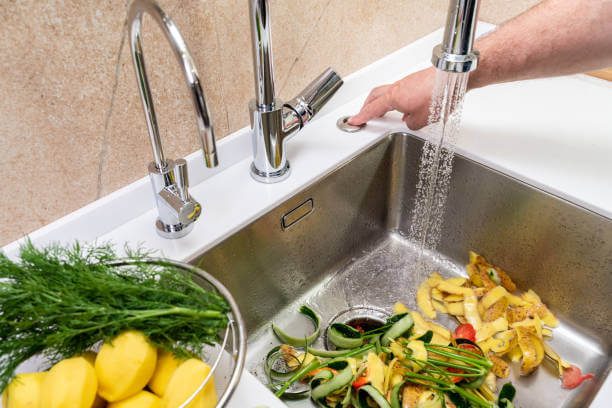
- Run cold water before, during, and after use to help move particles and solidify grease.
- Avoid hard items like bones, fruit pits, and non-food materials.
- Never use harsh chemicals that can corrode components.
- Keep hands and utensils out — use tongs or pliers to remove obstructions.
- Watch for leaks or unusual noises that may signal a problem.
Garbage Disposal Not Working: Common Problems and Solutions
Most garbage disposal problems stem from jams, overload trips, clogs, or loose connections.
- Jammed impellers: Use an Allen wrench in the bottom slot to manually free the mechanism.
- No power: Press the reset button and confirm the unit is plugged in and the breaker has not tripped.
- Slow drainage: This may indicate a clog. Avoid fibrous foods that can tangle and block lines.
- Unusual noises: Turn off power and inspect for foreign objects.
- Leaks: Tighten connections or replace gaskets as needed.
If you are unsure of the cause or uncomfortable troubleshooting, a licensed plumber can diagnose and repair the system safely.
How Do I Install a Garbage Disposal Myself?
DIY installation is possible if you are comfortable with basic plumbing and electrical work and your existing wiring and mounting hardware are compatible.
Step-by-step:
- First, turn off the power. Switch off the circuit breaker and confirm power is off with a voltage tester.
- Next, remove the old disposal, if applicable.
- Disconnect drainpipes and the mounting assembly.
- Remove the unit from the mounting bracket.
- Scrape away old plumber’s putty from the sink flange.
- Install the new sink flange.
- Apply plumber’s putty and press the flange into the drain opening.
- Install the gasket and mounting ring from below.
- Secure the mounting assembly with screws.
- Wire the disposal, if not pre-wired.
- Remove the cover plate on the bottom.
- Connect wires: black to black for hot, white to white for neutral, and green to ground.
- Replace the cover plate securely.
- Mount the disposal unit.
- Align the unit with the mounting ring and twist to lock.
- Tighten with the included wrench if needed.
- Connect the discharge tube.
- Attach the tube to the outlet and connect it to the drainpipe.
- Use the proper gasket or clamp for a tight seal.
- Connect the dishwasher drain, if applicable.
- Knock out the plug in the dishwasher inlet and connect the hose.
- Lastly, test for leaks and function.
- Restore power at the breaker.
- Run water and turn on the disposal.
- Check all connections for leaks and tighten as needed.
When to Call a Pro for Installation
Call a professional if:
- You are not comfortable with plumbing or electrical work.
- Your home has older or complex plumbing.
- No dedicated power outlet exists, which may require an electrician.
- You are unsure about local code requirements.
- A previous unit failed due to leaks or wiring issues.
Hiring a professional helps ensure safe installation, fewer leaks, and reliable long-term operation.
Need help with your garbage disposal? Modernize connects homeowners with trusted local professionals for installation and repair. Explore our resources or get matched with an expert so your project is handled safely and efficiently.