Stairlifts
Inclined Platform Stairlift Guide: Costs, Best Brands, Installation Requirements
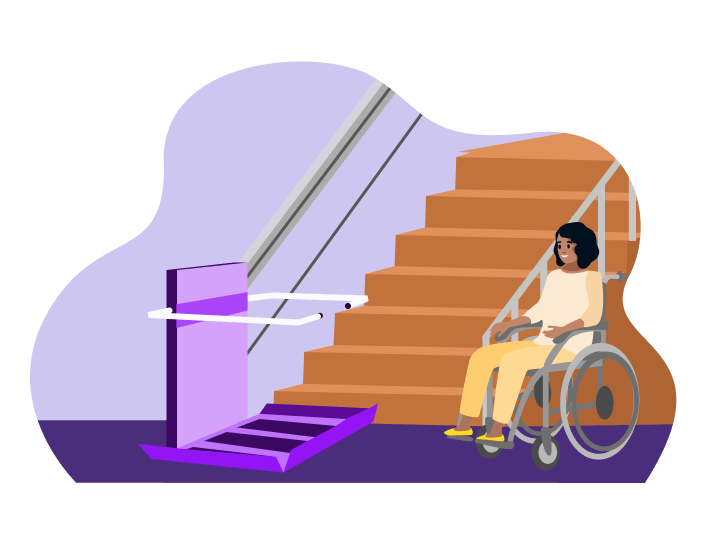
An inclined platform stairlift is a motorized platform that travels along a rail on a staircase. It allows wheelchair users to move between floors while staying in their chair. Unlike a standard seated stairlift, which requires users to transfer into a fixed chair and leave their wheelchair behind, an inclined platform lift carries both the user and their wheelchair for the whole trip.
For wheelchair users who cannot transfer on their own, or for whom transferring is risky, an inclined platform lift is often the most practical way to access multiple floors at home.
This guide covers how inclined platform lifts work, how they compare to other lifts, what they cost, which brands are recommended, and who they suit best.
Connect with the best stairlift pros in your area.

The Modernize Mission
We help homeowners make confident decisions through our reliable, up-to-date, and unbiased information and average project costs. All of our content is thoroughly reviewed and fact-checked by our team of home improvement experts. Learn more about how we maintain these values.
Table of Contents
- How Does an Inclined Platform Stairlift Work?
- Inclined Platform Lift vs. Vertical Platform Lift: What's the Difference?
- Inclined Platform Lift vs. Seated Stairlift: What's the Difference?
- Who Is an Inclined Platform Stairlift Best For?
- Staircase Requirements for Inclined Platform Lifts
- Best Inclined Platform Stairlift Brands and Models
- How Much Does an Inclined Platform Stairlift Cost?
- Installation Considerations
- Financing and Assistance Options
- Questions to Ask Before Purchasing
- FAQs About Inclined Platform Stairlifts
How Does an Inclined Platform Stairlift Work?
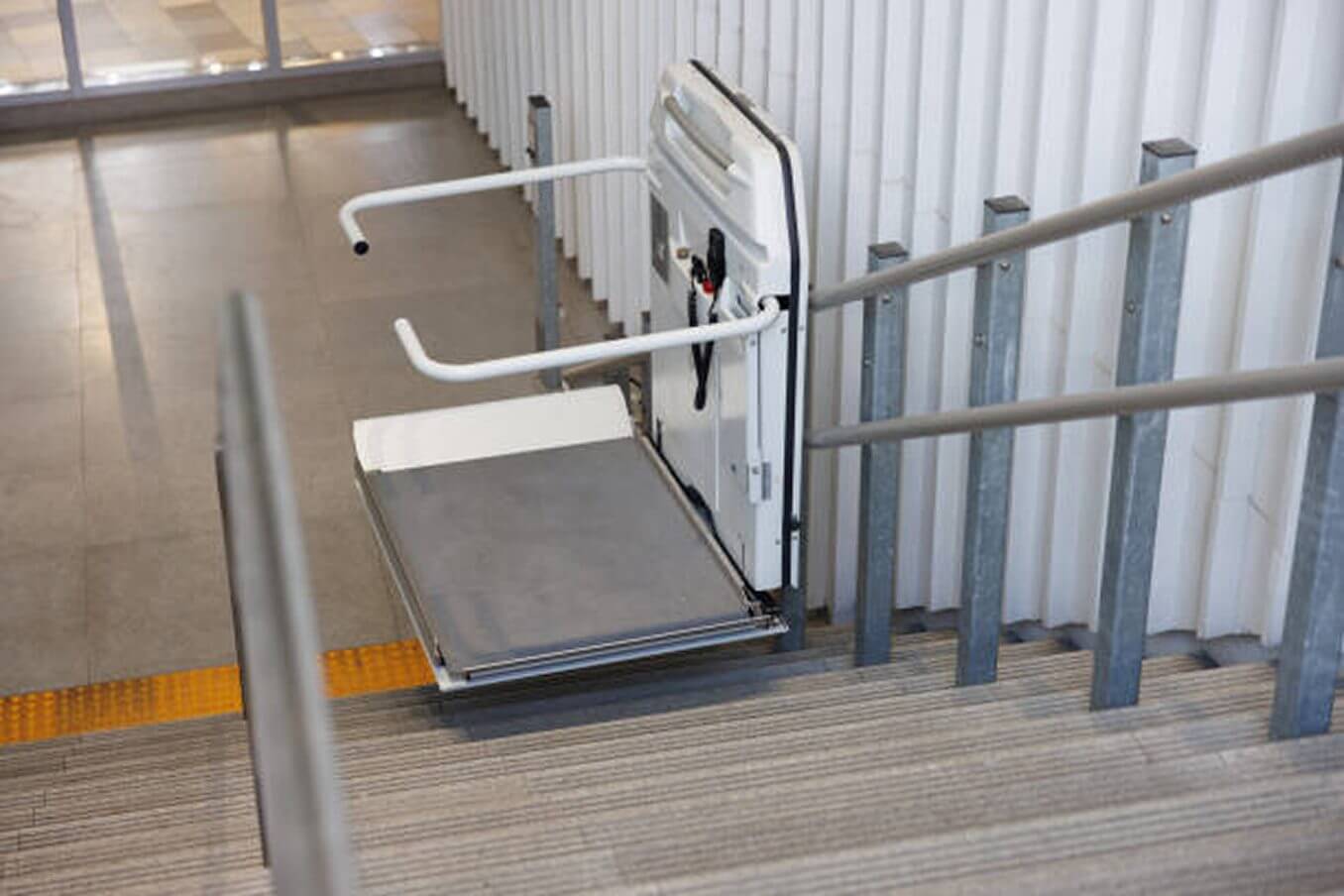
An inclined platform stairlift works similarly to a seated stairlift. A motorized carriage moves along a rail on the stairs, but instead of a chair, there is a flat platform big enough for a wheelchair and its user.
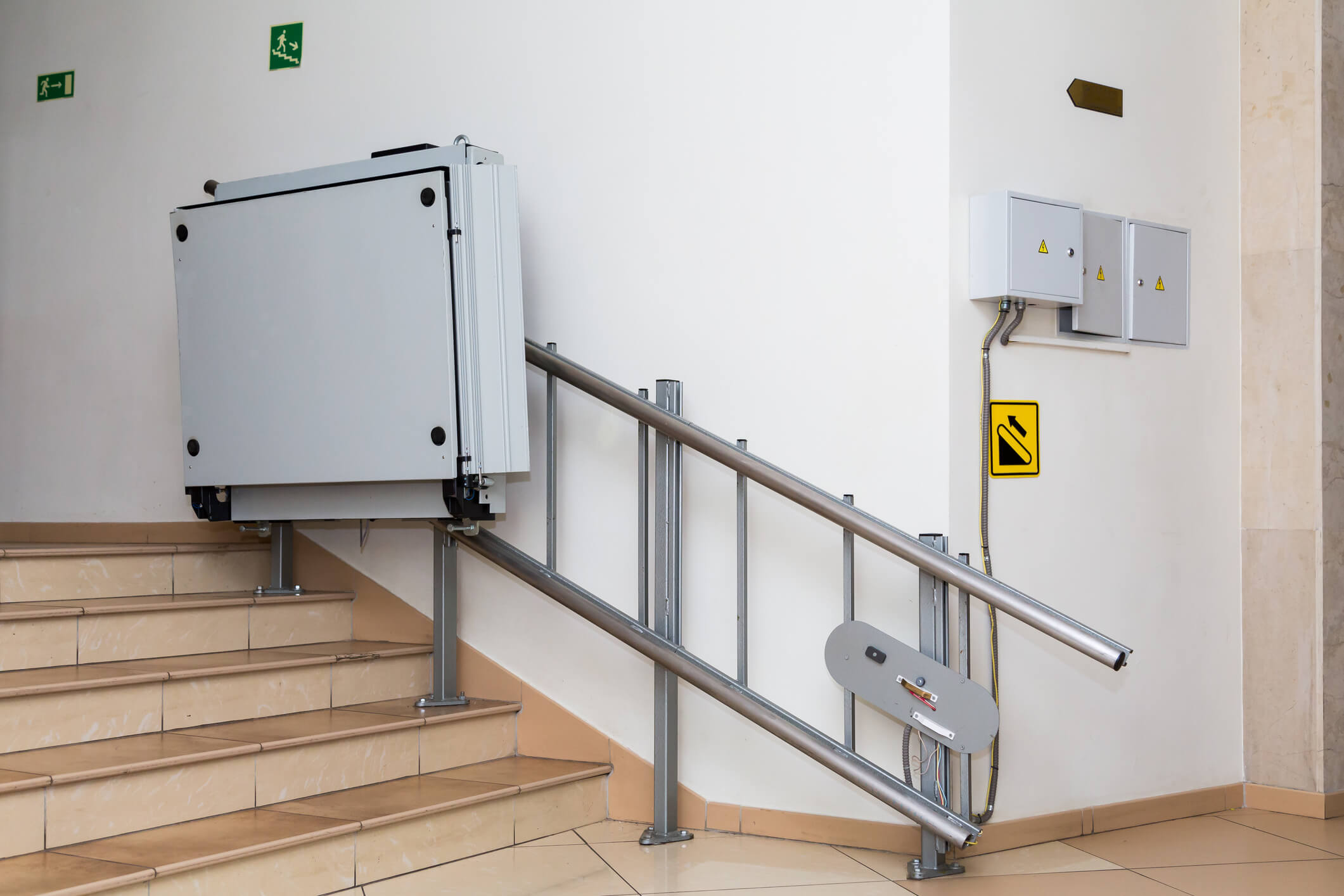
When not in use, the platform typically folds up against the wall to save space on the stairs. Common safety features include fold-down arms or barriers to prevent the wheelchair from rolling off, non-slip surfaces, sensors that stop the lift if something is on the stairs, and a battery backup for power outages.
The user or a caregiver rolls the wheelchair onto the platform, secures the safety barriers, and operates the lift with a simple control panel or remote. Most inclined platform lifts move at a slow, steady speed for safety.
Key Insights:Most inclined platform lifts require a staircase at least 32 to 36 inches wide. The Savaria Delta (straight staircases) and Savaria Omega (curved and multi-landing staircases) are two of the most widely installed residential models in the U.S. Installed costs range from $7,500 to $16,000 for straight staircases and $15,000 to $25,000+ for curved or multi-landing configurations. Medicare does not cover inclined platform stairlifts, but other financing options can offset the cost depending on your situation. |
Inclined Platform Lift vs. Vertical Platform Lift: What’s the Difference?
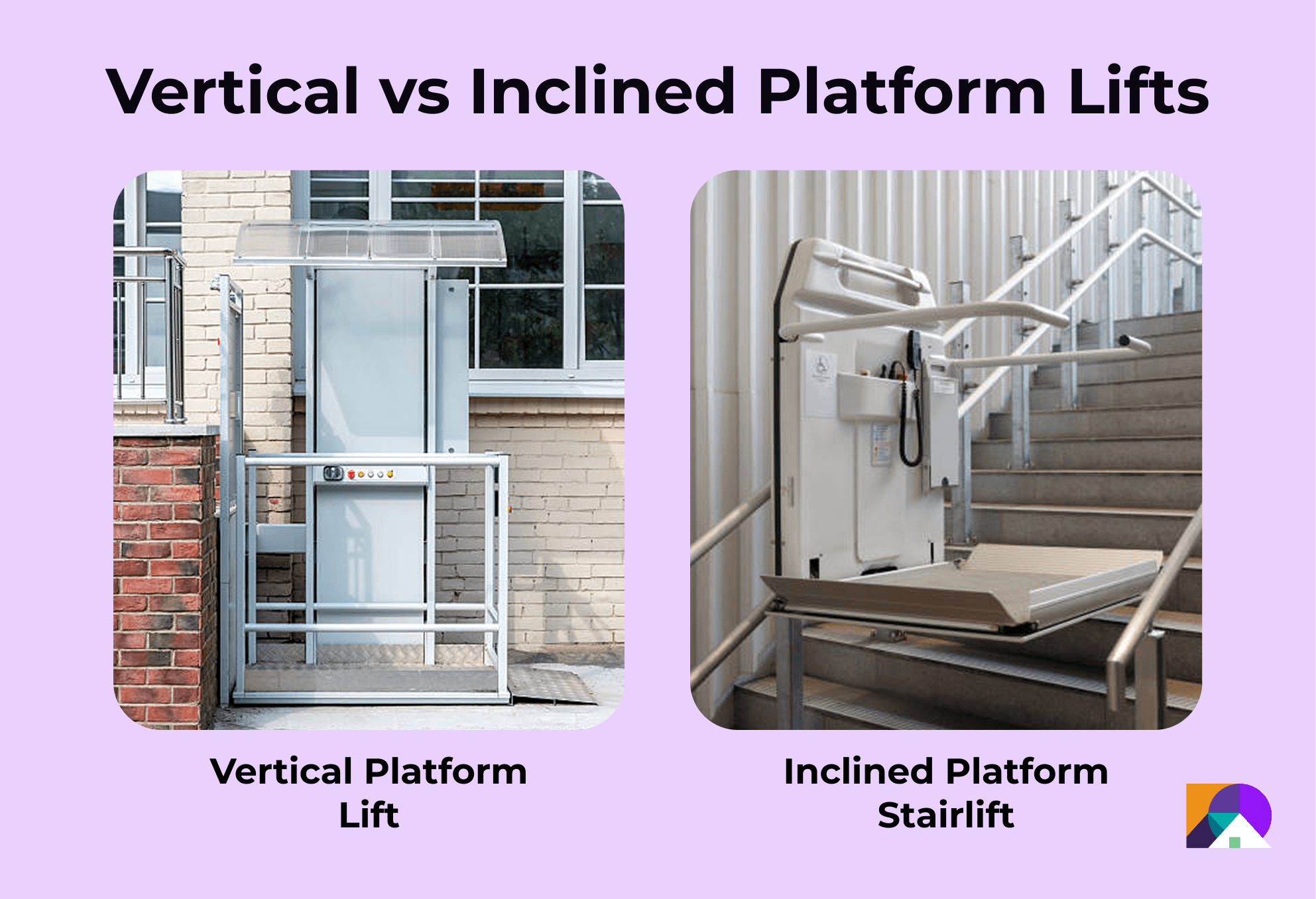
People often confuse these two products because both are made for wheelchair users and both are called platform lifts. The main difference is in how they move.
- An inclined platform lift moves at an angle along the staircase, following the stairs like a seated stairlift. It needs a staircase to be installed and is made for homes with stairs.
- A vertical platform lift moves straight up and down, similar to a small home elevator. It does not use the staircase and needs a shaft or open vertical space, usually installed next to the stairs or in a special opening through the floor. Vertical platform lifts take up less space than inclined models and can be installed both indoors and outdoors.
Main Differences
The two lift types differ in several key ways, from installation complexity to how much staircase space each one uses.
- Installation Requirements: Inclined platform lifts attach to existing stairs and usually do not require major changes to the floor or walls, except for anchoring the rail. Vertical platform lifts need a special vertical shaft, which often means cutting through floors and doing more construction.
- Staircase Space: Inclined platform lifts take up more of the staircase width than a seated stairlift when in use. When folded, they use less space but still take up more wall area than a seated lift. Vertical platform lifts do not use the staircase at all.
- Cost: Inclined platform lifts usually cost less than vertical platform lifts because they need less structural work. Vertical platform lifts often require more complex installation and significant construction.
- Best Use Case: Inclined platform lifts work best if you have a staircase and want to avoid major home changes. Vertical platform lifts are better if there is not enough space on the stairs or if you prefer an elevator-style lift.
Inclined Platform Lift vs. Seated Stairlift: What’s the Difference?
The main difference is whether the user needs to leave their wheelchair. With a seated stairlift, the user must get out of their wheelchair, sit in the stairlift chair, ride to the other floor, and then transfer back into another wheelchair or mobility device. An inclined platform lift allows the user to stay in their wheelchair the entire time.
If a user can transfer safely and independently, a seated stairlift is usually the better and more affordable choice. It costs less, takes up less space, and is easier to find. For users who cannot transfer safely due to paralysis, weakness, high fall risk, or a complex wheelchair setup, an inclined platform lift is the better option.
Caregivers should also consider how often they can help with transfers. Even if a user can transfer with help, reducing the number of transfers each day means less work for caregivers and a lower risk of falls.
Who Is an Inclined Platform Stairlift Best For?
- Inclined platform stairlifts mainly benefit wheelchair users who cannot transfer by themselves. This includes people with spinal cord injuries, advanced multiple sclerosis (MS), ALS, severe weakness from a stroke, or other conditions that make transferring hard.
- Power wheelchair users have a unique challenge that inclined platform lifts solve. Power wheelchairs are much heavier than manual chairs, often weighing 200 to 400 pounds, and cannot be easily moved to another floor while the user transfers on a seated lift. An inclined platform lift carries both the power wheelchair and the user together.
- Users at high risk of falling during transfers — such as older adults with poor balance or strength — may benefit from an inclined platform lift even if they can transfer. Fewer transfers mean less chance of falling.
- Homes where caregivers help with transfers, but where this is becoming harder due to aging, changes in the user’s weight, or a worsening medical condition, are good candidates for an inclined platform lift.
Staircase Requirements for Inclined Platform Lifts
Inclined platform lifts have stricter staircase requirements than seated stairlifts, and not every staircase is suitable. It’s important to know these requirements before getting a quote.
Staircase Width
Width is the most important factor. Most inclined platform lifts need a staircase that is at least 32 to 36 inches wide. This measurement refers to the staircase itself, not the space left after the lift is installed. Wider staircases make it easier for others to use the stairs when the platform is parked.
Type of Staircase
The type of staircase matters a lot.
- Straight staircases are the easiest to fit with an inclined platform lift.
- Staircases with a single 90-degree landing can sometimes work with a special rail system, but this adds complexity and cost.
- Spiral staircases and those with multiple turns usually are not compatible with inclined platform lifts. In those cases, a vertical platform lift or residential elevator is usually a better option.
Ceiling Height
The ceiling at the top of the stairs must be high enough for the platform and user to clear when reaching the upper floor. Low ceilings at the top of stairs are a common issue and should be checked during an in-home assessment.
Floor Space
The floor space at the top and bottom of the stairs must be sufficient for the platform to fully extend so users can get on and off safely. The space needed depends on the model, so check the exact measurements with your installer during the assessment.
Best Inclined Platform Stairlift Brands and Models
Inclined platform stairlifts are more specialized than seated stairlifts, so there are fewer professional installers. Lifeway Mobility, a leading accessibility dealer in the U.S., installs two Savaria inclined platform models for homes. Savaria is a well-known Canadian manufacturer with a strong presence in the U.S. and offers a wide range of inclined platform lifts through professional dealers.
Savaria Delta Inclined Platform Lift
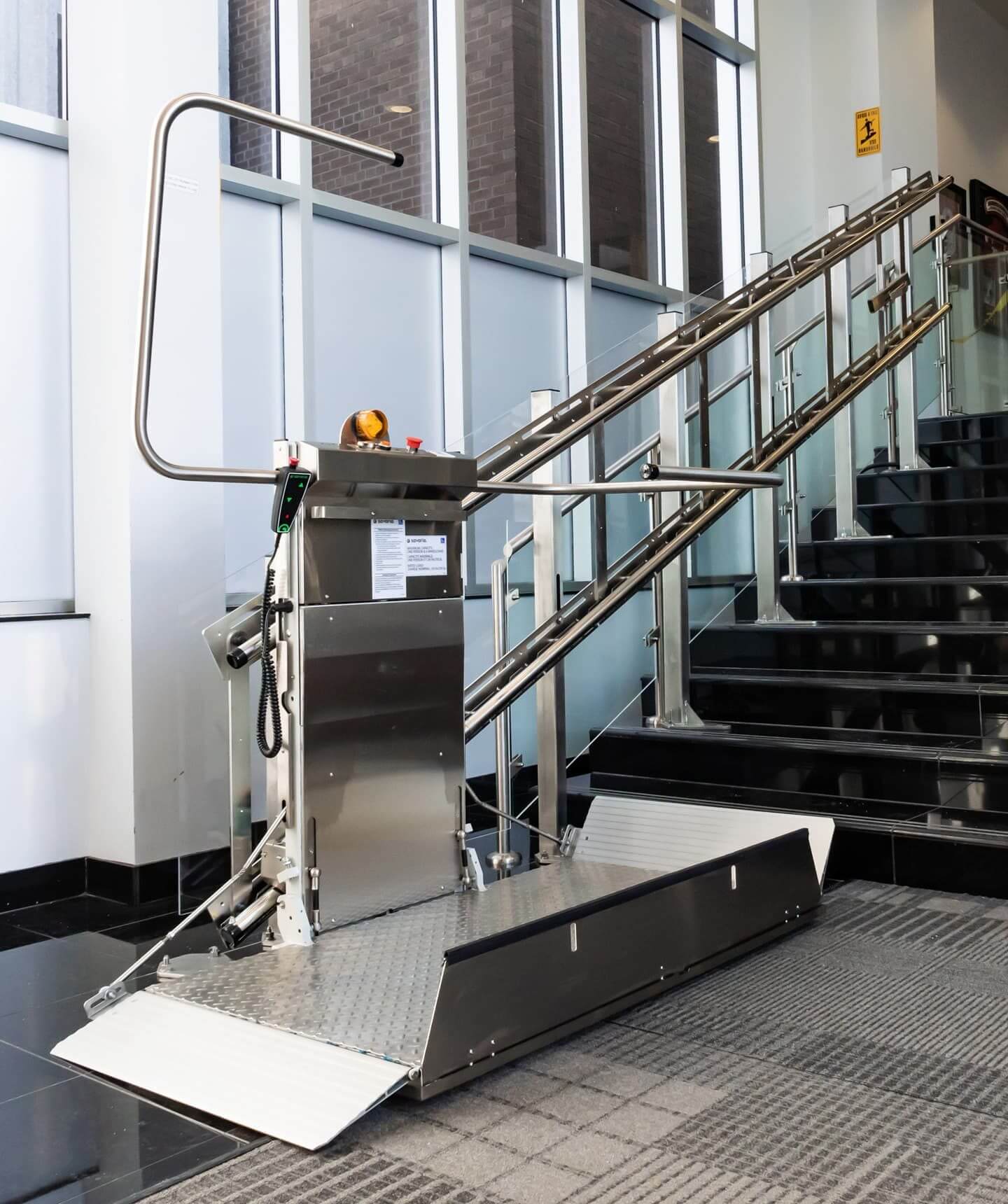
The Savaria Delta is made for straight staircases and is one of the most commonly installed residential inclined platform lifts in the U.S. The platform folds flat against the wall when not in use, leaving as much staircase width as possible for others.
Safety features include fold-down safety arms on all open sides, sensors on the rail and platform to detect obstructions, a non-slip platform surface, and a battery backup for power outages. The Delta is operated with a simple control panel on the platform or by remote.
- Platform Capacity: Up to 660 lbs (user and wheelchair combined, U.S. only)
- Best For: Straight staircases, users with manual or power wheelchairs who need a professionally installed solution with strong dealer support
- Warranty: 36 months for parts
Savaria Omega Inclined Platform Lift
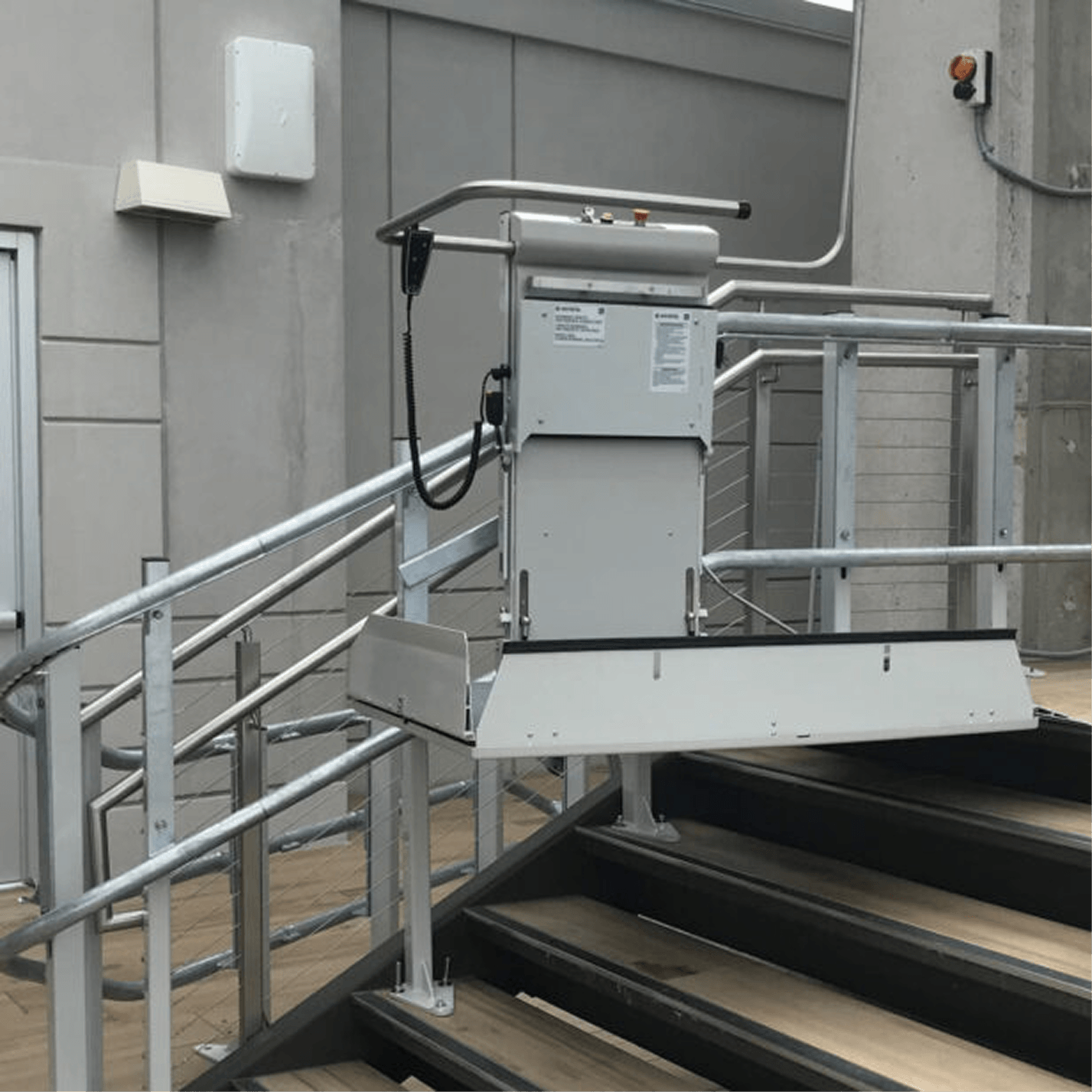
The Savaria Omega is made for curved and multi-landing staircases and is one of the few inclined platform lifts that can handle non-standard staircase shapes. Its custom rail follows the shape of the staircase, making it a good choice when a straight rail will not work.
Like the Delta, it has fold-down safety arms, obstruction sensors, a non-slip surface, and a battery backup. Because the rail is custom-built for each staircase, the wait time is longer and the cost is higher than for straight models.
- Platform Capacity: Up to 660 lbs (user and wheelchair combined; U.S. only)
- Best For: Curved, angled, or multi-landing staircases where a straight-rail inclined platform lift cannot be installed
- Warranty: 36 months parts
Other Models Worth Knowing About
In addition to the Savaria models, other inclined platform lifts are available in the U.S. from specialty dealers and regional providers.
Harmar, Garaventa, and AmeriGlide also make residential inclined platform lifts with different capacities, staircase compatibility, and features.
If the Savaria Omega or Delta does not fit your needs due to your staircase, weight requirements, or location, a local accessibility dealer may be able to recommend and install another model. An occupational therapist or certified aging in place specialist can help you choose the right product and connect you with qualified installers.
Connect with top stairlift pros today to get recommendations and compare pricing.
How Much Does an Inclined Platform Stairlift Cost?
Inclined platform stairlifts are more expensive than seated stairlifts at all price levels because they have a larger, more complex platform and stronger rail and drive systems. However, they usually cost less than vertical platform lifts since they require less construction work to install.
- Straight inclined platform lift: $7,500 to $16,000 installed
- Curved or multi-landing inclined platform lift: $15,000 to $25,000+ installed
- Outdoor inclined platform lift: $10,000 to $18,000+ installed
What Affects Cost?
- The main factor is the type of staircase. Curved and multi-landing staircases need custom rails, which makes them more expensive and takes longer to install.
- Platform capacity also affects the price, as higher weight limits require stronger construction.
- Extra features like powered safety arms, remote controls, and improved non-slip surfaces add to the cost.
- Local labor rates and installation details — such as ceiling height, landing space, and any needed structural changes — also affect the final price.
Installation Considerations
Before scheduling an installation, there are several important factors to review with your installer.
- All inclined platform stairlifts must be installed by professionals. The heavy platform, strong rail loads, and important safety features make certified installation essential. Most manufacturers also require professional installation to keep the warranty valid.
- Lead times for straight models are similar to standard stairlifts, with most installations completed within one to two weeks after ordering. Curved models need custom rails, which adds two to six weeks to the wait, depending on the manufacturer.
- During the in-home evaluation, the installer should check the staircase width at the narrowest point, ceiling height at the top landing, floor space at both landings, wall construction at anchor points, and whether any staircase modifications are needed before installation can begin.
- You may need a building permit, depending on where you live. Check local rules with your installer before starting work. Inclined platform lifts are more likely to need permits than seated stairlifts because of their size and weight.
Financing and Assistance Options
Inclined platform stairlifts can be expensive, but thankfully a few financing options are available to help make the cost more manageable.
Financing
Inclined platform stairlifts are among the more expensive home accessibility upgrades, so many people look for financing options. Most major dealers offer financing through third-party lenders. For example, Lifeway Mobility works with Affirm, and MobilityWorks and other national dealers have similar programs.
Medicare and Medicaid
Medicare does not cover inclined platform stairlifts. However, Medicaid waiver programs in some states cover platform lifts as durable medical equipment — eligibility and coverage levels vary significantly by state. The federal home accessibility tax credit under Section 36C may apply to inclined platform lift installations for eligible homeowners — consult a tax professional to determine eligibility.
VA Benefits
VA benefits through the Specially Adapted Housing grant program and the Home Improvements and Structural Alterations (HISA) program may cover inclined platform lift costs for eligible veterans. Contact your regional VA office for current program details and eligibility requirements.
Nonprofits
Some nonprofit organizations — such as state Centers for Independent Living and United Cerebral Palsy affiliates — offer help with equipment or low-interest loans for accessibility upgrades. A certified aging in place specialist or occupational therapist can help you find programs in your area.
Questions to Ask Before Purchasing
- Is my staircase wide enough to accommodate this specific model both in use and when folded?
- What is the combined platform capacity — user and wheelchair together — and does it accommodate my wheelchair’s weight?
- Is there adequate ceiling clearance at the top landing for this model?
- What floor space is required at both landings for safe loading and unloading?
- What permits are required in my municipality, and will the installer handle the permit process?
- Can this model navigate my staircase configuration, including any turns or landings?
- What is the folded profile of the platform and how much staircase width will remain accessible for other household members?
- What is the warranty, and is professional installation required to maintain coverage?
- Are financing or assistance programs available for my situation?
- What is the lead time for this specific model and configuration?