Stairlifts
Bariatric and Heavy-Duty Stairlifts: A Complete Guide for 2026
If you need a stairlift that can handle more weight than standard models, bariatric and heavy-duty stairlifts are built with stronger materials, wider seats, and easier-to-use controls for safety and comfort. Standard stairlifts usually support 250 to 300 pounds. Bariatric models can support 400, 500, or even 600 pounds, depending on the brand and model.
This guide explains what bariatric stairlifts are, how they are different from standard models, what they cost, which brands are best, and what to consider when choosing one.
Find the best stair-lifts pros in your area.

The Modernize Mission
We help homeowners make confident decisions through our reliable, up-to-date, and unbiased information and average project costs. All of our content is thoroughly reviewed and fact-checked by our team of home improvement experts. Learn more about how we maintain these values.
Table of Contents
- What Is a Bariatric Stairlift?
- How Do Bariatric Stairlifts Differ From Standard Models?
- Who Needs a Heavy Duty Stairlift?
- Bariatric Stairlift Weight Capacity Tiers
- High-Capacity Stairlift Costs
- Top Heavy Duty Stairlift Brands and Models
- Stairlift Width Considerations for Bariatric Users
- Installation Considerations for Bariatric Stairlifts
- Financing and Assistance Options for Bariatric Stairlifts
- Questions to Ask Before Purchasing a High-Capacity Stairlift
- FAQs About Heavy Duty Stairlifts
What Is a Bariatric Stairlift?
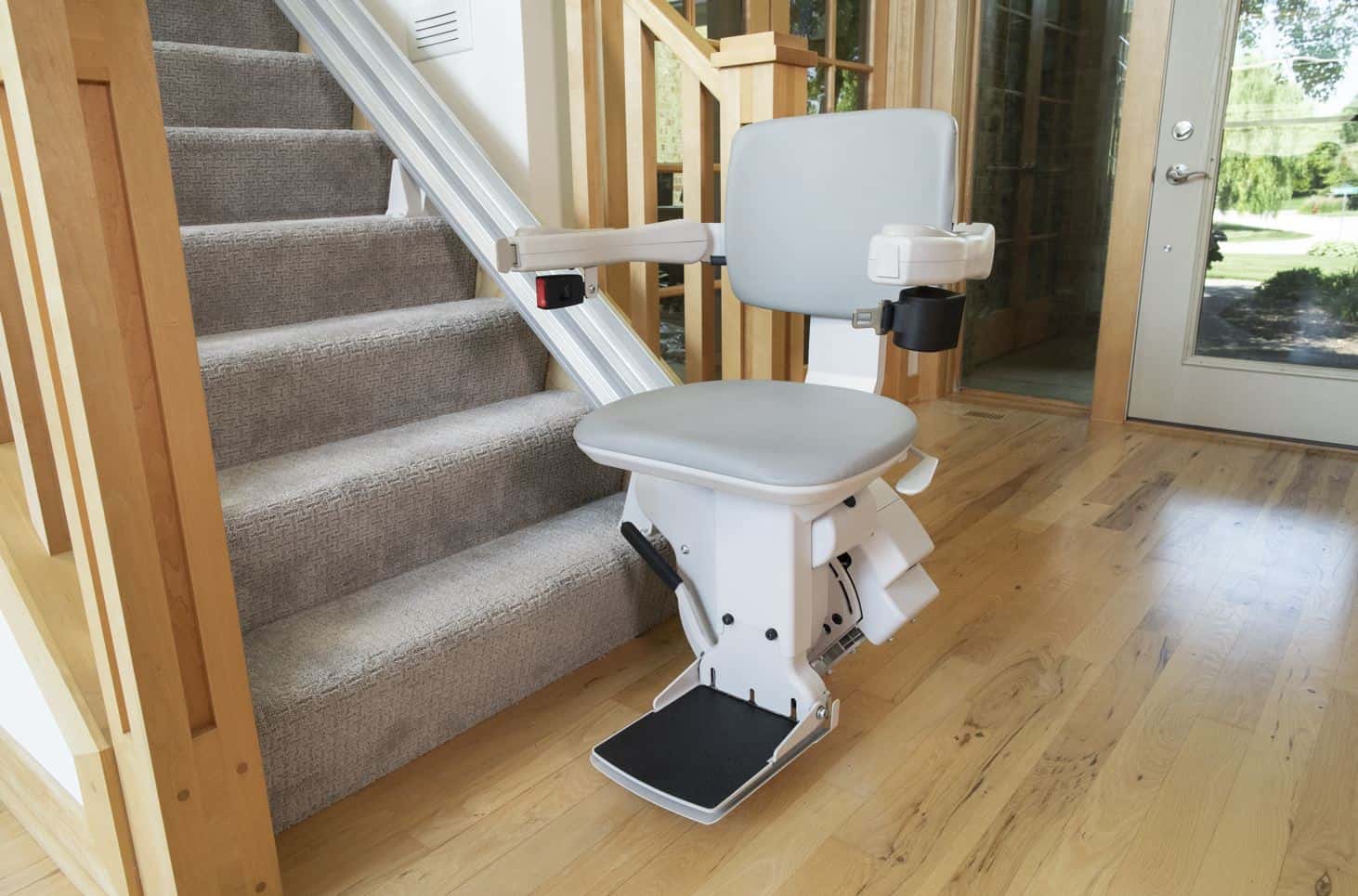
A bariatric stairlift, also known as a heavy-duty or high-capacity stairlift, is a motorized chair lift made for users who weigh more than a standard model can support. These stairlifts have higher weight limits, wider seats, stronger rails and motors, and sturdier armrests and footrests to fit more body types safely and comfortably.
In stairlifts, “bariatric” usually means any model rated for more than 300 pounds, though some brands set the limit at 350 or 400 pounds. Manufacturers often use terms like heavy-duty or high-capacity to mean the same thing. The important thing is the actual weight rating, not the name.
Key Insights:Bariatric stairlifts typically cost $500 to $2,000 more than comparable standard models — with straight configurations running $4,000 to $12,000+ installed depending on capacity tier. Harmar and Leaf Home are the only major manufacturers offering 600-pound capacity — the highest available in residential stairlifts. Most bariatric stairlifts require a minimum staircase width of 30 to 36 inches — wider than standard models — making an in-home assessment essential before purchasing. Medicare does not cover bariatric stairlifts, but VA benefits, state Medicaid programs, and medically necessary tax deductions may offset costs for eligible homeowners. |
How Do Bariatric Stairlifts Differ From Standard Models?
The differences go beyond just a higher weight limit. Making a standard stairlift larger without stronger parts would not be safe. Bariatric models are specially engineered from the beginning in several key areas.
- Bariatric stairlifts use thicker rails and tracks to support more weight without bending or wearing out. Standard rails are made for up to 300 pounds. Using them for more weight can put too much stress on the mounting points and brackets, which can become unsafe over time.
- Drive system motors are more powerful on bariatric models to move greater weight smoothly up and down the staircase without straining. Motor strain is one of the primary failure points on stairlifts used beyond their weight rating.
- Bariatric models have wider seats, usually 20 to 24 inches across, compared to 16 to 18 inches on standard models. The seat padding is also thicker to make sitting more comfortable for longer periods.
- The armrests and footrests on bariatric models are stronger and often wider to give better support when getting on, off, or riding the lift. Some models let you adjust the armrest width to fit different body sizes.
- Bariatric models use stronger mounting brackets and wall or stair anchors, with extra anchor points to spread the load across more spots on the staircase.
- Battery systems on some high-capacity models are upgraded to handle the additional power draw of moving greater weight, maintaining reliable performance and emergency backup capability.
Who Needs a Heavy Duty Stairlift?
The simplest answer is that anyone who weighs more than a standard stairlift’s capacity, usually 250 to 300 pounds, needs a bariatric model. Using a stairlift above its rated capacity is a serious safety risk and usually voids the manufacturer’s warranty.
Even if your weight is within the standard range, you might prefer a bariatric model for its wider seat and stronger build. People with larger body frames, limited hip movement, or special comfort needs often find bariatric seats more comfortable and easier to use.
Caregivers and family members should always check the weight rating before buying a stairlift. It’s easy to assume a standard model will work, but picking the wrong one can have serious consequences.
Bariatric Stairlift Weight Capacity Tiers
Manufacturers make stairlifts with different weight limits. Knowing your needs will help you pick the right model.
- Standard capacity: Up to 300 pounds — covers most residential stairlift models from all major manufacturers.
- Heavy-duty entry level: 300 to 400 pounds — available from most major manufacturers including Bruno, Harmar, and Stannah. These models use reinforced components but are often similar in profile to standard models.
- High-capacity: 400 to 500 pounds — a narrower product range, primarily from Bruno and Harmar. These models involve more significant engineering differences from standard models and typically cost more.
- Bariatric specialist: 500 to 600 pounds — available from select manufacturers, primarily Harmar and Leaf Home, for users with the highest capacity needs. These are the most specialized and most expensive models in the residential stairlift category.
High-Capacity Stairlift Costs
Bariatric stairlifts cost more than standard models because they use extra materials, stronger construction, and more powerful motors. The price difference is usually $500 to $2,000 or more, depending on the weight capacity and features you choose.
- Straight bariatric stairlift: $4,000 to $10,000 installed
- Curved bariatric stairlift: $12,000 to $20,000+ installed
- Outdoor bariatric stairlift: $5,500 to $12,000+ installed
Cost by capacity tier, installed:
- 300 to 400 lbs. $4,000 to $8,000 (straight)
- 400 to 500 lbs. $6,000 to $10,000 (straight)
- 500 to 600 lbs. $8,000 to $12,000+ (straight)
Curved stairlifts are much more expensive at any capacity because they need custom-made rails. A curved bariatric stairlift with a 400- to 500-pound capacity can easily cost $15,000 to $18,000 or more, installed.
What Affects Bariatric Stairlift Costs?
- Capacity tier is the primary driver — higher weight ratings involve more material and engineering cost.
- Staircase type (straight vs. curved) has the same outsized impact on bariatric models as it does on standard models.
- Optional features including powered swivel seats, power folding footrests, and adjustable armrest width add to the base price.
- Local labor rates and installation complexity — staircase width, elevation, and number of landings — affect the final installed cost as with any stairlift project.
Connect with stairlift pros near you for local pricing and recommendations.
Top Heavy Duty Stairlift Brands and Models
The highest capacity bariatric stairlift models come from Leaf Home and Harmar, with a 600 pound weight limit, but others are rated for up to 350 or 400 lbs. Here are the best options:
Leaf Home Comfort Lift HD — Heavy-Duty Straight Stairlift
Leaf Home’s Comfort Lift HD is its highest-capacity stairlift and one of the few straight models for homes that can support up to 600 pounds. Like all Leaf Home stairlifts, it comes with a limited lifetime warranty, which is among the best in the industry, and is installed by Leaf Home’s certified technicians across the country.
The Comfort Lift HD has the same key safety features as its standard models, such as obstruction sensors, a swivel seat, a battery backup for up to 60 trips per charge, and a powered footrest, all reinforced for the higher weight limit.
Pricing is not published online and requires an in-home consultation, which is standard practice for Leaf Home across all models. Given the 600-pound capacity and reinforced construction, expect pricing to fall at the higher end of the heavy-duty range.
- Capacity: Up to 600 lbs.
- Best for: People who need the highest weight limit, want the security of a limited lifetime warranty, and prefer working with one company for installation and service
- Estimated installed cost: $7,000 to $12,000 or more
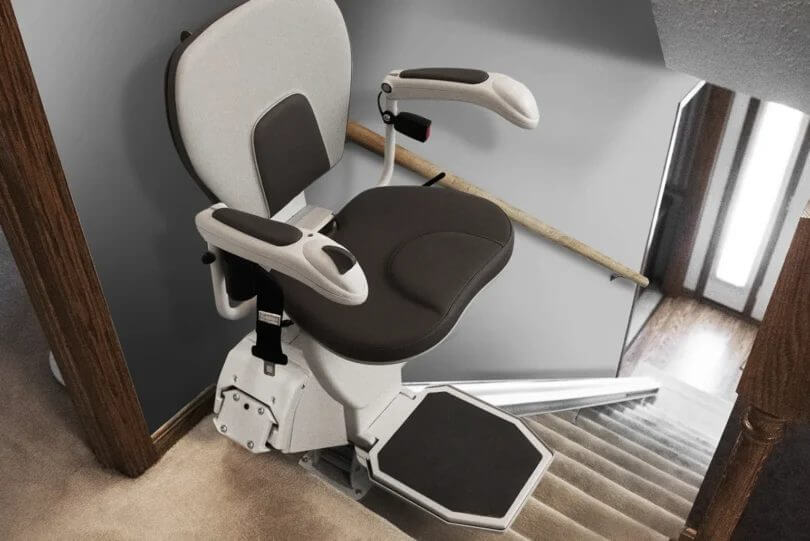
Bruno Electra-Ride Elite — Heavy-Duty Straight Stairlift
Bruno is one of the most popular stairlift brands in the U.S., and its heavy-duty Electra-Ride Elite is made for users up to 400 pounds. It has a wider seat than Bruno’s standard models, stronger rails, and a more powerful motor. Its slim rail design takes up less space on the stairs than some other heavy-duty models, which is helpful in narrow stairwells. You can buy it through Bruno’s authorized dealers, including Lifeway Mobility and MobilityWorks.
- Capacity: Up to 400 lbs.
- Best for: Users between 300 and 400 lbs. who want a widely supported brand with a strong dealer network
- Estimated installed cost: $5,000 to $8,000
Bruno Elite Curved — Heavy-Duty Curved Stairlift
Bruno’s curved heavy-duty offering applies the same reinforced construction to a custom-fabricated curved rail. Because curved stairlifts are built to the exact specifications of each staircase, lead time is longer than straight models. It is available in the same 400-pound capacity as the straight Elite.
- Capacity: Up to 400 lbs.
- Best for: Users up to 400 lbs. with curved, multi-landing, or non-standard staircases
- Estimated installed cost: $12,000 to $18,000+
Harmar SL600 Pinnacle — Heavy-Duty Straight Stairlift
Harmar’s SL600 is a flexible heavy-duty straight stairlift, with a standard capacity of 350 pounds and heavy-duty versions (SL600HD) that go up to 600 pounds. Its gear rack drive system runs smoothly and quietly, and the battery backup keeps it working during power outages. Harmar’s large dealer network makes the SL600 easy to find in the U.S.
- Capacity: 350 lbs. standard; up to 600 lbs. in heavy-duty configuration
- Best for: Users who need capacity above 400 lbs., or who want the widest capacity range from a single model
- Estimated installed cost: $5,500 to $12,000 depending on capacity configuration
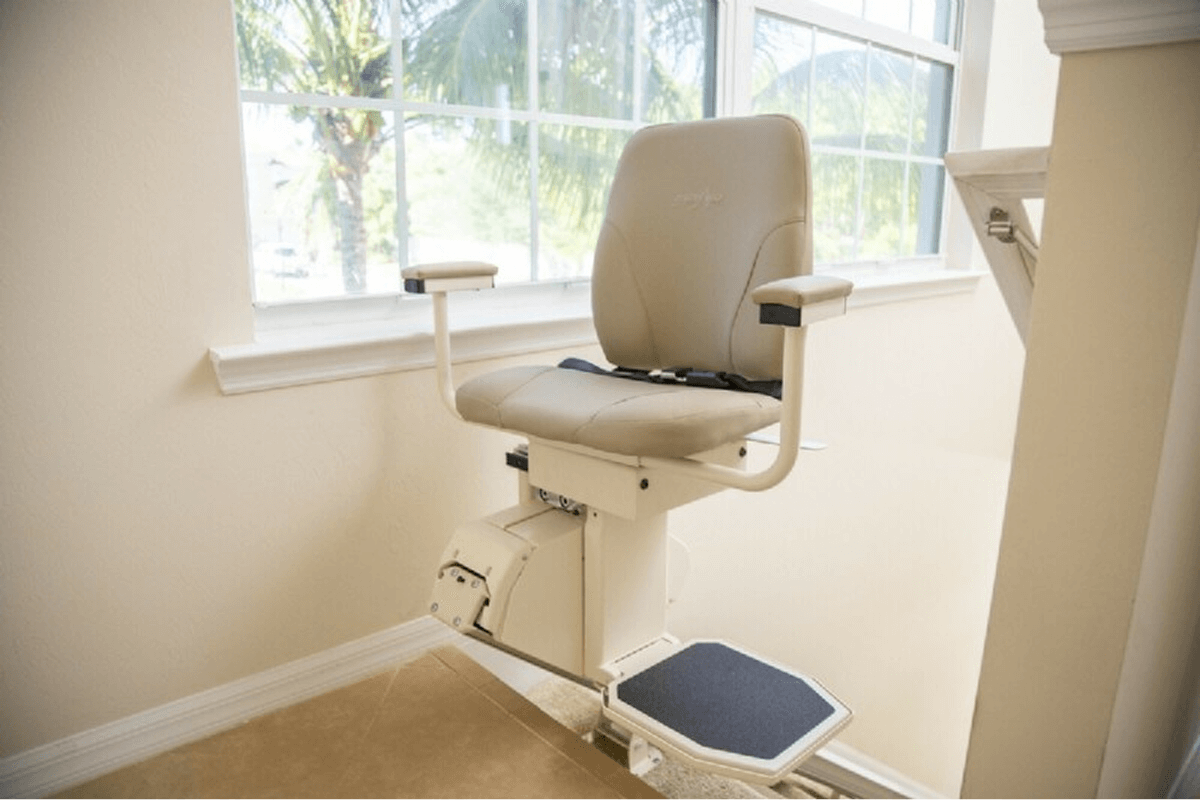
Harmar Pinnacle Curved — Heavy-Duty Curved Stairlift
Harmar’s curved heavy-duty offering provides the same high-capacity engineering in a custom-fabricated curved rail configuration. For homeowners with non-standard staircases who need capacity above what Bruno’s curved model provides, the Harmar curved is the primary alternative from a major manufacturer.
- Capacity: Up to 600 lbs.
- Best for: Users above 400 lbs. with curved or multi-landing staircases
- Estimated installed cost: $15,000 to $22,000+
Stannah Siena 600 — Heavy-Duty Straight Stairlift
Stannah’s Siena 600 supports up to 350 pounds and is one of the few heavy-duty models from a U.K.-based manufacturer with a strong U.S. dealer network. It comes with a power swivel seat as standard, which is helpful for users with limited hip or knee movement who need extra help getting in and out of the chair. You can also choose from different seat upholstery options.
- Capacity: Up to 350 lbs.
- Best for: Users up to 350 lbs. who want a power swivel seat standard and design customization options
- Estimated installed cost: $5,000 to $8,500
Need help deciding? Our network of stairlift installation pros can help you choose the best model.
Stairlift Width Considerations for Bariatric Users
Staircase width is very important when installing a bariatric stairlift, but it is not always discussed with standard models. The wider seat on a bariatric lift needs more space, both for the chair and for others who use the stairs when the lift is parked.
- Most bariatric stairlifts need a staircase that is at least 30 to 36 inches wide, which is wider than the 28-inch minimum for some standard models. Staircases at the lower end of this range may need careful measuring and sometimes a slimmer model.
- The folding seat and footrest on bariatric models are bigger than on standard lifts, even when folded. This means less space is left on the stairs when the lift is parked. Before you buy, ask your installer for the folded width of the model you want and compare it to your staircase.
It is especially important to have a certified installer visit your home before choosing a bariatric stairlift. They will check your staircase width, ceiling height, and landing space to make sure the model will fit.
Installation Considerations for Bariatric Stairlifts
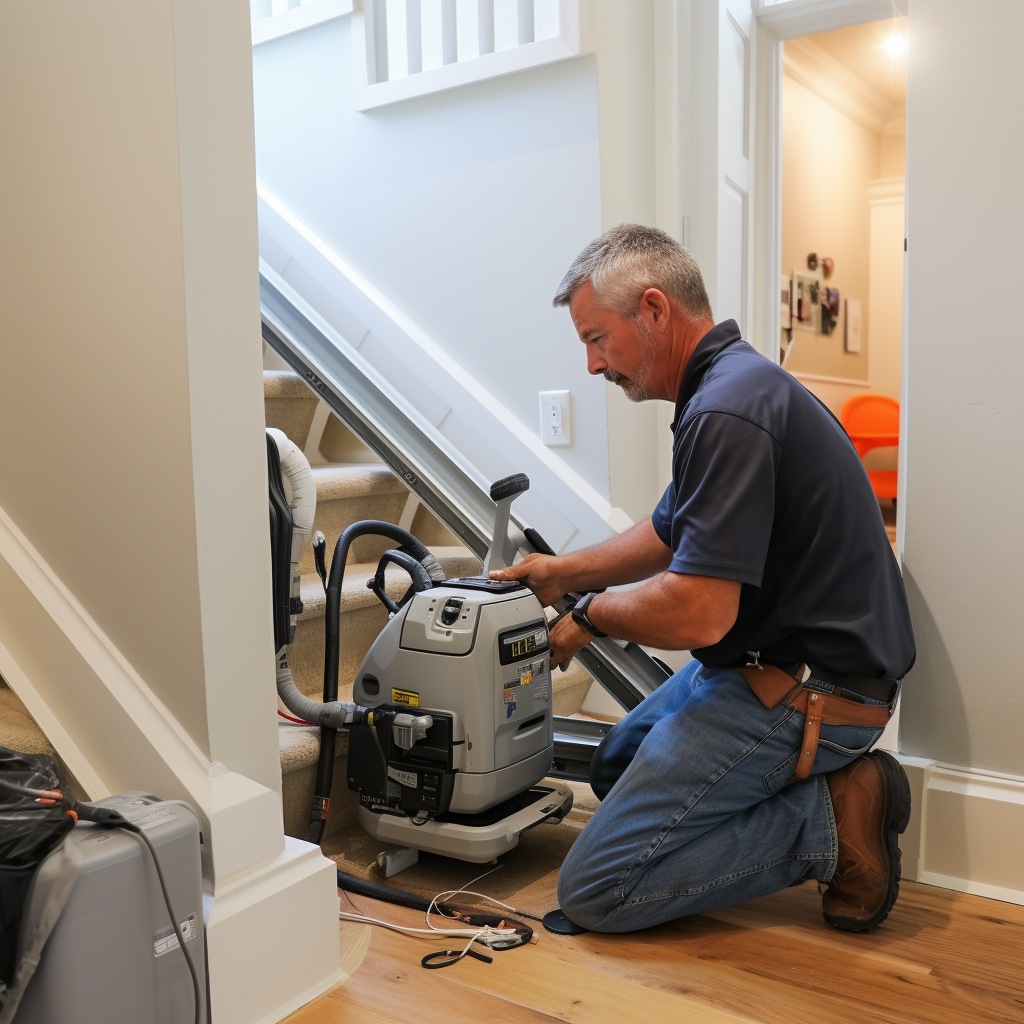
- Bariatric stairlifts must be installed by professionals. Because they carry more weight, it is even more important to mount the rails and brackets correctly. If a heavy-duty stairlift is not installed properly, it can be very unsafe.
- Most bariatric stairlift manufacturers require that an authorized dealer or certified technician install the lift to keep the warranty valid. This is standard for all stairlifts, not just heavy-duty ones, but you should always check before buying.
- Bariatric stairlifts use the same electrical setup as standard models. You just need a regular household outlet near where the lift parks. The motors use more power when running, but charging uses about the same amount as standard lifts.
- Installing a straight bariatric stairlift usually takes about one to two days, similar to standard straight models. Curved bariatric stairlifts need custom fabrication like standard curved models, so lead times are usually two to six weeks, depending on the manufacturer and dealer.
Financing and Assistance Options for Bariatric Stairlifts
Because bariatric stairlifts cost more, many people look for financing options. Most major dealers offer financing through third-party lenders. For example, Affirm is available through some dealers like Lifeway Mobility. The terms, rates, and eligibility depend on the lender and where you live.
Medicare does not pay for stairlifts, no matter the weight limit or medical need. Some state Medicaid programs, VA benefits for veterans, and local nonprofit grants may help with costs, but what you get depends on your state and personal situation.
Some bariatric stairlift purchases may be considered tax deductible with a doctor’s recommendation. Talk to a tax professional to see if you qualify.
Questions to Ask Before Purchasing a High-Capacity Stairlift
- What is the exact weight capacity of this model — not the range, but the specific rated limit for this configuration?
- What is the seat width, and is adjustable armrest width available?
- Is this model available in a curved configuration if my staircase requires it?
- What is the folded width of the chair and footrest, and how much staircase clearance will remain for other users?
- What is the warranty, and does it cover the full capacity rating or only standard use?
- Is professional installation required to maintain warranty coverage?
- What is the lead time for this specific model and configuration?
- Are financing options available, and what are the terms?