Ready to start your project?
Enter your ZIP to find local pros.
Stairlifts
Types of Stairlifts: Which One Is Right for Your Home?
On this page
What stairlifts are and how they work
Types of stairlifts for different needs
How to choose the right stairlift for your home
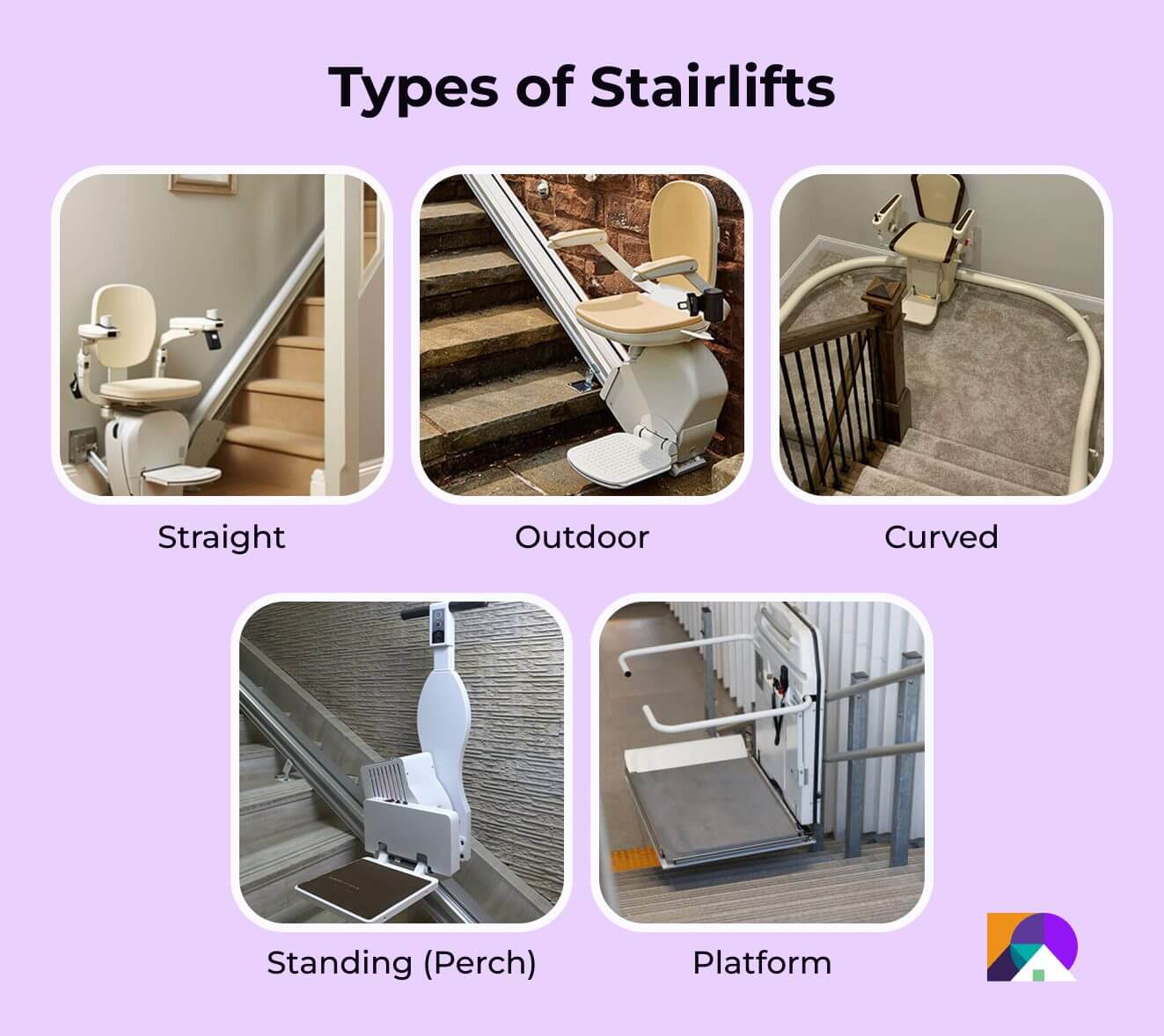
Choosing the right stairlift comes down to three main factors: the shape of your staircase, your mobility needs, and your budget. Most people need either a straight, curved, outdoor, standing, or platform stairlift. The differences between these types are important since picking the wrong one could mean it won’t fit your stairs, won’t meet your needs, or could cost much more than you expected. This guide explains each type of stairlift and who it’s best for. You’ll also find a summary of the features and custom options available for all types.
We help homeowners make confident decisions through our reliable, up-to-date, and unbiased information and average project costs. All of our content is thoroughly reviewed and fact-checked by our team of home improvement experts. Learn more about how we maintain these values.
Straight stairlift: Best for standard single-flight staircases. It’s the most affordable and quickest to install.
Standing stairlift: Best for narrow staircases or for people with knee and hip issues.
Curved stairlift: Best for stairs with turns, landings, or spiral shapes. These are custom-built and cost more.
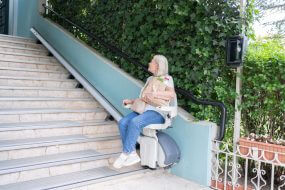
Outdoor stairlift: Best for outside staircases. Made to handle weather.
Platform stairlift: Best for wheelchair users. It carries both the chair and user together.
Looking for costs? Head over to our comprehensive stairlifts cost guide, where we cover unit costs and installation costs for each stairlift type.
Straight Stairlifts
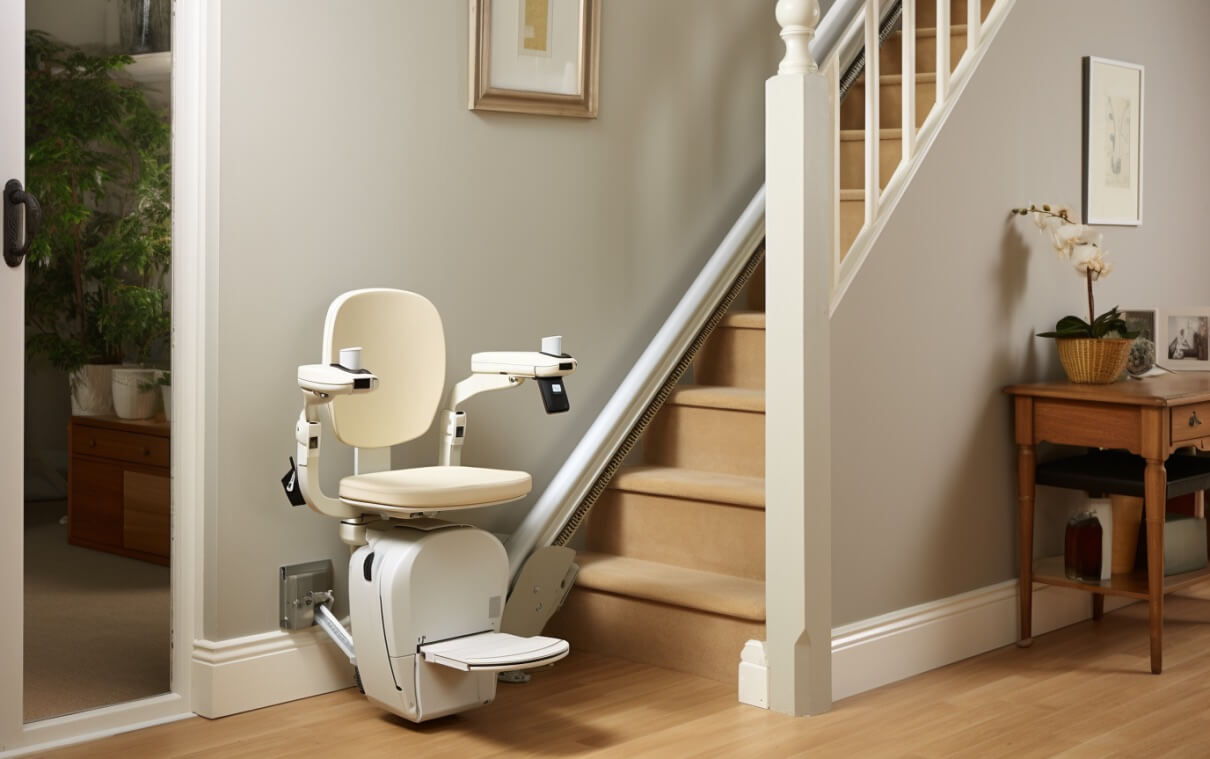
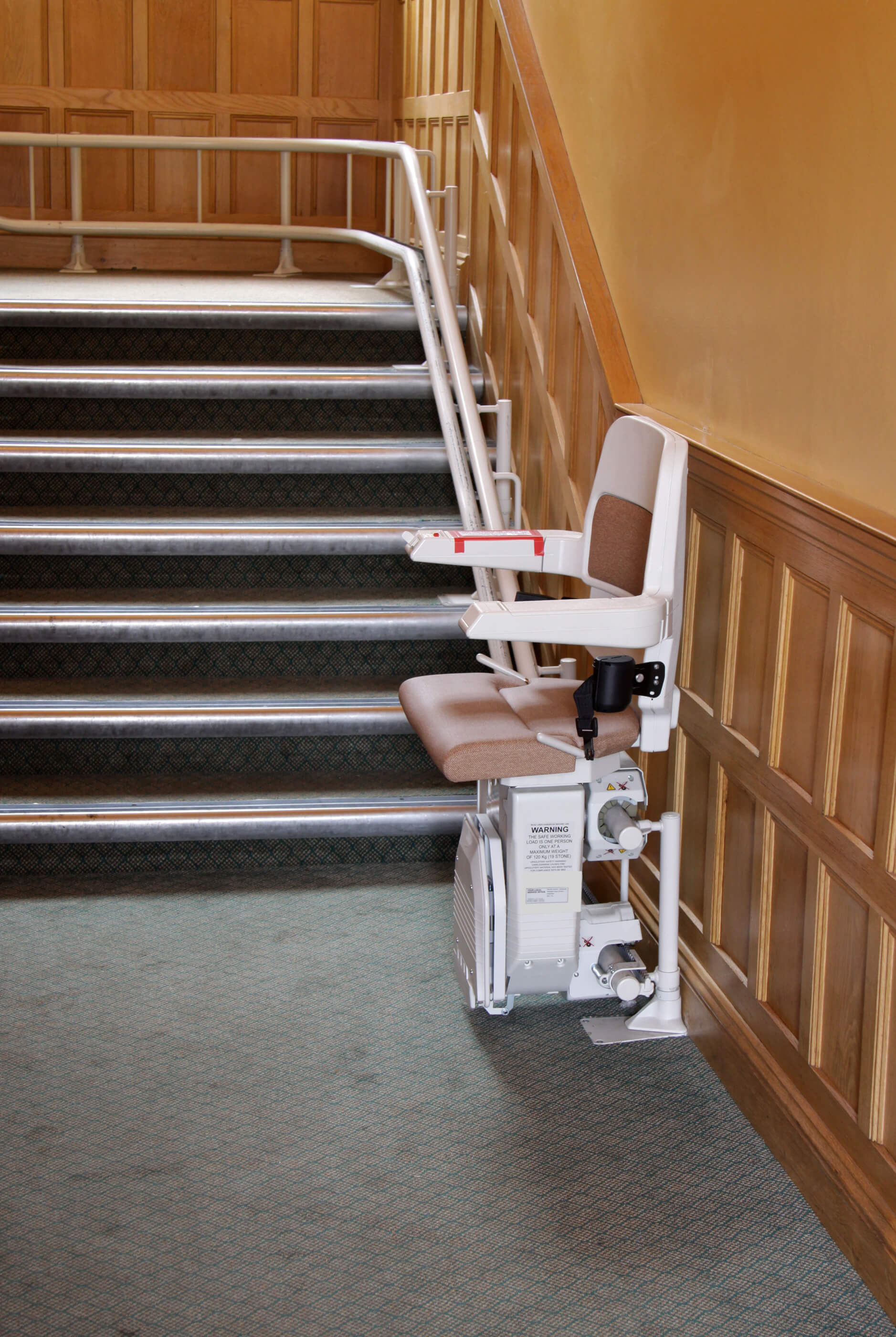
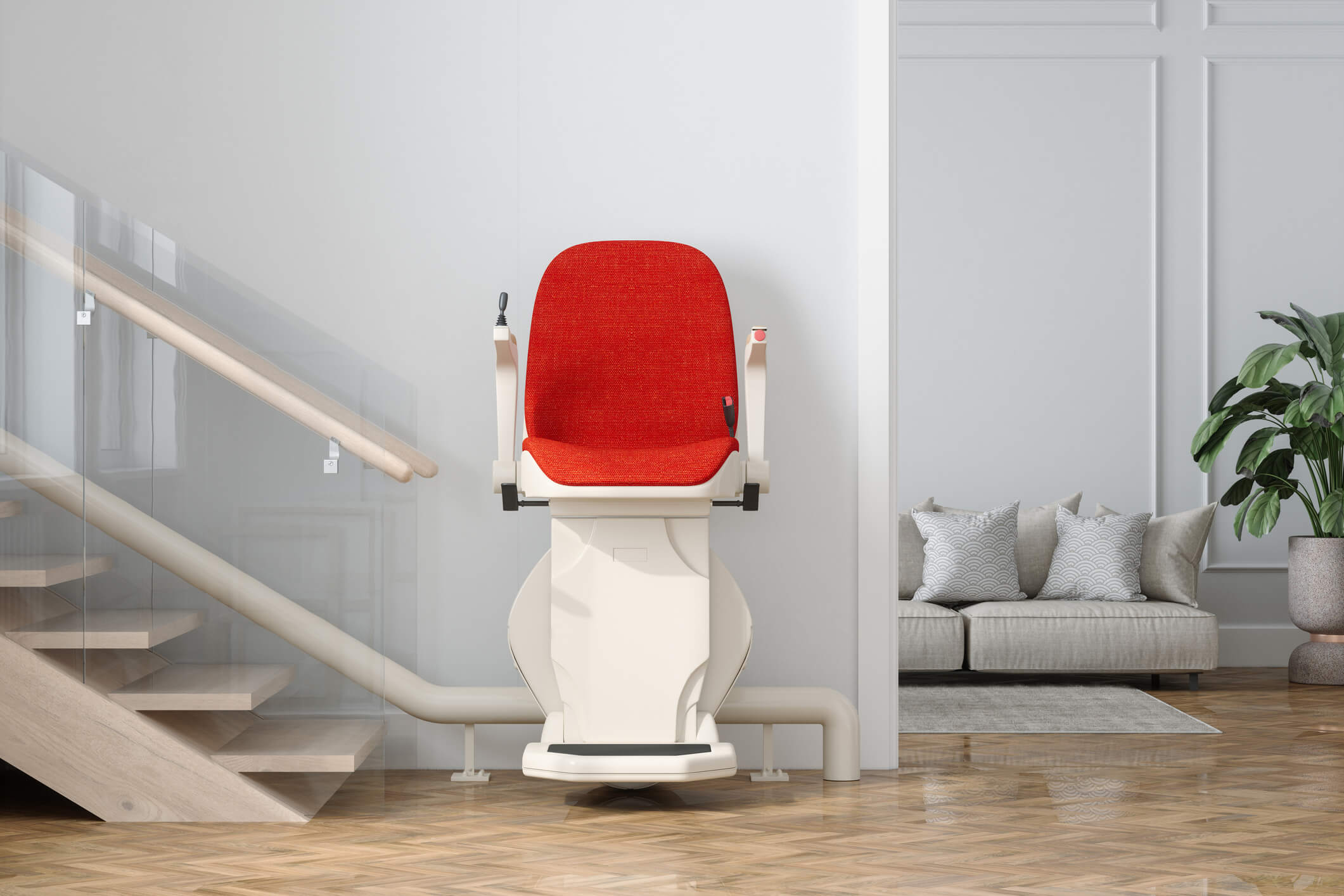
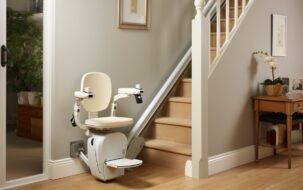
A straight stairlift moves along one continuous rail from the bottom to the top of a regular staircase. Because the rail is a standard size and not custom-built, these stairlifts are the fastest to install. Most can be put in within a day or two, and they’re also the easiest to find as certified pre-owned models.
The seat folds up when not in use to keep the staircase accessible for other household members, and the rail can be parked at the top or bottom of the staircase depending on preference. Optional retractable rails are available for situations where the lower rail extension blocks a doorway or creates a tripping hazard.
Best for: Single-flight straight staircases, standard mobility needs, homeowners looking for the most cost-effective solution.
Not ideal for: Staircases with any curves, turns, or intermediate landings.
Standing stairlifts, also known as perch lifts, use a small padded perch instead of a full seat. This lets the user ride in a semi-standing position. They are made for two main situations: when someone has trouble bending their knees or hips to sit comfortably, or when the staircase is too narrow for a seated model.
Perch lifts take up less space than regular seated stairlifts, so they’re a good option if others in your home also use the stairs. Most are made for straight staircases, but some dealers offer curved versions, too.
Best for: Homeowners with knee or hip limitations, narrow staircases, situations where staircase access for others is a priority.
Not ideal for: Homeowners who need full seated support or extended travel time on the lift.
Curved stairlifts are built to fit the unique shape of staircases with curves, bends, landings, or spiral steps. Because every curved staircase is different, the rail is made using exact measurements from a home visit. This takes longer and usually costs more than a straight stairlift.
The custom rail design gives you more options for parking the chair. On a curved staircase, the rail can often go a little past the top or bottom, so the chair can park around the corner and stay out of the way instead of blocking the stairs.
Certified pre-owned curved stairlifts are rarely available because each unit is built to a specific staircase and cannot be adapted to fit another home.
Best for: Staircases with curves, bends, multiple landings, split-level homes, spiral staircases.
Not ideal for: Homeowners looking for a budget option or quick installation timeline.
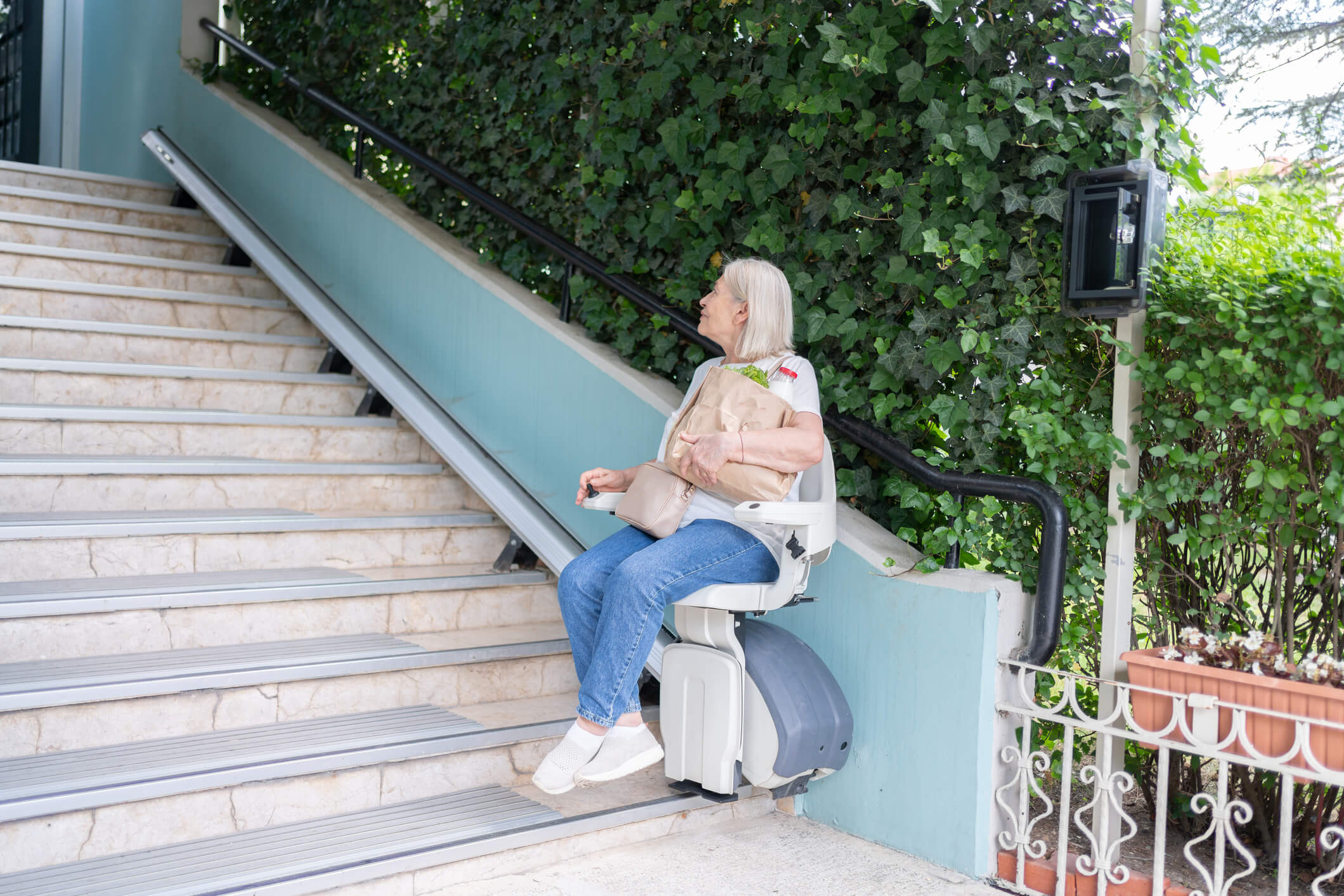
Outdoor stairlifts are built with weather-resistant materials to handle rain, snow, sun, and extreme temperatures. Indoor stairlifts would wear out fast outside. Outdoor models use rust-proof hardware, sealed electronics, and weatherproof seat covers to keep them safe and reliable all year.
Most outdoor stairlifts are installed on front porch steps, deck stairs, or outside entryways. Straight outdoor stairlifts are the most common, but many dealers also offer curved and multi-landing options.
Best for: Exterior staircases, porches, decks, homes where outdoor accessibility is a priority.
Not ideal for: Homeowners who need indoor floor-to-floor access — outdoor stairlifts are designed for exterior use only.
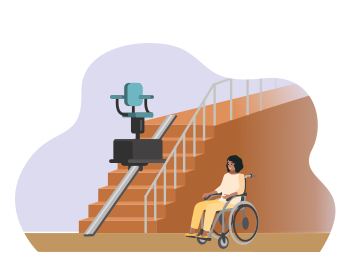
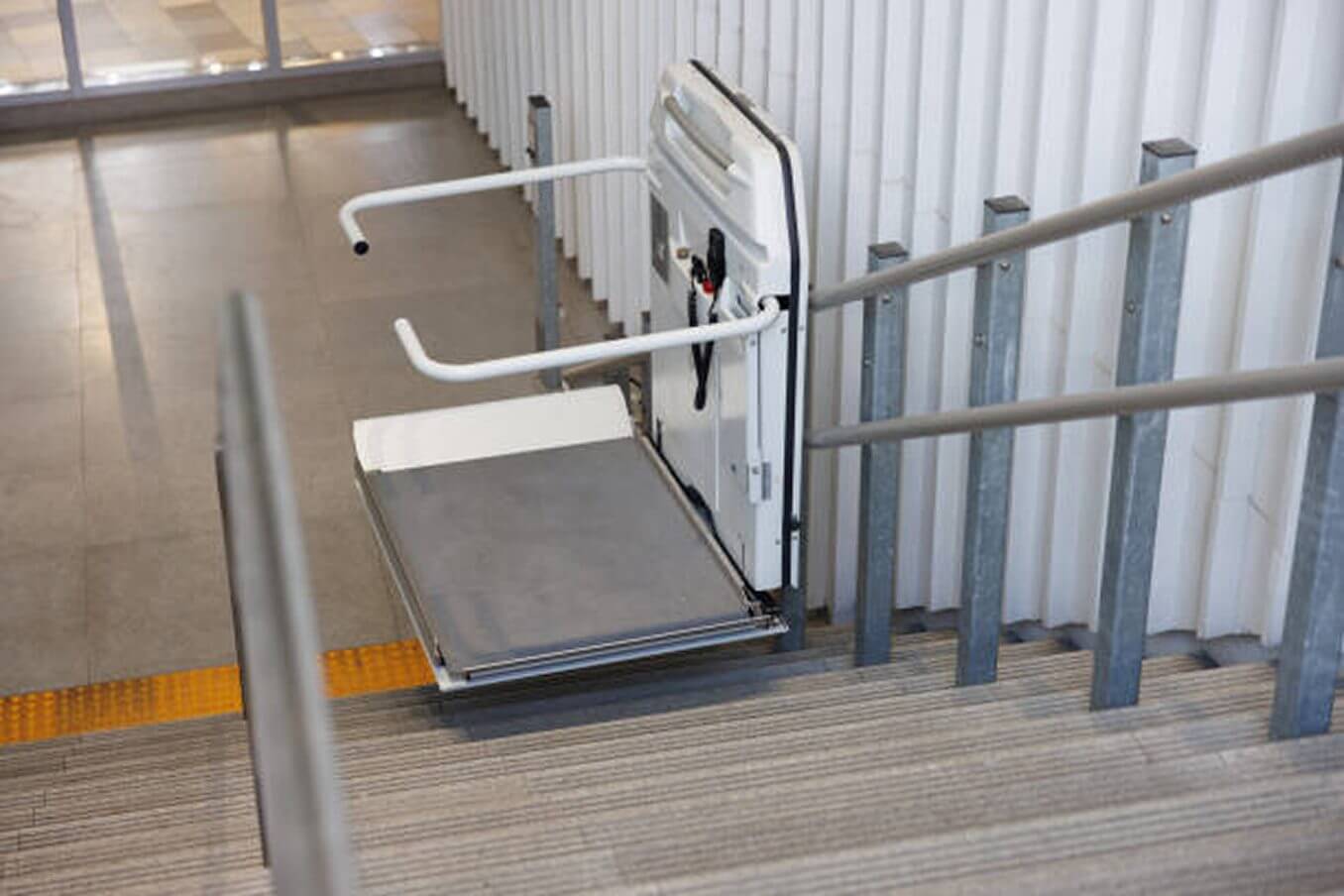
Platform stairlifts replace the chair with a flat platform large enough to accommodate a wheelchair, allowing the user to ride the lift without transferring out of their chair. They’re the most robust accessibility solution for wheelchair users who need floor-to-floor access and are not able to transfer to a seated stairlift independently.
Because the platform is larger, these stairlifts need wider stairs than other types — usually at least 32 to 36 inches of clear space. Platform stairlifts can be made for both straight and curved staircases, and they include safety rails and anti-rollback features to keep the wheelchair secure during the ride.
Best for: Wheelchair users who need to travel between floors with their chair.
Not ideal for: Narrow staircases, homeowners who can transfer to a seated lift independently.
Once you’ve picked the right stairlift, the next step is to choose the features and custom options that suit you. Most dealers let you pick from options for function, safety, and appearance.
Functional Features
Functional features include things such as rail types, power swivel ability, footrests, and controls.
Rail Types: Choosing the rail type is an important step after picking your stairlift. Most installations use a standard fixed rail.
Automatic retractable rail: Lifts the lower part of the rail when the chair moves up. This helps if the rail blocks a doorway or could be a tripping hazard. It works by itself and doesn’t need anyone else to help.
Manual folding rail: Does the same thing, but someone has to fold it by hand, so a second person may be needed if the user cannot do it themselves.
Power Swivel: Power swivel seats turn the chair automatically at the top and sometimes at the bottom of the stairs, so it’s easier to get off the lift without twisting. Standard seats turn by hand. Power swivel is especially helpful for people with limited leg movement or when there isn’t much space to turn at the landing.
Footrests: You can choose from standard fixed footrests, manual folding footrests, or automatic folding footrests that move up and down on their own. Oversized footrests are available on some models for users who have difficulty bending their knees and need to keep their legs further extended during the ride.
Controls: Controls are different depending on the model. Most people use standard remotes or armrest controls. For users with limited hand movement or grip strength, there are options like larger buttons, joystick controls, or other input devices.
Safety Features
Some common safety features include seat belts, obstruction sensors, battery backups, and bariatric models.
Seat Belts: Every stairlift has a seat belt, but the type can vary. Most basic models use a lap belt like you find on airplanes. Retractable lap belts are easier to use by yourself. If you need more support or have trouble staying seated, you can get five-point harnesses and ankle restraints.
Obstruction Sensors: Obstruction sensors on the rail and footrest automatically stop the lift if an object is detected on the staircase, preventing damage to the unit and reducing fall risk.
Battery Backups: A battery backup keeps the stairlift working during a power outage. This is an important safety feature for anyone who depends on the lift to reach key parts of their home. Most new stairlifts have this included, but check with your dealer to be sure.
Bariatric Models: Each stairlift model has a different weight limit. Standard stairlifts usually hold 250 to 300 pounds. Bariatric models are made for higher weight limits, with wider seats and stronger rails, and can usually support 400 to 600 pounds depending on the model.
Aesthetic Options
While basic stairlift models come with standard upholstery and rail colors, custom options let you choose what fits your style best.
Upholstery: Most mid-range and premium stairlifts let you choose the color and material of the upholstery. Many of the best stairlift brands allow you to pick from different fabrics, colors, and even leather or faux leather for easier cleaning. Basic models usually come in just one standard option.
Rail Color: Some dealers let you choose the color of the rail, so it can be powder-coated to match your stairs or home decor. Not every brand offers this, so ask about it during your assessment if it’s important to you.
Which Type of Stairlift Is Right for You?
If your stairs are straight and you just need a reliable way to sit and move between floors, a straight stairlift is likely your best bet. It’s the most affordable, fastest to install, and easiest to find as a pre-owned model.
If your staircase has any curves, landings, or turns, a curved stairlift is your only seated option. Budget for a longer lead time and higher cost, and ask your dealer about parking position flexibility during the assessment.
If you have trouble sitting because of knee or hip issues, or if your stairs are too narrow for a regular chair, consider a standing stairlift before choosing a straight seated model.
If you use a wheelchair and can’t move to a seated lift on your own, a platform stairlift is the right choice. Just make sure to check the width of your stairs with a professional before you buy.
If you need a stairlift for outdoor use, be sure to get quotes for outdoor-rated models only. Using an indoor unit outside will cause it to wear out quickly and void the warranty.
No matter which stairlift type you pick, having a licensed installer do an in-home assessment is the best way to make sure it fits and to get an accurate price. Modernize can help you find trusted local stairlift pros in your area.
Straight stairlifts are the most common type found in homes. Most houses have at least one straight staircase, and these models are the most affordable, quickest to install, and easiest to find — even as certified pre-owned units.
A curved stairlift with a custom-fabricated rail is the only option for staircases with curves, turns, or intermediate landings. These are built to the exact measurements of your staircase and cannot be adapted from standard straight-rail components.
Yes, in many cases. Standing stairlifts have a smaller footprint than seated models and are specifically designed for narrow staircases. Some seated models are also available in slimmer configurations. A professional assessment is the most reliable way to determine what will fit your specific staircase.
A perch stairlift, also called a standing stairlift, uses a small padded perch instead of a full seat. The user rides in a semi-standing position, leaning against the perch rather than sitting fully. They’re designed for users with knee or hip limitations that make sitting uncomfortable, and for narrow staircases where a full chair won’t fit.
Most modern stairlifts have a battery backup that keeps the lift running if the power goes out. The batteries charge while the lift is plugged in and turn on automatically if you lose power. Make sure battery backup is included before you buy, since it’s standard on most models but not all.
Yes. Bariatric stairlift models have stronger rails, wider seats, and higher weight limits, usually 400 to 600 pounds depending on the model. If you need a higher weight limit, ask about bariatric options during your in-home assessment.
Installing a straight stairlift usually takes one to two days. Curved stairlifts need a custom rail made before installation, so the whole process can take two to six weeks from assessment to finish, depending on the manufacturer and dealer.